
Trolley
You have no items in your shopping cart

 Budgets
 Dumbers
 Discs
Discs
 Benches
 Racks and Rigs
 Weights Holders
 Isotonic machines
 Calisthenics
 Cardio
 Kettlebells
 Flooring
 Gym Set
 Accessories
 Combat
 ARTI MARZIALI
 CONTAINER GYM
 Tug-Of-War
 Used Gym Equipment
 PILATES MACCHINARI
 GINNASTICA ARTISTICA
 CAMPI DA PADEL
 Prodotti in Pronta Consegna
 Informazioni
 IRONMAN
 Gift Card
- Donatif
- General information
- 0 I like it
- 467 Views
- 0 comments
- gym flooring, safety flooring, gym safety, shock-absorbing materials
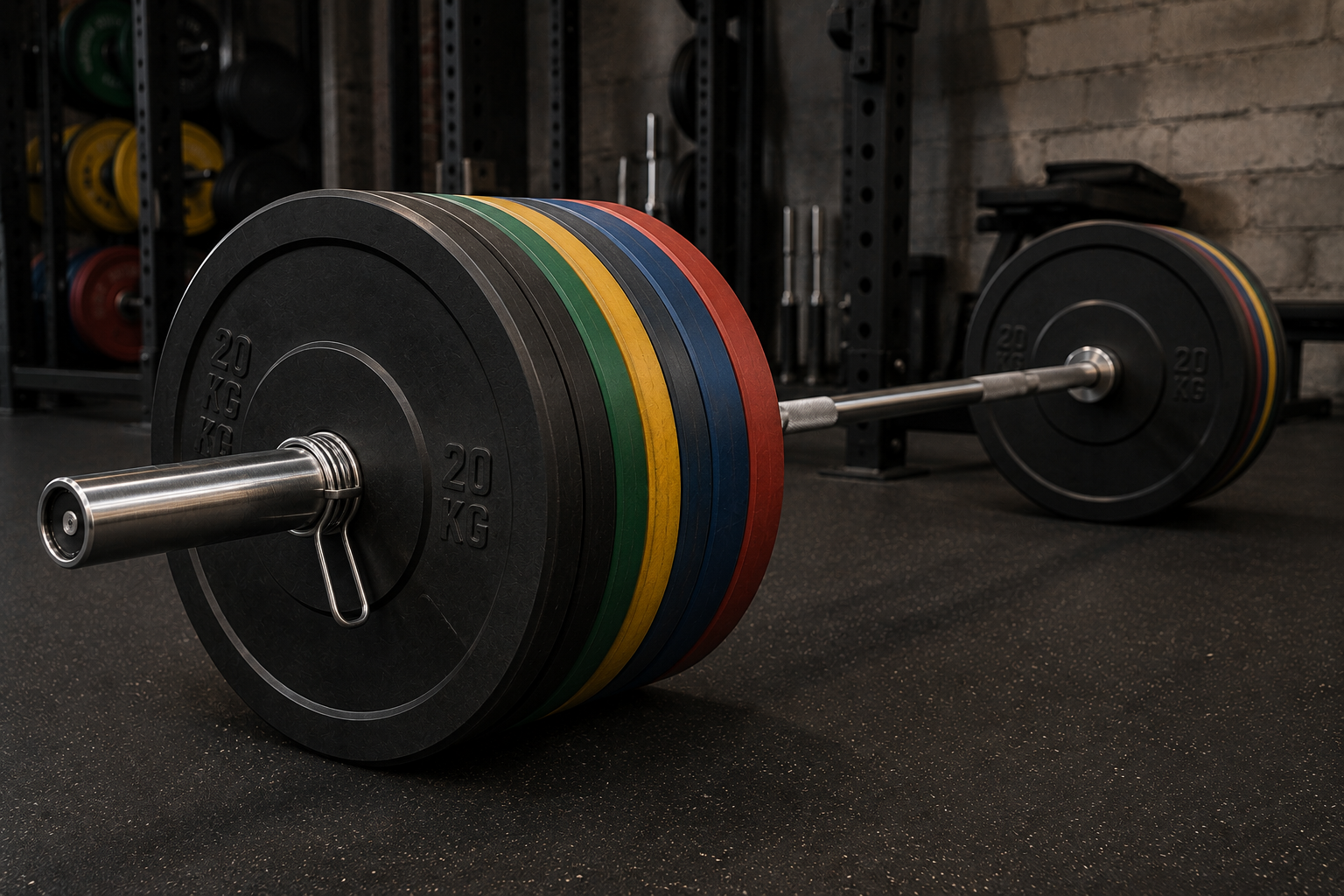
Maximum barbell load: How to read safety specifications
When buying a barbell, most users focus on price, diameter, or length, neglecting one of the most important aspects: structural safety. Technical data sheets often report values such as maximum capacity, PSI, tensile strength, and load capacity, but it is not always clear what they really mean and how to interpret them.
Understanding maximum barbell capacity means choosing equipment capable of supporting today's and future workouts without compromising performance, movement precision, and safety. An undersized barbell can progressively deform, lose elasticity, or, in extreme cases, suffer permanent damage that compromises its use.
Whether you practice bodybuilding, powerlifting, Olympic weightlifting, or functional training, knowing the technical parameters allows you to objectively compare different models and invest in a product that is truly suited to your goals.
- What the maximum capacity of a barbell means
- The meaning of PSI and tensile strength
- Declared capacity and real load
- Materials and build quality
- Why a barbell bends
- How to choose the right barbell
- The most common mistakes in evaluating specifications
- Why reading specifications protects your investment
What the maximum capacity of a barbell means
Maximum capacity represents the load that a barbell is designed to support under correct usage conditions. This value is determined by the manufacturer considering materials, shaft diameter, steel quality, workmanship, and construction features.
It is important to understand that the declared capacity does not simply indicate the weight the barbell can lift once, but the limit within which it maintains reliability, elasticity, and safety even during repeated use.
A model designed for high loads generally offers greater stability, better stress distribution, and a longer service life compared to an entry-level barbell.
Static and dynamic capacity
During exercises like squats or bench presses, the load acts primarily in a static way. In Olympic movements and Cross Training, however, accelerations and impacts generate dynamic forces much higher than the simple weight of the plates.
For this reason, two barbells with the same declared capacity can behave very differently during different disciplines.
Why capacity is not the only parameter
A high capacity value is important, but it must be interpreted together with the other technical data present in the product sheet.
Materials, tensile strength, and build quality actually determine the real behavior of the barbell under load.
The meaning of PSI and tensile strength
Among the most important specifications, the value expressed in PSI (Pounds per Square Inch) often appears, used to indicate the tensile strength of the steel. This parameter measures the tension that the material can withstand before deforming or breaking.
In general, a higher PSI value indicates stronger steel that is better suited for intensive training with high loads.
However, the data must always be evaluated together with the production process, heat treatments, and overall construction quality.
Interpreting barbell tensile strength
Tensile strength represents one of the main indicators of the quality of the steel used. A material with superior mechanical characteristics maintains elasticity and precision longer, even after thousands of workouts.
For those who practice strength training continuously, this parameter is of particular importance.
Why PSI alone is not enough
Two barbells with similar PSI values can offer different performance if they are made with different production processes, workmanship, or quality controls.
Analyzing the entire technical sheet allows for much more reliable comparisons.
Declared capacity and real load
A frequent mistake is to consider the maximum capacity as a habitual training goal. In reality, the barbell works in the best conditions when used with a safety margin relative to the maximum declared limit.
This approach helps preserve its elasticity, precision, and durability over time.
For those following strength progression programs, it is advisable to choose a model that offers a wide capacity reserve relative to the loads actually used.
The importance of the safety margin
Training constantly near the maximum limit increases mechanical stress on the equipment.
Choosing an oversized barbell relative to your needs offers greater peace of mind and a longer service life.
Intensive training
Powerlifting, Olympic weightlifting, and functional training generate high stress even when the weight does not reach the maximum declared capacity.
For this reason, it is appropriate to always evaluate the intended type of use.
Materials and build quality
The quality of the steel is only one of the elements that determine the performance of a barbell. The shaft diameter, bushing workmanship, rotation systems, and surface treatments also contribute to overall safety.
A product made with quality materials maintains constant mechanical characteristics even after years of intensive use.
Investing in superior construction means reducing the risk of premature deformation and obtaining a more reliable training experience.
Steel and workmanship
High-strength steels, heat treatments, and accurate quality controls improve the overall performance of the barbell.
These elements directly affect the durability of the product.
Bushings and components
The quality of the bushings, bearings, or sleeves influences the fluidity of the movements and the ability of the barbell to maintain constant performance over time.
Careful construction also increases safety during dynamic exercises.
Why a barbell bends
Every barbell is designed to flex within well-defined limits. Slight elasticity is normal and, in some disciplines, even desirable. The problem arises when the load exceeds the design characteristics or when the material progressively loses its mechanical properties.
Permanent bending compromises precision, safety, and comfort during workouts.
Preventing this type of damage means choosing an appropriate model and using it in compliance with the manufacturer's specifications.
Main causes of deformation
Repeated overloads, unexpected drops, incorrect use, and insufficient quality materials are the main causes of permanent deformation.
A correct initial choice significantly reduces these risks.
How to check the barbell
Periodically checking straightness, bushing rotation, and the general state of the equipment allows you to identify any anomalies before they become a problem.
A simple visual inspection contributes to daily safety.
How to choose the right barbell
The choice should start with training goals. A beginner who uses moderate loads has different needs than a powerlifter or a weightlifting athlete.
Analyzing the technical specifications allows you to identify the best balance between performance, durability, and financial investment.
Buying a barbell slightly superior to current needs is often the most cost-effective solution in the long run.
Home gym
For a home gym, it is advisable to choose a model that allows for growth margins without requiring replacement within a few years.
A long-term vision adds value to every investment.
Professional gyms
Facilities with intensive use should prioritize barbells designed for high reliability and operational continuity.
Higher quality materials help reduce maintenance and replacement costs.
The most common mistakes in evaluating specifications
Many users choose the barbell exclusively based on price or the maximum declared weight, ignoring all other parameters present in the technical sheet.
Another mistake is to compare products belonging to different categories without considering the type of use for which they were designed.
Reading the specifications carefully allows you to avoid purchases that are not suited to your needs and reduces the risk of premature replacements.
Thinking only about the initial cost
A lower price can hide less performant materials or a load capacity not adequate for future goals.
Evaluating the total cost over time is a much more rational choice.
Ignoring the technical sheet
Capacity, strength, diameter, build quality, and intended use should always be analyzed together.
This approach allows for truly objective comparisons between different models.
Why reading specifications protects your investment
Knowing the meaning of Olympic barbell max load, tensile strength, and other technical parameters allows you to choose safe, reliable equipment that is ready to accompany the evolution of your training. A quality barbell represents an investment destined to last many years if selected based on the athlete's real needs.
To compare models designed for different levels of use and to learn more about construction features, you can consult the range of Donatif professional barbells, developed to offer high performance both in home gyms and in intensive-use gyms.
Correctly interpreting technical specifications means training with greater awareness, reducing the risk of damage, and choosing equipment capable of supporting your strength goals in the long term.
Comments (0)