
Trolley
You have no items in your shopping cart

 Budgets
 Dumbers
 Discs
Discs
 Benches
 Racks and Rigs
 Weights Holders
 Isotonic machines
 Calisthenics
 Cardio
 Kettlebells
 Flooring
 Gym Set
 Accessories
 Combat
 ARTI MARZIALI
 CONTAINER GYM
 Tug-Of-War
 Used Gym Equipment
 PILATES MACCHINARI
 GINNASTICA ARTISTICA
 CAMPI DA PADEL
 Prodotti in Pronta Consegna
 Informazioni
 IRONMAN
 Gift Card
- Donatif
- General information
- 0 I like it
- 0 Views
- 0 comments
- gym flooring, safety flooring, gym safety, shock-absorbing materials
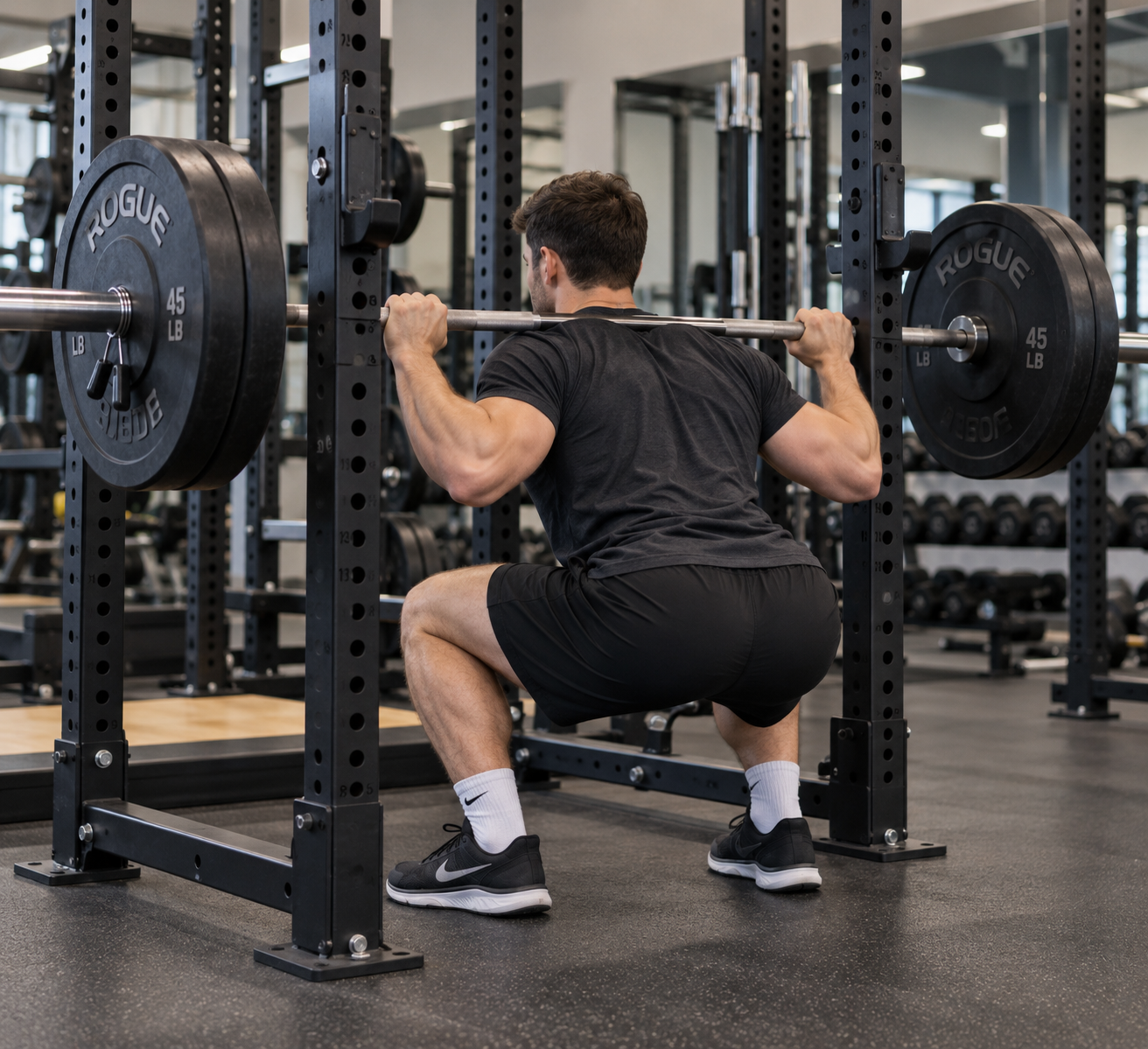
How to choose a power rack: a guide to the criteria that really matter
Choosing a power rack means evaluating technical features, available space, safety systems, accessory compatibility, and build quality. An informed choice should be based on the specifications in the manufacturer's documentation and the intended use, avoiding considering exclusively the price or the declared load capacity.
A power rack represents one of the most versatile pieces of equipment for barbell training and can be used both in professional environments and in spaces dedicated to individual training. To obtain a truly functional setup, it is necessary to carefully analyze the installation context and the user's needs.
This guide gathers the main technical criteria to compare different power rack models, highlighting the aspects that deserve the most attention before purchase.
- What criteria to evaluate
- What specifications really matter
- How to evaluate available space
- Accessory compatibility
- Safety features and setup
- Mistakes to avoid
- Comparison table
- How to make the final decision
What criteria really matter in the choice?
The evaluation should start from the intended use and the characteristics of the environment where the rack will be installed.
It is advisable to compare frame quality, construction methods, adjustment systems, accessory compatibility, availability of spare parts, and completeness of technical documentation.
A structured evaluation allows comparing different models using objective and verifiable parameters.
Why start from usage goals?
The required features can vary depending on the type of training, frequency of use, and the context in which the rack will be installed.
How much does build quality matter?
A structure designed for continuous use can facilitate equipment management and maintenance over time.
What technical specifications should be checked?
Among the most important features are dimensions, load capacity, hole configuration, safety systems, and compatibility with accessories provided by the manufacturer.
Each piece of data should be verified by consulting the official technical data sheet of the chosen model.
Construction methods can vary significantly from one rack to another and affect adjustment and customization possibilities.
Why check the load capacity?
The load capacity declared by the manufacturer must be consistent with the intended use and the installation methods indicated in the technical documentation.
Why is the hole layout important?
The hole configuration affects the adjustment of supports and safety systems and compatibility with numerous accessories.
How much space is actually needed?
The choice of the rack must consider not only the dimensions of the structure but also the operational area needed during training.
Sufficient space must be provided to use the barbell during exercises like squat and bench press, in addition to the possible installation of additional accessories.
The flooring must also be compatible with the installation methods provided by the manufacturer.
Why check the room height?
The available height must be compatible with the rack and any upper accessories or overhead exercises.
How much does the layout matter?
An orderly layout facilitates the use of the workstation and keeps training room pathways clear.
How to evaluate accessory compatibility?
Before purchase, it is useful to check which accessories are compatible with the model and if they can be added later as well.
Weight plate holders, pull-up bars, additional supports, and other components can change both the functionality and the overall footprint of the rack.
To compare the different available configurations, you can consult the professional power racks category.
Is it worth planning for future expansions?
A structure compatible with additional accessories can offer greater flexibility over time without replacing the entire rack.
Why check compatibility?
Each manufacturer may adopt different construction solutions that affect the installation of accessories.
What safety systems should be evaluated?
Barbell supports, safety bars, and adjustments represent fundamental elements in the rack setup.
Before use, it is advisable to check the correct assembly of components and compliance with the instructions provided by the manufacturer.
Adjustment and use methods can vary from one model to another.
Why check the supports?
The supports must be adjusted correctly and used in accordance with the rack's technical documentation.
How much does the manual matter?
The manual constitutes the primary reference for installation, adjustments, maintenance, and use of the equipment.
What mistakes should be avoided during purchase?
One of the most frequent mistakes consists in comparing racks exclusively based on price or maximum declared load capacity.
It is important to also consider build quality, available space, compatible accessories, maintenance, and technical documentation.
Neglecting these aspects can make the use of the equipment less efficient in the long term.
Why isn't price enough?
The initial cost represents only a part of the overall investment, which also includes installation, maintenance, and future management.
How much does the availability of spare parts matter?
The ability to source compatible components facilitates maintenance and contributes to the continuity of use of the rack.
Compact comparison table
| Criterion | What to check |
|---|---|
| Dimensions | Compatibility with available space |
| Load capacity | Specifications declared by the manufacturer |
| Holes | Adjustments and accessory compatibility |
| Safety features | Supports and safety bars |
| Accessories | Expandability and compatibility |
| Documentation | Manuals and technical data sheets |
This table allows comparing different models using practical and easily verifiable criteria.
Definitive characteristics must always be confirmed through the manufacturer's official technical documentation.
What documents to consult?
Installation manuals, technical data sheets, instructions for use, and official manufacturer documentation constitute the primary sources to verify requirements, setup, and installation methods.
What aspects to compare before purchase?
Dimensions, load capacity, hole configuration, safety systems, accessory compatibility, availability of spare parts, and completeness of technical documentation represent useful criteria for a complete evaluation.
How to choose the most suitable power rack?
The choice of a power rack should derive from the joint analysis of available space, the type of intended use, and the technical characteristics declared by the manufacturer. Comparing each model using the same criteria allows for a more objective evaluation consistent with your needs.
Before purchase, it is advisable to prepare a checklist including dimensions, load capacity, safety systems, accessory compatibility, technical documentation, maintenance, and future expansion possibilities. This approach facilitates an informed choice without relying exclusively on commercial information.
FAQ
What is the first element to evaluate? The available space and the compatibility of the rack with the environment where it will be installed.
Does the hole layout matter? Yes. It affects adjustments and compatibility with numerous accessories.
Can accessories be added later? It depends on the compatibility provided by the manufacturer for the chosen model.
What is the most reliable source for comparing power racks? Manuals, technical data sheets, and official manufacturer documentation represent the main reference for verifying characteristics, installation, and maintenance.
Comments (0)