
Trolley
You have no items in your shopping cart

 Budgets
 Dumbers
 Discs
Discs
 Benches
 Racks and Rigs
 Weights Holders
 Isotonic machines
 Calisthenics
 Cardio
 Kettlebells
 Flooring
 Gym Set
 Accessories
 Combat
 ARTI MARZIALI
 CONTAINER GYM
 Tug-Of-War
 Used Gym Equipment
 PILATES MACCHINARI
 GINNASTICA ARTISTICA
 CAMPI DA PADEL
 Prodotti in Pronta Consegna
 Informazioni
 IRONMAN
 Gift Card
- Donatif
- General information
- 0 I like it
- 0 Views
- 0 comments
- gym flooring, safety flooring, gym safety, shock-absorbing materials
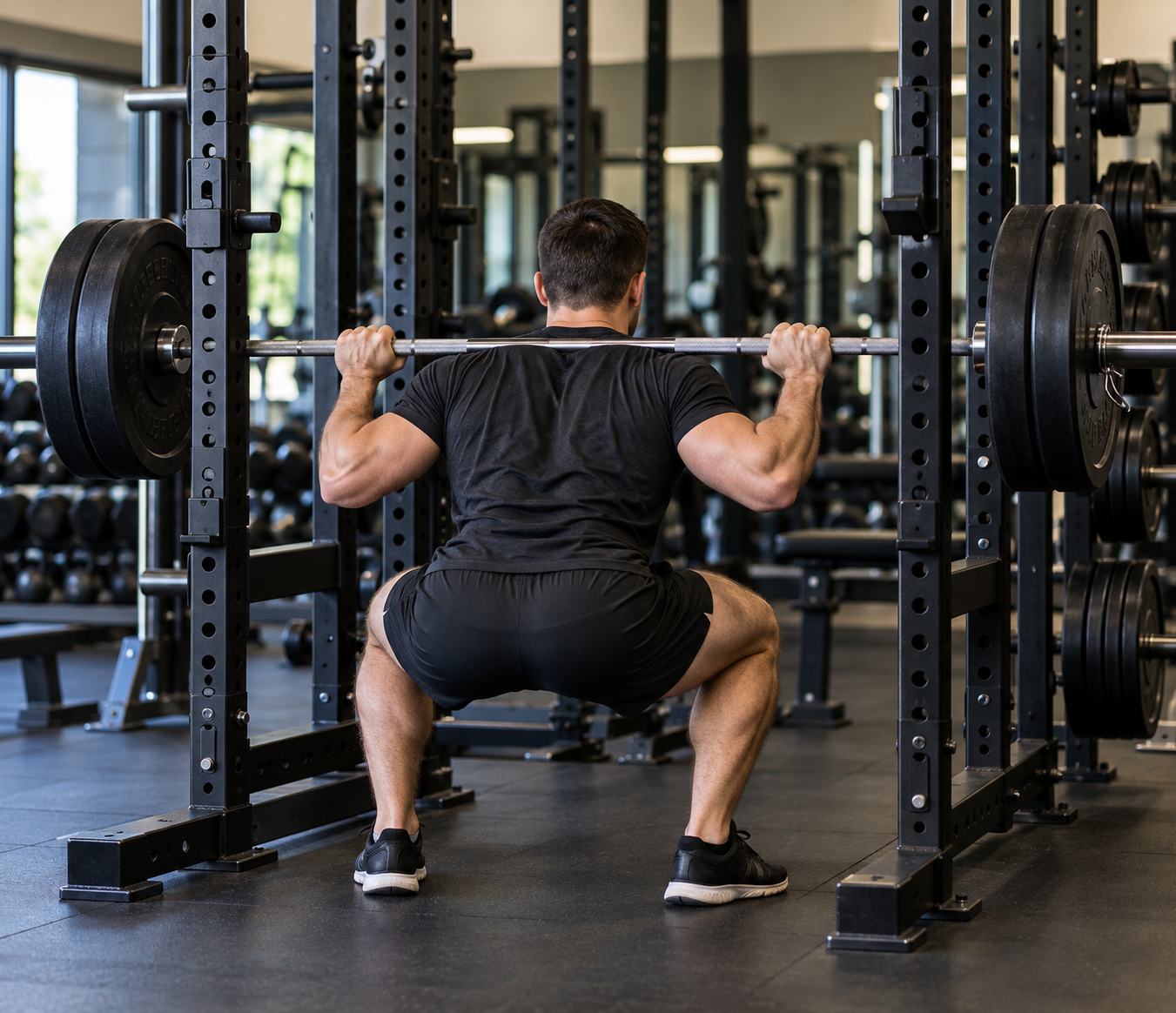
How to anchor a power rack: safety criteria and preliminary checks
Anchoring a power rack depends on the design of the structure and the manufacturer's instructions. Some models are designed to be fixed to the floor, while others can be used without permanent anchoring. Before any installation, it is essential to check the technical manual, assembly instructions, and the characteristics of the supporting surface.
Proper installation contributes to the stability of the equipment and allows the rack to be used under the conditions intended by the manufacturer. For this reason, it is not advisable to adopt fastening solutions different from those reported in the official documentation.
This guide illustrates the main criteria to verify before anchoring a power rack, highlighting preliminary checks, the most common errors, and aspects that affect installation safety.
- When it is necessary to evaluate anchoring
- How to check the supporting surface
- Why follow the manufacturer's manual
- Checks before use
- Errors to avoid
- Verification checklist
- Periodic checks
- How to plan a correct installation
When is it necessary to anchor a power rack?
Not all power racks require the same installation methods. The need for anchoring depends on the machine's design and the instructions provided in the manufacturer's technical documentation.
Before assembly, it is necessary to check whether the model requires fixing to the supporting surface or is designed to operate without permanent anchoring.
Any decision should be made exclusively based on the official instructions related to the installed model.
Why is there no single rule for everyone?
Each manufacturer can adopt different construction solutions and define specific installation methods for each model.
What is the first document to consult?
The installation manual represents the primary reference for checking requirements, fastening methods, and planned checks.
How to check the supporting surface?
The surface intended for installation must be compatible with the weight of the rack and the fastening system provided by the manufacturer.
Before assembly, it is advisable to check the conditions of the flooring, the flatness of the area, and the absence of elements that could compromise the stability of the structure.
Any coverings must also be compatible with the installation methods indicated in the technical documentation.
Why check flatness?
A regular surface facilitates the correct positioning of the rack and allows compliance with the conditions set by the manufacturer.
Is the type of floor important?
Yes. The characteristics of the surface can influence the installation methods intended for the chosen model.
Why always follow the manufacturer's manual?
The official instructions outline assembly procedures, compatible fastening systems, necessary components, and checks to be carried out after installation.
Using methods different from those intended can compromise the proper use of the equipment.
The information provided in the technical documentation constitutes the primary source for any work on the rack.
Why use the intended components?
The fastening systems indicated by the manufacturer are an integral part of the configuration intended for the model.
Is it advisable to modify the anchoring system?
No. Any modifications should be carried out only when expressly provided for and authorized by the manufacturer.
What checks to perform before use?
After installation, it is advisable to check the stability of the structure, the correct tightening of assembly elements, and the integrity of safety systems.
Before each workout, it is also recommended to check barbell supports, safety bars, adjustments, and installed accessories.
These checks help maintain the rack in the conditions intended by the manufacturer.
Which elements require more attention?
Supports, safety systems, fastening points, adjustments, and accessories must be checked regularly.
How often should checks be performed?
The frequency should follow the maintenance schedule indicated in the manufacturer's technical documentation.
What errors to avoid?
One of the most frequent errors consists of installing the rack without consulting the manual or by using fastening systems different from those intended.
It is also advisable to avoid installations on unsuitable surfaces or ones lacking the requirements requested by the manufacturer.
Neglecting post-assembly checks can make it more difficult to promptly identify any anomalies.
Why avoid improvised solutions?
Installation methods must comply with the manufacturer's technical instructions for the specific model.
Why repeat checks over time?
Periodic inspections allow you to check the maintenance of the conditions intended for the use of the equipment.
Compact verification checklist
| Element | Check |
|---|---|
| Manual | Installation method |
| Flooring | Compatibility with fastening |
| Structure | General stability |
| Fastenings | Control of assembly elements |
| Safety features | Supports and safety bars |
| Accessories | Compatibility with the rack |
This checklist represents a practical tool to verify the main aspects before commissioning the power rack.
Definitively operational methods must always be confirmed by consulting the manufacturer's official technical documentation.
What documents to consult?
Installation manuals, assembly instructions, technical data sheets, and official manufacturer documentation constitute the main sources for checking procedures, requirements, and maintenance schedules.
Is it useful to check any applicable standards?
When required by the installation context, it is also appropriate to refer to technical standards and applicable requirements mentioned by the manufacturer in the official documentation.
What checks to maintain over time?
A properly installed power rack requires periodic checks of fastening points, safety systems, the structure, and accessories. Preventive maintenance helps promptly identify any anomalies and keeps the equipment compliant with the conditions intended by the manufacturer.
It is advisable to record the interventions carried out, follow the scheduled maintenance program, and use exclusively compatible spare parts when replacements become necessary.
Why document interventions?
A record of checks facilitates maintenance planning and allows you to monitor the state of the equipment over time.
Why use compatible spare parts?
Components compatible with the installed model help maintain the characteristics intended by the manufacturer.
How to plan a correct installation?
The choice of installation methods for a power rack should always start from the analysis of technical documentation, the characteristics of the supporting surface, and the manufacturer's instructions. Evaluating these elements before assembly allows you to organize an installation consistent with the equipment design.
Before commissioning, it is advisable to prepare a checklist including anchoring methods, flooring characteristics, safety systems, fastenings, compatible accessories, and a maintenance schedule. To view the various available configurations, you can visit the professional power racks category.
FAQ
Do all power racks need to be anchored? No. The need for anchoring depends on the model and the manufacturer's instructions.
Can I use a different fastening system? It is appropriate to follow exclusively the installation methods reported in the official technical documentation.
What checks to perform after assembly? Verify structure stability, fastenings, safety systems, and correct assembly of accessories according to the manual.
What is the most reliable source for installing a power rack? Installation manuals, technical data sheets, and official manufacturer documentation represent the main reference for anchoring, assembly, and maintenance.
Comments (0)