
Trolley
You have no items in your shopping cart

 Budgets
 Dumbers
 Discs
Discs
 Benches
 Racks and Rigs
 Weights Holders
 Isotonic machines
 Calisthenics
 Cardio
 Kettlebells
 Flooring
 Gym Set
 Accessories
 Combat
 ARTI MARZIALI
 CONTAINER GYM
 Tug-Of-War
 Used Gym Equipment
 PILATES MACCHINARI
 GINNASTICA ARTISTICA
 CAMPI DA PADEL
 Prodotti in Pronta Consegna
 Informazioni
 IRONMAN
 Gift Card
- Donatif
- General information
- 0 I like it
- 521 Views
- 0 comments
- gym flooring, safety flooring, gym safety, shock-absorbing materials
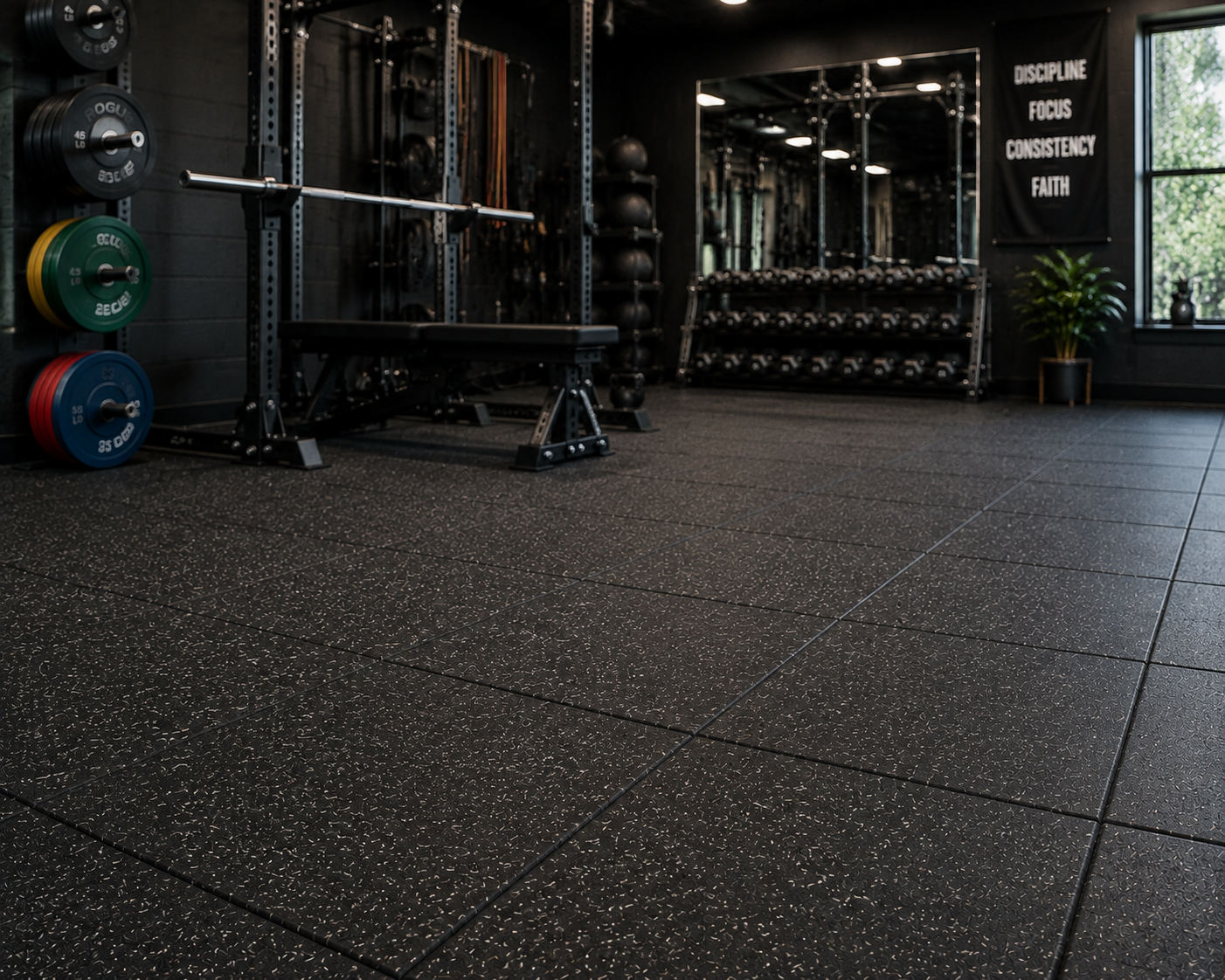
How to Clean and Maintain Your Gym's Rubber Flooring
Technical rubber flooring represents one of the most important investments for any gym, Cross Training box, yoga center, personal training studio, or home gym. Beyond ensuring safety, comfort, and protection for the subfloor, it contributes to the facility's aesthetics and the quality of the user experience. However, even the best flooring requires proper maintenance to retain its technical and aesthetic characteristics over time.
Many gym owners make seemingly harmless mistakes that end up compromising the material. Using overly aggressive detergents, products containing solvents, or bleach can actually deteriorate the surface, alter its color, and reduce its lifespan. Properly performed maintenance, on the other hand, allows you to keep the floor sanitized, resistant, and visually appealing for many years.
In this guide, you will discover everything you need to know about gym rubber floor cleaning, from choosing the most suitable detergents to the frequency of maintenance operations, as well as tips for eliminating the typical smell of new rubber without compromising the quality of the flooring.
- Why maintenance is important
- Daily cleaning
- Which products to use
- Products to avoid
- How to eliminate the smell of new rubber
- Long-term maintenance
- The most common mistakes
- How to preserve your investment
Why maintenance is important
Rubber flooring is designed to withstand thousands of hours of use, but its durability depends largely on the care with which it is maintained. Dust, sweat, magnesium residue, dirt from shoes, and accumulated grime can progressively deteriorate the surface if they are not removed regularly.
Consistent cleaning helps preserve the material's elasticity, maintain high anti-slip characteristics, and offer a more hygienic environment for all gym users.
Beyond functional aspects, clean flooring also improves the perception of the facility's quality. Users tend to associate a tidy and well-maintained environment with greater professionalism and attention to the customer.
Hygiene and safety
A regularly cleaned surface reduces the accumulation of bacteria, dust, and organic residue, helping to create a healthier environment for daily workouts.
Increased floor longevity
Proper maintenance slows down rubber wear, keeps the original color unchanged, and reduces the risk of cracking or premature deterioration.
How to perform daily cleaning
Routine maintenance should be performed every day in high-traffic gyms and with a frequency proportional to usage in private studios and home gyms.
The first step is to remove dust using vacuum cleaners equipped with soft brushes or electrostatic cloths. Subsequently, you can proceed with washing using a well-wrung microfiber cloth or a scrubber-dryer set with specific detergents.
It is important to avoid standing water on the surface. Although rubber is resistant to moisture, excess water can infiltrate between the joints or under the tiles if the installation is not completely sealed.
How often to clean
Cardio and functional areas used daily require daily cleaning, while less frequented zones can be treated two or three times a week while still maintaining high hygienic standards.
Recommended tools
Microfiber cloths, professional mops, and vacuum cleaners with soft brushes are the best solution for removing dirt without scratching the surface.
Which products to use
To achieve the best results, it is essential to use detergents specifically formulated for technical rubber surfaces. These products effectively remove dirt and residue without altering the material's structure.
The best SBR rubber detergents are characterized by a neutral pH and formulations free of aggressive solvents. In this way, they preserve the elasticity, color, and mechanical properties of the flooring.
Before using a new product, it is always advisable to perform a test on a small, hidden portion of the surface to check for any unwanted reactions.
Why choose a neutral detergent
Neutral pH detergents clean effectively without altering the composition of the rubber and can also be used frequently.
Watch the dosage
An excess of detergent can leave sticky residues that attract dust and dirt. It is always advisable to follow the instructions provided by the manufacturer.
Products that can ruin the floor
One of the most frequent mistakes is using products intended for other types of surfaces, such as particularly aggressive industrial detergents or highly concentrated degreasing substances.
Bleach is one of the most harmful products for many rubber floors. Its oxidizing action can alter the color, stiffen the material, and accelerate its deterioration.
Solvents, ammonia, acetone, and products containing petroleum derivatives should also be avoided as they can permanently compromise the surface.
Why avoid bleach
In addition to discoloring the material, bleach can reduce the flexibility of the rubber, promoting the appearance of micro-cracks and premature wear.
Beware of solvents
Many solvents progressively dissolve the surface layers of the rubber, compromising both the aesthetic appearance and the mechanical resistance.
How to eliminate the smell of new rubber
During the first few weeks after installation, it is normal to notice a slight characteristic smell of rubber. This is a physiological phenomenon that tends to decrease spontaneously over time.
To remove the gym rubber smell, it is sufficient to keep the environment well-ventilated, encouraging air exchange, especially in the first few days after installation.
Even gentle cleaning with neutral detergents can help accelerate the reduction of the odor without compromising the quality of the flooring.
Encourage air exchange
Regularly opening windows and doors or using mechanical ventilation systems helps to quickly disperse the volatile compounds initially present.
It just takes a little time
In most cases, the smell decreases significantly after a few weeks of normal use without requiring special interventions.
Long-term maintenance
In addition to routine cleaning, it is advisable to schedule periodic checks of the flooring's condition, verifying any open joints, localized wear, or the presence of cuts.
Areas subject to heavy loads, such as weightlifting zones, deserve special attention as they are the most exposed to deformation and repeated impacts.
Proper tatami maintenance and rubber surface care also include the timely replacement of any damaged elements to prevent the problem from spreading to adjacent areas.
Periodic inspections
Regularly checking the state of the flooring allows you to intervene before small defects turn into more extensive damage.
Protecting high-stress areas
In areas dedicated to Weightlifting, you can use specific platforms to further reduce wear on the flooring.
The most common mistakes
Many managers use cleaning machines with brushes that are too abrasive or excessive dosages of detergent, thinking they will achieve more effective cleaning. In reality, these behaviors accelerate the deterioration of the surface.
Also, leaving stagnant liquids or neglecting dust removal can compromise the appearance and performance of the floor over time.
Finally, ignoring the instructions provided by the manufacturer is one of the most frequent mistakes and can also negatively affect the validity of the warranty.
Overly aggressive cleaning
Hard brushes and abrasive products progressively wear down the surface layer of the rubber, reducing its lifespan.
Postponing maintenance
Intervening promptly is always easier and cheaper than restoring heavily deteriorated flooring.
How to preserve your investment
Quality technical flooring can maintain its performance for many years if accompanied by proper routine and extraordinary maintenance. Choosing the right products, respecting cleaning frequencies, and paying attention to small details make a big difference in the overall durability of the material.
Relying on specialized suppliers means you can also count on precise indications regarding recommended products and the most correct procedures. A professional solution like gym rubber floor cleaning allows you to obtain not only high-quality flooring but also the support necessary to keep it efficient over time.
With a few simple operations and the use of adequate detergents, it is possible to preserve the aesthetics, safety, and functionality of the flooring, protecting the value of your investment and offering users an environment that is always clean, professional, and pleasant to train in.
Comments (0)