
Trolley
You have no items in your shopping cart

 Budgets
 Dumbers
 Discs
Discs
 Benches
 Racks and Rigs
 Weights Holders
 Isotonic machines
 Calisthenics
 Cardio
 Kettlebells
 Flooring
 Gym Set
 Accessories
 Combat
 ARTI MARZIALI
 CONTAINER GYM
 Tug-Of-War
 Used Gym Equipment
 PILATES MACCHINARI
 GINNASTICA ARTISTICA
 CAMPI DA PADEL
 Prodotti in Pronta Consegna
 Informazioni
 IRONMAN
 Gift Card
- Donatif
- General information
- 0 I like it
- 0 Views
- 0 comments
- gym flooring, safety flooring, gym safety, shock-absorbing materials
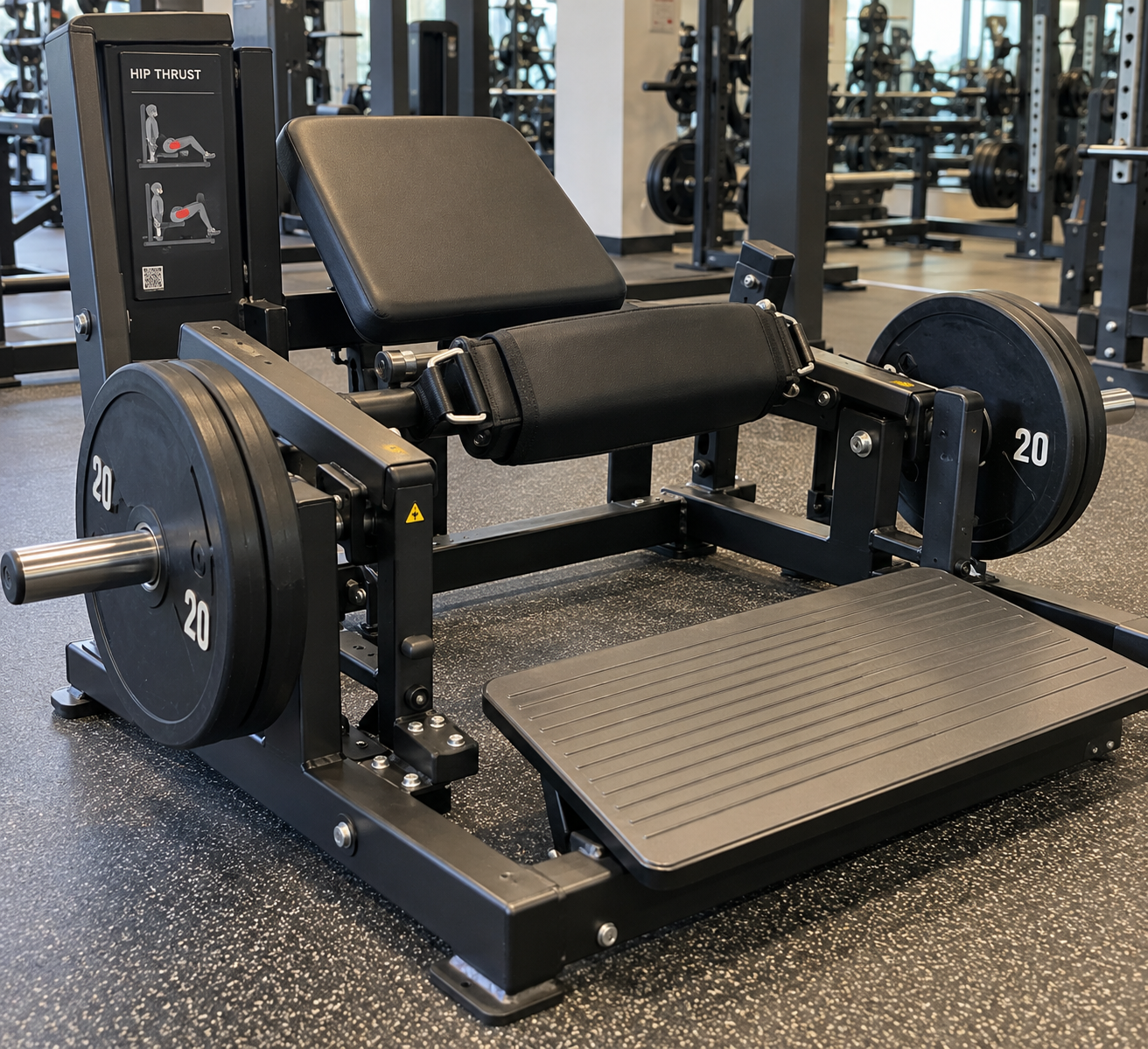
Hip thrust machine maintenance: how to check the belt and pins
Maintaining a hip thrust machine involves performing periodic checks on the belt, pins, pivot points, adjustment systems, and components subject to wear, always following the manufacturer's manual. A regular inspection schedule helps keep the machine efficient, reduces downtime, and promptly identifies any anomalies.
Routine maintenance operations are not limited to cleaning the machine. Inspecting mechanical components and heavily stressed parts allows you to preserve movement quality and schedule any interventions before wear compromises proper functioning.
This guide offers a practical approach based on verifiable checks, with particular attention to the belt, pins, and mechanical components that require constant monitoring in sports facilities and home gyms.
- What to check
- How often to perform checks
- How to check the belt
- Checking pins and bearings
- Cleaning and routine maintenance
- Signs of wear
- Checklist table
- How to plan maintenance
Which components require the most attention?
Periodic checks should focus on components that work during every repetition: the belt, pins, adjustment systems, padding, pivot points, and structural fastenings.
Before each use, it is helpful to check for the absence of deformations, looseness, unusual noises, and visible damage to contact surfaces.
Systematic verification makes it possible to detect any anomalies early on, avoiding more complex interventions over time.
Why check the frame?
The frame represents the load-bearing structure of the machine and should be inspected for cracks, deformations, corrosion, or loose fasteners.
Do adjustments also require maintenance?
Yes. Levers, adjustment pins, and locking systems must operate smoothly and ensure stable fastening during use.
How often should maintenance be performed?
The frequency of checks depends on the intensity of machine use and the manufacturer's instructions.
In professional gyms, it is advisable to perform daily visual checks, while more in-depth technical inspections must follow the schedule provided in the manual.
Even in home gyms, it is useful to schedule periodic inspections, especially after intensive use or long periods of inactivity.
What checks should be performed daily?
Check the stability of the machine, the condition of the belt, the correct tightening of adjustments, the presence of unusual noises, and the cleanliness of the surfaces.
When should in-depth checks be performed?
Following the frequency indicated in the manufacturer's technical documentation or whenever anomalies are encountered during use.
How to check the belt?
The belt is one of the components most subject to wear and should be inspected by checking the stitching, material, fastening systems, and connection points.
The presence of abrasions, cuts, deformations, abnormal stretching, or difficulty with the closing system represents a sign that requires closer inspection.
Replacement operations must be carried out according to the procedures indicated by the manufacturer using compatible components.
Why check the stitching?
Stitching constitutes one of the most stressed points during use and deserves a careful visual inspection.
How to check the fastenings?
It is necessary to check that the anchoring elements are intact, properly tightened, and free from visible deformations.
How to check pins and bearings?
The pins allow the proper movement of moving parts and must be checked for any play, looseness, or signs of wear.
Even bearings, when present in the machine design, require periodic checks to identify any abnormal friction, noise, or irregular sliding.
Any unusual behavior during movement should be investigated before continuing to use the equipment.
How to recognize abnormal play?
Excessive lateral movements or unexpected wobbling may indicate the need for a technical check.
Are noises an important sign?
Yes. Creaking, friction, or metallic noises can indicate the presence of components that need to be inspected as provided in the manual.
How to carry out routine cleaning?
Regular cleaning helps preserve materials and mechanical components. Surfaces must be kept clean using products compatible with the manufacturer's instructions.
It is advisable to remove sweat, dust, and residue that can accumulate in contact areas and adjustment systems.
For those wishing to learn more about dedicated equipment, the isotonic machines category is available.
What products should be used?
It is appropriate to use exclusively detergents compatible with the materials indicated in the machine's technical documentation.
Is lubrication needed?
Only if specified by the manufacturer. Any lubrication must follow the instructions given in the manual.
What signs indicate the need for intervention?
The main signs include evident wear of the belt, difficulty with adjustments, unusual noise, mechanical play, deformations, and deterioration of the padding.
Even variations in the fluidity of movement may suggest the need for a technical check.
Ignoring these signs can increase the number of interventions required over time.
When to replace a component?
When the manufacturer's manual requires it or when an inspection reveals damage that compromises proper functioning.
When to stop using the machine?
The machine should be taken out of use in the presence of structural anomalies, unsafe fastenings, or damaged components until technical checks are completed.
Compact checklist table
| Component | Recommended check |
|---|---|
| Belt | Stitching, abrasions, fastenings |
| Pins | Tightening and mechanical play |
| Bearings | Fluidity and noise |
| Adjustments | Correct locking |
| Frame | Stability and deformations |
| Padding | Upholstery integrity |
This table represents an operational reminder that must always be integrated with the procedures provided by the manufacturer.
Technical documentation remains the primary reference for establishing frequency, control methods, and component replacement criteria.
Which documents should be consulted?
The installation, use, and maintenance manuals provided by the manufacturer constitute the primary source for planning interventions and verifying the technical specifications of the machine.
What mistakes should be avoided?
Neglecting small signs of wear, using incompatible spare parts, modifying the machine structure, or postponing scheduled interventions are mistakes that can compromise equipment efficiency.
How to organize an effective maintenance program?
An orderly management of the hip thrust machine involves daily checks, scheduled inspections, and logging of performed interventions. This approach facilitates preventive maintenance planning and allows you to monitor the condition of wear-prone components over time.
Before purchasing, it can also be useful to evaluate the availability of spare parts, the simplicity of maintenance operations, the clarity of technical documentation, and the accessibility of components. These aspects directly impact operating costs throughout the entire life cycle of the machine.
FAQ
Does the belt need to be checked after every use? It is good practice to perform frequent visual checks, especially in gyms with a high number of users.
Do pins require specific maintenance? They must be inspected according to the manufacturer's instructions, checking tightness, wear, and the absence of abnormal play.
Do bearings need to be replaced periodically? Control and replacement methods depend on the machine's design and the instructions provided in the technical documentation.
What is the most reliable source for planning interventions? The use and maintenance manual provided by the manufacturer represents the main reference for checks, frequencies, and component replacement. :contentReference[oaicite:0]{index=0}
Comments (0)