
Trolley
You have no items in your shopping cart

 Budgets
 Dumbers
 Discs
Discs
 Benches
 Racks and Rigs
 Weights Holders
 Isotonic machines
 Calisthenics
 Cardio
 Kettlebells
 Flooring
 Gym Set
 Accessories
 Combat
 ARTI MARZIALI
 CONTAINER GYM
 Tug-Of-War
 Used Gym Equipment
 PILATES MACCHINARI
 GINNASTICA ARTISTICA
 CAMPI DA PADEL
 Prodotti in Pronta Consegna
 Informazioni
 IRONMAN
 Gift Card
- Donatif
- General information
- 0 I like it
- 527 Views
- 0 comments
- gym flooring, safety flooring, gym safety, shock-absorbing materials
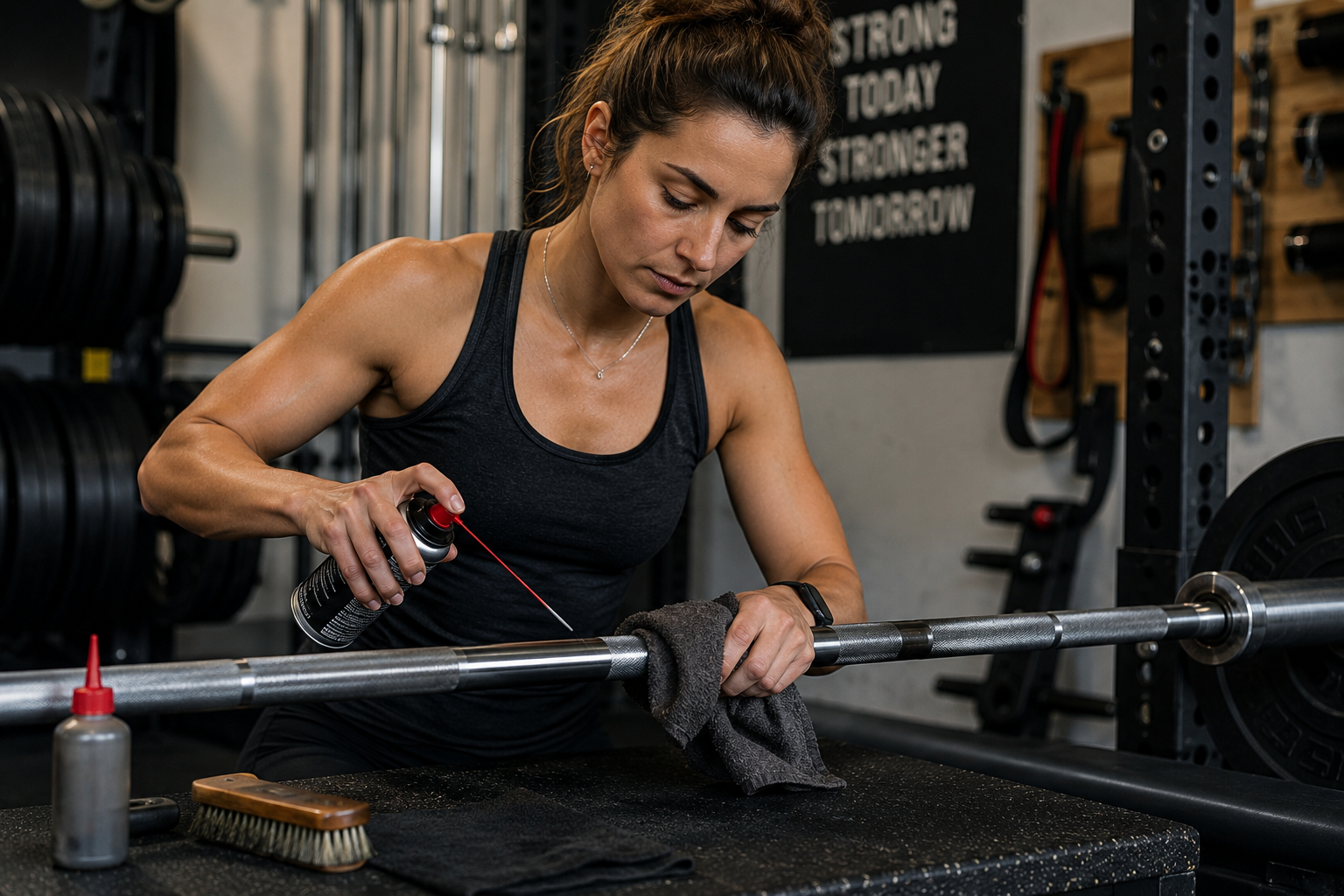
Barbell maintenance: how to prevent rust and wear
A professional barbell represents one of the most important investments for any gym, home gym, or fitness center. It is used hundreds of times throughout the year, subjected to heavy loads, contact with sweat, temperature variations, and constant mechanical stress. For this reason, even the best barbell available on the market requires proper maintenance to maintain its performance, safety, and aesthetic quality over time.
Barbell maintenance does not require complex procedures, but it must be performed consistently and with appropriate products. Cleaning, checking moving parts, and proper lubrication help prevent common problems such as oxidation, loss of bushing fluidity, and deterioration of the surface finish.
Well-maintained equipment not only lasts longer but also offers a better training experience. A barbell that rotates correctly, maintains a reliable grip, and preserves its structural integrity ensures greater safety during every exercise, from strength movements to more dynamic workouts.
- Why barbell maintenance is essential
- How to prevent rust and corrosion
- How to clean the barbell correctly
- Lubricating bushings and bearings
- Differences between barbell finishes
- Common maintenance mistakes
- Creating an effective maintenance schedule
- Protecting the value of your equipment over time
Why barbell maintenance is essential
During every workout, the barbell comes into contact with elements that can progressively compromise its condition. Sweat, dust, chalk residue, and ambient humidity can accumulate on the surface and accelerate the deterioration of the materials.
In a commercial gym, this phenomenon is even more evident because the equipment is used daily by numerous users. Without proper management, even a high-quality product can lose some of its initial characteristics.
Periodic maintenance allows you to intervene before small problems become more difficult and expensive to fix.
Increasing equipment lifespan
A well-cared-for barbell retains its mechanical and aesthetic characteristics for longer. Regular cleaning limits the accumulation of corrosive agents, while lubrication protects the internal components subject to movement.
These simple operations contribute to significantly extending the product's useful life.
Maintaining safe performance
A worn barbell can present problems with rotation, reduced grip, or surface deterioration. Periodically checking the state of the equipment allows you to maintain high safety standards.
Maintenance thus becomes an integral part of responsible gym management.
How to prevent rust and corrosion
Rust is one of the most frequent problems with barbells, especially when they are used in humid or poorly ventilated environments. Even small amounts of sweat left on the surface can promote the formation of oxidation over time.
Preventing corrosion is much simpler than restoring a barbell that is already compromised. Constant cleaning and proper surface protection are the main strategies.
Prevention must also take into account the type of finish on the barbell, as each treatment requires specific attention.
The role of the environment
Storing barbells in dry and well-ventilated places reduces the risk of oxidation. Humid garages, basements, and poorly ventilated rooms require more attention during maintenance.
Proper storage also helps protect the equipment.
Always remove sweat
Sweat contains substances that can accelerate metal corrosion. For this reason, it is advisable to clean the barbell after particularly intense sessions.
A simple, few-minute operation can prevent long-term problems.
How to clean the barbell correctly
Cleaning the barbell should be simple but regular. The main goal is to remove residues that can accumulate on the knurling, the sleeves, and in the rotation areas.
Using appropriate tools allows you to eliminate dirt without damaging the surface finish.
A correct procedure keeps the barbell more pleasant to use and preserves its original appearance.
Recommended cleaning procedure
The first step consists of removing dust and visible residue with a dry cloth or a soft brush. Subsequently, you can use mild products compatible with the barbell's surface treatment.
It is important to dry the product completely after cleaning to avoid moisture accumulation.
Which products to use
Neutral detergents and non-abrasive cloths are generally the safest solution for most finishes.
Products that are too aggressive can compromise the protective coating and accelerate wear.
Lubricating bushings and bearings
In addition to external cleaning, a fundamental element of maintenance concerns the internal components that allow the sleeves to rotate. Bushings and bearings must maintain good fluidity to ensure the barbell functions correctly.
Inefficient rotation can negatively affect comfort during exercises and increase stress on the joints.
Periodic lubrication helps keep moving parts in optimal condition.
Use the correct barbell bearing lubricant
The chosen product must be compatible with the barbell's mechanical components and applied without excess. Too much can attract dust and residue, while an insufficient amount does not guarantee adequate protection.
Following the manufacturer's instructions is always the best choice.
When to lubricate
The frequency depends on the intensity of use and the type of environment. A barbell used daily in a commercial gym requires more frequent checks than a product used occasionally in a home gym.
Observing any changes in rotation helps you understand when to intervene.
Differences between barbell finishes
The surface finish protects the steel from external agents and influences both the aesthetic appearance and the maintenance methods. Barbells can have different treatments, each with specific characteristics.
Knowing these differences allows you to use the most appropriate products and procedures.
Correct maintenance must always respect the type of coating present.
Chrome barbells
Chrome plating offers good protection against corrosion and a resistant surface. However, it is important to avoid abrasive products that could compromise the finish.
Regular cleaning keeps the surface shiny and functional.
Zinc-plated barbells
Zinc finishes offer protection against oxidation but may require more attention to preserve the surface treatment over time.
Proper use and the removal of residues help keep the coating effective.
The Cerakote barbell finish
Cerakote is a modern coating appreciated for its resistance, durability, and aesthetic possibilities. It offers effective protection but still requires proper maintenance to maintain its characteristics.
Using compatible products avoids damaging the surface treatment.
Common maintenance mistakes
One of the most frequent mistakes is cleaning the barbell only when obvious signs of wear appear. By that point, some problems may already be difficult to solve.
Another mistake is using unsuitable products, thinking they will achieve a more effective clean.
Maintenance must be preventative and not just a corrective intervention.
Using aggressive products
Solvents and overly strong detergents can deteriorate finishes and protective coatings.
Choosing mild products protects the material over time.
Storing the barbell poorly
Leaving the barbell in contact with damp floors or in unsuitable environments increases the risk of corrosion.
Dedicated racks and supports improve storage.
Creating an effective maintenance schedule
Organized management allows you to keep every barbell in optimal condition without requiring complex interventions. Establishing periodic checks makes maintenance a simple operational habit.
For professional gyms, this organization also helps improve the quality perceived by users.
Clean and well-maintained equipment communicates attention and professionalism.
Weekly checks
A quick verification allows you to identify dirt, residue, or rotation problems before they worsen.
Small, frequent interventions are more effective than occasional extraordinary maintenance.
Periodic inspections
Checking the knurling, sleeves, finishes, and moving parts helps maintain high safety standards.
This approach is particularly important in facilities with many users.
Protecting the value of your equipment over time
A quality barbell can accompany an athlete or a gym for many years, but only if it is managed correctly. Barbell maintenance is therefore an essential element for preserving the performance, safety, and economic value of your investment.
To choose equipment designed to last and to explore professional solutions, you can consult the range of Donatif barbells, developed to offer reliability and construction quality for home gyms and fitness facilities.
A proper routine of cleaning, lubrication, and inspection helps avoid problems like rust and premature wear, transforming maintenance from a simple ordinary activity into a true long-term equipment protection strategy.
Comments (0)