
Trolley
You have no items in your shopping cart

 Budgets
 Dumbers
 Discs
Discs
 Benches
 Racks and Rigs
 Weights Holders
 Isotonic machines
 Calisthenics
 Cardio
 Kettlebells
 Flooring
 Gym Set
 Accessories
 Combat
 ARTI MARZIALI
 CONTAINER GYM
 Tug-Of-War
 Used Gym Equipment
 PILATES MACCHINARI
 GINNASTICA ARTISTICA
 CAMPI DA PADEL
 Prodotti in Pronta Consegna
 Informazioni
 IRONMAN
 Gift Card
- Donatif
- General information
- 0 I like it
- 1 Views
- 0 comments
- gym flooring, safety flooring, gym safety, shock-absorbing materials
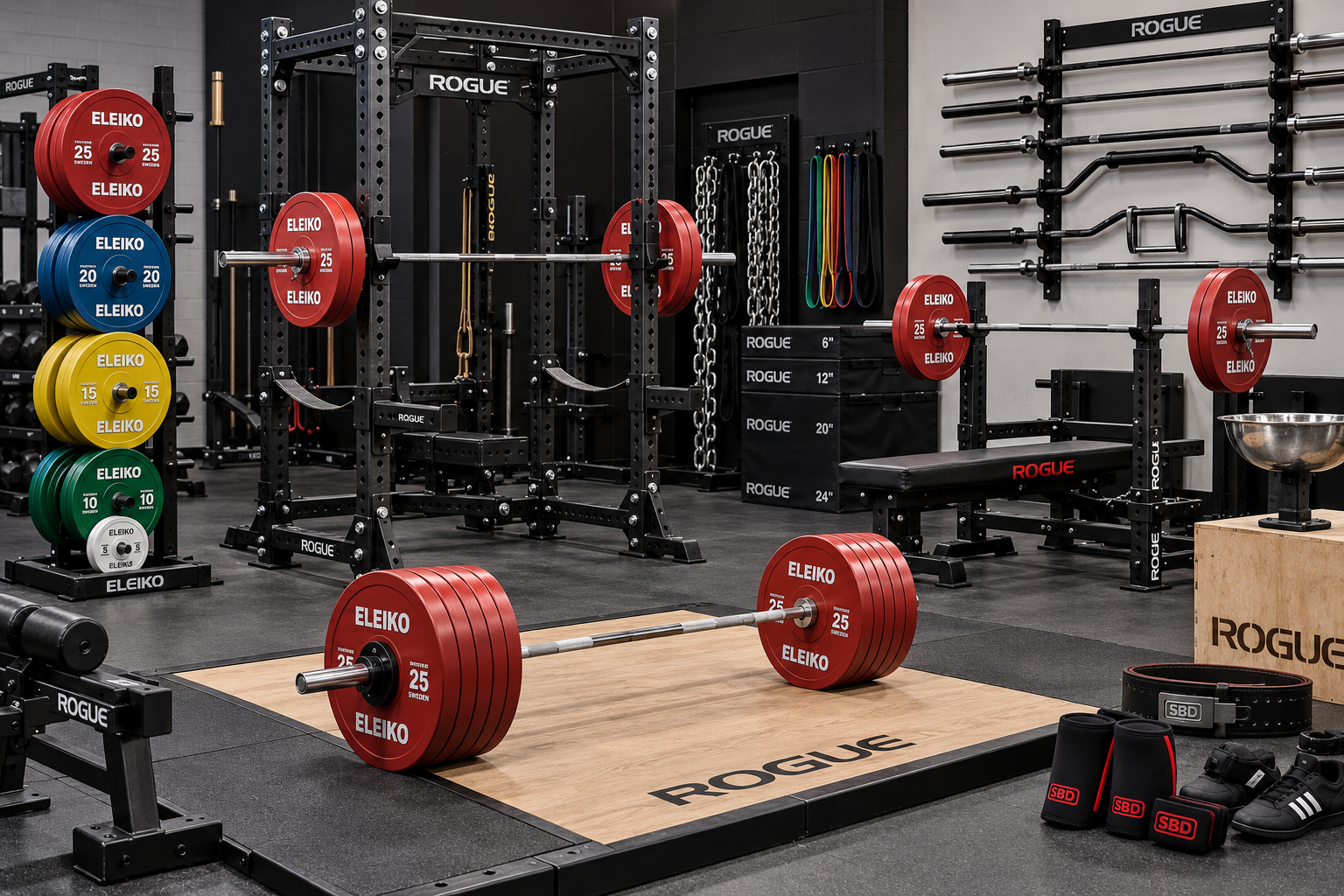
Powerlifting equipment maintenance: guide to tightening and inspection of racks and barbells
Proper maintenance of the equipment used in powerlifting is essential to preserve its functionality, reliability, and durability over time. Racks, barbells, benches, weight plates, and accessories are subjected to high stresses during every workout and require periodic checks to verify that all components are in the condition specified by the manufacturer.
Maintenance does not only consist of cleaning surfaces, but includes visual inspections, checking tightenings, verifying adjustments, and monitoring signs of wear. Scheduling regular checks allows for identifying any anomalies before they can compromise the proper use of the equipment.
Every sports facility should follow the maintenance plan indicated by the manufacturer and document the interventions carried out. Even in home gyms, it is advisable to adopt a simple but constant control routine, especially when using heavy loads.
- Why is maintenance important?
- What to check during inspections
- How frequently to perform checks
- Table of periodic checks
- How to recognize signs of wear
- Cleaning and routine maintenance
- Mistakes to avoid
- How to preserve the investment over time
Why is powerlifting equipment maintenance important?
During strength workouts, every component is subjected to repeated loads. Regular maintenance makes it possible to verify that the rack, bench, and barbell continue to function according to the manufacturer's specifications.
Neglecting periodic checks can encourage the wear of mechanical elements, less precise adjustments, and a progressive deterioration of the structure. Timely intervention, on the other hand, allows you to limit the extent of repairs and keep the equipment efficient for longer.
The technical documentation provided by the manufacturer always represents the primary reference for knowing control methods, components subject to maintenance, and correct procedures.
Why is maintenance a form of prevention?
Periodic inspections allow anomalies to be identified before they become major problems, facilitating scheduled interventions.
Does maintenance affect the lifespan of the equipment?
Regular management of checks and cleaning helps preserve materials, finishes, and adjustment systems over time.
Which components should be checked during the inspection?
Verifications should involve all elements that directly participate in the workout. In the case of the rack, it is advisable to check tightenings, structural stability, adjustment systems, and barbell supports.
For the barbell, it is recommended to carry out a visual inspection of the shaft, sleeves, and gripping surfaces, verifying that there are no deformations, obvious damage, or anomalies in the functioning of moving parts where applicable.
The bench, safety systems, weight plate holders, and other accessories should also be included in the periodic control routine.
What to check on the rack?
It is useful to check the proper tightening of bolts, the overall stability of the structure, the integrity of the uprights, and the functioning of the adjustments.
What checks to perform on the barbell?
It is necessary to check the condition of the surfaces, the correct functioning of the sleeves according to the manufacturer's instructions, and the absence of visible damage.
How frequently should checks be performed?
The frequency of checks depends on the intensity of use of the facility. A gym with numerous users will require more frequent checks than a home gym used occasionally.
Before each workout, it is advisable to carry out a quick visual inspection of the station. At scheduled intervals, more thorough checks can be performed following the instructions given in the technical documentation.
Every intervention should be recorded so as to maintain a history of the maintenance operations performed.
What checks to perform before use?
It is appropriate to verify the stability of the structure, correct positioning of the supports, integrity of the surfaces, and presence of any obvious anomalies.
Why schedule maintenance?
Regular planning allows interventions to be distributed over time and reduces the risk of forgetting important checks.
Table of periodic checks
The following table summarizes the main checks to include in routine maintenance.
| Component | Recommended check | Objective |
|---|---|---|
| Rack | Tightenings and stability | Verify the structure |
| Barbell | Visual inspection | Identify any anomalies |
| Bench | Stability and adjustments | Maintain proper functioning |
| Safety systems | Positioning and integrity | Ensure intended use |
| Weight plates | General conditions | Verify compatibility and state |
| Platform | Surface and fixing | Maintain a stable base |
Operational methods and maintenance intervals must always be verified in the manufacturer's instructions.
When anomalies are identified, it is advisable to suspend the use of the affected component until technical verification.
Why keep a log of interventions?
Recording checks and maintenance facilitates monitoring the state of the equipment and scheduling subsequent interventions.
Why consult the manuals?
The manuals report the correct control, maintenance, and replacement procedures provided for each product.
How to recognize signs of wear?
During inspections, it is important to observe any deformations, corrosion, looseness, abnormal noise, or difficulty in adjustments.
Deep scratches, localized wear of contact surfaces, and components that no longer properly maintain their position may also require technical investigation.
Every anomaly should be evaluated by referring to the manufacturer's instructions before continuing to use the equipment.
When to check tightenings?
Tightenings must be checked according to the maintenance schedule provided by the manufacturer and every time the structure is assembled, moved, or modified.
When to replace a component?
Replacement should take place when the manufacturer provides for it or when an inspection reveals conditions that no longer guarantee the proper use of the component.
How to perform routine cleaning?
Cleaning helps keep surfaces and mechanical components in good condition. It is advisable to regularly remove dust, chalk residue, and dirt using products compatible with the materials indicated by the manufacturer.
The technical flooring should also be kept clean to preserve the stability of the station and facilitate visual inspections of the training area.
An orderly station also makes it easier to identify any anomalies during periodic checks.
What products to use?
It is preferable to use detergents compatible with the equipment finishes, always following the manufacturer's instructions.
Why keep the training area tidy?
A clean space facilitates maintenance operations and makes it easier to identify any damaged components.
What mistakes to avoid during maintenance?
One of the most common mistakes is limiting cleaning while neglecting structural checks. Effective maintenance requires both visual inspections and checks of adjustments and tightenings.
It is also discouraged to use spare parts or accessories not compatible with the structure when the manufacturer does not foresee their use.
Ignoring small signs of wear can make a more complex intervention necessary in the future.
Is it correct to improvise repairs?
Any intervention should respect the manufacturer's instructions and use components compatible with the installed model.
Why not postpone checks?
Anomalies identified promptly are generally easier to manage than problems neglected over time.
How to preserve the investment in the long term?
Scheduled maintenance represents one of the most effective tools to keep equipment intended for powerlifting efficient. Planning regular checks, following the manufacturer's instructions, and documenting interventions allows for more orderly management of the entire lifecycle of the system.
Periodically checking rack tightenings, barbell inspection, accessory compatibility, periodic checks, and station conditions helps reduce the risk of using worn components.
To create an easily inspectable station, it can be useful to choose a professional powerlifting rack designed to integrate with the other elements of the training area and support simple and programmable routine maintenance.
Comments (0)