
Trolley
You have no items in your shopping cart

 Budgets
 Dumbers
 Discs
Discs
 Benches
 Racks and Rigs
 Weights Holders
 Isotonic machines
 Calisthenics
 Cardio
 Kettlebells
 Flooring
 Gym Set
 Accessories
 Combat
 ARTI MARZIALI
 CONTAINER GYM
 Tug-Of-War
 Used Gym Equipment
 PILATES MACCHINARI
 GINNASTICA ARTISTICA
 CAMPI DA PADEL
 Prodotti in Pronta Consegna
 Informazioni
 IRONMAN
 Gift Card
- Donatif
- General information
- 0 I like it
- 30 Views
- 0 comments
- gym flooring, safety flooring, gym safety, shock-absorbing materials
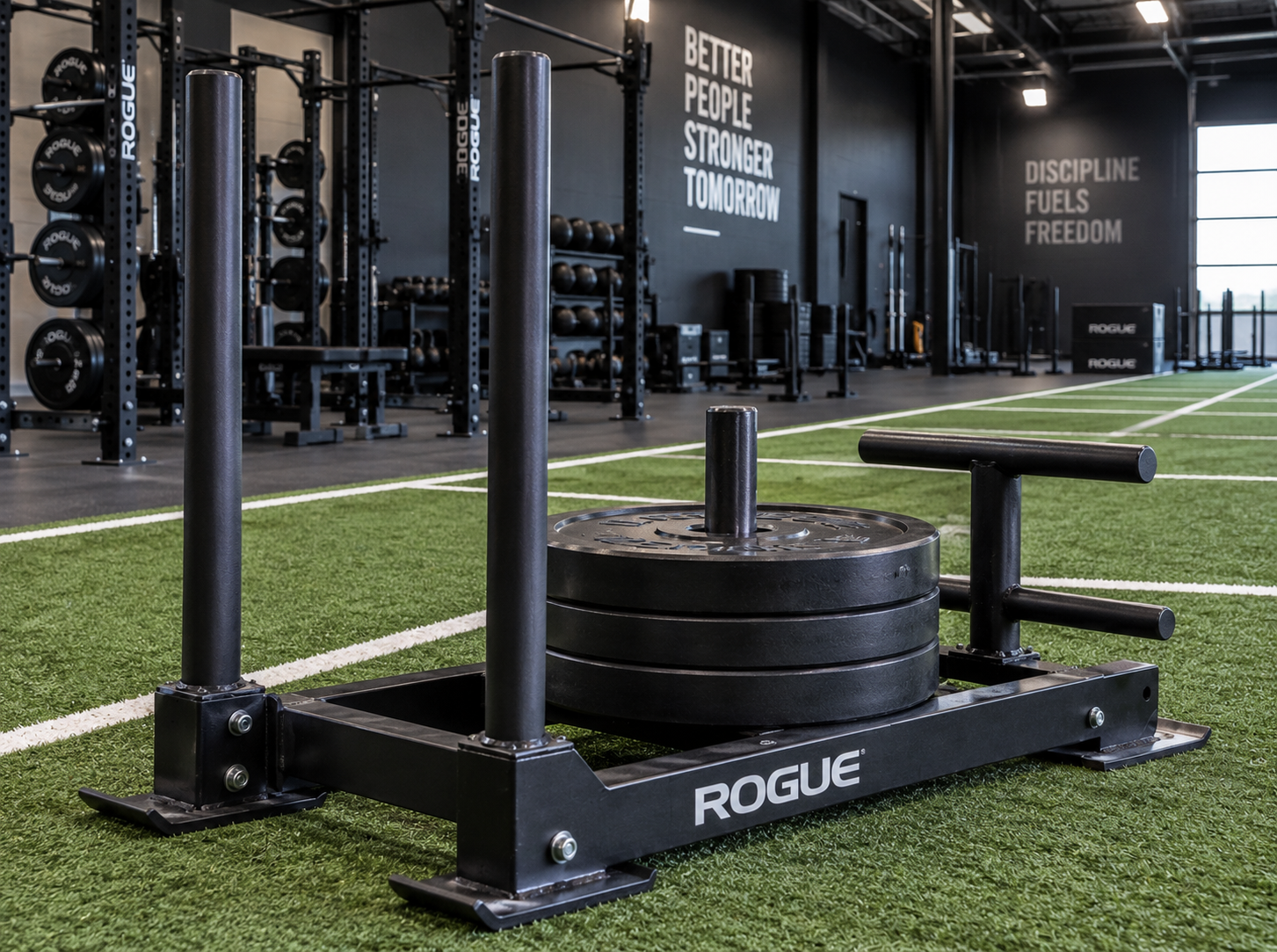
Prowler sled maintenance: skids inspection and tightening
Proper maintenance of the prowler sled allows you to maintain consistent performance, reduce flooring wear, and preserve safety during sled push and sled drag exercises. Regularly checking the skids, fastening points, and general condition of the structure allows you to promptly identify any anomalies before they compromise the equipment's operation.
The intensity of use directly affects the frequency of checks. In professional gyms, where the sled is used daily by numerous users, it is advisable to integrate scheduled checks into normal equipment maintenance procedures.
This guide brings together practical criteria for inspecting the skids, checking the tightness of assembled parts, recognizing major signs of wear, and planning preventive interventions without replacing the specific instructions provided by the manufacturer.
- Quick answer
- What to check
- Frequencies and signs of wear
- Cleaning and routine maintenance
- Checking the tightening
- When to intervene or replace
- FAQ
- Managing maintenance over time
Quick answer
Prowler sled maintenance consists of periodically checking the skids, structure, fastening systems, and floor contact surfaces. Worn skids, loose components, deformations, or abnormal movements must be checked and resolved before use, always following the manufacturer's instructions.
A regular maintenance program helps keep workout quality consistent and limits equipment wear.
The instructions contained in the manufacturer's manual must always take priority over general indications.
Pre-use check
A visual inspection of the sled and track allows you to quickly identify any anomalies before starting the session.
Follow the manufacturer's manual
Each model may require specific control, maintenance, and tightening procedures that must be followed.
What to check
The inspection should include skids, frame, uprights, grip points, weight plate support, and fasteners.
Skids represent one of the parts most subject to wear because they slide continuously on the training surface during every exercise.
Any unusual noises, mechanical play, or structural deformations also deserve a thorough check before the next use.
Skid inspection
The sled skids must have a uniform surface, free from obvious damage, deformations, or abnormal wear that could alter sliding.
Structure verification
The frame must be stable and free from cracks, bends, or components showing unexpected movement.
How often to perform checks
The frequency of checks depends on the intensity of use and the operating conditions of the gym.
A visual check before each workout is good practice, while more thorough checks can be planned periodically depending on the workload.
In professional facilities, it is useful to record checks, maintenance, and replacements in a dedicated equipment management program.
Home use
For occasional use, it is advisable to check the sled before the workout and carry out more thorough checks at regular intervals.
Professional use
With intensive use, it is appropriate to schedule documented inspections and periodic checks of parts subject to wear.
Cleaning and routine maintenance
Cleaning makes it easier to spot any anomalies and helps maintain consistent sled behavior on the training surface.
Residues, dust, and dirt can increase skid wear and alter friction during exercises.
To complete functional area management, you can consult the section dedicated to gym accessories, choosing exclusively products compatible with the model used.
Cleaning the sled
Use products compatible with the structure's materials, always following the manufacturer's instructions and avoiding substances that could damage the finishes.
Cleaning the track
Keeping the training surface free of dust and debris helps preserve both the skids and the flooring.
How to check tightening
Assembled parts may require periodic tightening checks to ensure structural stability during use.
Each check should be performed with appropriate tools and according to the manufacturer's instructions.
Incorrect fastening can affect equipment stability and workout quality.
Checking fasteners
Check that screws, bolts, and other connection systems are intact, correctly positioned, and free of abnormal play.
Check for any play
Any unexpected movement of the structure must be analyzed before using the sled again.
When to intervene or replace
In the presence of heavily worn skids, structural deformations, or damaged components, it is advisable to suspend use until the manufacturer's conditions are restored.
Components showing irregular wear or fasteners that no longer maintain proper stability also require thorough checking.
Improvised repairs or the use of incompatible spare parts can compromise the sled's behavior during training.
When to perform an intervention
Maintenance interventions must be performed exclusively according to the procedures indicated by the manufacturer and using compatible components.
When to replace the skids
If the skids show wear that compromises sliding or no longer meet the manufacturer's conditions, it is advisable to proceed with their replacement.
FAQ
Is it necessary to check the sled before every workout?
Yes, a quick visual inspection helps identify any damage, loose components, or anomalies that could compromise proper use.
Does flooring affect skid wear?
Yes, a sports flooring compatible with the sled and kept clean helps limit wear on both the skids and the training surface.
Managing maintenance over time
Scheduled maintenance allows you to preserve the value of your investment and keep the quality of the training experience consistent in home gyms and professional facilities.
When choosing a new sled, it is also useful to evaluate ease of inspection, accessibility of fastening points, availability of spare parts, build quality, and simplicity of routine maintenance operations.
When applicable, it is advisable to consult the manufacturer's manual and any references to relevant technical standards, always complying with instructions regarding assembly, maintenance, use, and replacement of wear components.
Elements to evaluate
Ease of maintenance, availability of spare parts, material quality, and simplicity of checks represent important criteria when choosing a sled destined for continuous use.
Scheduling checks
Integrating periodic checks into the gym's routine procedures helps promptly identify the first signs of wear and maintain consistent safety, efficiency, and operational continuity.
Comments (0)