
Trolley
You have no items in your shopping cart

 Budgets
 Dumbers
 Discs
Discs
 Benches
 Racks and Rigs
 Weights Holders
 Isotonic machines
 Calisthenics
 Cardio
 Kettlebells
 Flooring
 Gym Set
 Accessories
 Combat
 ARTI MARZIALI
 CONTAINER GYM
 Tug-Of-War
 Used Gym Equipment
 PILATES MACCHINARI
 GINNASTICA ARTISTICA
 CAMPI DA PADEL
 Prodotti in Pronta Consegna
 Informazioni
 IRONMAN
 Gift Card
- Donatif
- General information
- 0 I like it
- 422 Views
- 0 comments
- gym flooring, safety flooring, gym safety, shock-absorbing materials
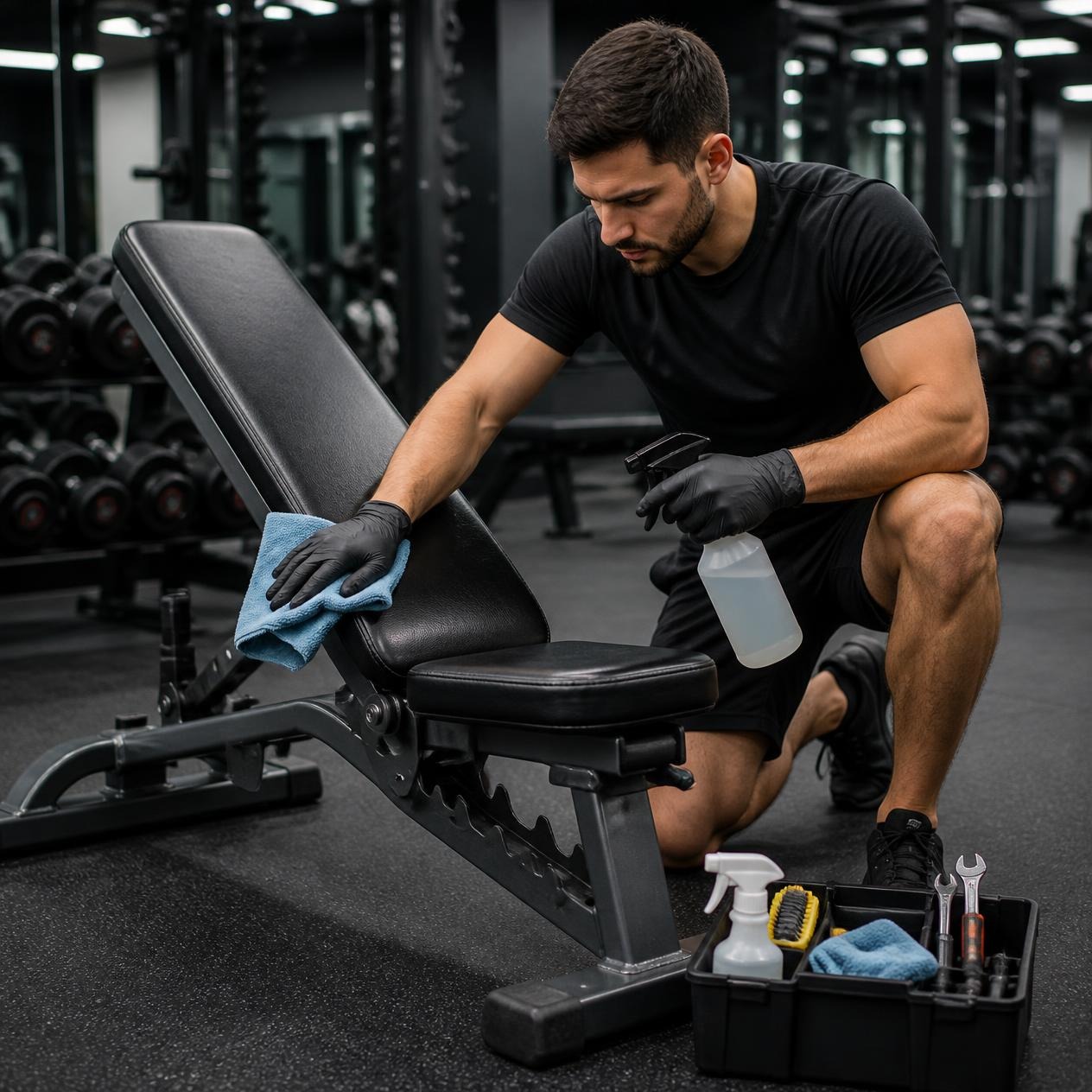
Gym bench maintenance: how to make a professional gym bench last
A weight bench is one of the most important investments for any commercial gym, fitness center, or advanced home gym. Even models built with high-strength steel and professional components are subjected daily to heavy loads, impacts, sweat, dust, and constant adjustments. Without proper maintenance, even the best equipment can lose stability, comfort, and efficiency much sooner than expected.
The good news is that preserving a professional bench requires simple but consistent interventions. Regular cleaning, periodic checks, and proper lubrication allow you to prevent premature wear, oxidation, and mechanical play, keeping performance high over the years. This approach also reduces replacement costs and helps ensure a safe training environment for all users.
In this guide, we analyze the best practices for the maintenance of a professional gym bench, illustrating how to protect upholstery, the frame, paintwork, and adjustment mechanisms, which checks to perform, and which errors to avoid to maximize the equipment's lifespan.
- Why maintenance is fundamental
- Daily cleaning of the bench
- Checking and lubricating mechanisms
- Protecting the frame and paintwork
- How to preserve the upholstery
- Scheduling periodic checks
- Common errors to avoid
- Maintenance as an investment
Why maintenance is fundamental
Every professional bench is used hundreds or thousands of times during its life cycle. Every backrest adjustment, every barbell rack, and every repetition generates stresses that, over time, can affect the precision of the mechanisms and the overall stability of the structure.
Preventive maintenance allows you to identify small signs of wear in a timely manner before they turn into more serious problems. A slightly loose bolt, a worn bushing, or a pin that needs lubrication can be resolved quickly, avoiding more costly damage.
For gym owners, this also means reducing machine downtime, improving user safety, and preserving the value of the investment made in professional equipment.
Greater safety during training
A stable and properly maintained bench offers reliable support even during exercises with heavy loads, reducing the risk of unwanted movements and increasing the user's confidence.
Reducing costs in the long run
Performing routine maintenance is significantly less expensive than premature replacement of equipment or repairing severely damaged components.
Daily cleaning of the bench
Gym equipment cleaning is the first step to preserving any professional bench. Sweat, dust, and residue can actually accelerate the deterioration of surfaces and promote the formation of bacteria, compromising both the aesthetics and hygiene of the equipment.
After each day of use, it is advisable to clean the upholstery and metal parts with mild detergents specific for fitness equipment, avoiding aggressive products containing solvents that could damage coatings and paint.
Regular cleaning also maintains the professional appearance of the gym, conveying to users an attention to quality and care for the environment.
Which products to use
Neutral detergents, microfiber cloths, and non-aggressive sanitizing solutions allow you to eliminate dirt and sweat without altering the surfaces.
How often to clean
In commercial gyms, it is advisable to clean after each use by users and perform a complete sanitization at the end of the day.
Checking and lubricating mechanisms
Adjustable benches are equipped with hinges, guides, pins, and adjustment systems that work continuously. Over time, they can accumulate dust or lose their original smoothness.
Proper adjustable bench lubrication allows you to keep movements fluid, reduce friction, and limit the wear of metal components. It is important to use suitable lubricants and apply them exclusively to the points indicated by the manufacturer.
During these operations, it is also worth checking the tightening of the bolts and the correct functioning of the locking systems, ensuring that every adjustment happens precisely and safely.
Choosing the correct lubricant
Specific products for metal components guarantee protection against wear without excessively attracting dust and dirt.
Checking bolts and pins
A quick periodic check of the tightening helps maintain the stability of the structure even after years of intensive use.
Protecting the frame and paintwork
The frame represents the structural part of the bench and is constantly exposed to humidity, sweat, and small impacts caused by barbells and dumbbells. Quality paint protects the steel, but it still requires some attention.
It is good practice to wipe off any sweat residue after use and periodically check for deep scratches that could promote oxidation.
Models built with high-quality materials and professional surface treatments offer superior resistance to corrosion, helping to maintain an impeccable appearance over time.
Preventing rust formation
A dry, well-ventilated environment and quick removal of moisture significantly reduce the risk of corrosion.
Avoiding accidental damage
Carefully placing barbells and plates helps preserve the surface finish of the structure.
How to preserve the upholstery
The upholstery is among the elements most stressed during training. Continuous compression, rubbing, and contact with sweat can compromise the comfort and resistance of the covering over time.
It is important to clean the covering regularly, avoid sharp objects, and check that there are no cuts or abrasions that could extend with use.
Professional benches built with high-density foams and technical coverings resist deformation better, offering constant comfort even after years of intensive use.
Surface hygiene
Proper sanitization helps keep the equipment pleasant to use and extends the life of the covering.
Monitoring the state of the seams
Small openings can be identified early, avoiding complete replacement of the upholstery.
Scheduling periodic checks
Maintenance should not be occasional but included within a scheduled plan. Defining weekly, monthly, and annual checks allows you to constantly monitor the state of the equipment.
In addition to visual checks, it is useful to note the interventions performed, creating a maintenance history that facilitates the management of the entire gym's machine fleet.
This methodology is particularly useful in fitness centers with high foot traffic, where equipment is subjected to very intense use.
Creating a checklist
A simple checklist allows you to quickly verify tightening, upholstery, adjustments, and the general condition of the bench.
Documenting interventions
Recording dates and operations performed facilitates the planning of future maintenance and improves equipment management.
Common errors to avoid
One of the most frequent errors consists of postponing small interventions, thinking they are not urgent. In reality, slightly worn components tend to deteriorate rapidly if neglected.
It is also inadvisable to use aggressive detergents, abrasive brushes, or non-specific lubricants, which could compromise the surface finishes and the correct functioning of the mechanisms.
Finally, ignoring small noises, mechanical play, or difficulties in adjustments often means postponing a problem that could be solved easily with a timely check.
Improvised interventions
Incorrect repairs can compromise the safety of the bench. When necessary, it is preferable to contact qualified personnel.
Don't wait for a breakdown
Preventive maintenance is always more cost-effective than repair after a failure.
Maintenance as an investment
Considering maintenance as an integral part of gym management means protecting the capital invested in equipment. A properly maintained bench retains performance, comfort, and economic value for many years, reducing the need for premature replacements.
Professional structures made with selected materials, resistant paintwork, and quality components require fewer extraordinary interventions and guarantee greater reliability even in high-intensity usage contexts. For this reason, choosing a professional gym bench designed with attention to durability represents a concrete advantage for any fitness center or advanced home gym.
A routine consisting of daily cleaning, scheduled checks, proper lubrication, and structural verifications allows you to preserve upholstery, mechanisms, and the frame over time, ensuring users have equipment that is always efficient, safe, and ready to support thousands of training sessions.
Comments (0)