
Trolley
You have no items in your shopping cart

 Budgets
 Dumbers
 Discs
 Benches
 Racks and Rigs
 Weights Holders
 Isotonic machines
 Calisthenics
 Cardio
 Kettlebells
 Flooring
 Gym Set
 Accessories
 Combat
 ARTI MARZIALI
 CONTAINER GYM
 Tug-Of-War
 Used Gym Equipment
 PILATES MACCHINARI
 GINNASTICA ARTISTICA
 CAMPI DA PADEL
 Prodotti in Pronta Consegna
 Informazioni
 IRONMAN
 Gift Card
- Donatif
- General information
- 0 I like it
- 169 Views
- 0 comments
- gym flooring, safety flooring, gym safety, shock-absorbing materials
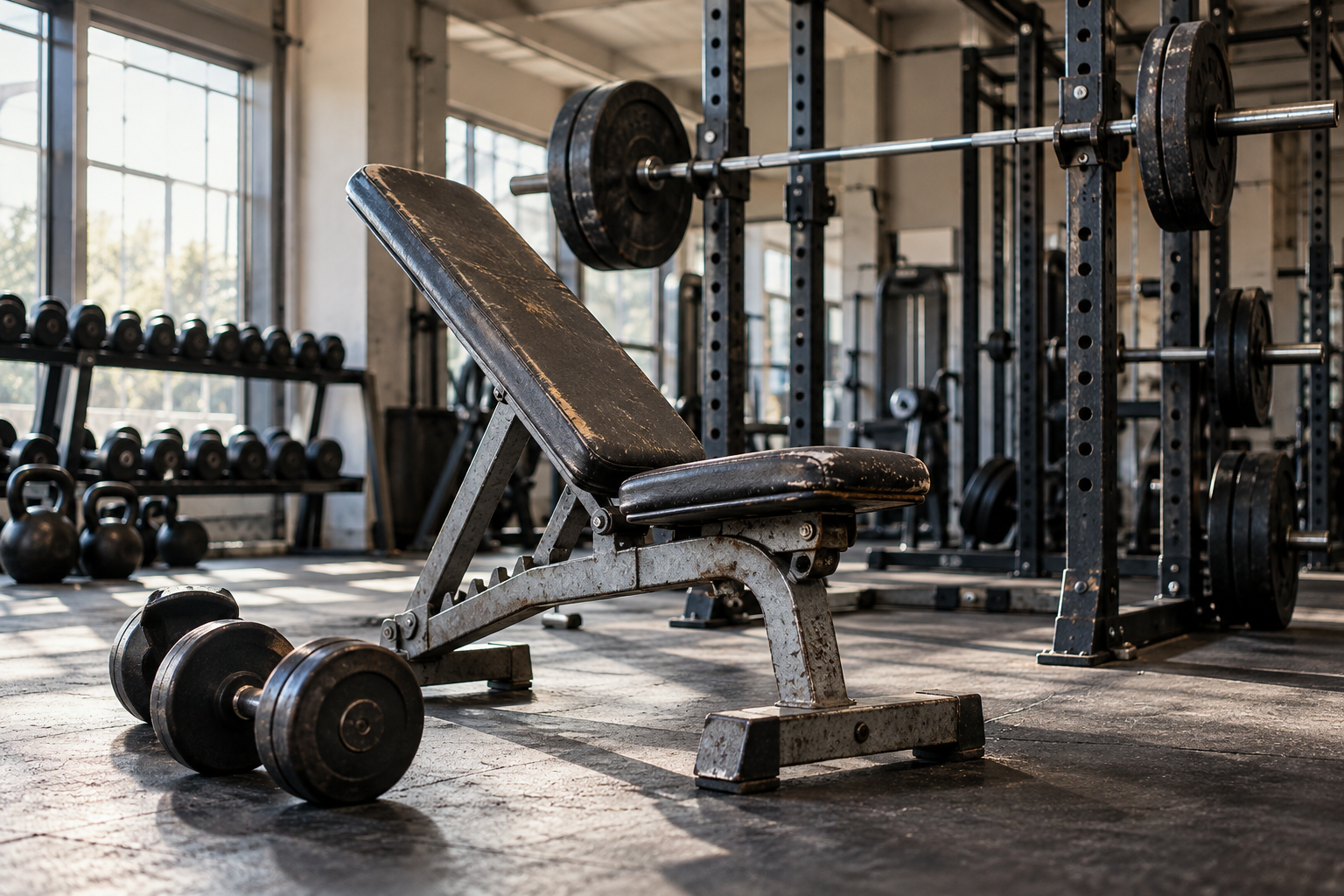
Risks of purchasing used gym equipment: what to check
An offer of used equipment can attract attention for its price and for the opportunity to quickly complete a room. Before deciding, however, the buyer must understand what they are purchasing: a machine identified with an available history, a refurbished product through described activities or equipment of which only photographs and generic statements from the seller are known.
The risks of purchasing used gym equipment depend mainly on missing information and the conditions of the transaction. Convenience cannot be evaluated on the displayed amount alone. Transport, checks, installation and any activities eventually necessary after the purchase contribute to defining the real project, along with the machine's compatibility with users and the facility's space.
This guide helps prepare the request and distinguish the points to clarify, without automatically attributing poor quality to every used product. A useful evaluation considers the individual asset and the documented services. Technical decisions must be supported by appropriate expertise, while the purchasing manager maintains a legible link between the requested function, declared conditions and total supply cost.
- Identify the product before judging the offer
- Distinguish used, overhauled and refurbished
- Examine condition and history without relying on appearance
- Check documentation and future management
- Verify space, transport and installation
- Compare the price with the cost of the complete supply
- Decide based on a legible file
Identify the product before judging the offer
The description must make it possible to recognize the product: model, configuration and available references form the basis of the request.
A generic denomination does not clarify which version is proposed and can make it difficult to retrieve documentation or components. The buyer should know whether the information refers to the single machine or to a type present in multiple specimens.
Used fitness equipment must be evaluated for the function it will perform in the new facility. The availability of an offer does not prove that the product meets the project. Before comparing prices, it is advisable to clarify users, activities and expected conditions of use, so as to recognize the data necessary for selection.
Gather model and configuration
Model and configuration can influence dimensions, adjustments and equipment. If the seller proposes multiple apparently similar specimens, they must be identified separately when conditions differ. Precise reference helps connect the quotation, any evaluation and delivery, avoiding a judgment formulated on one machine being automatically transferred to another.
Verify that images and description match
Photographs should refer to the proposed asset and show the elements useful for preliminary evaluation. A catalog image does not describe the condition of the used specimen. It is useful to ask for clarifications when text and images do not match, keeping the uncertainty visible instead of filling it through favorable assumptions or comparisons with announcements of similar products.
Distinguish used, overhauled and refurbished
The words used in the advertisement must be accompanied by a concrete description.
Overhauled or refurbished can indicate different activities, which the buyer must know in order to evaluate the offer. It is necessary to ask what has been checked or replaced and what documentation is available, without attributing a universal technical content to the label alone.
Refurbished equipment must be compared through the work described on the individual product and the conditions of supply. Work on the upholstery and activity on functional components do not represent the same performance. The proposal must make these differences legible, so that the price can be interpreted with respect to what is actually delivered.
Ask what activities were performed
The seller should be able to indicate performed activities and relevant references, within the limits of available information. An understandable list allows formulating additional questions and avoiding expectations born from the word refurbished alone. If an activity is not documented or described, it must remain a point to clarify when comparing offers.
Separate commercial description and evidence
Evidence may include reports, documents or other information attributable to the specimen. Not every offer will have the same level of detail, but the difference must be considered. A reassuring commercial description does not replace relevant evaluations, just as a recent paint job alone does not prove the condition of all the machine's components.
Examine condition and history without relying on appearance
Appearance offers partial information: superficial marks and functional conditions do not automatically coincide.
The buyer must gather what is available regarding history and known anomalies, avoiding considering a machine reliable just because it looks tidy. The evaluation must refer to the specific equipment and the function it will perform in the new room.
Verification of conditions of use requires expertise and relevant references. An informal test does not describe every possible condition of the machine and does not replace necessary technical activities. The purchasing manager can coordinate information and access, asking what checks were carried out and what further details are needed before confirming the choice.
Describe observed wear and anomalies
Wear and anomalies should be localized and described, without grouping them into a generic formula like normal signs of aging. The distinction makes it possible to understand which elements require clarification. The buyer should not, however, independently deduce the severity of a defect from a photograph alone, especially when it concerns functional components or non-visible parts.
Request an evaluation relevant to the equipment
History can help reconstruct previous activities and replaced components, but it must be read in its context. A document relating to a similar machine does not apply to the proposed specimen. When information is lacking, it is necessary to keep the limit of the evaluation recognizable and consider what checks are necessary for the purchase decision.
Check documentation and future management
Documentation must allow knowing installation conditions and indications relevant to management.
An economically interesting product may prove difficult to insert into the gym program if essential references are missing. Information must be linked to the actual model and version, avoiding using manuals of similar machines as equivalents without confirmation.
The availability of spare parts must be clarified through appropriate channels and on the specific equipment. It is not enough to find apparently identical components online. The buyer should know who will confirm compatibility and how subsequent requests will be managed, without interpreting the simple sale of the asset as an automatic inclusion of assistance or maintenance services.
Retrieve instructions referring to the model
Useful instructions must be able to be kept in the facility's inventory. This allows linking the machine to the control program and relevant activities, without depending on the seller's memory. If documents are not available, the request to retrieve them must be addressed before considering the organization of the service consolidated after delivery.
Clarify assistance and spare parts
Assistance and commercial conditions must be read in the actual formulation of the offer. It is useful to know who to contact, what data to transmit and what services are included or excluded. Clarity on these steps helps compare used alternatives, avoiding attributing a level of support to the proposal that is not described.
Verify space, transport and installation
The fact that a machine was installed elsewhere does not prove that it is suitable for the new building.
Dimensions, accesses and planned activities must be compared with the actual room. The layout must consider use and adjustments, while checks relevant to the property require appropriate professionals and cannot be replaced solely by the seller's experience.
Logistics of used goods must be described precisely. Disassembly, loading, transport and assembly can be entrusted to different parties and are not always included in the price. The purchasing manager must know who will perform each activity and what conditions are necessary to bring the equipment into the planned position without leaving essential steps implicit.
Measure operational footprint in the new premises
The operational footprint includes access, movements and relevant maintenance activities. A machine that fits geometrically may prove uncomfortable or interfere with neighboring stations. The comparison must be carried out on the actual configuration, also verifying accessories and components that might not appear in the summary measurements reported in the sales advertisement.
Agree on disassembly and handling
Possibilities for disassembly should not be deduced from the presence of bolts or previous transport. Methods and responsibilities must be confirmed through relevant references. The delivery path must be measured and described when it presents obstacles, so as to know any additional services before the product is purchased and leaves its original location.
Compare the price with the cost of the complete supply
The total useful for the decision includes the activities necessary for the agreed configuration.
A low selling price may be accompanied by transport costs or interventions yet to be defined. The comparison must make these items visible, avoiding assuming as free what is not mentioned or what requires subsequent evaluation.
Used and refurbished equipment can be examined through offers and documents of the relevant products. The commercial category helps the search, while the economic comparison must refer to the specimen, conditions and services actually proposed. The presence of a product in the catalog does not automatically confirm availability or inclusion of requested services.
List included activities and additional expenses
The prospectus can distinguish the asset, any technical activities and logistic services, with references to the proposals received. Differences must be visible even when comparing used and new. A comparison that uses only the machine for one alternative and a complete supply for the other risks attributing an advantage to perimeters that are not equivalent.
Keep confirmed figures and hypotheses separate
Hypotheses must remain recognizable, especially for activities yet to be evaluated. It is not advisable to invent a precise future expense without relevant data nor to attribute an arbitrary residual life to the product. The manager can identify what is missing to complete the picture and decide what information must be obtained before committing the budget.
Decide based on a legible file
The decision should be able to be reconstructed through a few elements: need of the facility, identification of the asset, documented conditions and cost of the expected perimeter.
This allows justifying the purchase without relying solely on the impression of having found a bargain. Price remains an important criterion, but connected to the function and organization of the new room.
The points conditioning the intervention must be resolved or explicitly managed before the order. Compatibility, documentation and logistic path should not be left to delivery. If a check requires further details, the limit must remain visible in the proposal, so that the client knows what information their decision is based on.
Connect requested function and chosen proposal
The requested function also helps compare less flashy alternatives. A used product can be relevant when it meets requirements and is proposed with legible conditions. Additional equipment does not automatically compensate for an essential limit, while a machine with a more recent appearance must still be evaluated through data and services of the specific offer.
Confirm conditions before ordering
The order must identify the specimen, configuration, included services and expected documents. Any variations that emerged during negotiations must be reported in relevant communications. The file thus moves from selection to the organization of the supply, allowing to verify the correspondence between what was approved and the equipment that will actually be inserted in the gym.
Comments (0)