
Trolley
You have no items in your shopping cart

 Budgets
 Dumbers
 Discs
 Benches
 Racks and Rigs
 Weights Holders
 Isotonic machines
 Calisthenics
 Cardio
 Kettlebells
 Flooring
 Gym Set
 Accessories
 Combat
 ARTI MARZIALI
 CONTAINER GYM
 Tug-Of-War
 Used Gym Equipment
 PILATES MACCHINARI
 GINNASTICA ARTISTICA
 CAMPI DA PADEL
 Prodotti in Pronta Consegna
 Informazioni
 IRONMAN
 Gift Card
- Donatif
- General information
- 0 I like it
- 150 Views
- 0 comments
- gym flooring, safety flooring, gym safety, shock-absorbing materials
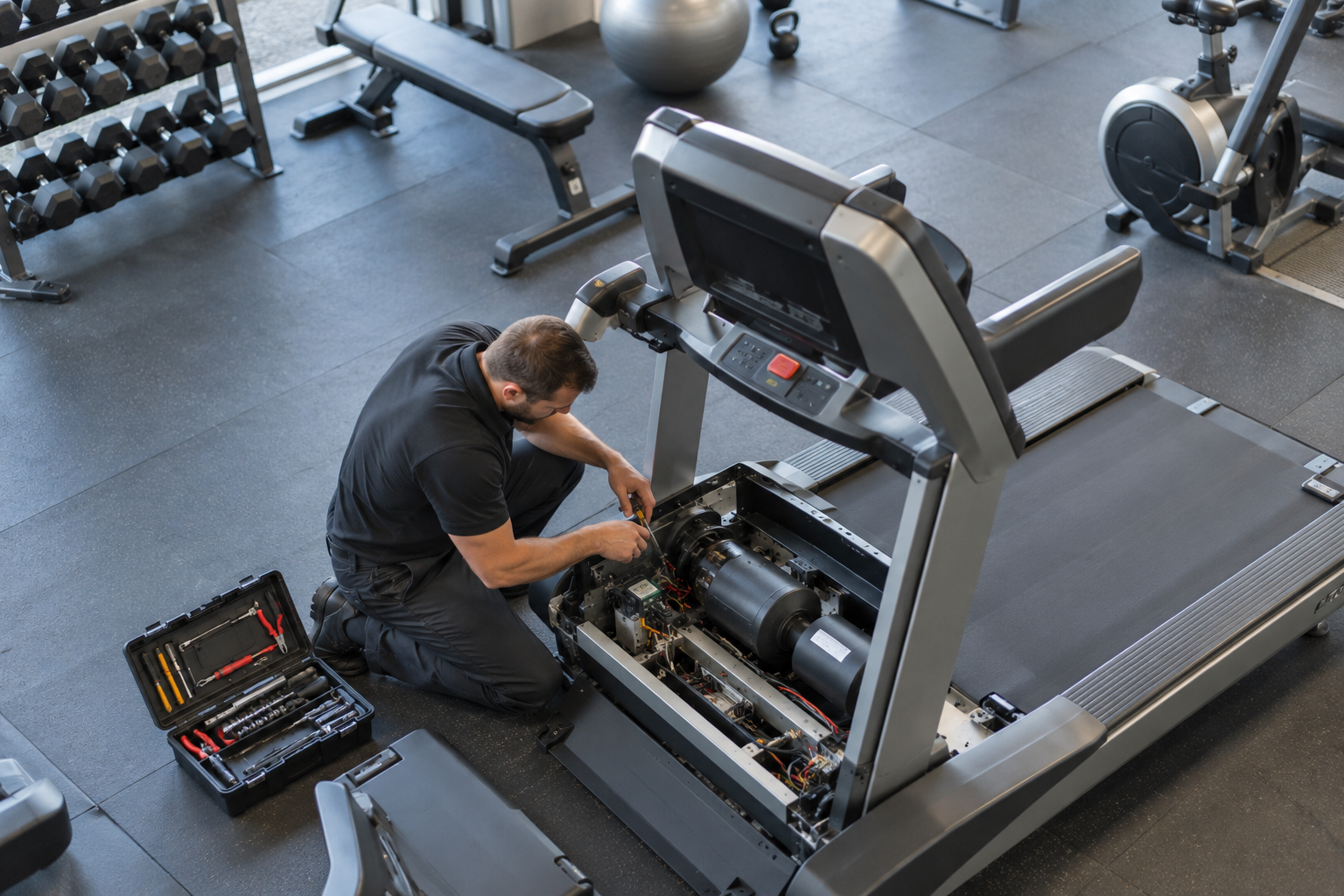
Annual fitness equipment inspection service: checks and costs
Organizing an annual fitness equipment inspection service means protecting the operational continuity of the gym, promptly identifying deteriorated components, and scheduling the interventions necessary to keep the equipment in the intended operating conditions. In a professional sports center, treadmills, strength machines, barbells, racks, and cable systems are subjected to different stresses. For this reason, a generic check is not sufficient to evaluate all maintenance needs.
For a gym manager, the main difficulty consists in distinguishing periodic inspection from routine maintenance, repairs, and any checks required by applicable regulations. The annual inspection can represent a structured moment for evaluating the condition of the equipment, but it does not automatically replace the more frequent checks prescribed by manufacturers or necessary based on the intensity of use.
This guide explains how to set up an inspection program, which elements to check, how to document interventions, and what criteria to use to compare supplier quotes. The objective is to offer operational continuity managers a practical checklist to reduce decision-making uncertainty, without attributing absolute guarantees against breakdowns or accidents to the annual inspection.
- What the annual fitness equipment inspection includes
- Equipment inventory and priority definition
- Checks on cardio machines
- Inspection of strength machines and cable systems
- Checks on racks, barbells, and free weight equipment
- Operational checklist and intervention documentation
- Inspection frequency and anomaly management
- Inspection costs and supplier comparison
- How to plan investment in maintenance
What the annual fitness equipment inspection includes
The annual inspection is a scheduled activity aimed at evaluating the state of the equipment and identifying any maintenance or repair needs. It may include visual checks, functional tests, examination of wear-and-tear components, and evaluation of general operating conditions. The actual content depends on the characteristics of the machines, the manufacturer's instructions, and the agreement stipulated with the service provider.
It is important to clarify that there is no single list of operations valid indiscriminately for all fitness equipment. A treadmill features different electrical and mechanical components than a strength machine, while a rack requires attention to structural connections and safety elements. The program must therefore be built by equipment categories and, when necessary, by individual models.
The manager should consider the inspection as part of a broader gym preventive maintenance system. Annual activities must be integrated with routine checks, instructor reports, and extraordinary interventions when anomalies are identified. A machine that presents an evident problem must not continue to be used while awaiting the scheduled inspection.
Difference between inspection, maintenance, and repair
Inspection consists primarily of the systematic evaluation of the equipment's condition and may include maintenance operations provided for in the contract. Routine maintenance, on the other hand, includes recurring activities such as technical cleaning, checks, and adjustments authorized by the manufacturer. Repair intervenes when it is necessary to restore the operation of a defective component.
These activities can be performed during the same intervention, but they must be distinguished in the quote and in the technical report. An inspection does not necessarily imply the replacement of all worn components, especially when spare parts and additional labor are excluded from the service.
Annual inspection and safety obligations
The annual periodicity must not be interpreted as a universal obligation applicable to any fitness machine. Obligations and control frequencies depend on relevant regulations, equipment characteristics, the context of use, and the manufacturer's instructions.
When applicable, Legislative Decree 81/2008 requires adequate management of work equipment and related safety conditions. Its concrete applicability must be evaluated in relation to the context. The manager should also consider the manufacturers' instructions and any specific requirements provided for certain installations.
Equipment inventory and priority definition
Before organizing an inspection service, it is necessary to know precisely the equipment present in the gym. An updated inventory allows the identification of models, manufacturers, serial numbers, installation dates, and machine locations. This information facilitates the preparation of the intervention and allows the technician to proactively identify any necessary documentation and components.
The inventory should also include the history of breakdowns and previous interventions. A machine that has required frequent repairs may deserve more attention than equipment with limited use and no recorded anomalies. However, the criterion must not be exclusively economic: safety conditions and manufacturer instructions remain a priority.
For facilities with numerous workstations, it is useful to classify equipment based on the frequency of use and the operational consequences of a potential downtime. A machine used continuously during classes may have a greater organizational impact than a workstation used occasionally. This classification helps plan interventions without neglecting necessary checks on less used equipment.
Creating a data sheet for each piece of equipment
Each data sheet should report internal identifier, brand, model, serial number, position in the gym, and references to technical documentation. It is also useful to record the date of the last check, interventions performed, and anomalies yet to be resolved.
Digital management can simplify information retrieval, but a structured register can also be effective. The fundamental element is keeping data updated and accessible to those responsible for maintenance.
Classifying machines according to use and criticality
The definition of priorities can consider intensity of use, equipment age, maintenance history, and availability of alternative workstations. It is useful to distinguish problems that require immediate intervention from programmable activities, while avoiding that the classification be used to postpone potentially dangerous conditions.
For example, an anomaly on a stop device or a structural component requires different management compared to purely aesthetic deterioration. Technical evaluation must determine appropriate measures, including possible temporary exclusion from use.
Checks on cardio machines
Cardio machines include equipment with different technical characteristics, such as treadmills, exercise bikes, ellipticals, and rowing machines. Many models integrate mechanical and electronic components and transmission systems subject to wear. The inspection must be organized according to specific instructions, without assuming that the same operations are appropriate for all machines.
On treadmills, for example, the state of the belt, the sliding system, the transmission components, and the stop devices provided by the model may be relevant. For exercise bikes and ellipticals, pedals, connections, resistance systems, and moving parts also become important. Checks must be performed by competent personnel, respecting precautions related to electrical power supply.
An effective inspection is not limited to turning on the machine and checking that the display works. It is necessary to evaluate relevant operating conditions and identify any signs of deterioration. Unusual noises, vibrations, irregular movements, or abnormal stops may indicate problems that require specific investigation.
Inspection of treadmills
For treadmills, the checklist can include checks of the belt, running surface, structure, accessible connections, and safety devices. Any tension or alignment adjustments must follow the manufacturer's instructions.
Not all treadmills require the same lubrication procedures. Applying unintended products can compromise operation. The technician must verify the model documentation before performing any treatment.
Checks on exercise bikes, ellipticals, and rowing machines
On exercise bikes, it is advisable to evaluate structural stability, adjustment functionality, pedal integrity, and resistance system conditions. On ellipticals, articulated connections and parts subject to repetitive movement take on particular importance.
For rowing machines, checks depend on the resistance system and construction configuration. Chains, belts, guides, and return systems must be examined when present, following the specific procedures indicated by the manufacturer.
Inspection of strength machines and cable systems
Strength machines use mechanical systems designed to guide or condition movement during exercise. Some use weight stacks connected by cables and pulleys, while others use levers and loadable plates. The inspection must consider these differences, because wear patterns and critical components are not identical.
In cable systems, it is particularly important to check the condition of connections, terminals, and sliding components. A damaged cable or a compromised connection can represent a significant criticality. The evaluation must follow the criteria provided by the manufacturer and not be based solely on the absence of obvious breakage.
Lever machines instead require attention to fulcrums, connections, plate supports, and adjustment devices. Upholstery and grips also contribute to the workstation's functionality. The deterioration of coverings can make replacement necessary, especially when it compromises the user's correct positioning.
Cables, pulleys, and connections
The strength machine inspection should include an examination of components subject to movement and fastening conditions. For cable systems, the technician must check for signs of deterioration provided in the manufacturer's documentation, including any damage to the coating or terminals.
It is not appropriate to intervene with makeshift repairs on cables or replace components with elements of unverified characteristics. When a component no longer meets the required conditions, it must be replaced with an appropriate solution.
Weight stacks, guides, and adjustments
Weight stacks must move according to the planned configuration, without abnormal interference. Guides, selection pins, and stop systems require checks consistent with the machine's instructions. Any difficulties in load selection must be evaluated before allowing use.
Seat and support adjustments must function correctly and maintain the selected position. A defective adjustment system can compromise the quality of the exercise and require suspension of the workstation until restored.
Checks on racks, barbells, and free weight equipment
Free weight equipment requires a different inspection compared to machines equipped with transmission systems. Racks, benches, barbells, dumbbells, and supports must be checked considering structural integrity, connection conditions, and wear of contact surfaces. Even in the absence of motorized components, deterioration can occur that affects safety.
For racks, it is important to check for deformations, damage, and connection anomalies. Safety systems, such as bars and supports designed to intercept the load, must be checked according to the manufacturer's instructions. Any unauthorized structural modifications can alter the conditions for which the equipment was designed.
Barbells require attention to the condition of the shaft, sleeves, and any rotation systems. Plates and dumbbells must be examined to identify loose components, deformations, or deterioration. The frequency of checks must be consistent with the intensity of use and available instructions.
Racks, benches, and safety systems
The verification of racks and benches can include visual inspection of structures, examination of connections, and evaluation of adjustment systems. When floor anchorages are present, checks must consider technical instructions relating to installation.
Adjustable benches require particular attention to the mechanisms that maintain the selected inclination. A device that does not correctly lock the position represents an anomaly to be resolved before returning to service.
Barbells, plates, and dumbbells
On barbells, it is useful to check for permanent deformations, sleeve damage, and operating anomalies of moving parts. Maintenance operations must respect the manufacturer's instructions, avoiding interventions that could alter the system's characteristics.
Plates and dumbbells must be checked to identify damage that could compromise grip or load stability. Storage systems must also maintain adequate conditions, avoiding disorderly accumulations and unforeseen overloads.
Operational checklist and intervention documentation
A gym equipment maintenance checklist makes the inspection process more orderly and allows the condition of machines to be compared over time. However, the checklist must not replace the manufacturer's technical instructions. Its role is to organize information, verify that planned activities have been considered, and document any anomalies.
For each piece of equipment, it is useful to record identifier, inspection date, assigned technician, operations performed, and verification result. When problems are identified, the report should describe the criticality and indicate necessary actions. It is important to distinguish completed activities from interventions yet to be authorized or scheduled.
Documentation allows the manager to maintain a searchable history. This facilitates budget planning, comparison between suppliers, and the identification of equipment requiring recurring interventions. Complete registration does not automatically prove that every risk has been eliminated, but it constitutes an important tool for the organized management of maintenance.
Checklist before inspection
Before intervention, it is advisable to verify that the inventory is updated, machine instructions are available, and instructor reports have been collected. The manager should also identify equipment already excluded from use and communicate known anomalies to the technician.
It is useful to agree on access to workstations and intervention times, avoiding interference with workouts. When activities on electrical or mechanical components are planned, relevant safety procedures must be respected.
Checklist after inspection
At the end of the intervention, the manager should receive a report identifying the inspected equipment, operations performed, and any limitations found. The document should distinguish usable machines from those requiring further intervention before being returned to service.
It is also important to verify which spare parts were installed and which activities remain excluded from the service. Unresolved anomalies must be included in an action plan with clearly defined responsibilities and priorities.
Inspection frequency and anomaly management
The annual inspection represents a possible organizational reference point, but it must not be considered sufficient in every situation. Some equipment may require daily, weekly, or periodic checks according to manufacturer instructions and conditions of use. Session intensity and the presence of wear components can influence the schedule.
For a gym with a high number of members, maintenance should be distributed throughout the year. This allows timely identification of anomalies and reduces the concentration of interventions in a single period. The annual inspection can therefore perform an overall control function and planning update.
When an instructor or user reports abnormal behavior, a clear procedure must be provided. The machine must be evaluated and, if the problem can compromise safety, excluded from use until verified. It is incorrect to continue using defective equipment simply because the scheduled check is planned for subsequent months.
Routine checks between inspections
Routine checks can include visual observations, verification of the functionality of accessible devices, and identification of abnormal noises or movements. Activities must be defined according to equipment instructions and the skills of the assigned personnel.
Instructors can contribute by promptly reporting problems, but must not perform technical repairs for which they lack training or authorization. The distinction of responsibilities helps maintain safer management.
Managing machine downtime without compromising service
When a workstation must be excluded from use, it is useful to apply clear signage and prevent accidental use. The manager should record the cause of downtime and organize the necessary technical verification.
The availability of alternative equipment can help temporarily reorganize workouts. However, operational continuity must not be achieved by returning a machine to service before the conditions that caused its exclusion have been resolved.
Inspection costs and supplier comparison
The cost of an annual inspection service depends on the number of equipment items, their type, initial conditions, and operations included in the intervention. A gym with numerous cardio machines may present different needs compared to a room dedicated primarily to free weights. Geographical location and technical assistance availability can also influence the quote.
To correctly compare offers, it is necessary to verify which activities are included. Some services may exclusively include checks and evaluations, while others may provide adjustments, routine maintenance, or specific replacements. Spare parts, transport, and extraordinary interventions could be billed separately.
The lowest price does not necessarily represent the economically best choice. An poorly documented inspection or one inadequate for machine characteristics can leave important criticalities unresolved. Comparison should therefore be based on skills, technical content, clarity of the report, and assistance conditions.
What to verify in the quote
A quote should identify the number of equipment items involved, inspection categories, and any exclusions. It is useful to check whether additional costs are provided for out-of-schedule interventions, component replacement, and travel.
The manager should also ask which documents will be delivered at the end of the inspection. A detailed report allows understanding of performed activities and planning of any subsequent actions.
Technician skills and spare parts availability
Supplier selection must consider experience on the types of equipment present and the ability to follow the instructions of respective manufacturers. Specific skills may be required for interventions on electrical systems or structural components.
The availability of compatible spare parts is an additional evaluation criterion. When a machine presents a deteriorated component, knowing supply times and conditions helps plan operational downtime without resorting to makeshift replacements.
How to plan investment in maintenance
Fitness equipment maintenance should be considered a routine item in the gym's economic management. Scheduling checks and interventions allows expenses to be distributed over time and provides better knowledge of the machine park's condition. This approach does not eliminate unexpected breakdowns, but can improve the facility's organizational capacity.
The budget should distinguish scheduled inspection, routine maintenance, spare parts, and extraordinary interventions. It is also useful to provide for periodic evaluation of older equipment, especially when recurring breakdowns or difficulties in sourcing components occur. The decision between repair and replacement must consider safety, total cost, and operational utility.
When equipment requires frequent interventions, it may be appropriate to compare repair costs with those of an alternative solution. For machines that cannot be restored to adequate conditions, replacement may be necessary. In other cases, documented maintenance and compatible components can allow continued use according to manufacturer instructions.
Evaluating spare parts and equipment replacement
Before authorizing a major repair, it is useful to verify spare parts availability, general machine conditions, and intervention costs. An economic evaluation must be accompanied by a technical one, because savings cannot justify keeping unsafe equipment in service.
When replacement concerns machines or training accessories, the manager can compare the features of gym equipment and accessories relevant to the facility's needs, verifying compatibility and intended use. However, the availability of an alternative product must not be confused with the possibility of using unapproved components on existing machines.
Indicators to monitor maintenance effectiveness
To evaluate the program, it is useful to monitor the number of breakdowns, downtime, intervention costs, and anomaly frequency by equipment category. This data allows identification of recurring situations and verification of whether scheduled activities meet operational needs.
Indicators must be interpreted considering intensity of use. A machine used continuously may require more interventions than a rarely used workstation, without this automatically demonstrating lower manufacturing quality.
Building an annual inspection plan
An effective plan can start with inventory updates, proceed with verification of manufacturer instructions, and define a control calendar consistent with the needs of individual equipment. The annual inspection can be used to evaluate the overall state of the machine park and update intervention priorities.
The calendar should be coordinated with gym hours and peak periods. Advance planning facilitates technician organization and allows users to be informed of any temporary workstation unavailability.
Protecting operational continuity through verifiable criteria
The choice of an annual inspection service should be based on the supplier's ability to perform relevant checks, document found conditions, and clearly indicate necessary interventions. The value of the service depends not only on the number of checked machines, but also on the quality of information the manager receives.
A structured program allows maintenance, risk management, and economic planning to be linked. For the gym manager, having an updated inventory, searchable technical reports, and anomaly procedures means being able to make more conscious decisions, reducing cost uncertainty and improving equipment management over time.
Comments (0)