
Trolley
You have no items in your shopping cart

 Budgets
 Dumbers
 Discs
 Benches
 Racks and Rigs
 Weights Holders
 Isotonic machines
 Calisthenics
 Cardio
 Kettlebells
 Flooring
 Gym Set
 Accessories
 Combat
 ARTI MARZIALI
 CONTAINER GYM
 Tug-Of-War
 Used Gym Equipment
 PILATES MACCHINARI
 GINNASTICA ARTISTICA
 CAMPI DA PADEL
 Prodotti in Pronta Consegna
 Informazioni
 IRONMAN
 Gift Card
- Donatif
- General information
- 0 I like it
- 48 Views
- 0 comments
- gym flooring, safety flooring, gym safety, shock-absorbing materials
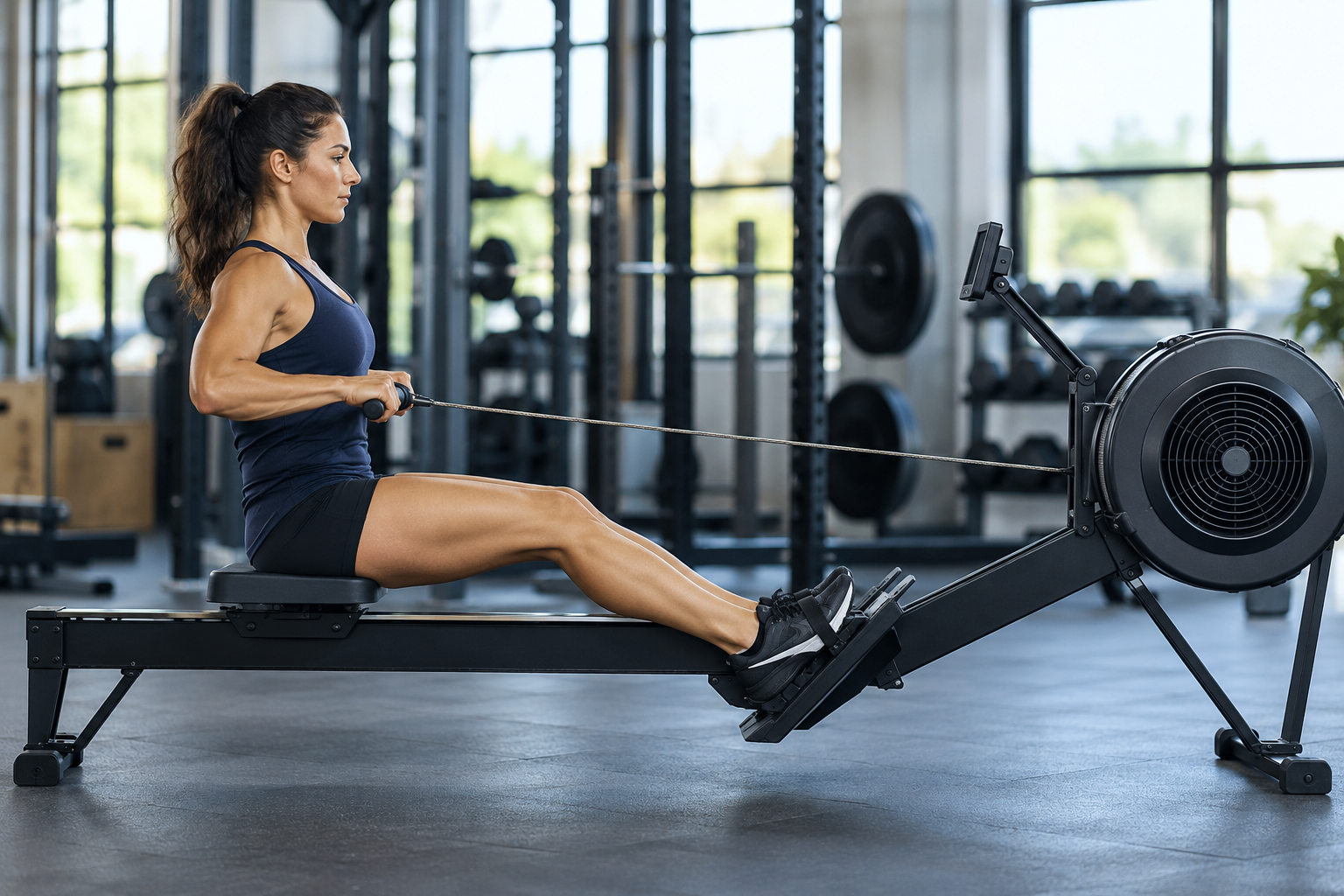
Central-Pull or Separate-Arm Rowing Machine: Differences and Selection
The difference between a central-pull rowing machine and one described as peripheral-pull mainly concerns how the user holds and moves the pulling mechanism. Central-pull models typically have a single handle connected to the transmission; other designs may use separate arms or levers. These commercial descriptions do not explain every feature of a machine.
Pull geometry must be distinguished from the system generating resistance. A central handle does not automatically mean air resistance, and two arms do not establish how the effort behaves. The specific design, adjustments, transmission and manufacturer's documentation determine how the model works.
This guide explains practical comparisons without assigning universal performance to either category. Movement, use, space and maintenance should be connected to the actual setting: home training, a shared cardio room or supervised activity. Start with the required movement and operating conditions rather than the label on the product page.
- What does central pull mean?
- What changes with separate arms?
- Resistance is a separate feature
- Technique and comfort during movement
- Comparing training and display data
- Size and positioning
- Maintenance and shared use
- Which configuration should you choose?
What does central pull mean?
A central-pull rower normally has a handle held with both hands and connected to a transmission point in front of the user. During the drive, the seat slides and the handle moves towards the body according to the intended technique. Hand movement has some freedom but remains influenced by the transmission exit point and user position. This freedom does not remove the need for instruction: posture, sequence and recovery require proper learning.
Assess handle and transmission
Observe grip shape, accessibility and the system's behaviour on the return. Cables, straps and chains require the checks and care specified by the manufacturer; they are not interchangeable based on a general preference. The handle's starting distance can affect access. A supervised trial helps assess whether the setup is manageable, while maintenance requirements and permitted use must come from the machine's documents.
What changes with separate arms?
On models with side levers, each hand holds a separate element and movement follows the arms' geometry more closely. Range and direction depend on pivot locations and the design's degrees of freedom. Some products are described as closer to rowing with oars, but resemblance does not establish equivalence with rowing on water. Assess what the machine actually allows rather than turning a marketing image into a universal technical property.
Check coordination requirements
Two arms can change the coordination task but do not automatically guarantee independent work on each side: linkages and resistance arrangements differ. Check how the levers should move and whether specific exercises or configurations are permitted. Do not improvise one-sided use simply because there are two grips. Follow instructions and consider whether the user can maintain a controlled movement, especially with an unfamiliar system.
Resistance is a separate feature
The effort-generating system must be assessed separately from handle arrangement. Air, water, magnetic and hydraulic systems, as well as combinations, appear in the market, with behaviour depending on the design. Products sharing a label do not necessarily provide identical feel or progression. Relevant information includes available adjustment, response to pace and the manufacturer's explanation of intensity. The number of levels belongs to that model's scale, rather than a common scale across brands.
Understand what the control changes
A control may change a system parameter without directly representing overall exercise difficulty. Pace, technique and working method also contribute to perceived effort. Two settings with the same number are therefore not necessarily comparable on different machines. Ask how controls work and whether adjustment during movement is allowed. Evaluate the ability to modulate work for the user rather than treating the highest number as proof of quality.
Technique and comfort during movement
A rower must allow movement consistent with its instructions, but execution also depends on learning. On sliding-seat configurations, the sequence of legs, trunk and arms requires control; recovery should not become an uncontrolled fall into the starting position. Machine geometry may make parts of the sequence more or less intuitive, without replacing instruction. No category is universally more comfortable because proportions, adjustments and familiarity influence the experience.
Observe supports and settings
Check the seat, footrests, securing systems and ability to reach the handle without forced positions. Adjustments must follow instructions and keep feet in the prescribed position. During a trial, assess entry, stopping and exit as well as the first strokes. Stop if pain or unexpected symptoms occur and seek appropriate advice. Equipment selection must not become a promise of individual medical suitability.
Comparing training and display data
For general training, the ability to repeat work with controlled technique and understandable parameters matters. Handle type should suit the programme and the user's ability to manage the machine. Neither category guarantees calorie expenditure: duration, intensity and personal characteristics affect the outcome. Display estimates depend on the methods used and should not be presented as exact measurements of every individual's expenditure.
Use numbers consistently
Time, estimated distance, stroke rate and power can help track training if available and interpreted under the system's definitions. Keep conditions reasonably consistent and record relevant settings when comparing sessions. Do not assume distance or resistance has identical meaning across machines. For structured tests or specific comparisons, establish what the machine measures and how those measurements are defined. A feature-rich screen does not correct poor technique.
Size and positioning
A central transmission may run along the machine's axis, while side arms can require clearance throughout their sweep. This does not make either category universally more compact: dimensions and movement must be checked on the actual model. Consider the rower in operation rather than only in storage. Allow access to the seat, mounting and dismounting, and routes clear of moving parts. Minimum requirements come from instructions and applicable site conditions.
Store only as permitted
Where space is limited, check whether folding, lifting or vertical storage is permitted. Shape alone does not imply these options. Establish who should perform the operation, where the structure should be held and how it locks in the approved position. A compact folded machine can still need substantial working space. Consider cleaning access and keeping children or other users away from moving components during permitted handling.
Maintenance and shared use
Each design has components to inspect: seat rail, fasteners, handles, transmission or lever joints as applicable. Frequencies and procedures must not be invented as identical for every model. Follow the manufacturer's plan and identify which tasks staff may perform. New noises, abnormal play or irregular recovery need assessment before continued use. Do not select lubricants or repairs by analogy with other equipment, because materials and mechanisms can require different treatment.
Consider room management
In a shared gym, consider adjustment, visible instructions, cleaning between users and available support. Declared intended use must match the setting; functioning during a short trial is insufficient evidence. Check spare parts and model identification, particularly when the equipment supports daily operations. Noise may affect placement, but should be evaluated in context rather than assigning a universal sound level to a technology.
Which configuration should you choose?
A central handle can suit a project requiring that movement when the user manages the sequence well. An arm-based model may be appropriate where its path and characteristics match the programme. These are possibilities to assess, not claims of superiority. Compare geometry, resistance, adjustments, operating dimensions, permitted use and maintenance. If essential information is missing, request clarification rather than infer specifications from the commercial category.
Base the decision on the actual model
The cardio machines section provides equipment to explore during selection. Consult documents and conditions for each proposal, keeping pull mechanism separate from resistance. A trial, where available, connects technical information with the actual movement. The suitable choice supports understandable use, manageable operation and the facility's requirements without relying on unproven equivalence or benefits.
Comments (0)