
Trolley
You have no items in your shopping cart

 Budgets
 Dumbers
 Discs
 Benches
 Racks and Rigs
 Weights Holders
 Isotonic machines
 Calisthenics
 Cardio
 Kettlebells
 Flooring
 Gym Set
 Accessories
 Combat
 ARTI MARZIALI
 CONTAINER GYM
 Tug-Of-War
 Used Gym Equipment
 PILATES MACCHINARI
 GINNASTICA ARTISTICA
 CAMPI DA PADEL
 Prodotti in Pronta Consegna
 Informazioni
 IRONMAN
 Gift Card
- Donatif
- General information
- 0 I like it
- 88 Views
- 0 comments
- gym flooring, safety flooring, gym safety, shock-absorbing materials
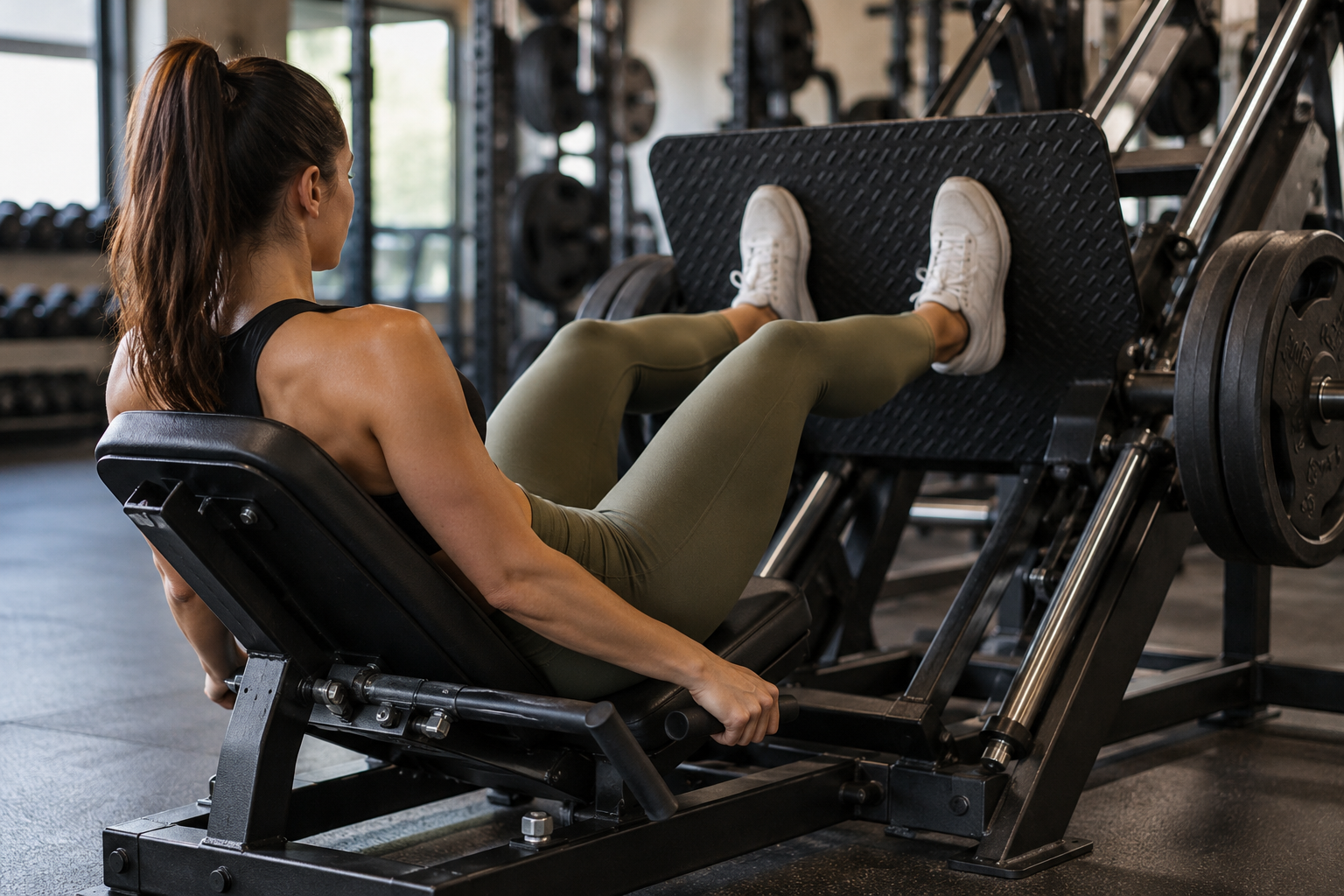
Gluteus press: involved muscles and technique for effective training
The gluteus press is an isotonic machine designed to train the gluteal muscles through a guided hip extension movement. In professional gyms, it represents an interesting solution for integrating lower body work with targeted, easily programmable exercises that are adaptable to users with different levels of experience. Its effectiveness, however, depends on the configuration of the machine, the correct adjustment of the workstation, and the user's ability to perform the movement without excessive compensations.
Understanding the relationship between gluteus press: involved muscles and technique allows fitness center managers to evaluate the utility of this equipment within a professional training program. The gluteus maximus is generally the primary muscle involved in the hip extension movement, but the participation of other muscle groups varies depending on body position, trajectory, and the machine's construction characteristics. Not all gluteus press machines on the market use the same movement system.
For a gym manager or purchasing manager, knowing these differences is fundamental for choosing equipment consistent with customer needs. This guide explores functional anatomy, execution technique, adjustments, frequent errors, and programming criteria, with particular attention to aspects that affect training quality and the daily management of the weight room.
- How the gluteus press works
- Muscles involved during the exercise
- Machine adjustment and starting position
- Correct execution technique
- Common errors and compensations to avoid
- Training programming with the gluteus press
- Differences compared to other glute exercises
- Selection criteria for a professional gym
- Evaluating the investment and operational continuity
How the gluteus press works
The gluteus press is generally designed to guide a hip extension movement through resistance applied to the lower limb. The user pushes against a platform or dedicated support, keeping the trunk stabilized through specific supports. The movement allows the hip extensor muscles to be trained without necessarily requiring the management of a free barbell.
Biomechanical characteristics depend on the machine's configuration. Some models provide an upright or slightly inclined position, while others use supports for the chest and pelvis. The direction of the push can also change, influencing the distribution of resistance during the arc of movement. For this reason, it is important to check the manufacturer's instructions before applying generic technical guidelines.
A properly designed machine should allow the user to maintain a stable position and develop force along a trajectory compatible with individual mobility. The presence of a guided movement does not eliminate the need for motor control, but it can facilitate learning and the repeatability of the exercise.
The hip extension movement
Hip extension consists of the movement through which the femur moves posteriorly relative to the pelvis or the pelvis moves relative to the femur, depending on the configuration of the exercise. In the gluteus press, resistance is generally countered through the action of the extensor muscles.
The trajectory must be performed without seeking an excursion greater than the available mobility. When the hip movement ends, continuing to push through excessive lumbar extension does not necessarily increase the useful work of the glutes and can introduce undesirable compensations.
Guided resistance and load control
Gluteus press machines can use weight stacks, levers with plates, or other resistance systems. Each solution presents different characteristics in terms of adjustment, load progression, and resistance curve.
The ability to change the load gradually represents an advantage for gyms that welcome users with different strength levels. However, the value selected on the machine should not be considered directly comparable to that of equipment characterized by different geometries.
Muscles involved during the exercise
The main objective of the gluteus press is to train the muscles responsible for hip extension. The gluteus maximus generally plays the most relevant role, while other muscles can contribute to the movement or stabilization of the pelvis. The effective involvement depends on the starting position, joint angle, and technique used.
It is important to distinguish between primary motor muscles and stabilizer muscles. In fact, during the exercise, some structures contribute directly to the production of the force necessary to move the resistance, while others keep the body in a functional position. This distinction helps instructors to correctly interpret the sensations reported by users.
The gluteal musculature in hip extension works in coordination with other muscle groups. It is not possible to isolate a single muscle completely through a simple change in foot position, but it is possible to modify the mechanical demands and the relative contribution of the different structures.
Gluteus maximus as the primary mover
The gluteus maximus is one of the main muscles responsible for hip extension. During the pushing phase of the gluteus press, it contributes to developing the force necessary to move the lower limb against resistance.
Its participation varies along the joint arc and also depends on the level of initial hip flexion. To favor effective work, it is important to maintain control of the pelvis and use an excursion compatible with individual mobility.
Hamstrings and stabilizer muscles
The hamstrings, in particular the semitendinosus, semimembranosus, and the long head of the biceps femoris, can contribute to hip extension. Their involvement also depends on the position of the knee, as they are biarticular muscles.
The gluteus medius and other muscles of the pelvic region can participate in stabilization, while the abdominal and trunk muscles contribute to maintaining a controlled position. The specific role varies according to the machine structure and the characteristics of the user.
Machine adjustment and starting position
Correct adjustment represents one of the most important factors for achieving an effective movement. A gluteus press may feature chest supports, hand grips, foot platforms, and starting position adjustment systems. Each element must be adapted to the anthropometric characteristics of the user.
An inadequate setting can modify the trajectory, limit useful excursion, or encourage trunk compensations. For this reason, in professional gyms, it is appropriate for instructors to know the available adjustments and know how to explain to users how to use them correctly.
The starting position should allow for a stable support and a balanced distribution of pressure on the supports. The pelvis must remain controlled during the movement, without requiring excessive tension in the shoulders or the lumbar region.
Adjustment of supports and platform
The supports must be positioned according to the manufacturer's instructions, considering height, limb length, and hip mobility. A platform that is too far away can make it difficult to reach the starting position, while an excessively close adjustment can limit the freedom of movement.
It is useful to perform a few repetitions without significant load to verify that the trajectory is comfortable. Any pressure points or interferences must be resolved before increasing the intensity.
Pelvis position and trunk control
The pelvis should maintain a controlled orientation during the exercise. It is not necessary to seek an identical position for everyone, but it is important to avoid excessive oscillations that transfer part of the movement to the lumbar spine.
The abdominal muscles contribute to trunk stabilization, while the machine's supports provide mechanical support. The user must learn to take advantage of these elements without stiffening unnecessarily or holding their breath throughout the entire set.
Correct execution technique
The gluteus press technique should prioritize control, continuity of movement, and appropriate load management. After adjusting the machine, the user assumes the position intended by the manufacturer, stabilizes the trunk, and positions the foot on the support. The push is then performed through hip extension, avoiding sudden movements.
During the concentric phase, the goal is to develop force without excessively modifying the position of the pelvis. The return phase should be controlled, allowing the muscles to manage the resistance without letting the load fall. The execution speed must be consistent with the program and the machine's characteristics.
A correct gluteus press execution technique does not necessarily require reaching the mechanical limit of the equipment at every repetition. The useful excursion is that which allows the movement to be maintained predominantly at the hip level, respecting individual joint characteristics.
Push phase and muscle activation
The push phase starts from a stable position, with the foot properly placed and the trunk controlled. The user extends the hip against resistance, avoiding using the momentum of the torso to complete the movement.
The sensation of work should be compatible with the action of the gluteal muscles, but subjective perception alone does not represent a precise measure of muscle activation. The technician must observe above all the quality of the trajectory and the ability to maintain control.
Return phase and eccentric control
During the return, the lower limb moves back toward the starting position through a controlled hip flexion. The resistance must be managed without losing contact with the supports or allowing sudden movements.
A controlled eccentric phase contributes to maintaining muscle tension and allows for verifying the stability of the execution. The rhythm can vary according to the goals of the program, but it should remain repeatable during the set.
Common errors and compensations to avoid
One of the most frequent errors in the gluteus press consists of using an excessive load relative to the user's control capacity. When resistance exceeds a manageable level, the movement can become discontinuous and involve trunk or pelvic compensations. In these conditions, increasing the weight does not necessarily correspond to a more effective stimulus for the gluteal muscles.
Another error concerns seeking excessive excursion. Some users attempt to push their foot as far as possible, continuing the movement through lumbar hyperextension. This behavior modifies the distribution of work and can make the final phase of the repetition less controllable.
For instructors, it is important to observe the movement from different angles and distinguish normal individual variations from obvious compensations. Correction should start from adjusting the machine and reducing the load before introducing more complex technical instructions.
Lumbar hyperextension during the push
Lumbar hyperextension occurs when the user excessively accentuates the extension of the spine to complete the movement. It can be encouraged by too high a load, inadequate adjustment, or the search for an excursion greater than that available at the hip level.
To limit it, it is useful to keep the trunk stable and stop the push when it is no longer possible to continue through hip movement. A reduction in load can facilitate learning the correct trajectory.
Using momentum and loss of control
Movements that are too fast can lead the user to take advantage of the machine's inertia rather than controlling the resistance. This behavior makes the stimulus less uniform and can increase stress on mechanical components.
An effective progression should prioritize technically stable repetitions before increasing the weight. The goal is not to perform the movement as slowly as possible, but to maintain a speed compatible with the required control.
Training programming with the gluteus press
The gluteus press can be inserted into programs dedicated to muscle hypertrophy, general conditioning, and strengthening the lower limbs. Its placement in the session depends on the athlete's goals and the other planned exercises. In some programs, it can be used after demanding multi-joint movements, while in others it can represent a main exercise for targeted work on hip extension.
The choice of sets, repetitions, and load should consider experience, recovery capacity, and overall training volume. There is no universally superior number of repetitions for glute training. It is possible to obtain useful stimuli through different intervals, provided the work is sufficiently demanding and technically controlled.
For a professional gym, the ability to quickly adjust resistance makes the machine suitable for individualized programs. However, instructors should avoid applying identical progressions to all users, especially when mobility, strength level, and familiarity with the equipment change.
Programming for glute hypertrophy
In hypertrophy-oriented programs, the gluteus press can be used with sufficiently demanding sets and a volume consistent with the rest of the session. Indicative ranges of 8-15 repetitions can represent a practical starting point, without constituting a mandatory rule.
Progression should be based on the quality of the repetitions and the ability to gradually increase the work performed. Increasing the load while maintaining a stable trajectory is generally more useful than seeking rapid increases accompanied by compensations.
Adaptation for beginners and advanced users
For beginner users, it is appropriate to dedicate the first sessions to learning the adjustments and the movement. Moderate loads and controlled repetitions allow for developing familiarity with the machine.
Advanced users can use more articulated progression strategies, modifying volume, intensity, and distribution of sets. Even in these cases, technical quality must remain a priority criterion.
Differences compared to other glute exercises
The gluteus press represents one of the possible solutions for training hip extension, but it does not necessarily replace other exercises dedicated to the gluteal muscles. Hip thrusts, squats, lunges, and deadlifts have different biomechanical characteristics and can contribute in a complementary way to programming.
The main difference concerns how the resistance is applied and the level of stabilization required. A guided machine can reduce some needs for balance and coordination, allowing the user to focus more on the intended movement. Free exercises, on the other hand, generally require wider management of motor variables.
For a fitness area manager, it is useful to consider the gluteus press as part of a diversified range of equipment. The choice of equipment should allow instructors to propose different stimuli, avoiding overlaps that lack a real function in the program.
Gluteus press and hip thrust
The hip thrust involves a hip extension movement with the trunk supported and resistance applied generally in the pelvic region. The gluteus press instead uses a guided configuration that can involve a push performed with one lower limb.
Differences in the resistance curve and body position can modify muscle demands. It is not correct to establish an absolute superiority of one exercise without considering individual goals, technique, and characteristics.
Gluteus press, squats, and lunges
Squats and lunges involve multiple joints and require significant coordination between the hip, knee, and ankle. The gluteus press generally allows more focus on the hip extension movement, even while involving other stabilizer muscles.
A balanced program can use both categories of exercises. Multi-joint movements contribute to general strength development, while guided machines can offer additional opportunities to manage training volume.
Selection criteria for a professional gym
The choice of a gluteus press for a professional gym should start from analyzing user needs and the configuration of the weight room. Dimensions, adjustments, resistance system, and ease of use are important parameters, but must be evaluated together with construction quality and the availability of technical assistance.
A machine intended for intensive use must maintain constant functional characteristics during consecutive sessions. The quality of pins, bearings, guides, and adjustment systems can influence the fluidity of the movement and the need for maintenance interventions. It is therefore appropriate to request precise technical information, avoiding comparisons based exclusively on aesthetic appearance.
When evaluating professional isotonic machines, the purchasing manager should also verify compatibility with other existing equipment. A gluteus press can effectively complete a zone dedicated to the lower limbs, provided it meets concrete needs and does not represent a simple duplication of functions already available.
Ergonomics and adjustment options
The machine should allow for adjustments appropriate for users with different heights and body proportions. Supports, platforms, and starting position must be easily adaptable, preferably through intuitive and clearly identifiable systems.
A complex adjustment can slow down usage during peak hours and increase the risk of incorrect settings. For this reason, it is useful to verify the practicality of the controls through a direct test, when possible.
Structural quality and mechanical characteristics
The robustness of the frame and the quality of the connections contribute to overall stability. Fluidity of movement should also be evaluated, considering any friction, mechanical play, and abnormal noises.
Technical specifications should indicate usage limits, installation methods, and maintenance procedures. The presence of complete documentation facilitates equipment management and allows for comparing different solutions through verifiable criteria.
Evaluating the investment and operational continuity
The purchase of a gluteus press must be included in the overall planning of the weight room. The initial price represents only one component of the investment, while component durability, maintenance, availability of spare parts, and frequency of use affect the effective cost over time. An apparently affordable machine may be less interesting if it requires frequent interventions or has adjustments that are poorly suited to customers.
For a gym manager, it is useful to estimate the number of users who could regularly use the equipment and evaluate its placement relative to other stations dedicated to the lower limbs. A rational distribution of machines can improve training flows and reduce waiting times, especially during peak hours.
The evaluation should also include the level of training required for instructors. A guided machine can facilitate learning but does not eliminate the need to explain adjustments, technique, and usage limits. Investing in staff preparation contributes to enhancing the equipment's characteristics and improving the member experience.
Total cost of ownership and maintenance
The total cost of ownership includes purchase, transport, installation, scheduled maintenance, and any extraordinary interventions. To correctly compare multiple machines, it is useful to consider a homogeneous period of use and estimate the main expenditure items.
The availability of spare parts and qualified assistance can help reduce downtime. Easily accessible components and documented maintenance procedures represent concrete advantages for facilities that use the equipment daily.
Practical criteria for the purchasing decision
Before proceeding with the purchase, the gym manager should verify the machine's compatibility with available space, the variety of adjustments, and the quality of movement. It is also important to consider the user profile and the presence of other equipment that trains the same muscle groups.
The evaluation of gluteus press: involved muscles and technique must translate into a choice consistent with the goals of the fitness center. A machine that allows for controlled hip extension, intuitive adjustments, and a gradual progression of load can be a useful resource for programs dedicated to strength and glute hypertrophy.
For a professional facility, the value of the investment depends on the ability to integrate the equipment into a complete training offering. Construction quality, ergonomics, instructor training, and scheduled maintenance contribute to maintaining reliable performance and ensuring usage consistent with customer needs over the long term.
Comments (0)