
Trolley
You have no items in your shopping cart

 Budgets
 Dumbers
 Discs
 Benches
 Racks and Rigs
 Weights Holders
 Isotonic machines
 Calisthenics
 Cardio
 Kettlebells
 Flooring
 Gym Set
 Accessories
 Combat
 ARTI MARZIALI
 CONTAINER GYM
 Tug-Of-War
 Used Gym Equipment
 PILATES MACCHINARI
 GINNASTICA ARTISTICA
 CAMPI DA PADEL
 Prodotti in Pronta Consegna
 Informazioni
 IRONMAN
 Gift Card
- Donatif
- General information
- 0 I like it
- 166 Views
- 0 comments
- gym flooring, safety flooring, gym safety, shock-absorbing materials
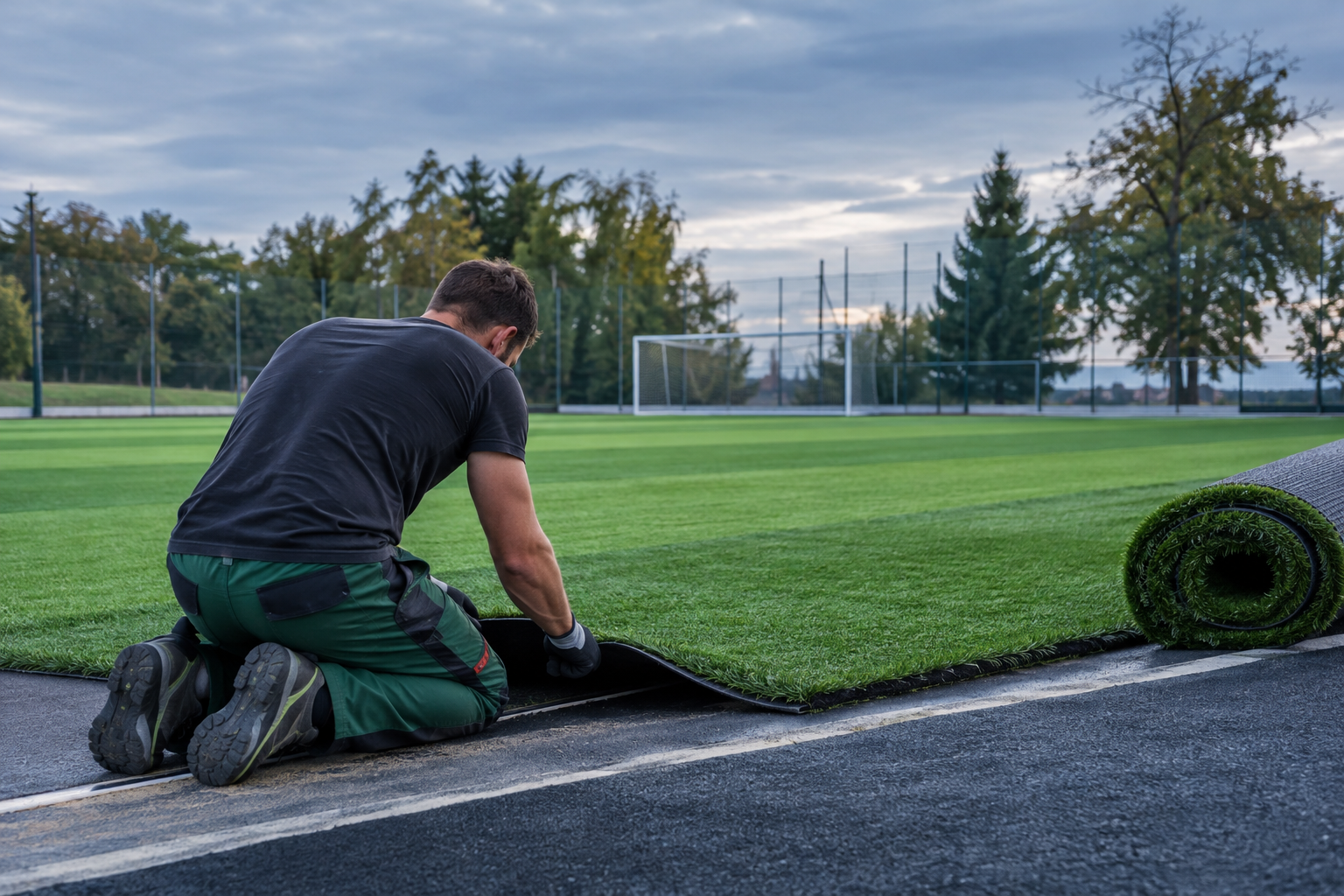
Artificial turf soccer field: organizing project and installation
Installing an artificial turf soccer field requires decisions that precede the installation of the surfacing. Ground, support system, water management and construction site organization must be compatible with the intended activity and site conditions.
The installation of an artificial turf soccer field must be treated as a complete project. A suitable material does not compensate for an unverified support, while a well-coordinated construction site allows for checking the workmanship before they are covered by subsequent phases.
This guide helps the manager prepare questions and documents for designers and operators. It does not assign universal measures or solutions: sports requirements, works and procedures must be verified for the specific intervention by competent figures.
Before requesting a price, describe type of use, frequency, available area and connected services. A field intended for lessons and recreational activity may have different organizational needs than one designed for events. Applicable conditions must be clarified before choosing the system.
For example, in a facility that remains partially open during work, the plan must distinguish user access from site routes. It is not enough to anticipate material delivery if there is then no suitable storage or if vehicles interfere with activities. These conditions must be discussed before setting dates.
Another case is the replacement of an existing surface that presents stagnation. The comparison between offers should clarify whether it includes only the new surfacing or also investigations and interventions on the causes. Without this distinction, prices could describe different works and leave the initial problem unresolved.
The manager can use these scenarios to prepare questions common to all operators. Answers must indicate who performs the checks, what data is needed and how outcomes will be recorded before proceeding to the next phase.
- Define field and service
- Know site and support
- Choose the synthetic system
- Water, levels and preparatory works
- Coordinate installation and equipment
- Estimates and responsibilities
- Open and maintain the field
Define field and service
Activities and users
Indicate what activities the field will host, which groups will use it and how access will be distributed. A usage forecast helps discuss surface characteristics, maintenance and available time for interventions. Distinguish commercial assumptions from data already observed in the facility.
If you anticipate competitions, check with the competent organization for relevant references and procedures. Do not deduce sports suitability from a generic description of the surfacing. The system and configuration must be evaluated against the effectively foreseen use and event.
Initial document
Gather activities, known constraints and open checks into a shared request. Indicate project contacts and information still needed. A common basis allows suppliers to formulate more comparable proposals and professionals to identify conditions to explore further.
Do not fix every component before knowing the site. The initial document can indicate functions and expected performance while leaving verification of solutions to designers. Alternatives should be explained through technical and operational consequences, not just price differences.
Know site and support
Survey and access
An adequate survey must represent levels, boundaries, obstacles and access. Verify how vehicles and materials will enter and where they can park during work. Sufficient space for the finished field may not be sufficient for all construction site operations.
Clarify area availability and conditions that can influence its use with the help of competent figures. Any administrative and authorization checks depend on the location and project. The presence of a previous sports activity does not automatically demonstrate the possibility of carrying out the new intervention.
Ground evaluations
The appointed professional must identify the necessary investigations for ground and support. Do not choose a standard stratigraphy just because it was used in another facility. Site conditions may require different preparations and affect schedule and workmanship.
If the intervention concerns an existing field, gather information on the previous system and observed problems. Depressions, stagnation or recurring repairs require deeper investigation before covering the surface. A new surfacing does not automatically solve the cause of a support defect.
Choose the synthetic system
Components working together
Evaluate the complete system, not just the carpet: support, any intermediate layers, surfacing and other planned components must be compatible. Request sheets and instructions that identify the proposed configuration and conditions for installation and use.
Similar visual characteristics do not demonstrate equivalent performance. Ask which data are relevant to the activity and what checks are required. Manufacturer declarations must refer to the actual system, without being automatically extended to replaced components or undocumented combinations.
Maintenance right from the choice
Examine how the system will be cleaned, checked and maintained. Ask what equipment and skills are needed and how to organize activities between bookings. A product should not be selected assuming that maintenance is zero because the surfacing is synthetic.
Any specific performance and conditions of use must be documented by the supplier. If infill material is planned, verify characteristics, management and applicable conditions with competent operators. Avoid replacements decided solely on the availability or cost of an apparently similar material.
Water, levels and preparatory works
Water management
Water management must be designed relative to site and system. A surfacing described as draining does not prove by itself that the entire field is capable of handling expected conditions. Support, connections and discharge points must be evaluated by competent figures.
The project should clarify which works and controls precede installation. If critical points exist, identifying them beforehand allows discussing the solution without intervening on an already completed field. Conditions observed during work must be communicated to the designer.
Prepared surface controls
Before installing the system, verify that the support meets the requirements indicated in the project and product instructions. Planarity, levels and other relevant parameters must be checked with appropriate methods. Visual inspection does not replace required measurements.
Assign a contact person for the handover between preparation and installation. If a non-conformity emerges, record and resolve it before the next phase. Covering an unverified condition can make it harder to identify and correct a problem later.
Coordinate installation and equipment
Sequence of works
Define delivery times, storage and site availability. Materials must be stored according to instructions and protected from incompatible work. Ask the installer what environmental and operational conditions installation requires, avoiding a schedule based solely on the arrival date.
To guide your request among sports products you can consult Donatif; this consultation does not confirm a specific supply or installation of artificial turf soccer fields. Services, skills and available systems must be verified directly with the appointed operators.
Field lines and equipment
Markings and equipment must match the project and planned activity. Verify how they will be made and checked before opening. A configuration change may require a drawing update, not just a verbal agreement between operators.
Goals, fences and other elements require their own specifications and instructions, including installation and maintenance. Fasteners must be consistent with system and support. If lighting or other systems are present, coordinate interventions with qualified professionals avoiding unevaluated temporary connections.
Estimates and responsibilities
Comparing the same perimeter
Request offers that distinguish preparatory works, sports system, installation, equipment and checks. Indicate what is already available and what remains to be ascertained. A seemingly convenient total can exclude essential activities present in another proposal.
Check configuration, quantities and supply conditions. If a component can be replaced, ask how compatibility will be verified and who will approve the change. An initial sheet does not necessarily describe what will be delivered if the product changes during the order.
Managing variations and unforeseen events
The schedule should distinguish confirmed steps and activities dependent on checks. Clarify how further interventions will be evaluated and who can approve them. Relevant contractual conditions must be examined with the support of the competent professional when necessary.
Also define coordination responsibilities and communication methods. The manager should not reconstruct who performed a piece of work only after a problem occurs. Keeping drawings, confirmations and records helps connect project, materials and actually realized interventions.
Open and maintain the field
Check before use
Gather final documents and results of expected controls and ascertain that open points have been resolved. Opening must follow applicable procedures and checks by competent people. A test match does not replace technical control of the system.
Provide staff with instructions, contacts and reporting procedures. Identify who can suspend use and how any damage is handled. The first operational shift must know field conditions without relying on informal explanations from those who followed the construction site.
Daily management plan
Organize cleaning and maintenance according to the installed system's instructions. Assign activities and record controls, interventions and observed conditions. Do not automatically apply methods used on other surfaces or introduce products not intended to solve an occasional problem.
After startup, compare use and intervention needs with initial hypotheses. Staff observations can guide the schedule and communications to users. Technical modifications, instead, require appropriate verification to keep the system consistent over time.
Comments (0)