
Trolley
You have no items in your shopping cart

 Budgets
 Dumbers
 Discs
Discs
 Benches
 Racks and Rigs
 Weights Holders
 Isotonic machines
 Calisthenics
 Cardio
 Kettlebells
 Flooring
 Gym Set
 Accessories
 Combat
 ARTI MARZIALI
 CONTAINER GYM
 Tug-Of-War
 Used Gym Equipment
 PILATES MACCHINARI
 GINNASTICA ARTISTICA
 CAMPI DA PADEL
 Prodotti in Pronta Consegna
 Informazioni
 IRONMAN
 Gift Card
- Donatif
- General information
- 0 I like it
- 799 Views
- 0 comments
- gym flooring, safety flooring, gym safety, shock-absorbing materials
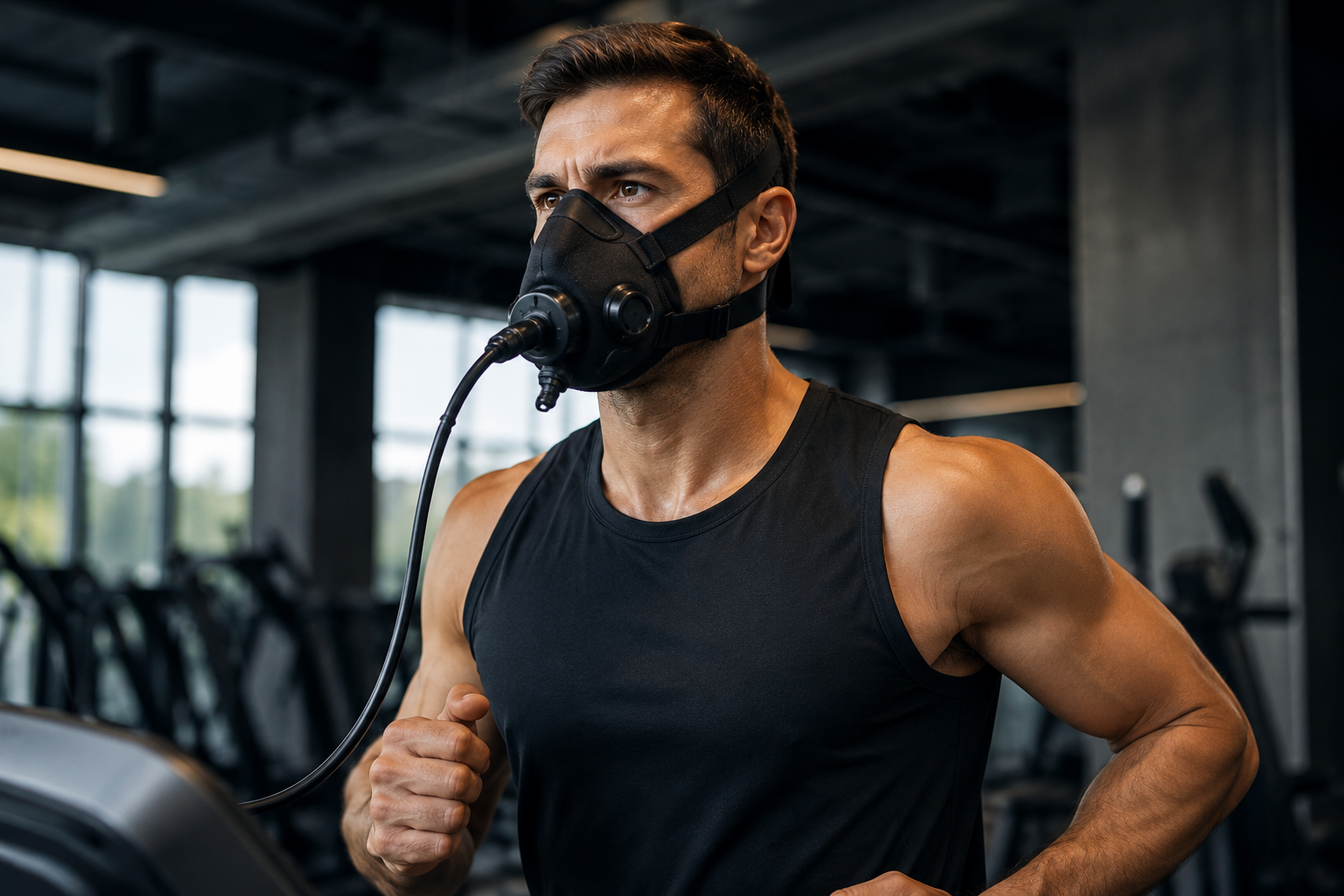
Hypoxia Masks: ergonomics and comfort for prolonged sessions
During hypoxia training, the quality of the experience depends on many elements working together: the generator, control system, parameter monitoring, and accessories used by the athlete. Among these, the mask represents an apparently simple but decisive component, because it is the direct connection point between the hypoxic system and the user.
A prolonged session requires concentration, breath control, and the ability to maintain a constant rhythm. A mask that is not ergonomic, is uncomfortable, or is not suited to the shape of the face can become a constant source of distraction, reducing the quality of the training and negatively influencing the perception of the service offered.
The choice of a comfortable hypoxia mask must therefore consider several aspects: materials used, fit, air seal, ease of cleaning, and availability of spare parts. For performance-oriented athletes, comfort is not an aesthetic detail, but a necessary condition to make the most of every session with a hypoxia generator.
Importance of the mask in hypoxic training
The mask used with a hypoxia generator has the fundamental task of transferring air to the athlete with the oxygen concentration programmed by the system. Its effectiveness depends on the ability to create a stable connection between the device and the face, avoiding leaks and ensuring a correct flow throughout the session.
In a professional context, this component must be evaluated with the same attention reserved for the main technological elements. An inadequate mask can, in fact, compromise the quality of the protocol even when the generator and monitoring system are working correctly.
Athletes who use hypoxia to improve their preparation must be able to maintain maximum focus on the technical movement and effort control. An uncomfortable accessory, on the other hand, introduces an element of disturbance that can limit the continuity of the training.
Connection between athlete and technology
The mask represents the most direct point of contact between the person and the hypoxic system. For this reason, it must offer a balance between technical functionality and comfort during use.
Good design allows the athlete to perceive the technology as a natural support and not as an obstacle during the session.
Influence on the quality of the session
During intense training, even small discomforts can affect concentration. Excessive pressure on the face, irritating materials, or poor stability can change the way the athlete manages breathing and intensity.
Choosing the correct mask therefore contributes to maintaining better continuity throughout the protocol.
Ergonomics and comfort during prolonged sessions
Hypoxia sessions can have significant durations and require continuous use of the mask. In these conditions, ergonomics becomes an essential parameter to ensure a good user experience.
An ergonomic mask must adapt to the morphology of the face without creating excessive pressure points. At the same time, it must maintain an effective seal to avoid flow losses that could alter the correct functioning of the system.
Comfort derives from a combination of different factors: structure shape, softness of materials, adjustment of the straps, and uniform pressure distribution. No element can be evaluated in isolation.
Reduction of distractions during training
An athlete using an advanced hypoxic system must be able to dedicate all their energy to the session. A well-designed mask reduces the need for constant adjustments and allows for more natural breathing.
This aspect becomes particularly important in high-intensity training, where every interruption can affect the quality of the work performed.
Adaptation to long-duration sessions
The needs of short-term use can be very different from those of a prolonged session. For long periods, lightness, breathability, and the ability to maintain comfort over time become fundamental.
A professional solution must be designed with the continuity of use in mind.
Materials and construction quality of the mask
The materials used in the construction of the mask directly influence the comfort, durability, and safety of the accessory. A product intended for frequent use must withstand numerous training cycles while maintaining constant characteristics.
The construction quality concerns both the part in contact with the face and the connection components with the hypoxic system. Each element must contribute to creating a reliable and easy-to-use solution.
Athletes seeking high performance must pay attention to the choice of materials, because comfort during many hours of use also depends on the physical characteristics of the mask.
Advantages of medical-grade silicone
Medical-grade fitness silicone is often considered an interesting solution for parts in contact with the skin due to its softness, resistance, and ability to better adapt to surfaces.
A quality material helps reduce the risk of irritation and improves the feeling of comfort during prolonged use.
Resistance and durability over time
A professional mask must maintain its elasticity and functionality even after numerous uses. Poor-quality materials can deteriorate more quickly, changing the fit and the ability to ensure a good seal.
The quality of the components therefore represents an investment in the continuity of the system.
Fit and adherence to the face
Fit is one of the most important aspects in choosing a hypoxia mask. Every athlete has different anatomical characteristics, and an effective solution must adapt to different shapes without compromising comfort.
Good adherence allows for maintaining the flow provided by the generator and reduces leaks that could influence the precision of the protocol. At the same time, excessive pressure can create discomfort during use.
The goal is to find a balance between stability and naturalness, allowing the athlete to breathe in a controlled manner without perceiving a physical obstacle.
Mask adjustment systems
Adjustable straps allow the mask to be adapted to the individual characteristics of the user. A well-designed system allows for quick modifications while maintaining a stable position during movement.
This feature is particularly useful for athletes who alternate between different work intensities.
Air seal and system precision
The correct seal is fundamental to ensure that the air provided by the generator is actually used by the athlete. Significant leakage can reduce the effectiveness of the entire system.
For this reason, fit and technical efficiency must be considered together.
Cleaning, maintenance, and spare parts
A frequently used mask requires adequate cleaning and maintenance procedures. Hygiene is a fundamental aspect, especially when the accessory is used in professional contexts or by multiple users.
The ease of maintenance must be evaluated already during the selection phase. A mask that is complex to clean can reduce the frequency of necessary interventions and compromise the quality of the experience.
The availability of replacement components also represents an important element to ensure continuity over time.
Importance of original spare parts
Training mask spare parts allow the system to be kept efficient without having to completely replace the accessory. Gaskets, straps, and other components can be subject to wear and must be easily replaceable.
Using compatible spare parts helps preserve safety and performance.
Hygienic management of the mask
Regular cleaning removes residue and keeps the material in optimal condition. Proper management extends the life of the accessory and improves comfort during use.
Maintenance therefore becomes an integral part of the quality of the service offered.
How to choose a professional mask
The choice of the ideal mask must consider the type of use, the frequency of sessions, and the level of performance required. A professional athlete will have different needs compared to an occasional user.
The evaluation must include comfort, materials, compatibility with the generator, and availability of support. A professional product must be able to accompany the evolution of training.
Relying on specialized suppliers of masks and filters for hypoxia generators allows you to choose components designed to work correctly within the system.
Compatibility with the hypoxic generator
Each system must be evaluated as a whole. The mask must be compatible with the generator used and with the connections provided by the manufacturer.
Correct integration avoids operational problems and ensures greater reliability.
Evaluation of the user experience
In addition to technical characteristics, it is important to consider the feeling during actual use. A mask may have excellent materials but not be suitable for the athlete's conformation.
Practical testing and the possibility of customization represent important elements in the final choice.
Investment in athlete comfort
The mask represents one of the elements closest to the athlete within a hypoxic system. For this reason, its quality directly influences the perception of the entire training experience.
Choosing an ergonomic accessory, made with reliable materials and easily manageable, means protecting the quality of the sessions and allowing the user to focus completely on performance. Comfort therefore becomes a technical factor, not just an aesthetic one.
A professional hypoxic system reaches its maximum potential when every component works in harmony. A properly designed mask helps create continuity, safety, and greater effectiveness during every session.
Comfort as a competitive advantage
For sports centers and professionals, offering comfortable tools improves the perceived quality of the service. Athletes are more inclined to maintain consistent protocols when the equipment does not represent a limitation.
Comfort therefore becomes a distinctive element in building a premium experience.
Quality and performance in the long term
Investing in a quality mask means reducing operational problems and maintaining constant performance over time. Reliable materials, correct maintenance, and adequate ergonomics contribute to the durability of the entire system.
When every detail is designed to support the athlete, hypoxic technology can fully express its value.
Comments (0)