
Trolley
You have no items in your shopping cart

 Budgets
 Dumbers
 Discs
Discs
 Benches
 Racks and Rigs
 Weights Holders
 Isotonic machines
 Calisthenics
 Cardio
 Kettlebells
 Flooring
 Gym Set
 Accessories
 Combat
 ARTI MARZIALI
 CONTAINER GYM
 Tug-Of-War
 Used Gym Equipment
 PILATES MACCHINARI
 GINNASTICA ARTISTICA
 CAMPI DA PADEL
 Prodotti in Pronta Consegna
 Informazioni
 IRONMAN
 Gift Card
- Donatif
- General information
- 0 I like it
- 13 Views
- 0 comments
- gym flooring, safety flooring, gym safety, shock-absorbing materials
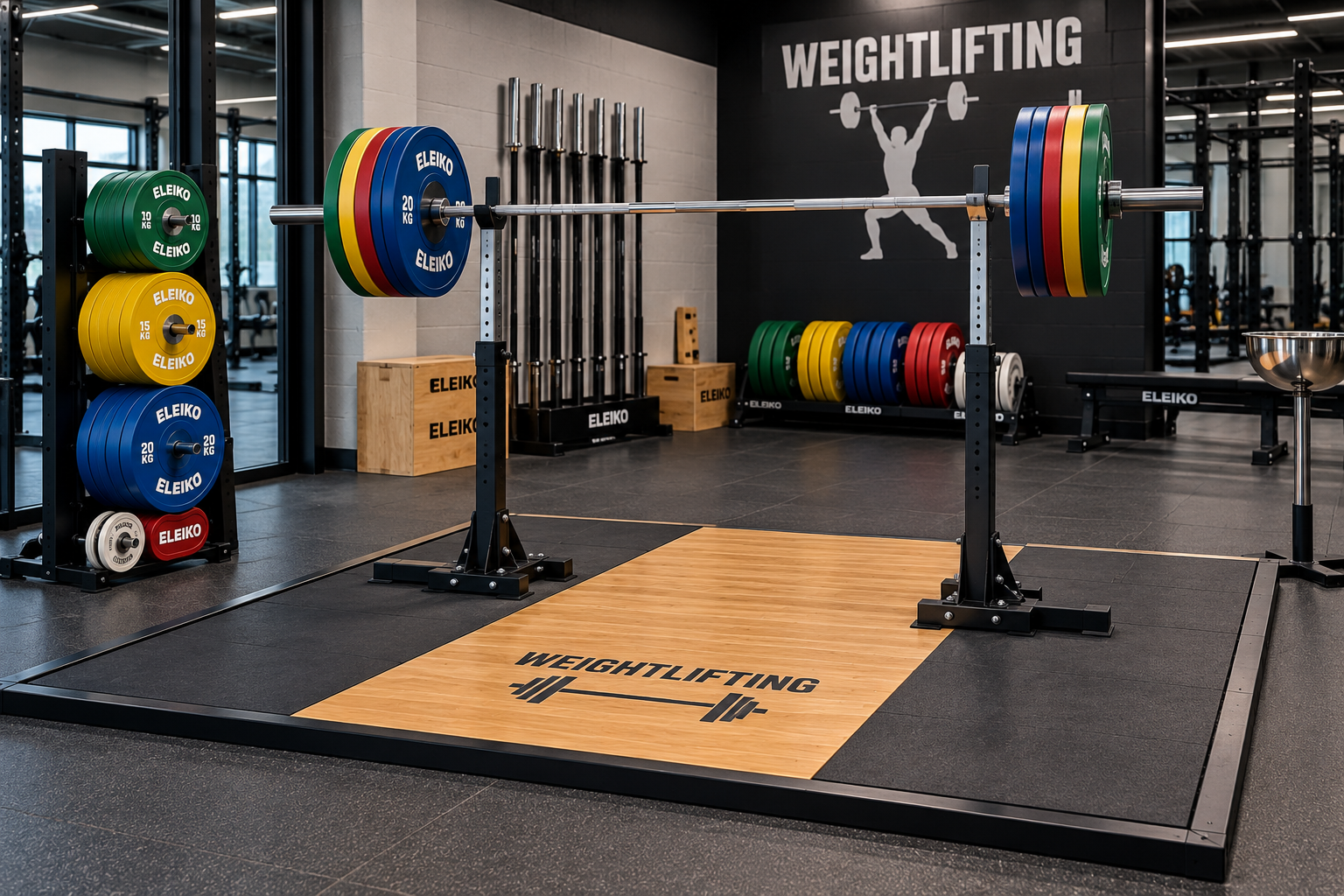
Snatch and clean and jerk platform: how to choose the most suitable solution for weightlifting
The platform represents one of the central elements of any area dedicated to weightlifting. During the execution of the snatch and clean and jerk, it offers a technical surface designed to support training with barbells and bumper plates, also contributing to the organization of the station and the protection of the underlying flooring.
Choosing a platform does not mean evaluating only dimensions or materials. It is necessary to consider compatibility with the rest of the equipment, available space, intensity of use, and the characteristics of the area where it will be installed. Proper design facilitates both training and the maintenance of the structure.
Before purchasing, it is therefore advisable to analyze the room layout, verify the manufacturer's stated specifications, and plan the arrangement of the equipment to maintain an orderly and functional space.
- What is a snatch and clean and jerk platform?
- How to choose the platform
- Which materials to evaluate
- Table of selection criteria
- How to use the platform correctly
- Safety and flooring protection
- Errors to avoid
- How to plan the investment
What is a snatch and clean and jerk platform?
The platform is the technical surface on which the Olympic weightlifting exercises are performed. It delimits the athlete's working area and constitutes the reference point for the organization of the station dedicated to the snatch and clean and jerk.
In addition to defining the operational zone, the platform contributes to the integration between the barbell, bumper plates, and flooring, favoring an orderly configuration consistent with the gym's design.
The choice of the platform should always be made considering the context of use, the number of athletes, and the characteristics of the facility.
What is the main function of the platform?
The platform identifies the area intended for Olympic exercises and contributes to the organization of the station dedicated to weightlifting.
In what environments is it used?
It can be installed in professional gyms, sports centers, and home gyms designed for barbell training.
How to choose the right platform?
The choice should start from the analysis of the available space and the overall configuration of the training area. A platform must integrate correctly with the existing flooring and the room layout.
It is also important to check the technical characteristics reported by the manufacturer, including dimensions, construction materials, and installation methods.
For facilities subject to intensive use, it can be useful to provide a modular configuration that allows any future expansions.
Why check the dimensions?
The dimensions of the platform must be compatible with the operational space necessary to perform the Olympic exercises.
Why check compatibility?
The platform, barbell, bumper plates, and flooring should be designed to work together without operational limitations.
Which materials to evaluate?
The materials influence the durability of the platform, ordinary maintenance, and integration with the rest of the station. It is advisable to refer to the manufacturer's technical specifications to understand the construction characteristics of the selected model.
The quality of the finishes can also affect the ease of cleaning and the preservation of the surface over time, especially in gyms with daily use.
The choice of materials should be consistent with the expected level of use and the overall design of the weightlifting area.
What characteristics to observe?
It is appropriate to evaluate the construction quality, finishes, and installation methods indicated in the technical documentation.
Does the choice of materials affect durability?
Materials suitable for the context of use can help maintain the functionality of the platform over time if used and maintained according to the manufacturer's instructions.
Table of selection criteria
The following table summarizes the main elements to evaluate before purchase.
| Element | What to verify | Why it is important |
|---|---|---|
| Dimensions | Compatibility with space | Correct organization of the area |
| Materials | Manufacturer's specifications | Durability and maintenance |
| Installation | Installation method | Stability of the station |
| Compatibility | Barbell and bumper plates | Consistent configuration |
| Flooring | Integration with the room | Protection of the structure |
| Layout | Positioning of the stations | Orderly use of space |
This table represents a general reference to compare different configurations.
Before the final choice, it is always appropriate to consult the technical product datasheets.
Why consider the layout?
A correct arrangement of the platforms improves the management of the area and facilitates workouts with multiple athletes.
Why read the technical documentation?
The manufacturer's specifications constitute the main reference to verify characteristics and compatibility.
How to use the platform correctly?
The platform should be used exclusively for the exercises foreseen by the area project and kept free from unnecessary equipment during training.
Before each session, it is advisable to check that the surface is clean, stable, and free of elements that could hinder the athlete's movements.
Correct use also includes respecting the manufacturer's instructions regarding installation and maintenance.
What checks to perform?
It is useful to perform a visual inspection of the surface and verify that the platform is correctly positioned.
Why keep the station clear?
An orderly area facilitates workouts and makes equipment management easier.
How to improve safety and flooring protection?
The platform works together with the technical flooring, contributing to the organization of the area intended for Olympic exercises. The compatibility between these elements should be verified already in the design phase.
It is also important to correctly plan the arrangement of the stations to avoid interference with passageways or other areas of the gym.
Periodic maintenance of the surface allows keeping the entire configuration efficient over time.
Why protect the floor?
Adequate design helps preserve the surface intended for training and keep the technical area tidy.
How much does the layout matter?
A rational arrangement of the platforms facilitates room management and improves the usability of the stations.
What errors to avoid?
One of the most frequent errors consists in choosing a platform without verifying compatibility with the barbell, bumper plates, and flooring.
It is also advisable to avoid installations in areas that are too small or lack the space necessary to perform Olympic exercises.
Neglect of surface maintenance can also reduce the functionality of the station over time.
Is price the main criterion?
No. Compatibility, construction quality, space organization, and ease of maintenance are equally important aspects.
Why plan future expansions?
A modular configuration makes it easier to add new stations while maintaining uniformity across the entire weightlifting area.
How to plan the investment in the platform?
The choice of the platform should be part of an overall project that includes the barbell, bumper plates, flooring, and space organization. Evaluating these elements together allows creating a coherent and easily manageable technical area.
Carefully analyzing the snatch and clean and jerk platform, weightlifting barbell, bumper plates, and configuration compatibility allows for a more conscious choice.
To complete a station dedicated to Olympic exercises, it can be useful to integrate a supply of bumper plates compatible with the barbell and the training area project, maintaining uniformity between equipment and the gym layout.
Comments (0)