
Trolley
You have no items in your shopping cart

 Budgets
 Dumbers
 Discs
Discs
 Benches
 Racks and Rigs
 Weights Holders
 Isotonic machines
 Calisthenics
 Cardio
 Kettlebells
 Flooring
 Gym Set
 Accessories
 Combat
 ARTI MARZIALI
 CONTAINER GYM
 Tug-Of-War
 Used Gym Equipment
 PILATES MACCHINARI
 GINNASTICA ARTISTICA
 CAMPI DA PADEL
 Prodotti in Pronta Consegna
 Informazioni
 IRONMAN
 Gift Card
- Donatif
- General information
- 0 I like it
- 24 Views
- 0 comments
- gym flooring, safety flooring, gym safety, shock-absorbing materials
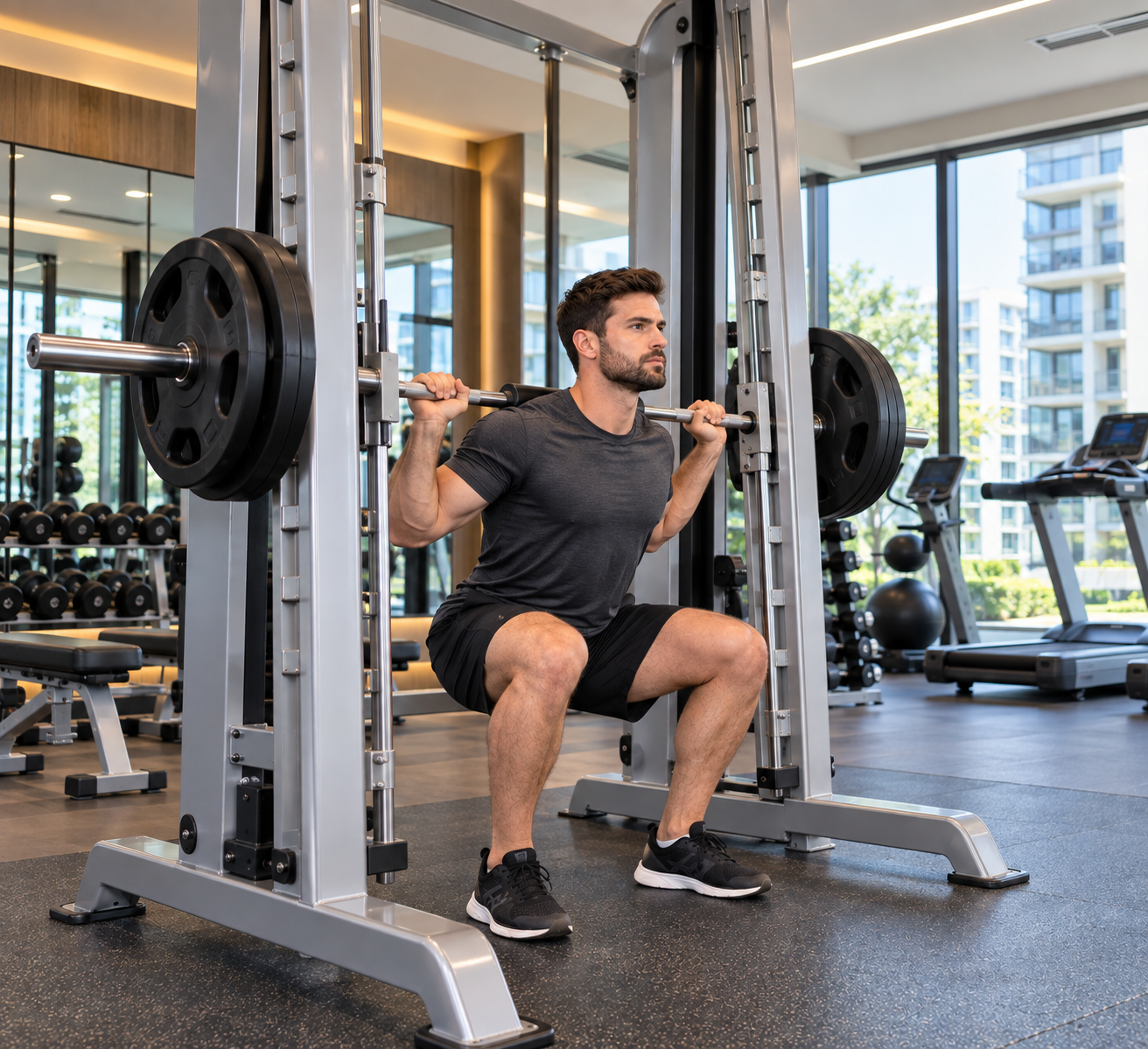
Condominial gym vs home gym: differences, advantages and selection criteria
The choice between a condominial gym and a home gym depends on goals, available space, usage methods and investment management. Although both allow training close to one's home, they meet different needs in terms of organization, design and maintenance.
The operational answer is simple: a condominial gym is designed to be shared by multiple users and requires planning that takes into account collective use, maintenance and space organization. A home gym, on the other hand, is a private space configured to the needs of one or more users in the same home.
This guide compares the two models using verifiable criteria, helping condominium administrators, designers and industry professionals identify the solution most consistent with the context of use.
- Quick answer
- Main differences
- Selection criteria
- When to choose a condominial gym or a home gym
- Design errors to avoid
- How to evaluate the investment
- FAQ
Condominial gym or home gym: which solution to choose?
A condominial gym is intended for shared use by residents and requires design oriented toward collective management.
A home gym is instead designed for private and personalized use, with equipment selected according to the needs of individual users.
The choice should be based on the number of users, available space, management methods and project goals.
What is the first criterion?
Defining who will use the space and with what frequency represents the starting point for any project.
What elements to compare?
Room dimensions, space organization, maintenance, equipment type and operating costs constitute practical comparison criteria.
What are the main differences?
The condominial gym is designed to accommodate multiple users and requires a spatial distribution that favors equipment sharing.
The home gym can be organized according to individual preferences, allowing greater configuration customization.
Both solutions require careful planning, but differ in usage methods and operational management.
Comparative table
Usage: shared | private.
Users: condominium residents | one or more members of the same home.
Management: collective organization | personal management.
Equipment: selection oriented to multiple users | customized configuration.
Maintenance: scheduled and shared | managed directly by the owner.
Usage experience
Access methods, equipment availability and space organization can vary significantly between the two solutions.
What criteria help in the choice?
The decision should take into account available space, number of users, frequency of use and the budget allocated for the project.
It is also important to verify equipment compatibility with the environment, the availability of proper sports flooring and maintenance needs.
A well-planned project allows optimizing investments and simplifying management over time.
Space evaluation
Dimensions, clear height, internal pathways and the possibility of installing equipment must be verified before purchase.
Management organization
In the case of a condominial gym, it is useful to define procedures for use, maintenance and equipment control.
In which scenarios should one solution be chosen over the other?
A condominial gym can be considered when the goal is to offer a shared service to residents while optimizing common spaces.
A home gym can be consistent when an exclusively personal space configured to specific needs is desired.
In both cases, it is advisable to develop a complete project before proceeding with equipment purchases.
Condominial gym scenario
Design should prioritize equipment robustness, ease of use and maintenance simplicity.
Home gym scenario
Configuration can be adapted to individual goals while maintaining greater flexibility in equipment selection.
What mistakes are made most often?
One of the most frequent errors consists in using the same design criteria for a shared gym and a home gym.
Another critical issue concerns underestimating the space needed for machine use and routine maintenance.
It is also advisable to avoid purchasing equipment that is inconsistent with the expected number of users or environmental characteristics.
Non-functional layout
An unbalanced equipment distribution can limit space use and make management more complex.
Inconsistent equipment supply
Equipment should be selected based on expected actual use, avoiding redundant purchases.
How to properly evaluate the investment?
Before building a condominial gym, it is advisable to prepare planning that includes setup works, systems, maintenance, gym accessories and scheduled equipment replacement.
Machine selection should be based on construction quality, technical support, spare parts availability and documentation provided by the manufacturer. To explore the various categories available, you can consult the section dedicated to gym equipment and compare the solutions best suited to the project.
Progressive planning also allows expanding the supply over time while maintaining a balance between available space, budget and actual use of the facility.
Financial programming
The plan should include initial investments, scheduled maintenance, future updates and facility operating costs.
Supplier selection
In addition to price, it is advisable to compare equipment quality, technical documentation, after-sales support and spare parts availability.
FAQ
Does a condominial gym require different design than a home gym?
Yes. A shared facility must be organized considering use by multiple users, maintenance and collective space management.
Is it possible to use the same equipment?
In some cases yes, but the choice should be made by evaluating use intensity, number of users and environment characteristics.
How to choose the flooring?
Flooring should be compatible with planned activities and technical indications from installed equipment manufacturers.
What sources to consult during design?
For technical aspects, it is advisable to refer to manufacturer manuals, equipment documentation and any references to applicable standards declared by manufacturers. For interventions on common spaces, it is also advisable to verify applicable building and condominium regulations. The setup of this content follows an answer-first structure with verifiable criteria, consistent with the brief provided.
Comments (0)