
Trolley
You have no items in your shopping cart

 Budgets
 Dumbers
 Discs
Discs
 Benches
 Racks and Rigs
 Weights Holders
 Isotonic machines
 Calisthenics
 Cardio
 Kettlebells
 Flooring
 Gym Set
 Accessories
 Combat
 ARTI MARZIALI
 CONTAINER GYM
 Tug-Of-War
 Used Gym Equipment
 PILATES MACCHINARI
 GINNASTICA ARTISTICA
 CAMPI DA PADEL
 Prodotti in Pronta Consegna
 Informazioni
 IRONMAN
 Gift Card
- Donatif
- General information
- 0 I like it
- 28 Views
- 0 comments
- gym flooring, safety flooring, gym safety, shock-absorbing materials
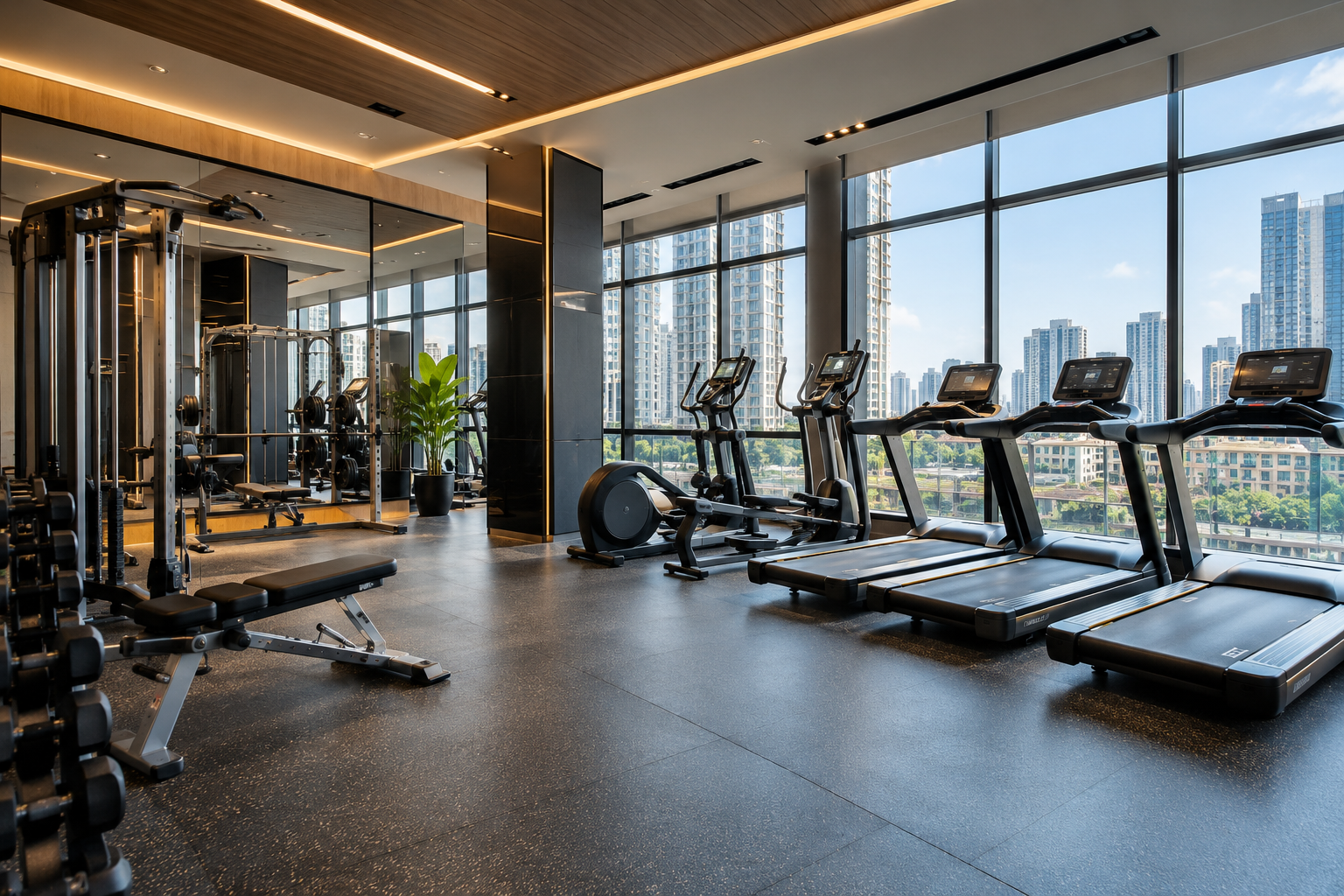
Condominium gym safety: how to reduce noise and vibrations
The safety of a condominium gym does not exclusively concern the correct use of equipment, but also includes the management of noise and vibrations that can affect the comfort of other residents and the preservation of the rooms. Careful design makes it possible to reduce these effects already in the early stages of construction.
The operational response consists of combining correct layout design, appropriate sports flooring, the choice of equipment compatible with the environment, and a periodic maintenance program. Both the methods of use and the distribution of machines also help limit the transmission of vibrations.
This guide offers verifiable criteria to address the issue of safety related to noise and vibrations in a condominium gym, without overlapping with the insights dedicated to general design or equipment selection.
- Quick answer
- What are the main risks?
- What safety requirements to consider?
- Checks before use
- Errors to avoid
- How to plan interventions
- FAQ
How to reduce noise and vibrations in a condominium gym?
The reduction of noise and vibrations is achieved by correctly designing spaces, using suitable flooring, installing equipment according to manufacturer instructions, and scheduling periodic checks.
It is also advisable to distribute the machines in a balanced way, avoiding concentrations of loads in restricted areas and periodically checking the condition of surfaces and fastenings.
Careful management of the environment helps improve comfort, equipment durability, and the overall quality of the fitness space.
What is the first intervention?
Analyzing the characteristics of the room and designing the layout before installing the equipment represents the starting point.
What aspects to check?
Load distribution, type of flooring, position of the machines, maintenance, and methods of use must be carefully evaluated.
What are the main risks?
Impact noise, vibrations transmitted to the structure, and incorrect use of equipment represent the most frequent critical issues in a shared gym.
Even insufficient maintenance or the deterioration of components subject to wear can increase abnormal noises during use.
A poorly functional layout can also favor the propagation of vibrations and make space management less easy.
Noise from use
Uncontrolled dropping of weights, improper use of machines, and worn components can increase the perceived noise level.
Transmission of vibrations
Vibrations can depend on the type of exercise, the position of the equipment, and the floor configuration.
What safety requirements should be considered?
Each piece of equipment should be installed following the manufacturer's instructions and respecting the spaces necessary for use and maintenance.
The flooring must be compatible with the weight of the machines and the planned activities, while the layout should avoid excessive concentrations of loads.
For construction and plant engineering aspects, it is advisable to check the applicable requirements with competent professionals and refer to the available technical documentation.
Correct installation
Installation compliant with the manufacturer's instructions helps maintain the stability, functionality, and durability of the equipment.
Scheduled maintenance
Periodic checks of fasteners, moving parts, and surfaces help identify any anomalies in a timely manner.
What checks to perform before use?
Before opening the gym and subsequently on a regular basis, it is useful to check the state of the flooring, the stability of the machines, and the absence of loose components.
It is also advisable to check for any unusual noises during operation and schedule the maintenance interventions indicated by the manufacturer.
The technical documentation of the equipment should remain available to facilitate checks and assistance operations.
Verification checklist
1. Check the stability of the equipment. 2. Verify the flooring. 3. Inspect fasteners and components subject to wear. 4. Ascertain the absence of abnormal noises. 5. Record maintenance interventions.
Continuous monitoring
Periodic verification makes it possible to promptly identify changes in equipment behavior and plan necessary interventions.
What errors to avoid?
One of the most frequent errors consists of installing equipment without having correctly designed the space distribution.
Another critical issue concerns the choice of flooring not suitable for the type of use or the failure to maintain the machines.
It is also advisable to avoid using damaged equipment or equipment with components that produce abnormal noises during operation.
Unplanned layout
A poorly balanced arrangement can increase acoustic impact and make gym management less efficient.
Insufficient checks
Neglecting verifications and maintenance can favor the onset of noise, vibrations, and premature wear of the equipment.
How to plan interventions?
For a condominium gym, it is advisable to provide a plan that includes flooring, installation, scheduled maintenance, replacement of components subject to wear, and gym accessories necessary for space management.
The choice of equipment should be based on manufacturing quality, ease of maintenance, and available technical documentation. To explore the different categories, you can consult the section dedicated to gym equipment and compare the solutions best suited to the project.
Preventive planning of interventions facilitates gym management and helps maintain high standards of functionality over time.
Maintenance program
Defining control frequencies and recording executed interventions helps keep the gym efficient and easily manageable.
Choice of suppliers
In addition to price, it is advisable to compare technical assistance, spare parts availability, user manuals, and post-sales support.
FAQ
Is the flooring sufficient to eliminate noise and vibrations?
No. Flooring represents one of the elements of the project, but layout, methods of use, maintenance, and equipment selection also influence the overall result.
How often should equipment be checked?
Verifications should follow the manufacturer's instructions and be part of a periodic maintenance program appropriate to the intensity of use.
How to recognize an anomaly?
Unusual noises, vibrations different from normal operation, instability, or loose components require a check before continuing use.
What sources to consult to design a safe condominium gym?
For technical aspects, it is advisable to refer to manufacturer manuals, equipment documentation, and any references to applicable standards declared by manufacturers. For interventions on the building, it is also advisable to check applicable building and condominium regulations with competent professionals. The setup of this content follows an answer-first structure with verifiable criteria, consistent with the provided brief.
Comments (0)