
Trolley
You have no items in your shopping cart

 Budgets
 Dumbers
 Discs
Discs
 Benches
 Racks and Rigs
 Weights Holders
 Isotonic machines
 Calisthenics
 Cardio
 Kettlebells
 Flooring
 Gym Set
 Accessories
 Combat
 ARTI MARZIALI
 CONTAINER GYM
 Tug-Of-War
 Used Gym Equipment
 PILATES MACCHINARI
 GINNASTICA ARTISTICA
 CAMPI DA PADEL
 Prodotti in Pronta Consegna
 Informazioni
 IRONMAN
 Gift Card
- Donatif
- General information
- 0 I like it
- 83 Views
- 0 comments
- gym flooring, safety flooring, gym safety, shock-absorbing materials
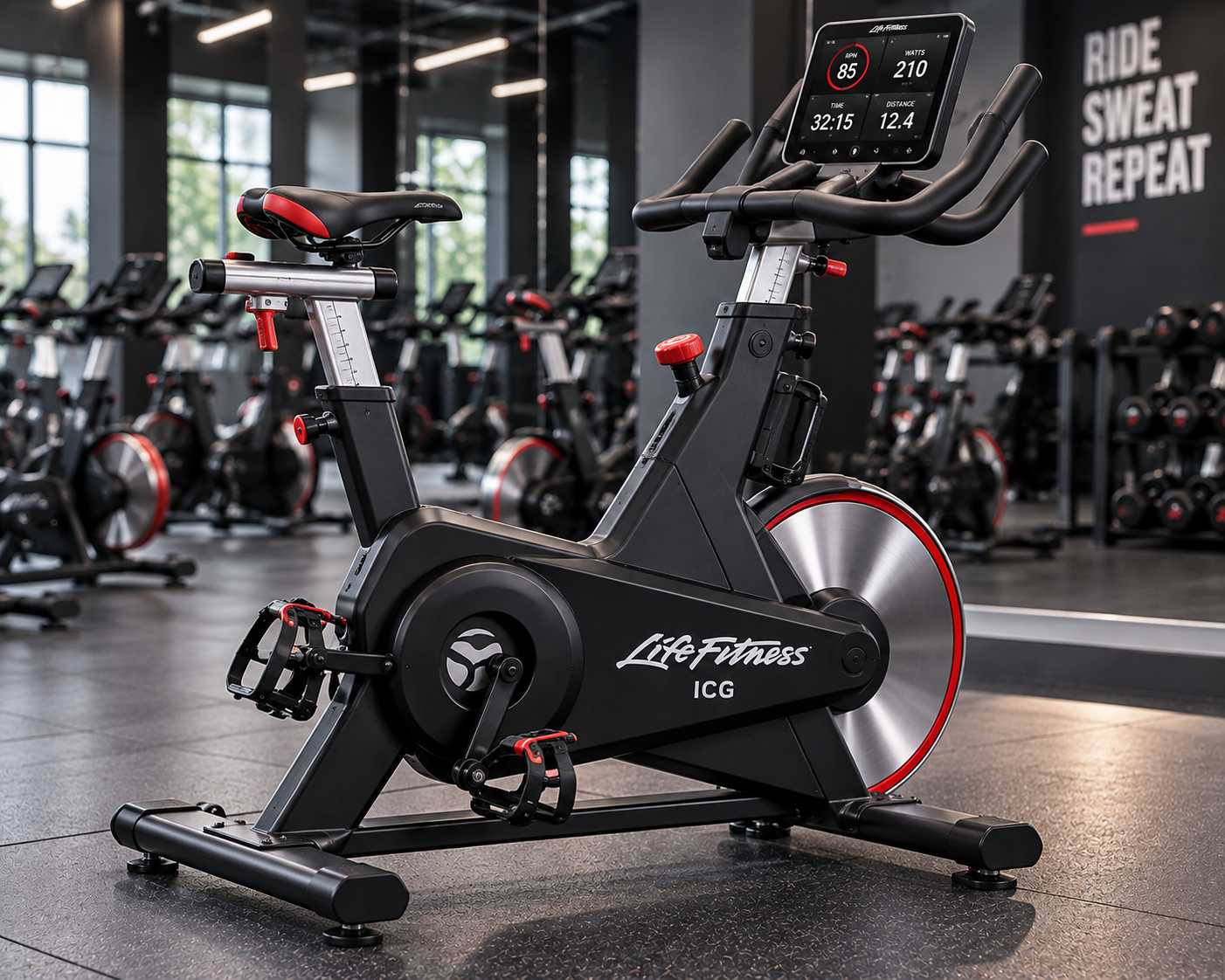
Spin bike safety: incorrect setup and fastenings
The safety of a spin bike depends largely on the correct adjustment of the bicycle and periodic inspection of the fastening systems. Inadequate setup or improperly locked components can compromise comfort, pedaling quality, and continuity of use, especially in gyms, cycling rooms, and fitness centers where the bicycle is frequently adjusted by different users.
Many operational issues stem from hastily performed adjustments or from failing to check the attachment points after numerous user changes. For this reason, it is useful to adopt a simple, repeatable inspection procedure consistent with the manufacturer's instructions.
This guide illustrates the main safety checks to perform before using the spin bike, the most common errors in setup adjustment, and the preventive checks that help keep the bicycle efficient over time.
- Quick answer
- What are the main risks
- Which safety requirements to check
- Pre-use checks
- Maintenance and periodic checks
- Errors to avoid
- Operational checklist
- Why safety protects the investment
How to avoid problems due to incorrect setup and fastenings?
The safety of a spin bike depends on the correct positioning of the bicycle, the adjustment of the saddle and handlebars according to the manufacturer's instructions, and the inspection of the fastening systems before use. Preventive verification reduces the risk of anomalies during training and contributes to operational continuity.
Each check should be performed following the bicycle manual and included in the facility's maintenance program.
An orderly management of inspections also facilitates the planning of technical interventions and the monitoring of equipment status.
What is the first check to perform?
Verify that the spin bike is stable, correctly positioned, and free of wobbles before starting the workout.
Why follow the manufacturer's manual?
Official instructions represent the main reference for adjustments, maintenance, and safety checks.
What are the main risks of an incorrect setup?
An inadequate setup can compromise comfort and pedaling quality, making the use of the bicycle less effective.
Among the most frequent situations are improperly locked adjustments, unchecked saddle position, incorrectly fixed handlebars, or components exhibiting abnormal movement.
These aspects should be checked every time the bicycle is adjusted by a new user.
Why check the saddle?
A properly adjusted and locked saddle promotes a stable position consistent with the manufacturer's instructions.
What checks to perform on the handlebars?
It is advisable to verify that the adjustment system is fully tightened and that there are no unwanted movements.
What safety requirements must be verified?
Before use, it is advisable to check that the bicycle is installed on a stable surface and that all adjustment systems are working correctly.
The characteristics of the flywheel, the transmission, and the resistance system should be maintained according to the manufacturer's instructions through scheduled maintenance.
The flooring also contributes to the overall stability of the bicycle and should be evaluated during the design of the training area.
Why is installation important?
Correct installation reduces the risk of instability and facilitates subsequent maintenance operations.
Why leave space around the bicycle?
Adequate space improves accessibility, safety, and ease of use during training sessions.
What checks to perform before use?
A visual inspection takes a few minutes and allows for the rapid identification of any anomalies.
It is advisable to check the stability of the structure, the correct tightening of adjustments, the condition of the pedals, the smoothness of pedaling, and the absence of visibly loose components.
If obvious anomalies are detected, it is advisable to temporarily suspend the use of the bicycle until the verifications required by the manufacturer are completed.
What visual checks are recommended?
General condition of the structure, adjustment systems, pedals, fastening elements, and condition of the surfaces most subject to use.
When to perform a functional test?
After installation, maintenance, or when abnormal behavior is reported during pedaling.
Why does maintenance improve safety?
Scheduled maintenance allows for the periodic inspection of components subject to wear and keeps the bicycle efficient over time.
Operations should be planned following the instructions provided in the manufacturer's technical documentation and recorded in the facility's maintenance plan.
To complete an area dedicated to cardiovascular training, it is possible to integrate the room with other professional cardio machines while maintaining consistent control procedures for all equipment.
Why check spare parts?
Good availability of wear-and-tear parts facilitates scheduled interventions and contributes to operational continuity.
How important is technical assistance?
An organized assistance service makes it possible to promptly manage any extraordinary interventions.
Which errors most compromise safety?
One of the most common errors consists in using the spin bike without verifying the correct locking of adjustments after a user change.
It is also advisable to avoid neglecting small signs of wear, postponing maintenance, or modifying components without following the manufacturer's instructions.
Even using the bicycle on unsuitable surfaces can affect the overall stability of the structure.
Why always check the fastenings?
Adjustment systems are used frequently and should be verified before each workout.
Why check the supporting surface?
A stable flooring contributes to the correct behavior of the bicycle during pedaling.
Which checklist to use before use?
| Check | Objective |
|---|---|
| Bicycle stability | Verify the absence of wobbling |
| Fastenings | Check the correct locking of saddle and handlebars |
| Pedals | Verify condition and fixing |
| Transmission | Check movement smoothness |
| Adjustments | Verify correct operation |
| Manual and maintenance | Follow manufacturer procedures |
When to use the checklist?
Before opening the room, after maintenance interventions, and whenever anomalies are reported during use.
Why record checks?
A history of inspections facilitates maintenance planning and the monitoring of the spin bike fleet status.
Why does safety also protect the investment?
Correct management of the spin bike makes it possible to maintain high equipment reliability and reduce the risk of interruptions during training activities.
Following the manufacturer's instructions, periodically checking setup and fastenings, and planning maintenance represent fundamental practices for preserving the bicycle's performance in the long term.
Integrating systematic checks into the daily management of the room helps protect both users and the value of the investment made by the facility.
How often to check fastenings?
The frequency depends on the intensity of use of the spin bike, but checks should follow the maintenance schedule indicated by the manufacturer and include pre-use inspections.
Who should perform the maintenance?
Maintenance should be carried out according to the procedures provided by the manufacturer and documented within the facility's maintenance plan.
Comments (0)