
Trolley
You have no items in your shopping cart

 Budgets
 Dumbers
 Discs
Discs
 Benches
 Racks and Rigs
 Weights Holders
 Isotonic machines
 Calisthenics
 Cardio
 Kettlebells
 Flooring
 Gym Set
 Accessories
 Combat
 ARTI MARZIALI
 CONTAINER GYM
 Tug-Of-War
 Used Gym Equipment
 PILATES MACCHINARI
 GINNASTICA ARTISTICA
 CAMPI DA PADEL
 Prodotti in Pronta Consegna
 Informazioni
 IRONMAN
 Gift Card
- Donatif
- General information
- 0 I like it
- 806 Views
- 0 comments
- gym flooring, safety flooring, gym safety, shock-absorbing materials
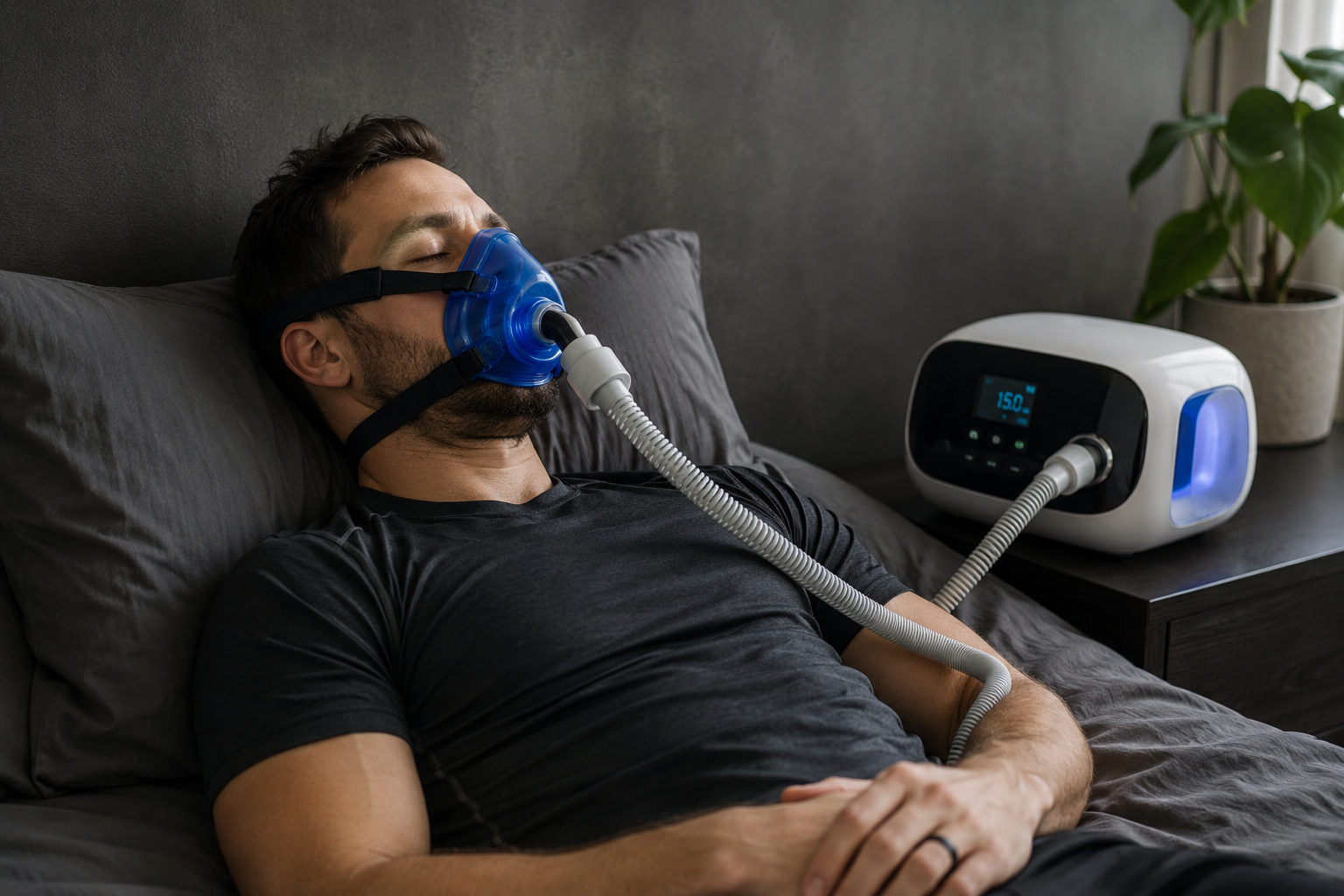
Meaning of intermittent hypoxia (IHT): technique and protocols for performance
Hypoxic training has introduced new possibilities to the world of athletic conditioning and advanced fitness, allowing oxygen availability to be used as a true variable in the training process. Among the most studied and applied methodologies is intermittent hypoxia, also known by the acronym IHT, a technique based on controlled alternation between periods of reduced oxygen availability and recovery phases under normoxic or hyperoxic conditions.
Unlike simple prolonged stays at simulated altitude, IHT uses a dynamic sequence of stimuli that allows the body's response to be modulated with greater precision. This characteristic makes the method particularly interesting for professional facilities, advanced fitness centers, and athletes who want to integrate personalized protocols into their conditioning.
Understanding the true meaning of intermittent hypoxia means going beyond the idea of «training with less oxygen.» IHT represents a structured methodology in which cycle management, the precision of technological systems, and monitoring of individual response become fundamental elements for achieving an effective path.
- What is intermittent hypoxia and how it works
- The principle of alternation between hypoxic and hyperoxic air
- How an IHT protocol is structured
- The benefits of intermittent hypoxia in performance
- The role of hypoxic respiratory training
- The technology of the hypoxic chamber in cycle management
- Applications of IHT in professional fitness centers
- The evolution of hypoxic protocols for performance
What is intermittent hypoxia and how it works
Intermittent hypoxia is a methodology that involves alternating exposure to environmental conditions with varying oxygen availability. During an IHT session, the user goes through programmed cycles in which the system modifies the composition of the breathed air according to established parameters.
The underlying concept is to create a controlled stimulus through temporary variations in oxygen availability, avoiding continuous stay at the same hypoxic level for the entire duration of the session. This allows for greater flexibility in protocol management.
The hypoxic chamber thus becomes a tool capable of generating different environments within a single session, adapting to the user's goals and the instructions of the chosen program.
Difference compared to continuous exposure
In continuous exposure, the body remains immersed in hypoxic conditions for a prolonged period. In IHT, however, the stimulus is distributed through specific intervals.
This difference changes how the body perceives and manages environmental variation.
Managing the stimulus precisely
One of the main advantages of IHT is the ability to control the duration and intensity of the phases.
Programming allows the protocol to be adapted to the user's level and the goals of the session.
The principle of alternation between hypoxic and hyperoxic air
The core of IHT is represented by the controlled variation of the breathed environment. During the hypoxic phase, oxygen availability is reduced, while during the hyperoxic or recovery phase, availability is increased compared to the previous phase.
This alternation creates a sort of «oxygen stimulus training,» in which the body must adapt quickly to environmental changes.
The goal is not simply to spend time in an environment with less oxygen, but to use the variation as a programmable element within a path of improvement.
The dynamics of oxygen during the session
The ability to rapidly modify oxygen levels allows for more articulated protocols compared to simple static exposure.
Precise cycle management is essential to maintain consistency across different sessions.
How the body reacts to cycles
The alternation between different phases requires continuous adaptations by the systems involved in oxygen management.
Individual response can vary based on training level, personal characteristics, and frequency of exposures.
How an IHT protocol is structured
An effective IHT protocol must be designed considering several elements, including session duration, number of cycles, stimulus intensity, and user goals.
There is no single configuration valid for everyone. Personalization represents a central aspect because different people may respond differently to the same exposure scheme.
For this reason, in professional applications, technology is often accompanied by control and monitoring systems that allow the user's response to be evaluated.
Main elements of an IHT protocol
A protocol generally includes hypoxic phases, recovery periods, and a defined time management.
The combination of these elements determines the type of stimulus applied.
Personalization of sessions
Personalization makes it possible to adapt the work to the specific needs of athletes, fitness clients, or advanced home users.
Flexible management improves the quality of the path over the long term.
The benefits of intermittent hypoxia in performance
Interest in IHT stems from the possibility of using hypoxia as a complementary tool within physical conditioning. The alternation of stimuli allows simulated altitude to be integrated without necessarily resorting to long periods of continuous exposure.
The benefits of intermittent hypoxia are generally associated with the ability to create a more dynamic and adaptable training environment.
For athletes and facilities working on performance, the main value of IHT lies in the ability to program the stimulus precisely.
Efficiency of available time
IHT can be interesting for those with limited time who want to introduce advanced methodologies.
The cyclical structure allows work to be concentrated into organized sessions.
Additional stimulus to conditioning
Intermittent hypoxia can be used as an additional element compared to traditional protocols.
Its effectiveness depends on the ability to correctly insert it into the general programming.
The role of hypoxic respiratory training
Hypoxic respiratory training represents another area connected to the management of exposure to conditions with reduced oxygen availability. This approach uses specific exercises and protocols to work on the body's respiratory response.
Within a controlled hypoxic environment, respiratory work can be integrated with other types of activities to create more complete paths.
The precision of the system allows the stimulus to be managed without relying solely on the user's subjective perception.
Relationship between breathing and oxygen
Breathing represents one of the main mechanisms through which the body regulates gas exchange.
Understanding this relationship helps to better interpret the response during hypoxic protocols.
Integrating respiratory work and IHT
Integration must be programmed consistently with the goals of the session.
A structured approach allows better use of available technology.
The technology of the hypoxic chamber in cycle management
The execution of IHT protocols requires systems capable of rapidly modifying environmental conditions. A professional hypoxic chamber must therefore be designed to manage precise and repeatable variations.
The most advanced machines allow different cycles to be programmed, controlling air parameters and maintaining stability throughout the session.
Technology thus becomes a fundamental element to transform IHT from a simple theoretical concept into an applicable methodology.
Speed of environmental changes
The system's ability to rapidly modify oxygen levels influences the quality of the protocol.
Precise changes allow greater fidelity to the chosen programming.
Automatic parameter control
Automatic systems make it possible to maintain the set protocol without continuous interventions.
This increases reliability and simplicity of management.
Applications of IHT in professional fitness centers
Intermittent hypoxia represents an interesting solution for gyms and fitness centers that want to expand their services with performance-oriented protocols.
The ability to personalize sessions allows them to target users with diverse needs, from advanced athletes to clients interested in innovative methodologies.
Proper organization of the service, however, requires technical skills and professional management of the environment.
Creating high-value services
IHT can become a distinctive element for facilities that want to propose advanced experiences.
The quality of the protocol depends on the combination of technology and expertise.
Managing diverse users
Each user may have different goals and characteristics.
Personalization therefore represents a key factor in offering an effective service.
The evolution of hypoxic protocols for performance
Intermittent hypoxia represents one of the most interesting methodologies in the evolution of simulated altitude training because it combines technology, control, and the possibility of personalization.
The alternation between hypoxic air and recovery phases allows oxygen to be used as a dynamic variable, transforming the environment into a programming tool.
For fitness centers, athletes, and advanced users, understanding the meaning of IHT means recognizing the value of an approach based on data, structured protocols, and precise stimulus management.
Comments (0)