
Trolley
You have no items in your shopping cart

 Budgets
 Dumbers
 Discs
Discs
 Benches
 Racks and Rigs
 Weights Holders
 Isotonic machines
 Calisthenics
 Cardio
 Kettlebells
 Flooring
 Gym Set
 Accessories
 Combat
 ARTI MARZIALI
 CONTAINER GYM
 Tug-Of-War
 Used Gym Equipment
 PILATES MACCHINARI
 GINNASTICA ARTISTICA
 CAMPI DA PADEL
 Prodotti in Pronta Consegna
 Informazioni
 IRONMAN
 Gift Card
- Donatif
- General information
- 0 I like it
- 738 Views
- 0 comments
- gym flooring, safety flooring, gym safety, shock-absorbing materials
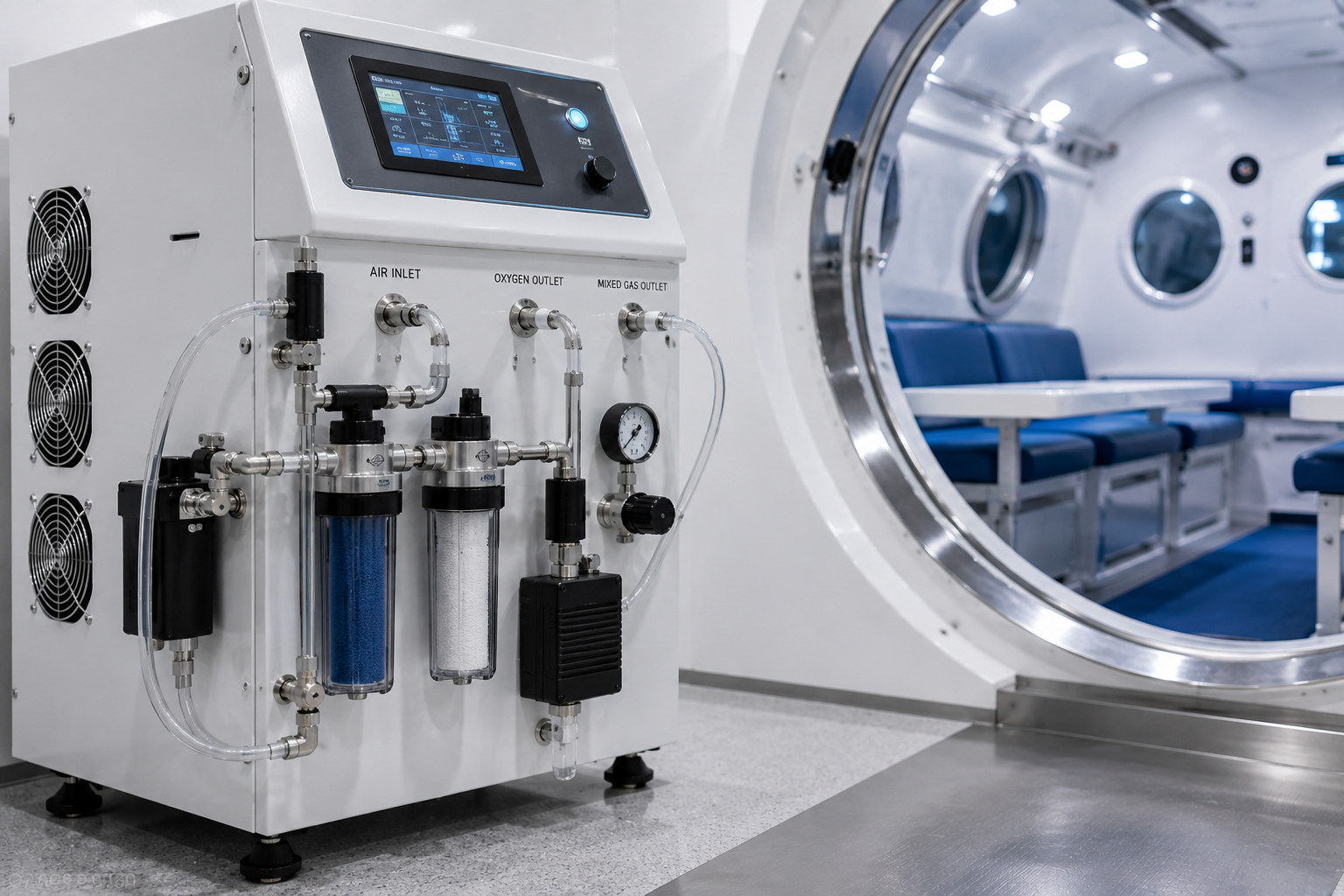
Hypoxia Generator Silencer: training at altitude without disturbing others
Hypoxic training represents one of the most advanced solutions for athletes, fitness centers, and professionals who wish to offer innovative protocols based on high-altitude simulation. However, when a hypoxic system is installed in a home, apartment building, or wellness-oriented gym, an often underestimated aspect becomes fundamental: managing the noise produced by technical components.
Hypoxia generators and compressors are designed to run continuously and ensure a constant flow of modified air, but their mechanical operation can produce vibrations and sound levels that are noticeable, especially in quieter environments. For this reason, choosing an appropriate hypoxia generator silencer means improving the user experience and preventing potential noise-related issues.
Proper acoustic design is not just about comfort, but also the overall quality of the service offered. A professionally installed hypoxic chamber must ensure high performance, safety, and intelligent noise management, allowing users to focus on their training without interference and operators to work in a more pleasant environment.
- Why noise is a critical factor in hypoxic systems
- How a hypoxia generator silencer works
- Professional hypoxic chamber soundproofing
- Hypoxia compressor noise management
- Soundproof box solutions for fitness
- Criteria for choosing effective acoustic insulation
- Investing in the acoustic comfort of the hypoxic system
Why noise is a critical factor in hypoxic systems
A professional hypoxic system is composed of several technological elements that work together to create controlled environmental conditions. The generator, compressor, ventilation systems, and control devices must operate in a coordinated manner to maintain the stable oxygen concentration required during training.
These components, like any mechanical equipment, can generate noise resulting from internal movement, airflow, and vibrations transmitted to surrounding surfaces. In an industrial environment or a large sports facility, these sounds may be less relevant, whereas in apartments, private studios, or boutique gyms, they become an element that must be carefully managed.
The perception of noise does not depend solely on the volume produced, but also on the frequency, the duration of operation, and the context in which the system is installed. Constant noise during a training session can negatively influence an athlete's concentration and reduce the perceived quality of the service.
Impact of noise on the user experience
Hypoxic training often requires concentration, breath control, and attention to bodily sensations. A noisy environment can make the experience less pleasant, especially when the goal is to create a condition similar to controlled recovery or advanced athletic preparation.
For professional facilities, environmental comfort is a distinctive element. A client who chooses a premium service expects not only advanced technology but also an environment that is well-maintained in every aspect.
Acoustic problems in apartment buildings
The installation of hypoxic systems in residential contexts requires particular attention. Vibrations can propagate through floors, walls, and load-bearing structures, creating disturbances even at a distance from the installation point.
Preventive design allows for identifying the most suitable solutions to reduce noise transmission and maintain a positive relationship with the surrounding environment.
How a hypoxia generator silencer works
A silencer applied to a hypoxia generator aims to reduce the noise produced by the system's operation without compromising the airflow necessary for the proper functioning of the equipment. The design must therefore find a balance between acoustic reduction and technical efficiency.
Professional systems use specific materials and configurations to absorb or attenuate the sound waves generated by mechanical components. The goal is not simply to cover the noise, but to limit its propagation at the source.
A correct approach considers the entire system and not just the generator. Positioning, pipe connections, anti-vibration mounts, and the surrounding structure also influence the final result.
Reducing noise at the source
Intervening directly near the sound source is often the most effective strategy. Reducing noise before it spreads into the environment allows for better results compared to solutions applied only to the surrounding space.
A properly managed hypoxia compressor noise allows the system to remain operational without compromising the comfort of people present in the environment.
Balance between performance and silence
Every modification to the system must respect the technical requirements of the generator. Insulation designed without considering air exchange or heat dissipation could compromise the equipment's operation.
For this reason, professional solutions are studied by considering performance, safety, and acoustic comfort simultaneously.
Professional hypoxic chamber soundproofing
The acoustic design of a hypoxic chamber does not concern only the generator, but the entire environment where the training takes place. Walls, doors, ventilation systems, and internal surfaces can influence sound propagation.
Proper hypoxic chamber soundproofing allows for the creation of a more comfortable space, which is particularly important when the chamber is used for individual sessions, athletic recovery, or premium programs.
The goal is to obtain an environment where the technology remains invisible to the end user: the client should perceive only the quality of the experience, not the complexity of the system that makes it possible.
Materials for acoustic insulation
The materials used for insulation must be selected based on the characteristics of the noise present. Some materials are more effective at absorbing frequencies generated by mechanical components, while others help limit transmission through structures.
A correct combination allows for significantly improving comfort without creating invasive or difficult-to-manage solutions.
Integrated space design
A professional hypoxic environment must be designed considering all elements present. Correctly positioning the generator and providing adequate insulation systems contributes to achieving a more effective result.
The design phase is therefore decisive for avoiding subsequent interventions and ensuring a solution that is truly suitable for the context.
Hypoxia compressor noise management
The compressor is one of the components that most requires attention from an acoustic point of view. Its continuous operation generates vibrations and mechanical noises that can propagate into the environment if not adequately controlled.
Compressor management must therefore include both interventions on the noise produced and systems capable of limiting the transmission of vibrations. These two aspects are linked but require different technical solutions.
A well-designed system allows the compressor to work under the intended conditions while maintaining an acoustic level compatible with the environment of use.
Vibration control
Vibrations are one of the main causes of disturbance in residential environments. Elastic mounts, dedicated bases, and decoupling systems can reduce the transmission of oscillations to the building's structure.
This type of intervention improves general comfort and also protects system components from unwanted stress.
System maintenance and noise
A properly maintained hypoxic system tends to maintain more stable acoustic performance over time. Worn components or inefficient filters can increase the noise produced during operation.
Preventive maintenance therefore becomes an integral part of acoustic comfort management.
Soundproof box solutions for fitness
When available space or the context requires superior noise control, a soundproof box for fitness can be an effective solution. This system allows for creating a dedicated barrier around the noisiest components.
The box must be designed to ensure acoustic insulation without hindering ventilation, accessibility, and maintenance. An improvised solution could, in fact, create temperature problems or make technical interventions difficult.
Professional solutions, on the other hand, integrate acoustic and operational needs, offering a more organized and functional environment.
Advantages of a turnkey solution
A complete project allows for evaluating the generator, environment, materials, and installation simultaneously. This reduces the risk of incompatibility and ensures a more predictable result.
For professional facilities, a turnkey solution is an advantage because it simplifies project management and reduces unforeseen events.
Integration with gyms and private studios
Acoustic needs change based on the installation location. A boutique gym needs to maintain a relaxing atmosphere, while a private studio must often respect stricter building regulations.
The ability to customize the system allows it to be adapted to the specific characteristics of the space.
Criteria for choosing effective acoustic insulation
Choosing an insulation solution requires a technical analysis of the context. There is no single system valid for every installation, because the result depends on the environment, generator power, usage mode, and system location.
A professional assessment allows for identifying the truly necessary interventions, avoiding useless costs or ineffective solutions.
The quality of the insulation must be evaluated together with the ease of maintenance and the durability of the adopted solution.
Certified soundproofing and reliability
Using solutions with certified characteristics offers greater security in predicting acoustic performance. This aspect is particularly important when the system is installed in environments where noise can generate complaints.
Design based on professional criteria reduces the risk of future problems and improves the perceived quality of the service.
Assessment of the installation context
Before installation, it is important to analyze the position, space dimensions, presence of shared walls, and system usage methods. Each element can influence the most effective insulation strategy.
A correct initial assessment allows for designing a solution that is truly adapted to the user's needs.
Investing in the acoustic comfort of the hypoxic system
Noise management is a fundamental element for those who wish to offer high-level hypoxic training. A technologically advanced system must be accompanied by equally accurate environmental design.
Reducing noise and vibrations means improving the athlete's experience, protecting the relationship with the surrounding environment, and increasing the perceived quality of the service. A professional solution allows for using generators and compressors effectively without compromising comfort.
Investing in acoustic insulation, appropriate components, and integrated design allows for creating a reliable and discreet hypoxic environment, suitable for both professional fitness facilities and private installations where silence and performance must coexist.
Reducing operational risk
Proper noise management avoids potential issues related to complaints, usage restrictions, or subsequent corrective interventions. Prevention therefore becomes a strategic element in system design.
Solutions studied in advance allow for keeping the system efficient and compatible with the context in which it is inserted.
Quality of the hypoxic experience
A quiet environment enhances the technology present and allows the user to focus completely on the training. Acoustic comfort becomes an integral part of the value offered.
For this reason, choosing professional insulation systems represents an investment in the overall quality of the hypoxic service.
Comments (0)