
Trolley
You have no items in your shopping cart

 Budgets
 Dumbers
 Discs
Discs
 Benches
 Racks and Rigs
 Weights Holders
 Isotonic machines
 Calisthenics
 Cardio
 Kettlebells
 Flooring
 Gym Set
 Accessories
 Combat
 ARTI MARZIALI
 CONTAINER GYM
 Tug-Of-War
 Used Gym Equipment
 PILATES MACCHINARI
 GINNASTICA ARTISTICA
 CAMPI DA PADEL
 Prodotti in Pronta Consegna
 Informazioni
 IRONMAN
 Gift Card
- Donatif
- General information
- 0 I like it
- 437 Views
- 0 comments
- gym flooring, safety flooring, gym safety, shock-absorbing materials
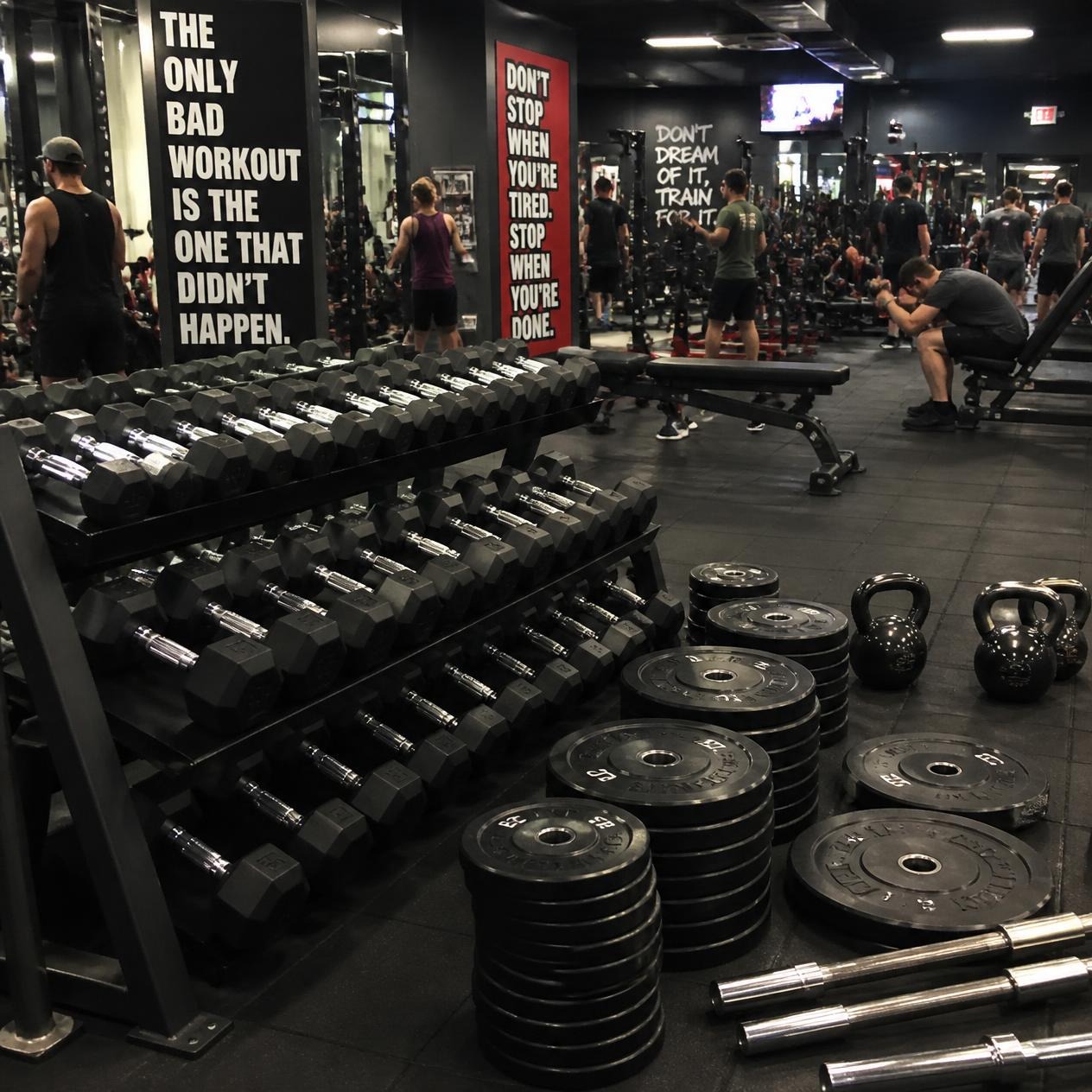
Multifunction station or free weights? The science of hybrid training
For many years, the fitness world has been divided between two schools of thought: on one side, proponents of free weights, considered the benchmark for developing strength and coordination; on the other, admirers of multifunction machines, appreciated for their safety, practicality, and ability to isolate muscle groups. Today, however, scientific research and the experience of trainers show a much more interesting picture: it is not about choosing just one solution, but about intelligently combining both.
A hybrid approach allows you to leverage the advantages of each system, alternating multi-joint barbell exercises with guided movements that allow you to work safely even in conditions of fatigue. This strategy improves the quality of training, increases the variety of stimuli, and makes it easier to build effective programs for both strength and muscle hypertrophy.
In this guide, we analyze why a multifunction gym bench represents the ideal complement to free weights, how to organize a hybrid workout in a home gym, and what criteria to follow to get the most out of both types of equipment.
- Free weights and multifunction: the differences
- The advantages of free weights
- The advantages of multifunction stations
- Why the hybrid approach works
- How to organize a complete home gym
- How to build an effective program
- Why choose both solutions
Free weights and multifunction: the differences
Free weights require the athlete to directly control the movement, stabilizing the load through the coordinated work of numerous muscle groups. Barbells and dumbbells develop functional strength, balance, and motor control, which are fundamental characteristics for improving overall performance.
Multifunction stations, on the other hand, guide the trajectory of the exercise through systems of pulleys, levers, or cables. This allows you to focus more work on the target muscle, reducing the involvement of stabilizer muscles and increasing safety during execution.
Both approaches have solid technical foundations. The choice should therefore not be interpreted as an absolute alternative, but as the opportunity to use different tools to achieve complementary goals.
Freedom of movement
Free weights allow you to naturally adapt the trajectory to individual biomechanics, improving coordination and proprioception.
Guided movement
Machines allow you to maintain a more consistent technique and reduce the risk of compensations, especially for those who are beginners.
The advantages of free weights
Training with barbells and dumbbells is one of the most effective methods for developing general strength. Exercises like squats, deadlifts, bench presses, and military presses involve numerous muscle groups simultaneously, promoting high neuromuscular adaptation.
This type of training improves the ability to produce force, increases intermuscular coordination, and makes body control in space more efficient. For this reason, it continues to be a pillar in the athletic preparation of many sports disciplines.
Free weights also allow for a practically unlimited progression of the load, a feature particularly appreciated by those who wish to constantly increase their performance.
Maximum strength development
Large multi-joint exercises allow you to use heavy loads while involving numerous muscle chains simultaneously.
Involvement of stabilizer muscles
Every repetition requires control, balance, and coordination, improving the overall quality of the movement.
The advantages of multifunction stations
Multifunction machines are an extremely effective tool for isolating specific muscle groups and maintaining constant tension throughout the movement. This makes them particularly interesting in programs dedicated to the development of hypertrophy.
The guided trajectory also allows you to train with greater peace of mind even when you reach a high level of fatigue, reducing the risk of losing control of the load.
For those who train independently at home, a multifunction station allows you to perform numerous exercises without the need for a spotter, increasing practicality and safety.
Targeted work
Modern machines allow you to emphasize the contraction of the target muscle while reducing the involvement of secondary muscle groups.
Training with greater safety
A controlled trajectory allows you to focus on the intensity of the exercise without worrying about managing the balance of the load.
Why the hybrid approach works
Integrating free weights and multifunction means taking advantage of the best of both worlds. Fundamental exercises can be performed with a barbell to develop strength and coordination, while machines can complete the session by increasing the volume of work safely.
Numerous programs used by professional athletes follow this very logic. After complex exercises like squats or bench presses, guided movements are inserted that allow you to prolong muscle work without compromising technical quality due to accumulated fatigue.
This approach offers a greater variety of training stimuli, improves motivation, and allows you to easily adapt the program to individual goals.
Strength and hypertrophy together
The combination of large multi-joint exercises and guided movements represents an effective strategy to simultaneously develop strength, muscle volume, and technical control.
Fatigue management
Machines allow you to continue training even in the final phases of the session while maintaining a high level of safety.
How to organize a complete home gym
A modern home gym does not necessarily have to be composed of dozens of different machines. A bench with a barbell support, a barbell with plates, and a multifunction station already allow you to cover an extremely wide range of exercises.
This configuration allows you to alternate sessions dedicated to strength with workouts oriented toward hypertrophy without occupying excessive space. The choice of modular equipment also helps to make the most of every square meter available.
Those who have a dedicated room can complete the equipment with adjustable dumbbells, resistance bands, and small accessories, further expanding the training possibilities.
Space optimization
A multifunction gym bench allows you to concentrate numerous functions into a single structure, keeping the gym tidy and versatile.
Essential equipment
A few quality tools, chosen with care, allow you to create extremely complete programs without excessive investment.
How to build an effective program
Programming should begin with the most demanding exercises from a neuromuscular point of view, such as squats, bench presses, and deadlifts, when energy levels are still high. Subsequently, it is possible to insert guided exercises to increase the volume of work while maintaining a high quality of contraction.
This scheme allows you to exploit the full potential of free weights and, at the same time, use machines to refine work on specific muscle groups without unnecessarily increasing the risk of technical errors due to fatigue.
The choice of loads, number of sets, and repetitions depends on individual goals, but the combination of the two systems makes the program extremely flexible and adaptable over time.
Strength-oriented sessions
Fundamental barbell exercises represent the heart of days dedicated to the development of maximal strength.
Complementary work
Machines are ideal for increasing training volume and exploiting the benefits of multifunction machine hypertrophy through controlled sets and continuous tension.
Why choose both solutions
The opposition between machines and free weights belongs to the past. The evolution of athletic preparation shows that the most effective approaches are those capable of integrating different tools based on the athlete's goals. For this reason, the comparison of free weights vs machines training should be replaced by a broader assessment based on complementarity.
For those who wish to build an efficient home gym, a correct home gym training program can leverage both types of equipment, alternating multi-joint exercises and guided movements to get the most out of every session. This combination improves variety, safety, and training continuity.
Investing in a solution that combines free weights and a multifunction station means creating an environment capable of accompanying the athlete's evolution for many years. Thanks to the ability to adapt exercises, modulate intensity, and diversify stimuli, hybrid training is now one of the most complete strategies for developing strength, muscle mass, and movement quality in any context.
Comments (0)