
Trolley
You have no items in your shopping cart

 Budgets
 Dumbers
 Discs
Discs
 Benches
 Racks and Rigs
 Weights Holders
 Isotonic machines
 Calisthenics
 Cardio
 Kettlebells
 Flooring
 Gym Set
 Accessories
 Combat
 ARTI MARZIALI
 CONTAINER GYM
 Tug-Of-War
 Used Gym Equipment
 PILATES MACCHINARI
 GINNASTICA ARTISTICA
 CAMPI DA PADEL
 Prodotti in Pronta Consegna
 Informazioni
 IRONMAN
 Gift Card
- Donatif
- General information
- 0 I like it
- 340 Views
- 0 comments
- gym flooring, safety flooring, gym safety, shock-absorbing materials
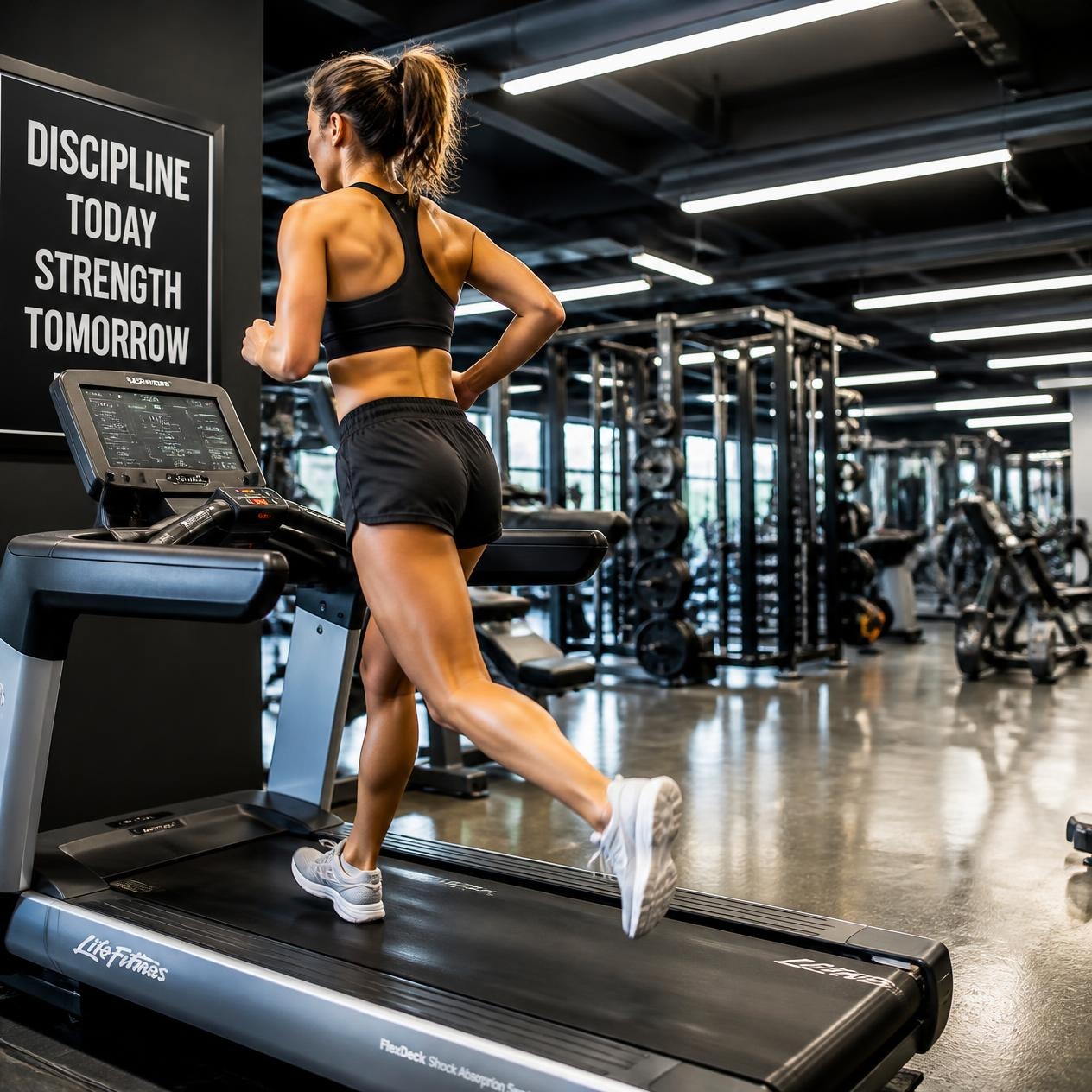
Self-Lubricating Treadmill: How It Works and Why to Choose One
A self-lubricating treadmill represents one of the most interesting innovations in the fitness equipment sector in recent years. Whether it is for a private home gym or a professional gym, one of the aspects that most influences the lifespan of a treadmill is the correct lubrication of the running deck and the belt. Neglected maintenance increases friction, strains the motor, accelerates the wear of components, and can cause costly repair interventions.
Traditionally, treadmills require periodic manual lubrication using specific silicone oil. This operation, although relatively simple, is often forgotten or performed incorrectly. The result is a progressive loss of machine efficiency and an increase in mechanical stress. To solve this problem, many manufacturers have developed self-lubrication systems that automatically distribute the lubricant in the necessary quantities during normal use.
This technology offers concrete advantages to both private users and fitness center managers, reducing the time dedicated to routine maintenance and helping to preserve the machine's performance, quietness, and reliability over the long term. In this guide, we will analyze how self-lubricating systems work, their benefits, the differences compared to traditional models, and the criteria to consider before purchasing.
- How a self-lubricating system works
- The advantages of self-lubrication
- Differences compared to manual maintenance
- Protection of the motor and belt
- Why it is useful in gyms
- The benefits for the home gym
- How to choose the right model
- Why it represents a smart investment
How a self-lubricating system works
The operating principle is simple but extremely effective. In treadmills equipped with self-lubrication, there is a reservoir containing specific lubricant and a distribution system that gradually transfers the product between the belt and the running deck.
Depending on the manufacturer, the release of the lubricant can occur automatically after a certain number of hours of use or through systems controlled by the machine's electronics. In both cases, the goal is to keep the lubrication level constant, avoiding both excess and lack of product.
This uniform distribution reduces friction and allows the motor to work in optimal conditions during every training session, helping to improve reliability and comfort.
The role of the reservoir
The lubricant is stored in a special container that is easily refillable during normal scheduled maintenance, avoiding frequent interventions on the running deck.
Automatic lubricant distribution
The system progressively doses the product in the necessary quantities, maintaining a constant protective film between the surfaces subject to friction.
The advantages of self-lubrication
The main benefit consists of the drastic reduction of manual interventions. Those who use the treadmill frequently no longer have to remember to perform periodic lubrication, reducing the risk of forgetfulness that could compromise the machine's lifespan.
An automatic system also guarantees a much more uniform distribution compared to manual application, avoiding accumulations of lubricant in some areas and deficiencies in others. This helps to make the run smoother and quieter.
In the long run, less friction translates into a reduction in the wear of the running deck, the belt, and the transmission system, with a consequent reduction in extraordinary maintenance costs.
Time savings
Automating one of the main maintenance operations allows you to dedicate yourself exclusively to training without worrying about periodic deadlines.
Longer component life
Constant lubrication reduces mechanical stress and extends the useful life of the entire machine.
Differences compared to manual maintenance
Traditional treadmill belt maintenance normally requires lifting the belt, applying the lubricant, and subsequently distributing it uniformly through a few minutes of operation. Although the operation is not particularly complex, it requires attention and regularity.
With a self-lubricating system, most of these activities are eliminated. The user simply needs to periodically check the lubricant level and refill it when necessary, following the manufacturer's instructions.
It is important to remember that self-lubrication does not completely eliminate machine maintenance. Cleaning the running deck, checking belt tension, and periodic checks of mechanical components remain essential.
Traditional lubrication
Requires scheduled interventions and correct application of the product to avoid premature wear and increased friction.
Simplified maintenance
Self-lubrication reduces manual interventions while maintaining high machine performance with less effort from the user.
Protection of the motor and belt
One of the most important advantages concerns motor protection. When the running deck is not sufficiently lubricated, the resistance to belt movement increases, and the motor is forced to develop greater force to maintain the set speed.
This increase in effort causes greater electrical consumption, higher operating temperatures, and accelerated wear of internal components. Proper lubrication, on the other hand, reduces the load on the motor, improving its reliability and efficiency.
The belt also benefits from the reduction in friction, maintaining elasticity, smoothness, and comfort during walking or running for longer.
Reduction of friction
Less friction means less energy required by the motor, smoother operation, and a more pleasant running sensation.
Consistent performance over time
Protecting surfaces subject to wear helps to maintain the quality of training unchanged even after many hours of use.
Why it is useful in gyms
In a fitness center, a treadmill can run for many hours every day. Reducing maintenance interventions means decreasing the risk of machine downtime and ensuring equipment is always available to users.
The self-lubricating system also helps to standardize maintenance, avoiding errors due to non-uniform manual interventions. This represents an important advantage for managers who wish to maintain high efficiency in their fleet of machines.
Less wear on components also leads to a reduction in overall management costs, improving the return on investment for professional equipment.
Reduction of downtime
Less extraordinary maintenance means greater machine availability and a better experience for gym users.
Cost optimization
Simpler scheduled interventions allow for containing operating expenses and extending the equipment's lifecycle.
The benefits for the home gym
For the home user, the advantages are also significant. Those who train a few times a week can easily forget maintenance deadlines, especially if the treadmill is used by multiple people.
Thanks to the automatic system, the risk of damaging the motor due to lack of lubrication is significantly reduced. This makes the machine more reliable and requires less attention in daily management.
Self-lubrication also represents added value for those who wish to purchase a treadmill intended to last many years without complications in routine maintenance.
Greater convenience
The automatic system eliminates many of the tasks typical of traditional maintenance, making the treadmill easier to manage.
More reliability over time
Constant lubrication helps maintain high performance and comfort even with frequent use.
How to choose the right model
When evaluating the purchase of a self-lubricating treadmill, it is important to consider not only the presence of the automatic system but also the overall quality of the machine. The frame, motor, electronics, running deck dimensions, and availability of technical support directly affect the user experience.
It is also advisable to check the type of lubricant required. Some models exclusively use specific treadmill silicone oil provided by the manufacturer, while others allow the use of compatible products. Always following the manufacturer's instructions is essential to preserve the warranty and ensure the correct functioning of the system.
To learn more about the features of professional equipment dedicated to indoor training, you can consult self-lubricating treadmill, where further information is available on the technologies adopted in models intended for both domestic and professional use.
Evaluate the machine as a whole
Self-lubrication represents an important added value, but it must be accompanied by solid construction and quality components.
Spare parts and support
The availability of technical support and original spare parts allows the lubrication system to remain efficient even after many years.
Why it represents a smart investment
A low-maintenance professional treadmill offers advantages that go well beyond simple convenience. Automating one of the most important operations for the health of the machine means decreasing the risk of errors, preserving the motor, improving the smoothness of the run, and increasing the overall lifespan of the equipment.
Whether in a home gym or in professional facilities, a self-lubricating system helps to reduce the time dedicated to routine interventions and to limit the risk of costly breakdowns caused by insufficient maintenance. This allows you to focus on training and service continuity, two fundamental aspects for getting the most value from the investment.
Evaluating a treadmill equipped with this technology means choosing a modern solution, designed to simplify daily management and maintain high performance over time, offering a more reliable, comfortable, and efficient user experience.
Comments (0)