
Trolley
You have no items in your shopping cart

 Budgets
 Dumbers
 Discs
Discs
 Benches
 Racks and Rigs
 Weights Holders
 Isotonic machines
 Calisthenics
 Cardio
 Kettlebells
 Flooring
 Gym Set
 Accessories
 Combat
 ARTI MARZIALI
 CONTAINER GYM
 Tug-Of-War
 Used Gym Equipment
 PILATES MACCHINARI
 GINNASTICA ARTISTICA
 CAMPI DA PADEL
 Prodotti in Pronta Consegna
 Informazioni
 IRONMAN
 Gift Card
- Donatif
- General information
- 0 I like it
- 708 Views
- 0 comments
- gym flooring, safety flooring, gym safety, shock-absorbing materials
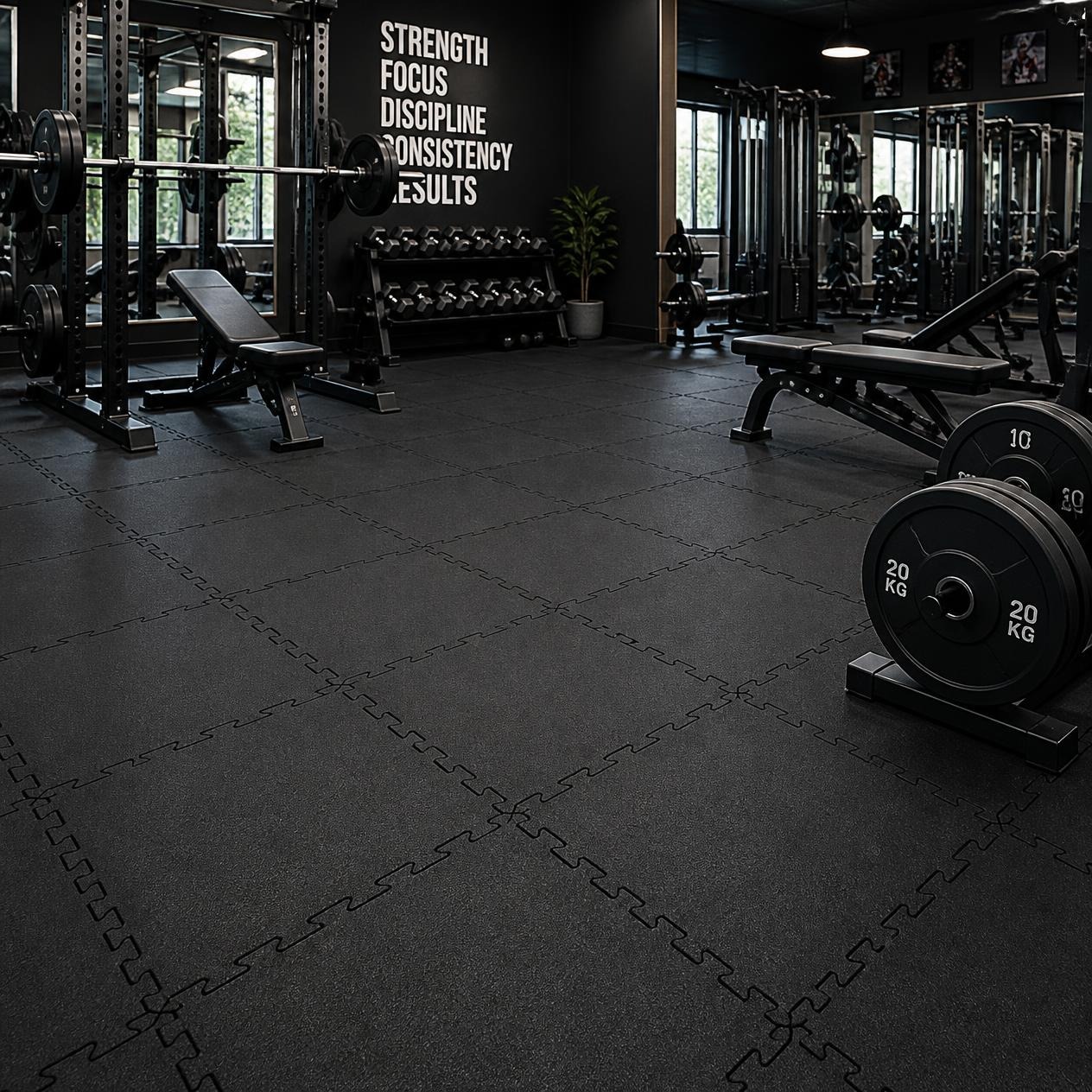
Tatami vs SBR Rubber: Which to choose for your combat area?
Choosing tatami flooring is one of the most important decisions for those designing a new combat area or looking to renovate an existing gym. MMA, Brazilian Jiu-Jitsu, Grappling, Functional Training, and Cross-Training have very different requirements, making it essential to carefully evaluate the flooring material. One of the most common mistakes is thinking that a single surface can perfectly satisfy all sports activities without compromise.
In recent years, the comparison between EVA tatami and SBR rubber flooring has become increasingly frequent. Both solutions offer specific advantages, but they are designed to meet different needs. Recycled rubber offers high resistance to static and dynamic loads generated by weight training, while tatami guarantees greater impact absorption, comfort, and safety during throws, grappling, and ground work.
For a sports entrepreneur, the choice should not be driven solely by the initial cost, but by the type of use, the expected duration of the investment, and the experience you want to offer your members. Understanding the difference between EVA and SBR allows you to create a truly functional combat area, avoiding design errors that could compromise both training sessions and the longevity of the flooring.
- The characteristics of the two materials
- Why choose EVA tatami
- When SBR rubber is the right choice
- Which flooring for MMA and Grappling
- Mixed training and Cross-Training
- Resistance, maintenance, and durability
- How to choose the best solution
- Evaluating the long-term investment
The characteristics of the two materials
The comparison between EVA and SBR rubber starts with the physical properties of the materials. Tatami is generally produced in high-density EVA foam, a foam material designed to absorb impacts, distribute forces, and offer a comfortable surface during bodyweight training.
SBR rubber, on the other hand, is derived mainly from recycled vulcanized rubber and is characterized by greater compactness, higher weight, and a high capacity to withstand concentrated loads. For this reason, it is often used in areas dedicated to weightlifting.
Understanding the structural differences between these materials allows you to identify the most suitable solution for the activities carried out daily in the gym.
The structure of EVA foam
The cellular structure of the foam allows it to absorb part of the energy generated during falls, rolls, and throws, improving athlete comfort.
The characteristics of SBR rubber
The higher density makes recycled rubber extremely stable under heavy loads, limiting permanent deformation during use with barbells and machines.
Why choose EVA tatami
Tatami is the benchmark choice for disciplines where athlete safety and protection are a priority. During MMA, grappling, wrestling, and Brazilian Jiu-Jitsu training, the body is in constant contact with the surface, making the material's ability to cushion impacts essential.
Modern high-density EVA foams guarantee an excellent balance between stability and cushioning. Furthermore, professional surfaces are designed to limit skin abrasions without compromising the grip necessary during standing phases.
For combat areas dedicated primarily to combat sports, tatami continues to be the most technically suitable solution.
Impact absorption
Falls, throws, and grappling techniques require a surface capable of reducing the stress transmitted to the joints, improving comfort and safety during training.
Comfort in ground-based disciplines
Prolonged work on the floor makes surface quality particularly important, especially in disciplines that involve constant contact between skin and tatami.
When to use gym SBR rubber
SBR rubber finds its ideal application in areas dedicated to strength training. Barbells, dumbbells, and kettlebells subject the floor to highly concentrated loads that require high mechanical resistance.
The greater density of the material allows for limited deformation and wear even under intensive use. Furthermore, the high mass helps keep the flooring stable without the need for special fastening systems.
When the priority is to protect the subfloor from the impact of weights, SBR rubber is an extremely reliable solution.
Performance under heavy loads
The compact structure of the rubber effectively distributes the weight of equipment and barbells, reducing the risk of permanent indentations.
Wear resistance
In environments characterized by heavy traffic and constant movement of equipment, recycled rubber maintains high performance even after years of use.
What is the best MMA flooring?
When the main goal of the room is to host MMA, grappling, or Brazilian Jiu-Jitsu training, tatami offers characteristics that are difficult for SBR rubber to replicate. Impact absorption, elastic response, and greater protection during falls make EVA foam the preferred solution in professional combat areas.
Grappling techniques involve frequent throws, rolls, and ground work. Using a surface that is too rigid would increase the load on the joints and reduce the comfort perceived by the athletes.
For this reason, many specialized academies choose exclusively professional tatami for their areas dedicated to combat sports.
Managing throws
An elastic surface helps absorb part of the energy developed during falls, improving safety for both beginners and competitors.
Ground training
During long grappling sessions, the quality of the surface directly influences comfort, mobility, and the quality of the sporting experience.
Mixed training and Cross-Training
Many modern gyms integrate combat sports, functional training, and athletic preparation in the same environment. In these cases, it is important to carefully evaluate the primary use of the area.
If barbells and heavy weights are used frequently, it may be appropriate to separate the operational zones by adopting different materials based on the activities performed.
Smart design allows for high performance in both areas, avoiding compromises that would penalize one of the disciplines.
Dividing spaces
Creating specialized areas allows each material to be used under the conditions for which it was designed, improving safety and durability.
Modularity as an advantage
Modular systems facilitate future expansions or changes to the gym's internal layout without invasive structural work.
Resistance, maintenance, and long-term durability
The lifespan of flooring depends not only on the material but also on daily use, build quality, and scheduled maintenance.
Tatami requires regular cleaning to maintain its surface characteristics, while SBR rubber requires periodic maintenance to preserve its aesthetic appearance and limit dust accumulation.
Both solutions can guarantee a long operational life if installed correctly and used in the environments for which they were designed.
Tatami maintenance
Constant cleaning and the timely replacement of damaged elements allow for the maintenance of high safety and hygiene standards.
Rubber maintenance
Recycled rubber requires proper cleaning and periodic checks to preserve performance and aesthetic appearance over time.
How to choose the best solution
The choice between EVA and SBR must start with an analysis of the facility's primary activities. A gym oriented primarily toward combat sports will benefit more from professional tatami, while a weight room will prioritize the resistance of rubber.
For multifunctional facilities, it is often preferable to design dedicated areas, avoiding the use of a single flooring type for vastly different activities.
To evaluate the best available solutions, it is advisable to consult a professional range of tatami flooring, comparing density, thickness, modularity, and build quality based on the operational needs of the gym.
Analyzing real needs
Number of users, training intensity, type of courses, and the presence of heavy equipment are the main criteria to consider before purchasing.
Relying on specialized suppliers
A competent partner can support the design of the combat area by suggesting the most suitable solution from a technical and economic perspective.
Evaluating the long-term investment
The choice of flooring directly influences safety, training quality, facility longevity, and member satisfaction. Evaluating only the initial price risks leading to higher costs over time due to premature replacements or performance that does not meet the facility's actual needs.
By carefully analyzing the type of activity performed, the frequency of use, and the gym's goals, it is possible to identify the most suitable material. In many situations, the combination of dedicated surfaces is the most effective solution to ensure operational excellence in both combat areas and spaces intended for athletic preparation.
A well-planned investment allows you to offer a professional environment, increase athlete safety, and enhance the gym's image, contributing to the growth of the business in the medium and long term.
Comments (0)