
Trolley
You have no items in your shopping cart

 Budgets
 Dumbers
 Discs
Discs
 Benches
 Racks and Rigs
 Weights Holders
 Isotonic machines
 Calisthenics
 Cardio
 Kettlebells
 Flooring
 Gym Set
 Accessories
 Combat
 ARTI MARZIALI
 CONTAINER GYM
 Tug-Of-War
 Used Gym Equipment
 PILATES MACCHINARI
 GINNASTICA ARTISTICA
 CAMPI DA PADEL
 Prodotti in Pronta Consegna
 Informazioni
 IRONMAN
 Gift Card
- Donatif
- General information
- 0 I like it
- 423 Views
- 0 comments
- gym flooring, safety flooring, gym safety, shock-absorbing materials
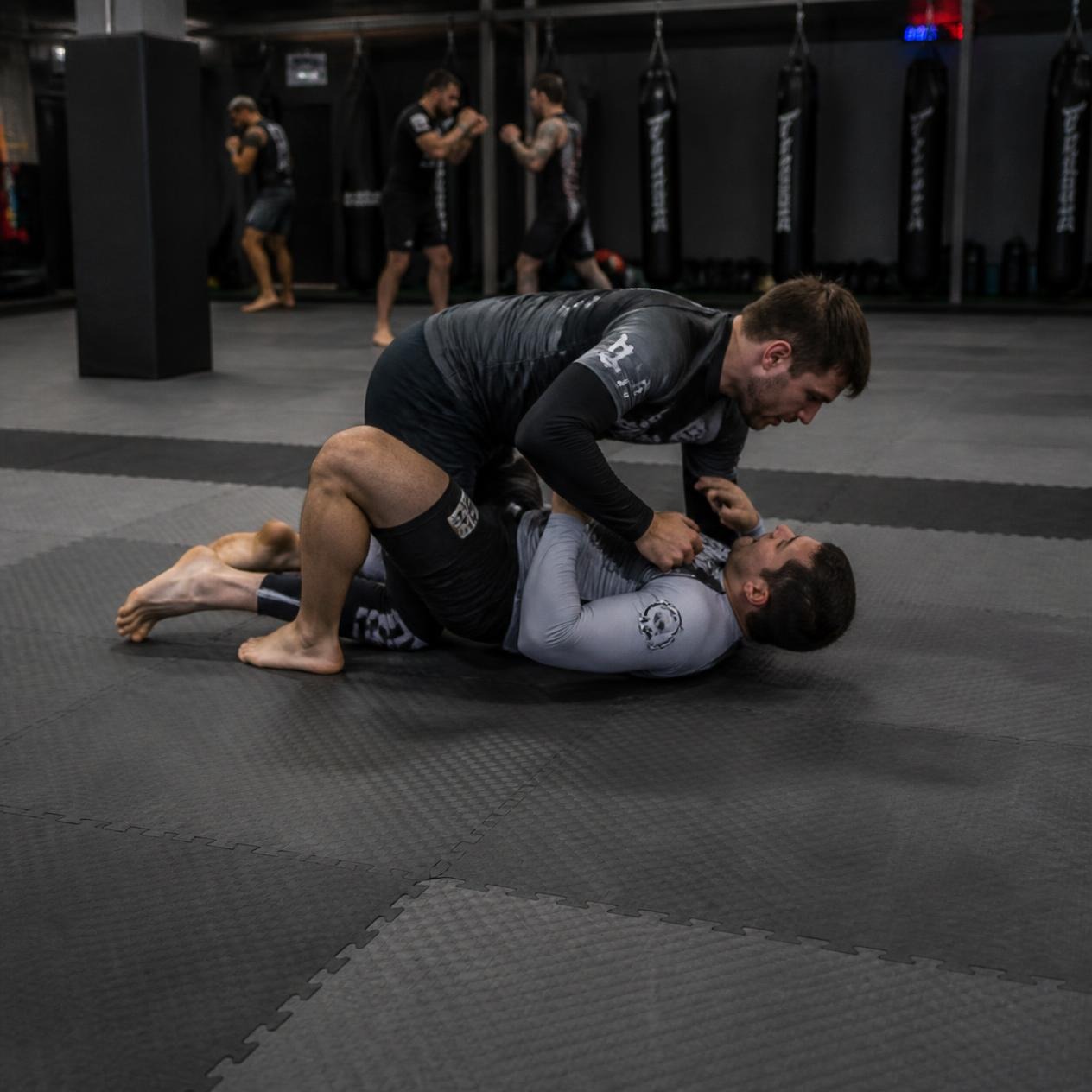
Tatami for MMA and Grappling: A Guide to Anti-Abrasion Choices
Choosing the right MMA tatami is one of the most important decisions for gym owners, fitness centers, and martial arts academies that want to offer a safe, professional, and long-lasting environment. When it comes to disciplines like MMA, grappling, Brazilian Jiu-Jitsu, and wrestling, the focus is often on the thickness of the tatami, while neglecting a decisive feature: the surface finish. It is the surface that athletes are in continuous contact with that influences comfort, skin abrasions, performance, and maintenance costs.
In disciplines that involve numerous takedowns, ground transitions, and dragging movements, the skin is subjected to high stress. A material that is too rough can cause frequent abrasions, increasing athlete discomfort and slowing down recovery between training sessions. Conversely, a surface that is too smooth could compromise the grip needed for certain techniques, creating a trade-off that requires in-depth technical evaluation.
For a gym manager, choosing the correct tatami means protecting investments, improving the member experience, and reducing premature flooring deterioration. This guide analyzes all the fundamental aspects of the choice, comparing the main surface finishes available on the market and explaining which features to prioritize to obtain the best balance between safety, comfort, and durability.
- Why the tatami surface is fundamental
- Rice straw effect vs. smooth tatami
- How to reduce abrasions during grappling
- Materials and construction quality
- Flooring durability and maintenance
- How to choose tatami for a professional gym
- Evaluating return on investment
- How to make the best decision
Why the tatami surface is fundamental
In combat disciplines, the tatami surface is continuously subjected to friction, compression, and rotation. Every training session involves thousands of movements where arms, knees, shoulders, and feet come into direct contact with the floor. For this reason, the surface texture influences much more than just the feel to the touch.
A properly designed surface distributes friction evenly, limiting pressure points and reducing the risk of friction burns. This aspect becomes particularly important during intensive grappling training, where athletes spend a large part of the session on the mat.
For the facility manager, investing in the right surface means decreasing member complaints, improving the perceived quality of the center, and preserving the flooring for longer.
Comfort during training
Comfort is not just about the softness of the material but also the surface's ability to accompany the athlete's natural movement without generating excessive friction.
Impact on safety
A correct balance between grip and smoothness allows for the execution of dynamic techniques while maintaining stability during standing phases and limiting abrasions during ground work.
Rice straw effect vs. smooth tatami
One of the most frequent comparisons concerns smooth vs. rough tatami. Rice straw effect surfaces offer superior grip and are ideal for disciplines where foot stability is a priority, such as karate or taekwondo. However, in disciplines with continuous ground contact, they can increase friction on the skin.
Smooth surfaces, on the other hand, are designed to decrease abrasion while still maintaining a good level of control. For MMA and Brazilian Jiu-Jitsu, they often represent the most balanced solution.
The final choice depends on the gym's prevalent activities, the level of the athletes, and the intensity of the sessions scheduled during the week.
When to choose the rice straw surface
This finish is recommended when most classes involve standing techniques, rapid changes of direction, and limited prolonged wrestling work.
When to prefer a smooth surface
Smooth surfaces are indicated for MMA, grappling, and BJJ as they significantly reduce the risk of skin abrasions while maintaining good controllability during movement.
How to reduce abrasions during grappling
Preventing abrasions is one of the elements most appreciated by athletes. A quality anti-abrasion tatami limits friction without compromising safety.
Modern production technologies allow for micro-textured surfaces that improve the trade-off between grip and comfort. This allows athletes to train more frequently with less skin irritation.
Reducing abrasions also means decreasing the risk that small skin traumas force members to temporarily interrupt their training.
Factors that increase friction
Pressure exerted, temperature, humidity, material quality, and the degree of surface wear directly influence the formation of abrasions.
Prevention strategies
Proper cleaning, the use of professional materials, and the timely replacement of worn modules contribute to maintaining high flooring performance.
Materials and construction quality
The composition of the inner core affects the tatami's ability to absorb impacts and maintain its characteristics over time.
High-density EVA foams, controlled production processes, and chemical-resistant coatings ensure greater durability even in high-use contexts.
To learn more about the different solutions available, it is useful to consult the range of grappling flooring offered by specialized manufacturers.
EVA foam density
A correct density improves impact absorption, avoiding permanent deformations even after years of use.
Coating quality
The surface coating must resist detergents, sweat, humidity, and continuous friction without losing its characteristics.
Flooring durability and maintenance
Professional flooring is a multi-year investment. For this reason, maintenance plays a fundamental role in preserving aesthetics and performance.
Daily cleaning with suitable products prevents the accumulation of dirt that could alter the surface's behavior. It is also important to periodically check for any signs of wear or deformation.
Proper maintenance allows for significantly extending the tatami's life cycle, reducing the overall cost of the investment.
Daily cleaning
Regularly sanitizing the tatami improves gym hygiene and keeps the surface friction level constant.
When to replace the tatami
Obvious signs of permanent crushing, loss of elasticity, or deterioration of the coating indicate the need to replace the affected modules.
How to choose tatami for a professional gym
Every facility has different needs. An academy focused on Brazilian Jiu-Jitsu will require different characteristics than a multisport center.
Training frequency, the number of practitioners, the presence of competitions, and the level of the athletes must be considered when selecting the flooring.
Evaluating price alone can translate into higher costs in the long run due to early replacements or increased maintenance.
Analyzing real needs
Before purchasing, it is appropriate to define which disciplines will be practiced and what the level of daily use will be.
Relying on specialized suppliers
An experienced partner can recommend the most suitable configuration, avoiding design errors that would affect the gym's profitability.
Evaluating return on investment
A professional tatami is not just an initial cost but an element that contributes directly to the facility's reputation.
Satisfied athletes, fewer superficial injuries, and a better training experience foster member loyalty and positive word-of-mouth.
Considering the total cost of ownership, including maintenance and durability, allows for more realistic comparisons between the different solutions available.
Initial cost vs. real cost
Higher quality products may require a larger investment but guarantee a significantly longer useful life.
Long-term benefits
Reliable flooring reduces extraordinary interventions, improves the gym's image, and contributes to business growth.
How to make the best decision
Choosing the best tatami does not depend exclusively on thickness but above all on the quality of the surface, the resistance of the materials, and the suitability for the disciplines practiced. Carefully evaluating the surface finish allows you to offer a more comfortable environment for athletes and preserve the investment over time.
For facilities oriented toward MMA, grappling, and Brazilian Jiu-Jitsu, prioritizing surfaces designed to limit friction is a strategic choice that improves the user experience and contributes to training continuity. A complete technical evaluation, supported by specialized suppliers, allows you to identify the solution best suited to the gym's goals.
By analyzing materials, finishes, maintenance, durability, and construction quality, it is possible to make an informed investment capable of supporting the facility's growth, improving member satisfaction, and ensuring high performance even after years of intensive use.
Comments (0)