
Trolley
You have no items in your shopping cart

 Budgets
 Dumbers
 Discs
Discs
 Benches
 Racks and Rigs
 Weights Holders
 Isotonic machines
 Calisthenics
 Cardio
 Kettlebells
 Flooring
 Gym Set
 Accessories
 Combat
 ARTI MARZIALI
 CONTAINER GYM
 Tug-Of-War
 Used Gym Equipment
 PILATES MACCHINARI
 GINNASTICA ARTISTICA
 CAMPI DA PADEL
 Prodotti in Pronta Consegna
 Informazioni
 IRONMAN
 Gift Card
- Donatif
- General information
- 0 I like it
- 639 Views
- 0 comments
- gym flooring, safety flooring, gym safety, shock-absorbing materials
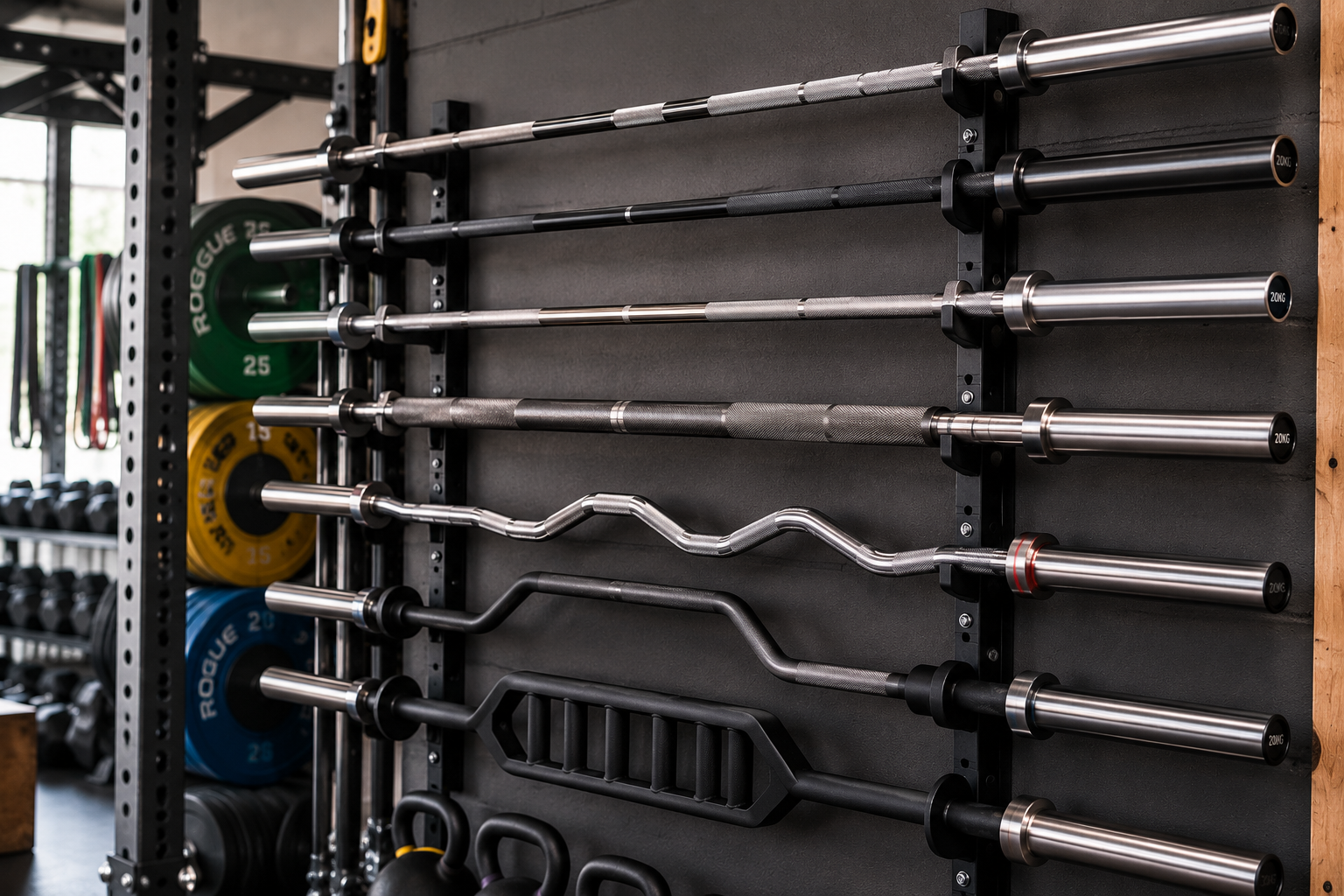
25mm, 28mm or 50mm Barbells: Which diameter to choose?
When buying your first barbell for a home gym, one of the aspects that generates the most doubt concerns the diameter. Many users choose based on price or current availability, without considering that the barbell standard determines which plates can be used, what loads can be handled, and how easy it will be to evolve your equipment over time.
The barbell diameter is therefore not just a simple technical detail. The difference between a 25 mm model, a 28 mm model, and a 50 mm Olympic barbell directly influences compatibility, robustness, sensations during training, and intended use. A correct choice allows you to avoid double purchases and build a gym that is more consistent with your goals.
Before investing in a barbell, it is essential to understand how the different standards work, which plates can be used, and which solution is most suitable for amateur training, strength development, or professional use. Knowing these differences helps to transform an apparently simple purchase into a strategic decision for the future of your gym.
- The main barbell standards
- 25 mm barbells: features and use
- 28 mm barbells: the most common compromise
- 50 mm Olympic barbells
- Compatibility between diameter and plates
- How to choose the correct diameter
- Common mistakes during purchase
- Investing in the right barbell
The main barbell standards
The three most common standards in the world of weight training are represented by 25 mm, 28 mm, and 50 mm barbells. These measurements refer mainly to the diameter of the sleeves where the plates are inserted, not necessarily to the diameter of the entire gripped bar.
Each standard is created for different needs. The smaller models are generally associated with budget kits or light home use, while the 50 mm Olympic diameter represents the standard used in professional gyms and competitions.
Choosing correctly means evaluating your current training level but also considering the possibility of future growth.
How standards have evolved
The first barbells intended for home use favored simplicity and cost containment. With the spread of strength training and Olympic disciplines, robustness, precision, and load capacity have become increasingly important.
This led to the spread of the Olympic standard as a professional reference.
Why a few millimeters make a difference
An apparently minimal difference changes the overall structure of the system. The diameter of the bushings, the type of compatible plates, the resistance of the barbell, and the availability of accessories change.
For this reason, choosing without knowing the standards can lead to future limitations.
25 mm barbells: features and use
25 mm barbells are generally designed for those approaching weight training or for non-intensive home use. They are often included in complete kits sold to those buying their first equipment to train at home.
The main advantage of this standard is the low cost, which allows you to start with a reduced investment. However, the load capacity and the availability of accessories can represent a limit when training becomes more advanced.
For those who use moderate loads and perform occasional workouts, it can be a sufficient solution, but it is important to know its limits.
When it can be a good choice
A 25 mm barbell can be suitable for absolute beginners, general fitness workouts, and programs where very high loads are not expected.
It allows you to start building a training routine without a significant initial investment.
The limits of the 25 mm standard
With the increase in loads, lower robustness compared to higher standards may emerge. Furthermore, the choice of compatible plates can become more limited.
Those who foresee significant growth should carefully evaluate whether this standard is really suitable for their path.
28 mm barbells: the most common compromise
The 28 mm diameter represents one of the most common standards in home gyms and gyms oriented towards general strength training. It offers a good balance between cost, robustness, and availability of accessories.
Compared to cheaper models, it generally guarantees greater load capacity and a construction more suitable for continuous use.
For many enthusiasts, it represents the ideal balance point between advanced amateur needs and superior performance.
The advantages of the 25mm vs 28mm barbell
The transition from 25 mm to 28 mm generally brings greater solidity and a better experience during exercises like squats, bench press, and deadlifts.
The greater diffusion of this standard also makes it easy to find compatible plates and accessories.
Who it is recommended for
It is a recommended choice for those who train regularly, want to improve their strength, and wish to purchase equipment that is more durable than basic kits.
Many complete home gyms use this standard as the main configuration.
50 mm Olympic barbells
The Olympic barbell represents the professional standard par excellence. The 50 mm sleeves allow the use of Olympic plates and are designed to support high loads and intensive use.
These barbells are generally equipped with superior construction features, such as more advanced rotation systems, high-strength materials, and a greater capacity to withstand dynamic stresses.
They are the main choice for professional gyms, powerlifting, weightlifting, and athletes who seek the highest level of performance.
The Olympic barbell diameter
The 50 mm Olympic standard has become the international reference for most strength disciplines.
Its widespread use ensures a wide availability of compatible plates, accessories, and components.
When to choose the 50 mm
Those who foresee intensive training, significant load progressions, or professional use should seriously consider this standard.
The higher initial investment is offset by greater durability and versatility over time.
Compatibility between diameter and plates
One of the most important aspects in choosing a barbell concerns compatibility with the plates already owned or that you wish to purchase. Each standard requires plates with a specific internal hole.
Purchasing components belonging to different standards can make it impossible to use the equipment or require additional solutions.
For this reason, it is always advisable to choose the standard first and subsequently build your set of weights.
The 28mm hole plates
Plates with a 28 mm hole are designed for barbells with compatible sleeves and represent a very common solution in home gyms.
Before purchasing, it is essential to always check the measurements declared by the manufacturer.
Planning future purchases
A consistent choice allows you to progressively expand your gym without having to replace all the equipment.
Thinking about the future reduces the risk of unnecessary expenses.
How to choose the correct diameter
The choice of diameter depends mainly on goals, training frequency, and available budget. There is no universally better standard for every person, but there is one that is most suitable for every need.
A beginner who trains occasionally may have different needs than an athlete who aims to progressively increase loads for many years.
Evaluating your future path helps you choose a more cost-effective solution.
Choice for a home gym
For a home gym destined to grow over time, it is often better to orient yourself towards more widespread and easily expandable standards.
This allows you to add new plates and accessories without completely modifying the system.
Choice for professional use
Professional facilities normally require equipment designed for intensive use, where reliability and durability become absolute priorities.
In these cases, the Olympic diameter often represents the most suitable solution.
Common mistakes during purchase
One of the most frequent mistakes is to buy the cheapest barbell without checking compatibility with the available plates.
Another mistake is to underestimate the growth of your training level and choose a standard that could become limiting after a short time.
Informing yourself about the standards before purchasing allows you to avoid many future problems.
Choosing only based on price
The initial cost is important, but it must be evaluated together with durability, expansion possibilities, and construction quality.
A cheaper product does not always represent the best investment.
Buying without checking specifications
Many online purchases are made by reading only the product title, without checking diameter, capacity, and compatibility.
Carefully analyzing the technical data sheet reduces the risk of errors.
Investing in the right barbell
Choosing between 25 mm, 28 mm, and 50 mm barbells means planning the future of your gym. The diameter influences compatibility, durability, growth possibilities, and training quality. A correct choice allows you to avoid premature replacements and build a weight system consistent with your goals.
To compare professional solutions and find the barbell best suited to your needs, you can consult the range of Donatif barbells and plates, designed to offer quality and reliability both in home gyms and in professional facilities.
Knowing the standards before purchasing allows you to transform a simple expense into an intelligent investment, creating a gym ready to accompany every phase of your training journey.
Comments (0)