
Trolley
You have no items in your shopping cart

 Budgets
 Dumbers
 Discs
Discs
 Benches
 Racks and Rigs
 Weights Holders
 Isotonic machines
 Calisthenics
 Cardio
 Kettlebells
 Flooring
 Gym Set
 Accessories
 Combat
 ARTI MARZIALI
 CONTAINER GYM
 Tug-Of-War
 Used Gym Equipment
 PILATES MACCHINARI
 GINNASTICA ARTISTICA
 CAMPI DA PADEL
 Prodotti in Pronta Consegna
 Informazioni
 IRONMAN
 Gift Card
- Donatif
- General information
- 0 I like it
- 2553 Views
- 0 comments
- stress reduction, improved self-esteem, physical and mental well-being, gym training
READING TIME: 9 MINUTES ➤➤
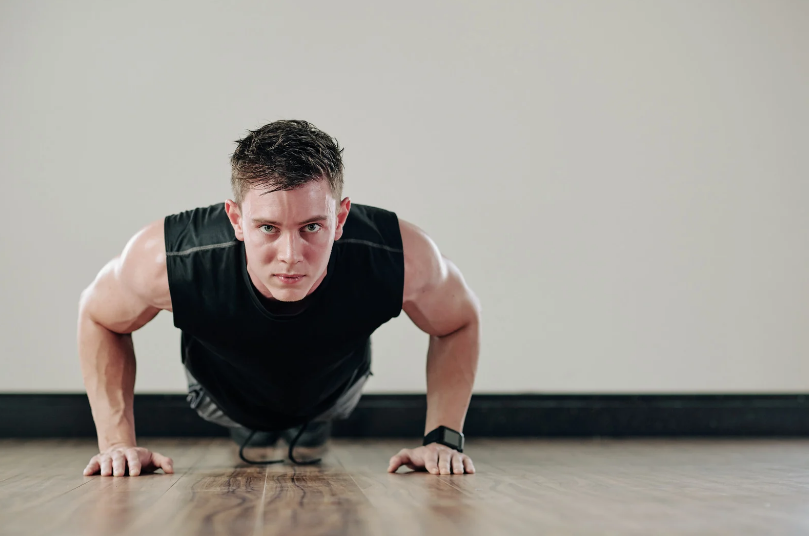
A bootcamp workout combines jumps, sprints, bodyweight exercises, and dynamic loads in high-intensity sequences. In this context, bootcamp flooring is not just a surface covering, but a structural component that directly affects safety, stability, and the overall durability of the training area. Overlooking the quality of the surface means exposing the space to premature wear, excessive noise, and repeated microtrauma.
Shock-absorbing bootcamp flooring is designed to handle continuous impact and sudden load variations. For advanced home gyms and micro gyms, choosing the right technical support improves the perception of solidity and delivers an experience aligned with professional standards.
- Why bootcamp flooring impacts safety and injury prevention
- Stability and grip: the technical foundation of high-intensity circuits
- Materials and density in shock-absorbing bootcamp flooring
- Acoustic comfort and protection of underlying surfaces
- Choosing and installing shock-absorbing fitness flooring
Why bootcamp flooring impacts safety and injury prevention
Shock-absorbing fitness flooring refers to a surface engineered to absorb part of the energy generated by impact. During burpees, box jumps, or explosive lunges, rebound forces are transferred to ankles and knees. High-density technical rubber reduces peak stress and distributes load more evenly.
In functional circuits, repetition is the critical factor. Even moderate impact, when repeated hundreds of times, can turn into joint stress. A rubber gym flooring for circuits solution with controlled elastic behavior helps limit vibrations and microtrauma, improving training continuity over time.
Impact absorption in plyometric exercises
Plyometrics require surfaces that respond quickly to compression. If the material is too rigid, energy returns almost entirely to the body. If it is too soft, stability is compromised. Shock-absorbing bootcamp flooring works by balancing elasticity and support.
For micro gyms and personal trainers, this aspect also affects the professional perception of the space. A surface aligned with the type of exercises performed communicates technical attention and reduces the risk of interruptions due to muscle or tendon discomfort.
Vibration reduction and joint protection
Every jump generates vibration that spreads into the subfloor. High-quality rubber gym flooring reduces vertical transmission, protecting not only the athlete but also the building structure. This is particularly important in residential or shared environments.
Joint protection is not only relevant for advanced athletes. Home gym users also benefit from a technical surface that reduces cumulative fatigue. Over time, this translates into greater consistency and fewer forced breaks.
Stability and grip: the technical foundation of high-intensity circuits
Bootcamp sessions involve frequent direction changes. Professional bootcamp flooring must ensure controlled grip, preventing slips without excessively locking the foot in place. A carefully designed texture allows rapid movements while maintaining precise foot placement.
During exercises such as mountain climbers or dynamic planks, surface stability directly affects execution quality. Inconsistent flooring can cause micro-sliding that compromises posture and alignment.
Controlled traction during direction changes and sprints
Grip is a technical variable, not an aesthetic detail. Functional circuit flooring must maintain traction even in the presence of sweat or environmental humidity. This reduces the risk of losing balance during high-intensity phases.
For advanced home gyms, selecting a surface with the right finish makes training more predictable and precise. The sensation underfoot influences perceived safety and movement quality.
Movement control under dynamic load
When circuits include kettlebells or dumbbells, the surface must remain stable under variable loads. High-density rubber gym flooring for circuits limits excessive deformation and maintains flatness even after prolonged use.
This structural control becomes a competitive advantage for micro gyms seeking to offer high technical standards in limited spaces, without invasive structural interventions.
Materials and density in shock-absorbing bootcamp flooring
The term rubber gym flooring generally refers to a surface made from compressed rubber granules. Material density determines resistance, load-bearing capacity, and long-term durability. Not all solutions perform equally.
Higher density provides greater stability under weights and explosive movements. For intensive bootcamp training, material selection directly affects both performance and the longevity of the investment.
High-density rubber and elastic response
High-density rubber combines mechanical strength with controlled elastic response. This allows shock-absorbing bootcamp flooring to maintain structural integrity even after repeated stress.
In professional or semi-professional environments, this prevents depressions and uneven wear, preserving both aesthetics and functionality over time.
Recommended thickness for home gyms and micro gyms
Thickness affects both absorption and insulation. In a home gym, the right thickness balances protection and ease of installation. In micro gyms, higher protection levels may be necessary depending on training volume.
The evaluation should consider exercise type, loads used, and subfloor characteristics. A preliminary technical assessment helps avoid oversizing or insufficient solutions.
Acoustic comfort and protection of underlying surfaces
Shock-absorbing fitness flooring also provides sound insulation. In residential settings, reducing noise transmission is essential for maintaining comfort and consistent use of the space.
A technical surface limits vibration propagation to the subfloor, protecting the structure from micro-cracks caused by repeated impacts.
Sound insulation in residential environments
In a home gym, noise is often the first operational limitation. Properly sized home gym flooring reduces sounds generated by jumps and dynamic foot strikes.
This becomes a significant advantage for those who want to train at flexible hours without compromising household comfort.
Protection of the screed and subfloor
Every impact transfers energy to the underlying surface. Without an adequate technical layer, the risk is long-term damage to the screed or original flooring.
Shock-absorbing bootcamp flooring acts as a protective barrier, distributing loads and preserving the integrity of the environment.
Choosing and installing shock-absorbing fitness flooring
Selecting the right bootcamp flooring requires evaluating training intensity, available space, and performance goals. Modular solutions allow progressive adaptations, especially useful during gym upgrades.
A preliminary technical assessment helps configure the appropriate thickness and density, preventing mistakes that may affect safety and comfort.
Modular solutions and simplified installation
Modular rubber tiles simplify installation and maintenance. This approach is ideal for micro gyms seeking quick interventions without interrupting operations.
Modularity also allows partial replacements in case of wear, optimizing long-term costs.
When to rely on specialized technical support
For more structured projects, technical support enables evaluation of loads, usage volume, and environmental characteristics. This reduces error margins and enhances overall system performance.
Relying on an expert in shock-absorbing bootcamp flooring means integrating safety, performance, and durability into a single solution consistent with your gym’s identity.
Comments (0)