
Trolley
You have no items in your shopping cart

 Budgets
 Dumbers
 Discs
Discs
 Benches
 Racks and Rigs
 Weights Holders
 Isotonic machines
 Calisthenics
 Cardio
 Kettlebells
 Flooring
 Gym Set
 Accessories
 Combat
 ARTI MARZIALI
 CONTAINER GYM
 Tug-Of-War
 Used Gym Equipment
 PILATES MACCHINARI
 GINNASTICA ARTISTICA
 CAMPI DA PADEL
 Prodotti in Pronta Consegna
 Informazioni
 IRONMAN
 Gift Card
- Donatif
- General information
- 0 I like it
- 67 Views
- 0 comments
- gym flooring, safety flooring, gym safety, shock-absorbing materials
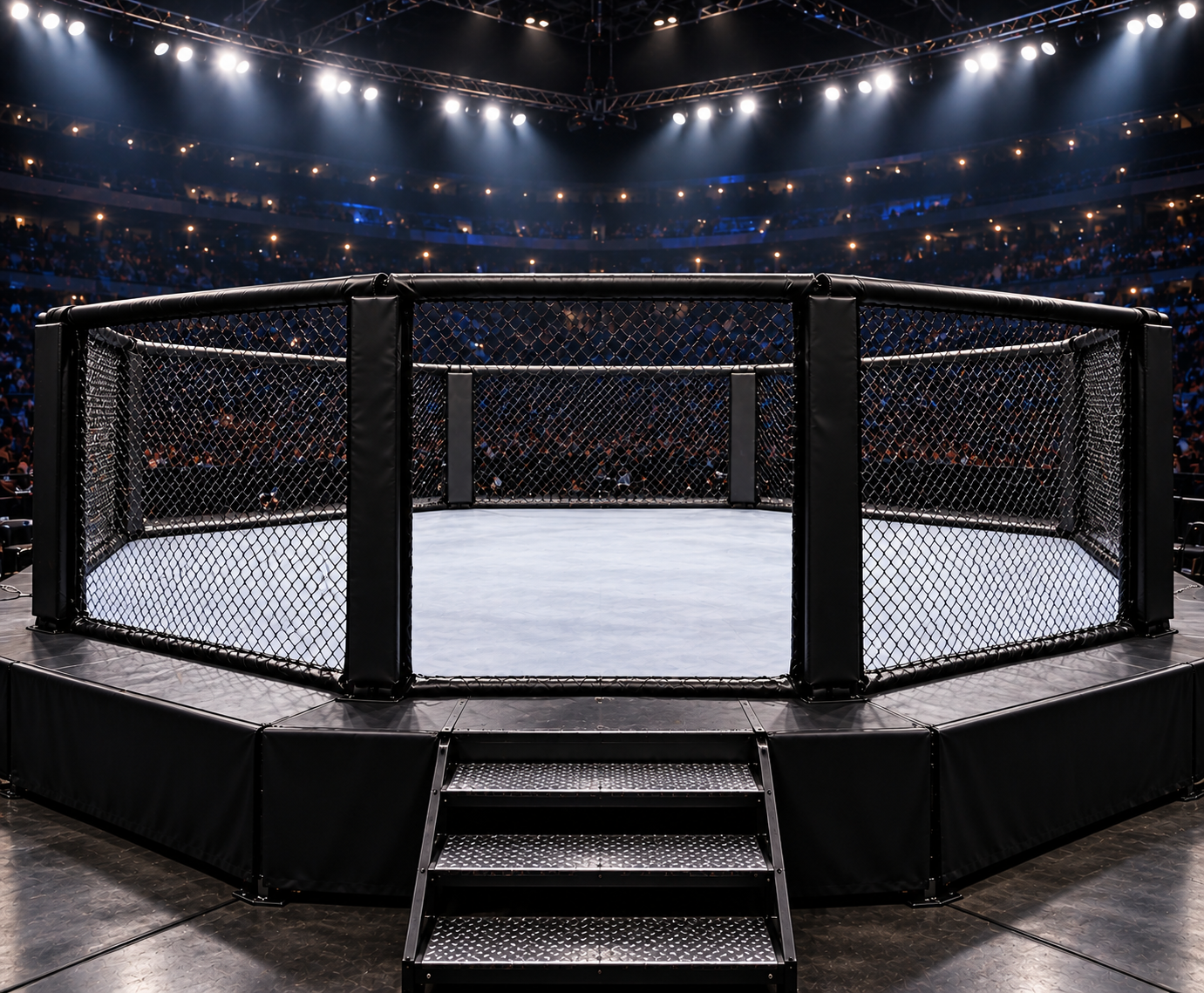
How to choose an MMA cage: technical criteria and requirements to evaluate
Choosing an MMA cage means evaluating much more than just the dimensions or the aesthetic appearance of the structure. An informed choice requires the analysis of verifiable factors such as intended use, manufacturing quality, configuration, available space, installation methods, maintenance, and technical documentation provided by the manufacturer. Considering these elements from the beginning allows for an investment that is consistent with the needs of the gym.
The needs of a center dedicated exclusively to mixed martial arts are different from those of a multi-sport gym, a combat sports academy, or a public facility. For this reason, the evaluation must start from operational objectives and the number of users who will use the cage during normal activity.
Before purchasing, it is advisable to gather all available technical information, compare the specifications of different models, and verify that the room meets the requirements for installation, use, and maintenance. The manufacturer's manual always represents the main reference for any design decision.
- Quick answer
- Which specifications really matter?
- Practical selection criteria
- Compatibility with the gym
- Comparative criteria table
- Errors to avoid
- Manuals and technical documentation
- FAQ
- Evaluating the investment
How to choose an MMA cage?
The choice of an MMA cage should be based on verifiable criteria: intended use, available dimensions, structural quality, configuration, installation methods, scheduled maintenance, and the manufacturer's technical documentation. Evaluating these aspects allows you to identify the most suitable solution without limiting yourself to price or aesthetics alone.
Every project should be developed considering the type of training planned and the number of users who will use the structure.
The manufacturer's technical specifications represent the main reference for comparing different models.
Defining objectives
It is important to establish whether the cage will be used primarily for MMA training, technical classes, sparring, or promotional activities.
Evaluating users
The frequency of use and the number of practitioners directly affect the choice of the most appropriate configuration.
Which technical specifications really matter?
The fundamental characteristics include manufacturing quality, assembly system, availability of spare parts, structural robustness, and ease of maintenance.
It is also advisable to check the characteristics of the padding, fastening systems, panels, and the technical documentation provided by the manufacturer.
To complete an area dedicated to combat sports, you can consult the range of combat sports equipment.
Structural quality
A construction designed for professional use helps guarantee stability and operational continuity throughout the entire life cycle of the equipment.
Components and spare parts
The availability of replaceable components and original spare parts facilitates scheduled maintenance over time.
What practical criteria help in the choice?
Before purchasing, it is useful to compare intended use, frequency of use, available space, installation methods, and the planned maintenance plan.
The possibility of expanding or reconfiguring the structure in the future can also represent an important element in the evaluation.
Each feature should be verified through the manufacturer's technical documentation.
Available space
It is necessary to check not only the area occupied by the structure but also the spaces required for access, maintenance, and daily use.
Installation
The assembly methods must be compatible with the room and the characteristics of the flooring.
How to check compatibility with the gym?
A cage may be technically sound but poorly suited to the room's layout or the organization of activities.
For this reason, it is advisable to evaluate the layout, internal pathways, presence of other equipment, and the possibility of conducting training sessions without interference.
Ease of access during assembly is also an element to verify beforehand.
Structure layout
The position of the cage should allow for orderly management of activities and good visibility by instructors.
Accessibility
Doors, corridors, and internal pathways must allow the transport of components to the installation area.
Comparative criteria table
Before making the final decision, it can be useful to compare the main aspects.
| Criterion | Why it is important | What to check |
|---|---|---|
| Dimensions | Compatibility with the room | Structure measurements and free area |
| Installation | Correct setup | Manual and assembly methods |
| Maintenance | Operational continuity | Inspection plan and spare parts |
| Configuration | Adaptability to activity | Planned intended use |
| Documentation | Technical support | Manufacturer's manuals and instructions |
Comparing specifications
Analyzing the technical documentation allows you to evaluate different models using homogeneous criteria.
Comparing usage
The operational needs of the gym should guide the choice more than just aesthetic features.
What errors are best avoided?
One of the most common mistakes is choosing exclusively based on price without evaluating the context of use.
It is equally important not to underestimate space requirements and the installation methods provided by the manufacturer.
Modifying the structure without authorization or using unplanned components can compromise the proper functioning of the cage.
Evaluating cost only
Price represents only one of the factors affecting the overall quality of the investment.
Ignoring the layout
Incomplete design can limit the functionality of the room and make daily management more complex.
Manuals and technical documentation
Before purchasing, it is advisable to consult the manufacturer's manual to check installation, maintenance, and configuration requirements.
It is also useful to keep documentation related to components, assembly procedures, and spare parts.
When applicable, the manufacturer's instructions and current regulations regarding sports equipment must be respected.
Manufacturer's manual
Contains official instructions for the installation, use, and maintenance of the structure.
Maintenance log
Documenting checks and interventions facilitates the management of the cage throughout its entire usage cycle.
FAQ
Are dimensions the most important criterion?
No. They must be evaluated together with intended use, manufacturing quality, installation, and maintenance.
Is a fixed or modular cage better?
It depends on the gym's project, available space, and the need to reconfigure the area over time.
What documents should be requested?
Installation manual, maintenance instructions, component list, and manufacturer's technical documentation.
Why choose with verifiable criteria
An informed choice stems from the analysis of technical requirements, available space, manufacturing quality, configuration, maintenance, and official documentation. Evaluating these elements allows you to select an MMA cage consistent with the gym's goals, facilitating installation, operational management, and long-term continuity of use without relying solely on commercial evaluations.
Comments (0)