
Trolley
You have no items in your shopping cart

 Budgets
 Dumbers
 Discs
 Benches
 Racks and Rigs
 Weights Holders
 Isotonic machines
 Calisthenics
 Cardio
 Kettlebells
 Flooring
 Gym Set
 Accessories
 Combat
 ARTI MARZIALI
 CONTAINER GYM
 Tug-Of-War
 Used Gym Equipment
 PILATES MACCHINARI
 GINNASTICA ARTISTICA
 CAMPI DA PADEL
 Prodotti in Pronta Consegna
 Informazioni
 IRONMAN
 Gift Card
- Donatif
- General information
- 0 I like it
- 146 Views
- 0 comments
- gym flooring, safety flooring, gym safety, shock-absorbing materials
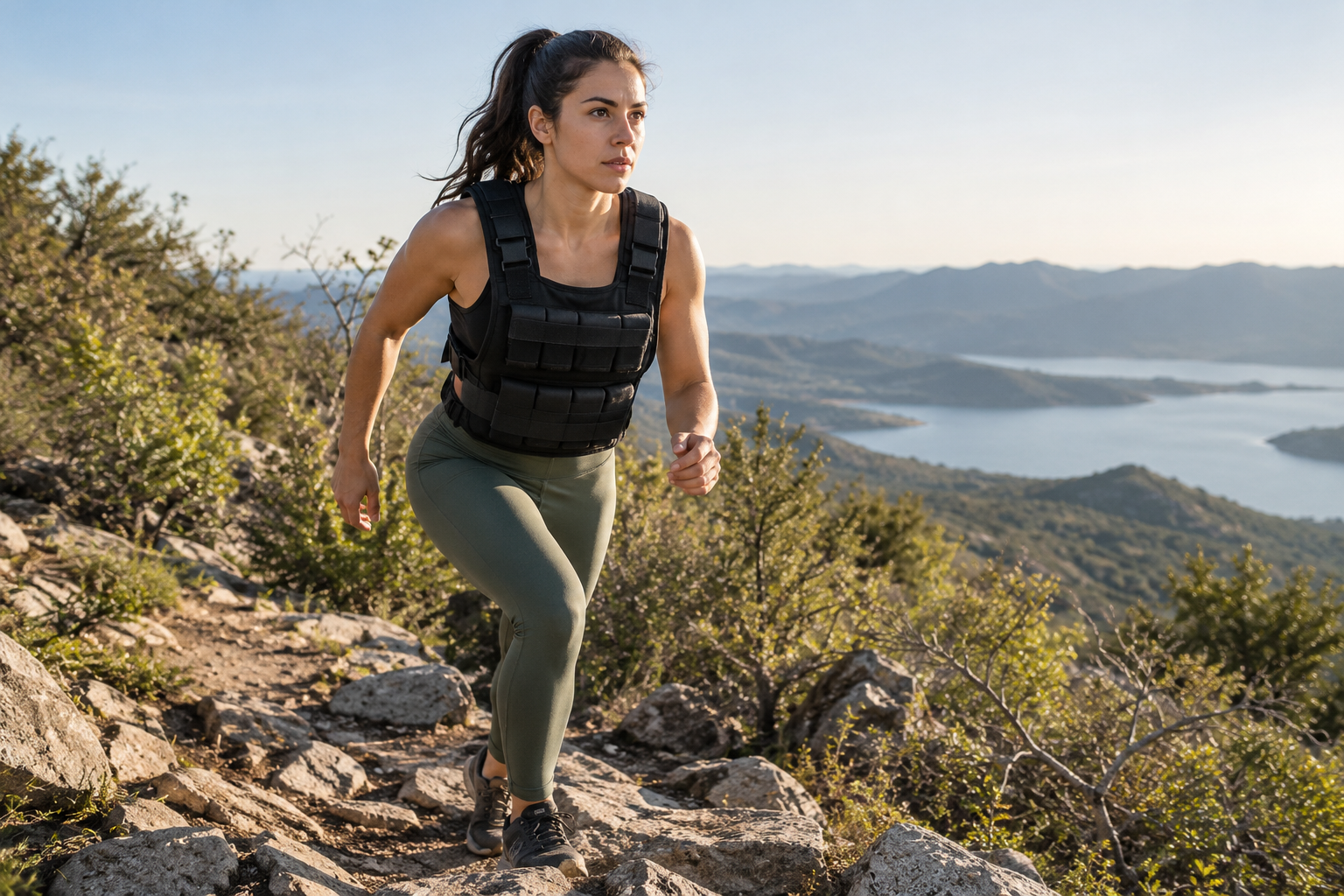
How to Use a Weight Jacket in Your Workouts
A weighted vest, also called a weight jacket, adds load through weights distributed in a garment. It can be used for selected walking activities and bodyweight exercises when the model and person suit the task. Wearing one does not automatically improve a workout: it changes the demand and requires another look at fit, movement and recovery.
The decision involves more than how many kilograms to add. Fit, weight placement, unrestricted breathing and stability affect the experience. A vest that bounces or obstructs movement can make a simple variation difficult to control even with apparently modest resistance.
This guide explains preparation, suitable activity choices and gradual loading. Examples are general rather than an individual programme. Follow the manufacturer's instructions and discuss whether additional weight serves your objective and circumstances with the person supporting your training.
- How should you fit the vest before training?
- How do you choose an initial load?
- How can a vest be used for walking?
- Which bodyweight exercises can be adapted?
- Do running and jumping need the same approach?
- How does the vest fit into a programme?
- How do fixed and adjustable vests compare?
- How should a weighted vest be checked and cleaned?
How should you fit the vest before training?
Put the vest on and fasten its intended adjustments before demanding activity. It should remain stable without restricting free breathing or producing uncomfortable pressure. Check that openings permit arm movement and no part interferes with the neck. Perform simple movements slowly to learn whether the fit changes when you bend or raise the arms. An acceptable standing fit does not establish stability during exercise. If you constantly need to reposition the garment, address this before increasing intensity or duration. The fit should support the task rather than become another movement you must manage during each repetition.
Distribute weights correctly
For adjustable models, insert elements only into their designated locations and follow the manufacturer's distribution instructions. Do not deliberately create imbalance merely to make the task harder without a specific reason and assessment. Check that pockets, closures and retention systems are complete and intact. A moving weight can change support and distract from the exercise. Do not add improvised objects to exceed the stated capacity. Being able to close a pocket does not prove that its contents are suitable for that vest. Compatibility concerns both the weight element and the way it is retained.
How do you choose an initial load?
There is no universal value making a vest appropriate for every person and exercise. Consider experience, chosen activity and control without added weight. Start with a manageable configuration that lets you recognise the difference from the familiar version rather than immediately seeking maximum capacity. If the weight changes posture, balance or breathing enough to undermine the task, reduce the demand or reconsider the variation. Fatigue alone should not be used as proof of a correct choice. The initial trial needs to show how the person and equipment work together, not establish the greatest amount they can tolerate briefly.
Change one factor at a time
Adding weight, increasing duration and reducing rest simultaneously makes the response harder to interpret. Initially keep route, exercise and work quantity consistent. Once the task is repeatable with good execution, consider one change and observe recovery in later sessions too. The manufacturer's weight figure describes added mass, not equivalent difficulty in every movement. The same load may be manageable while walking and much more demanding in an exercise that lifts a large proportion of body weight. Compare like tasks before concluding that the setting should be increased.
How can a vest be used for walking?
Begin on a familiar route with a regular surface and conditions allowing attention to gait and fit. Keep the pace controlled instead of simultaneously seeking more speed and weight. Check that the vest stays stable and the arms move naturally. Ascents, descents and uneven ground change the demand compared with a flat section. Introduce those variables separately rather than treating them as equivalent because the outing lasts the same time. The first experience is an opportunity to understand the combined behaviour, not set a maximum performance. A straightforward route also makes it easier to identify which change affected the activity.
Distance and environmental conditions
Consider heat, access to water and opportunities to stop. An extra garment can change thermal comfort, so do not choose it without considering outdoor conditions. Plan a route that does not force you to continue far from a return point when the load becomes difficult to manage. If the gait loses consistency or compensations appear, reduce the task. Record surface, route, duration and load when comparing outings. Distance alone does not describe their differences, and a short route under different conditions should not automatically be treated as easier or equivalent.
Which bodyweight exercises can be adapted?
Some users wear a vest for established push-ups, pull-ups or lower-body variations. Competence without added weight is the starting point. If the normal version is not yet controlled, a vest does not solve that difficulty. Ensure the garment does not obstruct the path and contact surfaces remain clear. During push-ups, for example, its fit should not force a changed neck position or unexpected contact between equipment and the floor. Try each variation carefully before the working set. A familiar exercise name does not guarantee that every vest design leaves enough space for the movement.
Same shape, different demand
The movement may look identical while the added load changes the work required. Do not automatically transfer the same sets and repetitions from the unweighted version. End the set according to control instead of continuing until any available compensation moves the body. If bars or other supports are used, account for their capacity and intended conditions: vest weight is added to body weight. A station that was previously suitable must still be used within its limits, not merely according to how sturdy it feels. The entire setup matters, including how the person enters and leaves it.
Do running and jumping need the same approach?
Running and jumping introduce impacts and demands that differ from walking or slow movements. They are not automatic next steps after a few vest sessions. Garment stability, contact quality and loading need specific assessment. The vest does not have to be used in every activity to serve a programme. If the goal is better addressed by another progression, choosing an unweighted variation may be the more coherent decision. An exercise appearing in a video does not establish suitability for your experience. Select the activity on its own merits rather than assuming that added weight improves every training method.
Avoid bouncing weights
A shifting vest during fast actions can alter movement and make weight position less predictable. Tightening it progressively is not a solution if breathing is restricted or pressure becomes uncomfortable. Check that the model is intended for the activity and ask a qualified training professional before introducing unfamiliar dynamic tasks. Stop if pain or an unusual sensation changes movement and assess the situation. Do not simply shorten steps or stiffen the body to finish the trial. A completed attempt is not enough if the task has become substantially different from the one you intended.
How does the vest fit into a programme?
Define why you want to use it. Increasing the demand of an established exercise differs from modifying a walking session. Give the vest a specific place and consider other weekly loads. If the legs or upper body are already heavily fatigued, extra weight may reduce quality without serving the goal. A short, clearly defined trial provides better information than improvising an entire workout with weight added to everything. The programme should remain understandable after the tool is introduced. Its purpose is an adjustment to selected tasks rather than a requirement to make all activities more exhausting.
Record and adapt
Record load, activity, duration or repetitions and perceived difficulty. Add fit problems and responses in subsequent sessions. Do not read one difficult day as proof that effort should increase further. Seek comparable conditions and change the task when quality repeatedly declines. A vest is an adjustment tool rather than an obligation throughout the session. Removing weight or choosing another variation can preserve the original objective instead of turning training into a test of discomfort tolerance. A useful record explains both what was done and why it was changed, allowing future decisions to be based on more than memory.
How do fixed and adjustable vests compare?
A fixed-weight model offers a defined configuration, while an adjustable one changes mass through the specified elements. Neither is automatically superior. Compare fit, ease of adjustment, bulk, cleaning and compatibility with planned activities. High maximum capacity is of little use if the vest is unstable at the settings actually needed. Consider replacement elements and instructions for positioning them correctly. Choice should reflect the intended function rather than the largest figure in a product description. A model that is convenient for one exercise may need a different assessment for another because contact and movement change.
Compatibility with other equipment
The gym equipment category provides options for a programme. Compare the vest with alternatives for the actual task instead of assuming it replaces dumbbells, cables or other resistance in every exercise. The point of load application changes and therefore so does its management. Consider interference with belts, backrests or supports. Combining accessories should retain movement freedom and usable closures. More tools together do not automatically mean more effective training. Check each combination rather than relying only on the fact that its separate pieces were individually suitable for another activity.
How should a weighted vest be checked and cleaned?
Before use, inspect seams, covering, buckles, closures and weight locations. Handle loose parts, tears or elements that will not stay positioned according to the manual. Do not conceal a fault with an improvised repair simply to continue. Check whether weights must be removed for cleaning and which methods are permitted. Different materials do not necessarily need the same treatment. Do not assume the whole vest can be immersed or machine-washed. Drying and storage should avoid conditions that damage components or make body contact uncomfortable. Maintenance needs to suit the actual model rather than a general assumption about sports clothing.
Finish the session in an orderly way
Remove the vest in a stable position and store it where weights cannot fall or obstruct a route. Keep removable elements identifiable and compatible with the model rather than mixing them casually. Check configuration again before the next session: another user's load may differ from yours. Orderly use connects weight selection, movement and equipment care. The goal is a repeatable progression consistent with the programme, not wearing as much weight as possible regardless of how the exercise changes. Clear storage and configuration make the next decision easier for both the individual and other users sharing the equipment.
Comments (0)