
Trolley
You have no items in your shopping cart

 Budgets
 Dumbers
 Discs
Discs
 Benches
 Racks and Rigs
 Weights Holders
 Isotonic machines
 Calisthenics
 Cardio
 Kettlebells
 Flooring
 Gym Set
 Accessories
 Combat
 ARTI MARZIALI
 CONTAINER GYM
 Tug-Of-War
 Used Gym Equipment
 PILATES MACCHINARI
 GINNASTICA ARTISTICA
 CAMPI DA PADEL
 Prodotti in Pronta Consegna
 Informazioni
 IRONMAN
 Gift Card
- Donatif
- General information
- 0 I like it
- 620 Views
- 0 comments
- gym flooring, safety flooring, gym safety, shock-absorbing materials
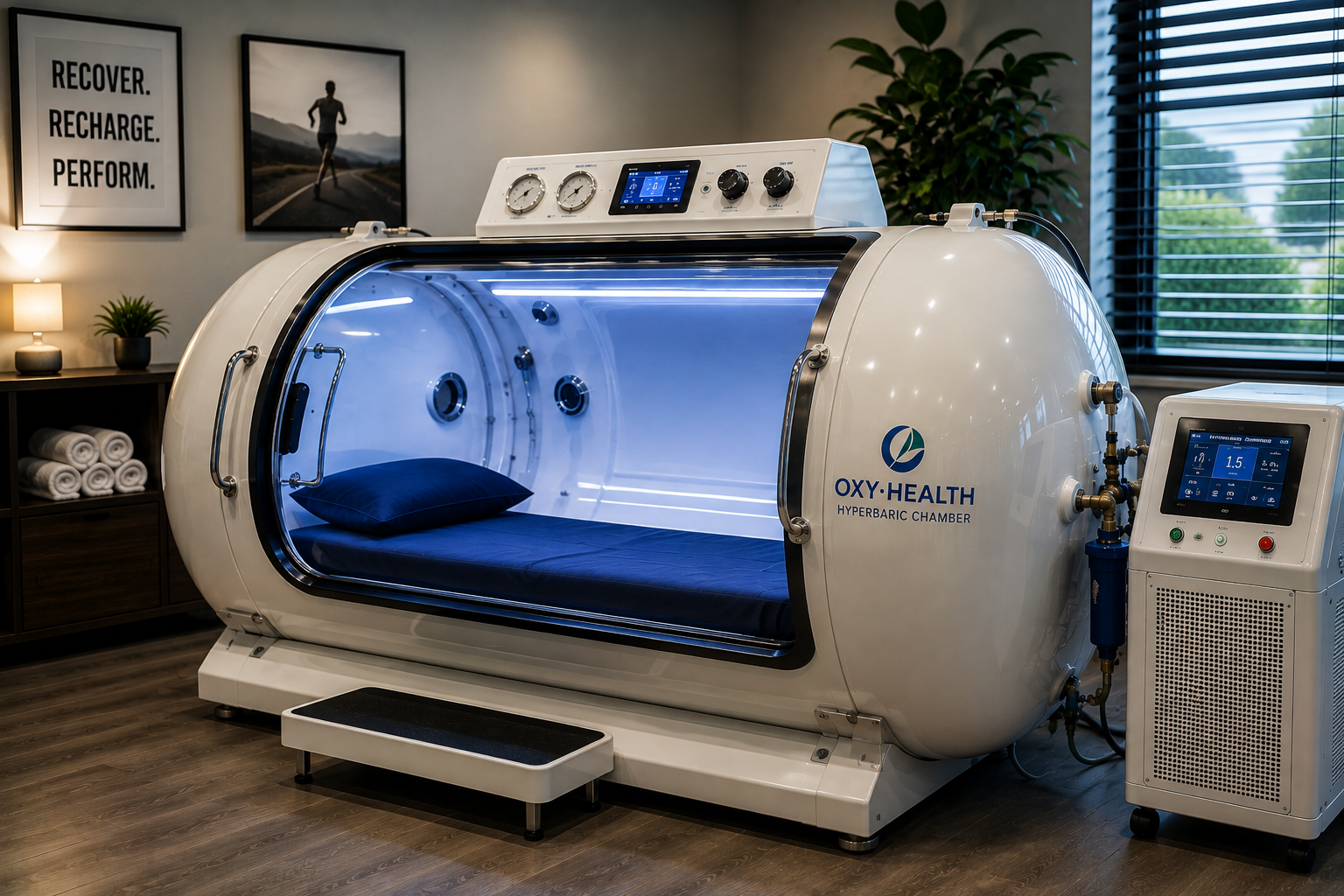
Hyperbaric chamber materials: The science of welding and airtightness Donatif
When discussing hyperbaric chamber materials, safety is not an additional detail, but the direct result of every design and manufacturing choice. A hyperbaric chamber must be designed to work under controlled pressure conditions, where the quality of the structure, the alloys used, and the assembly techniques determine the system's ability to maintain reliable performance over time.
For fitness industry entrepreneurs, engineers, and quality-conscious professionals, understanding what lies behind the construction of a hyperbaric chamber means evaluating an investment not only based on visible features, but above all based on the elements that guarantee safety, durability, and operational continuity. The metal structure, welds, and checks carried out during production represent the true technological heritage of the system.
A professional hyperbaric chamber must face a precise engineering challenge: containing a pressurized environment while maintaining mechanical stability, long-term reliability, and the highest levels of safety. Every component must be chosen and worked according to rigorous criteria, because manufacturing quality is what allows the technology to function correctly even after years of use.
- Why materials are the heart of the hyperbaric chamber
- Steel for hyperbaric chambers and alloy selection
- Certified welds and structural tightness
- Hyperbaric pressure tests and quality controls
- Production process and Italian hyperbaric engineering
- Durability and ROI of a professional hyperbaric chamber
- Why manufacturing quality makes a difference
- Safety written in metal
Why materials are the heart of the hyperbaric chamber
The structure of a hyperbaric chamber must withstand operating conditions very different from a normal enclosed environment. When the system works at pressures such as 1.5 or 2.0 ATA, every construction element is subjected to stresses that require precise design and appropriate materials.
The choice of materials directly influences several fundamental aspects: mechanical resistance, durability over time, ability to maintain tightness, and reliability during daily use. An error in component selection could compromise the overall behavior of the structure.
For this reason, professional manufacturers do not consider the material as a simple construction element, but as an integral part of the safety system.
Materials engineering and safety
Materials engineering studies the behavior of alloys and structures in relation to the stresses they must face. In the case of hyperbaric chambers, this means analyzing resistance, deformation, and stability during pressure cycles.
The correct choice makes it possible to create a structure capable of maintaining its characteristics even after numerous uses.
The structure as an element of reliability
A quality hyperbaric chamber must be considered as a long-term investment. The solidity of the structure influences not only safety, but also future operating costs.
Adequate materials reduce the need for extraordinary interventions and contribute to service continuity.
Steel for hyperbaric chambers and alloy selection
Steel for hyperbaric chambers represents one of the most important elements in the design of the main structure. The choice of alloy must take into account the mechanical characteristics required by the application and the need to maintain stable performance over time.
Not all steels have the same properties. Resistance, workability, stress behavior, and compatibility with production processes are factors that must be carefully evaluated during design.
The selection of the correct material allows to achieve a balance between structural robustness and manufacturing precision.
Characteristics of high-strength materials
Materials intended for hyperbaric chambers must offer specific characteristics to work in pressurized environments. The ability to resist repeated loads is a fundamental element in design.
The quality of the material contributes to the safety of the entire system.
Inspiration from aerospace materials
The reference to aerospace materials recalls a design approach based on lightness, precision, and reliability. High-criticality sectors have developed over time rigorous methodologies to select and work materials intended for demanding conditions.
These principles also influence the design of systems where structural safety is a priority.
Certified welds and structural tightness
Certified welds represent one of the most delicate aspects in the construction of a hyperbaric chamber. A structure can use high-quality materials, but the final solidity also depends on the precision with which the different elements are assembled.
Welding must guarantee structural continuity and contribute to the chamber's ability to maintain the expected internal pressure. For this reason, the process requires specific skills and accurate checks.
The quality of the welds is therefore directly linked to the overall safety of the system.
Precision of the welding process
Every phase of welding must be carried out following defined procedures. Technical parameters, material preparation, and control of the final result influence the quality of the connection.
Precise workmanship allows obtaining a more uniform and reliable structure.
Checks on structural joints
Joints represent fundamental points of the structure. For this reason, they must be subjected to verifications that allow evaluating the correct execution of the work.
The combination of craftsmanship and technological control increases the qualitative level of the final product.
Hyperbaric pressure tests and quality controls
Hyperbaric pressure tests are an essential phase to verify the chamber's behavior before commissioning. Through these checks, it is possible to evaluate the structure's ability to operate under the conditions provided by the design.
A professional system must be subjected to verifications that confirm the correct tightness and functioning of the main elements.
The controls represent an additional guarantee for those who invest in a technology destined to work daily with users and professionals.
Verification of airtightness
Airtightness is a fundamental characteristic of a hyperbaric chamber. The ability to maintain the expected internal conditions depends on the quality of the structure and the accuracy of the assembly.
In-depth verification makes it possible to identify any critical issues before operational use.
Quality and repeatability of controls
A professional production process must include repeatable and documentable controls. This approach makes it possible to maintain high standards and offer greater safety to users.
Quality stems from the combination of design, production, and final verification.
Production process and Italian hyperbaric engineering
Italian hyperbaric production is based on an approach in which design and construction work together to obtain a reliable product. The creation of a hyperbaric chamber requires multidisciplinary skills involving engineering, material processing, and quality control.
Every production phase contributes to the final result: from the choice of raw materials to manufacturing, up to concluding tests.
A carefully managed process allows offering a technology characterized by greater attention to detail and oriented toward durability.
From design to realization
The construction of a hyperbaric chamber begins with a design phase in which structural and functional requirements are defined.
Initial precision influences all subsequent phases of production.
Technical competence and manufacturer value
The manufacturer's competence represents a decisive element in choosing a complex technology. Experience and technical knowledge allow better addressing safety and reliability requirements.
The manufacturer thus becomes a strategic partner for the customer.
Durability and ROI of a professional hyperbaric chamber
For an entrepreneur attentive to ROI, manufacturing quality represents an economic as well as technical element. A hyperbaric chamber built with appropriate materials and accurate processes can offer greater operational continuity and reduce costs related to management over time.
The investment must not be evaluated solely on the initial price, but considering durability, reliability, and the technology's ability to generate value for the facility.
Structural solidity thus becomes a factor that directly influences the return on investment.
Reducing costs in the lifecycle
Quality components and accurate production processes help limit future problems and extraordinary interventions.
A design oriented toward durability protects the value of the investment.
The value of safety for the business
Safety is not just a technical requirement, but an element that protects the center's reputation and user trust.
Investing in quality means building a more solid service in the long term.
Why manufacturing quality makes a difference
In the hyperbaric chamber sector, every detail contributes to the final result. Materials, welds, controls, and design work together to create a structure capable of operating safely.
For this reason, the evaluation of a professional technology must go beyond the aesthetic or commercial aspect and focus on the elements that truly determine reliability and durability.
A chamber built according to engineering criteria represents an investment oriented toward service continuity and the protection of the facility's value.
Social proof and trust in technology
A manufacturer's reputation and the experience gained in the sector represent important elements when choosing a complex solution.
Trust stems from the combination of results, competence, and demonstrable quality.
Attention to manufacturing details
The difference between standard technology and a professional solution is often found in the less visible details: workmanship, controls, and materials used.
It is precisely in these aspects that long-term safety is built.
Safety written in metal
A professional hyperbaric chamber is the result of a precise combination of materials science, engineering, and quality control. The metal structure represents the basis upon which the reliability of the entire system is built.
Choosing a technology therefore means evaluating not only what the user sees, but also everything that works behind the chamber walls: selected materials, correctly executed welds, and tests capable of verifying operational safety.
For professionals and entrepreneurs in the fitness sector, investing in manufacturing quality means protecting the value of the investment and offering a service based on solidity, competence, and reliability over time.
Comments (0)