
Trolley
You have no items in your shopping cart

 Budgets
 Dumbers
 Discs
Discs
 Benches
 Racks and Rigs
 Weights Holders
 Isotonic machines
 Calisthenics
 Cardio
 Kettlebells
 Flooring
 Gym Set
 Accessories
 Combat
 ARTI MARZIALI
 CONTAINER GYM
 Tug-Of-War
 Used Gym Equipment
 PILATES MACCHINARI
 GINNASTICA ARTISTICA
 CAMPI DA PADEL
 Prodotti in Pronta Consegna
 Informazioni
 IRONMAN
 Gift Card
- Donatif
- General information
- 0 I like it
- 744 Views
- 0 comments
- gym flooring, safety flooring, gym safety, shock-absorbing materials
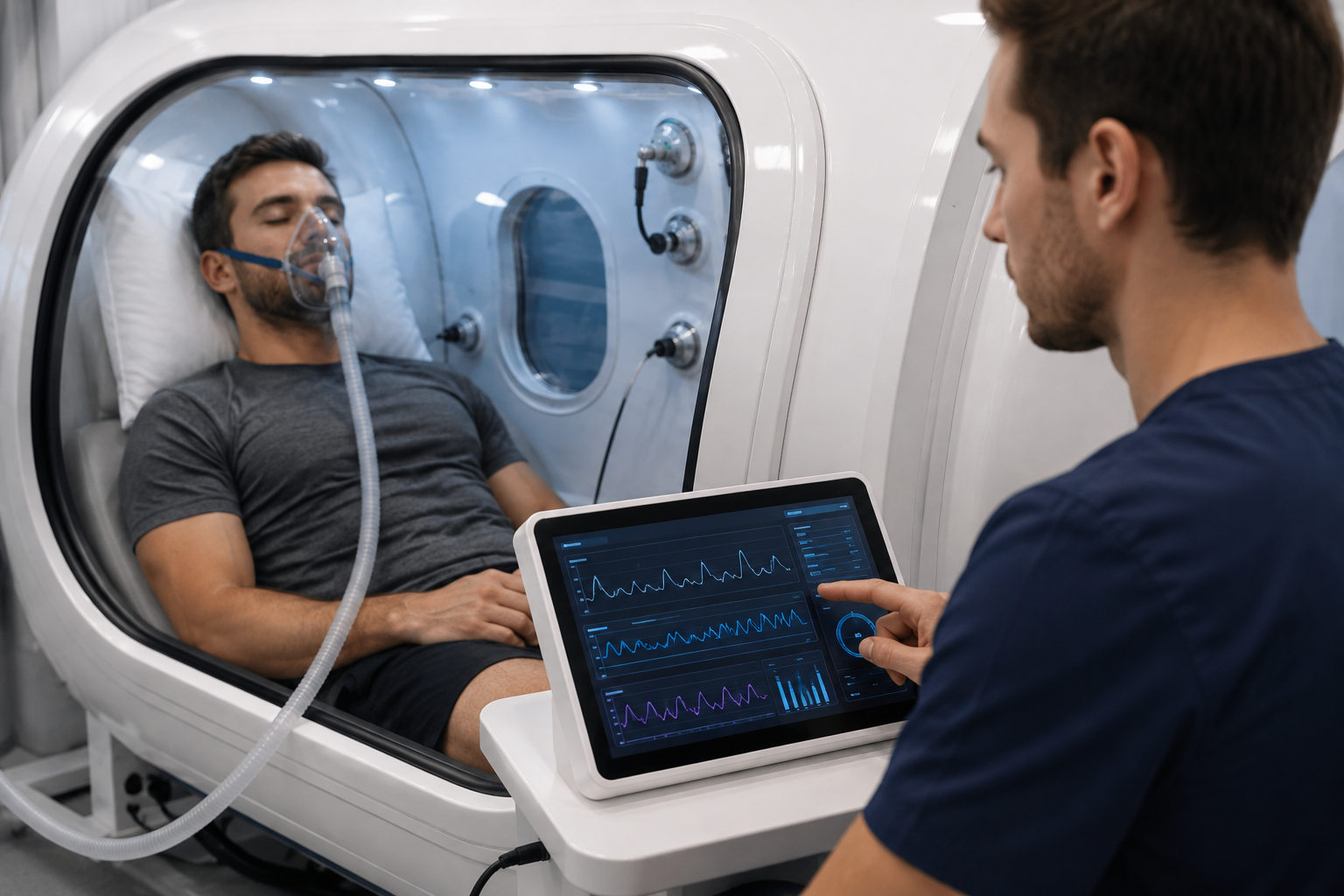
Performance monitoring in hypoxia: KPIs and tools to optimize training
Training in hypoxia represents one of the most advanced applications of sports technology because it allows for the introduction of a controlled environmental stimulus within preparation protocols. However, the quality of the results depends not only on the ability to train in an environment with reduced oxygen availability, but on the ability to collect and correctly interpret the data generated during the process.
For advanced athletes, sophisticated home gyms, and professional fitness centers, monitoring becomes an indispensable element. Using indicators such as oxygen saturation, heart rate, and heart rate variability allows for a better understanding of the individual response to the hypoxic stimulus and for adjusting the intensity of sessions more precisely.
The principle behind it is simple: what is not measured can hardly be improved. A data-based control system allows for transforming hypoxia from a simple technological experience into a true performance programming tool, reducing the risk of overload and improving load management.
- Why monitoring is fundamental in hypoxic training
- The main KPIs for evaluating the response to hypoxia
- Oxygen saturation during training
- HRV and hypoxia: analyzing recovery and stress
- Tools and sensors for monitoring in a hypoxic chamber
- How to use data to adjust training loads
- Preventing overtraining through data
- The future of performance monitoring in hypoxia
Why monitoring is fundamental in hypoxic training
The use of a hypoxic chamber modifies the context in which the body performs physical activity. The reduction in oxygen availability creates an additional stimulus that can influence the perception of effort, cardiovascular response, and recovery capacity.
Precisely for this reason, it is not enough to apply a standard protocol that is the same for every person. Each athlete can react differently to the same level of exposure, making an approach based on data collection and analysis necessary.
Hypoxia performance monitoring allows for obtaining useful information to personalize sessions, verify the effectiveness of protocols, and create a safer and more sustainable path over time.
Data as decision support
The data collected during training should not be considered just numbers to observe, but tools for making better decisions.
Analyzing variations in physiological parameters allows for understanding when to increase the stimulus, when to keep it stable, and when to introduce a recovery phase.
Personalizing training protocols
Every athlete presents individual characteristics related to their level of preparation, adaptation capacity, and stress response.
A monitoring system allows for creating protocols that are more consistent with personal needs, improving the efficiency of the entire process.
The main KPIs for evaluating the response to hypoxia
Measuring performance in hypoxia requires the use of key indicators capable of describing how the body reacts to the environmental stimulus and the physical activity performed.
The most commonly used KPIs include cardiovascular, respiratory, and recovery-related parameters. The combination of this information offers a more complete view compared to observing a single value.
Correct interpretation of KPIs allows for avoiding superficial evaluations and building a method based on objective information.
Main physiological indicators
Among the most important indicators are oxygen saturation, heart rate, and heart rate variability.
These parameters help to understand the level of stress produced by the session and the body's ability to adapt.
Performance-related indicators
In addition to physiological data, it is also important to consider the quality of performance, such as power, duration of effort, perception of fatigue, and the ability to maintain the planned intensity.
The integration of internal and external data allows for a more complete evaluation of the protocol's effectiveness.
Oxygen saturation during training
Oxygen saturation represents one of the most used parameters when working in hypoxic environments. This value indicates the percentage of hemoglobin bound to oxygen in the blood and provides information on the immediate response to reduced oxygen availability.
During simulated altitude training, monitoring saturation helps to understand how much the stimulus is perceived by the body and allows for adapting the level of exposure.
Training oxygen saturation must always be interpreted within the general context of the session and the individual characteristics of the athlete.
Using pulse oximeters
Pulse oximeters represent one of the most common tools for detecting saturation during physical activity.
Their ease of use allows for easily integrating the control of this parameter into daily protocols.
Correctly interpreting the data
An isolated value is not enough to evaluate the entire response to hypoxia.
It is necessary to observe the trend over time and compare it with other parameters to obtain truly useful information.
HRV and hypoxia: analyzing recovery and stress
Heart rate variability, known as HRV, has become an increasingly used tool for evaluating the recovery state and the body's stress level.
In the context of hypoxic training, HRV can provide additional information on the athlete's ability to manage the stimuli introduced during the process.
The combined analysis of training, physiological response, and recovery allows for creating more intelligent programming.
What heart rate variability indicates
HRV describes the variations in the intervals between one heartbeat and the next. This parameter is used as an indicator of the autonomic nervous system's response.
Variations over time can offer indications of the level of recovery and the ability to sustain new loads.
Using HRV in hypoxic programming
Using HRV and hypoxia together allows for evaluating whether the body is ready to face new stimuli.
This approach helps to avoid excessive increases in load when recovery is not yet complete.
Tools and sensors for monitoring in a hypoxic chamber
A modern hypoxic chamber can integrate various control tools to collect information during sessions. The quality of monitoring depends on the precision of the sensors and the ability to connect the collected data.
For professional facilities and advanced users, using reliable tools represents a fundamental element for enhancing the technological investment.
Data collection also allows for creating a history that is useful for evaluating progress and changes over time.
Types of sensors used
Hypoxic chamber sensors can include tools for environmental control and wearable devices for individual monitoring.
The integration of environmental data and athlete data offers a more complete view of the session.
Technology and data management
The most advanced systems allow for collecting and organizing information in a structured way.
This facilitates analysis by coaches, professionals, and users who want to follow an evidence-based path.
How to use data to adjust training loads
Data collection becomes truly useful when it is used to concretely modify programming. The goal is not to accumulate information, but to improve decisions regarding the intensity, duration, and frequency of sessions.
A data-based approach allows for identifying when to increase the hypoxic stimulus and when instead to maintain or reduce the load.
This makes the hypoxic chamber a more precise tool within sports preparation.
Adjusting training intensity
Physiological data can help to understand if the chosen intensity is adequate with respect to the session's goals.
Progressive adjustment allows for maintaining a balance between stimulus and recovery capacity.
Analyzing progress over time
Comparing data collected in different periods allows for evaluating the athlete's evolution.
This approach allows for identifying improvements and areas that require greater attention.
Preventing overtraining through data
One of the main goals of monitoring is to prevent the accumulation of stress from exceeding the body's recovery capacity.
Hypoxia can be an effective stimulus, but it must be managed within a balanced program.
KPI analysis allows for identifying early signs and intervening before performance quality decreases.
Recognizing signs of fatigue
Changes in physiological parameters can indicate a negative response to the overall load.
Observing these variations allows for modifying the program in a timely manner.
Balancing stimulus and recovery
Performance is born from the balance between training and recovery.
A monitoring system helps to find the optimal point for each athlete.
The future of performance monitoring in hypoxia
The evolution of technology is making monitoring increasingly accessible even outside of professional contexts. Advanced home gyms and fitness centers can use increasingly precise data to offer personalized paths.
The combination of a hypoxic chamber, sensors, and data analysis represents a new frontier for performance management.
Measuring what happens during training allows for transforming hypoxia into a controlled, replicable process oriented toward continuous improvement.
Comments (0)