
Trolley
You have no items in your shopping cart

 Budgets
 Dumbers
 Discs
Discs
 Benches
 Racks and Rigs
 Weights Holders
 Isotonic machines
 Calisthenics
 Cardio
 Kettlebells
 Flooring
 Gym Set
 Accessories
 Combat
 ARTI MARZIALI
 CONTAINER GYM
 Tug-Of-War
 Used Gym Equipment
 PILATES MACCHINARI
 GINNASTICA ARTISTICA
 CAMPI DA PADEL
 Prodotti in Pronta Consegna
 Informazioni
 IRONMAN
 Gift Card
- Donatif
- General information
- 0 I like it
- 474 Views
- 0 comments
- gym flooring, safety flooring, gym safety, shock-absorbing materials
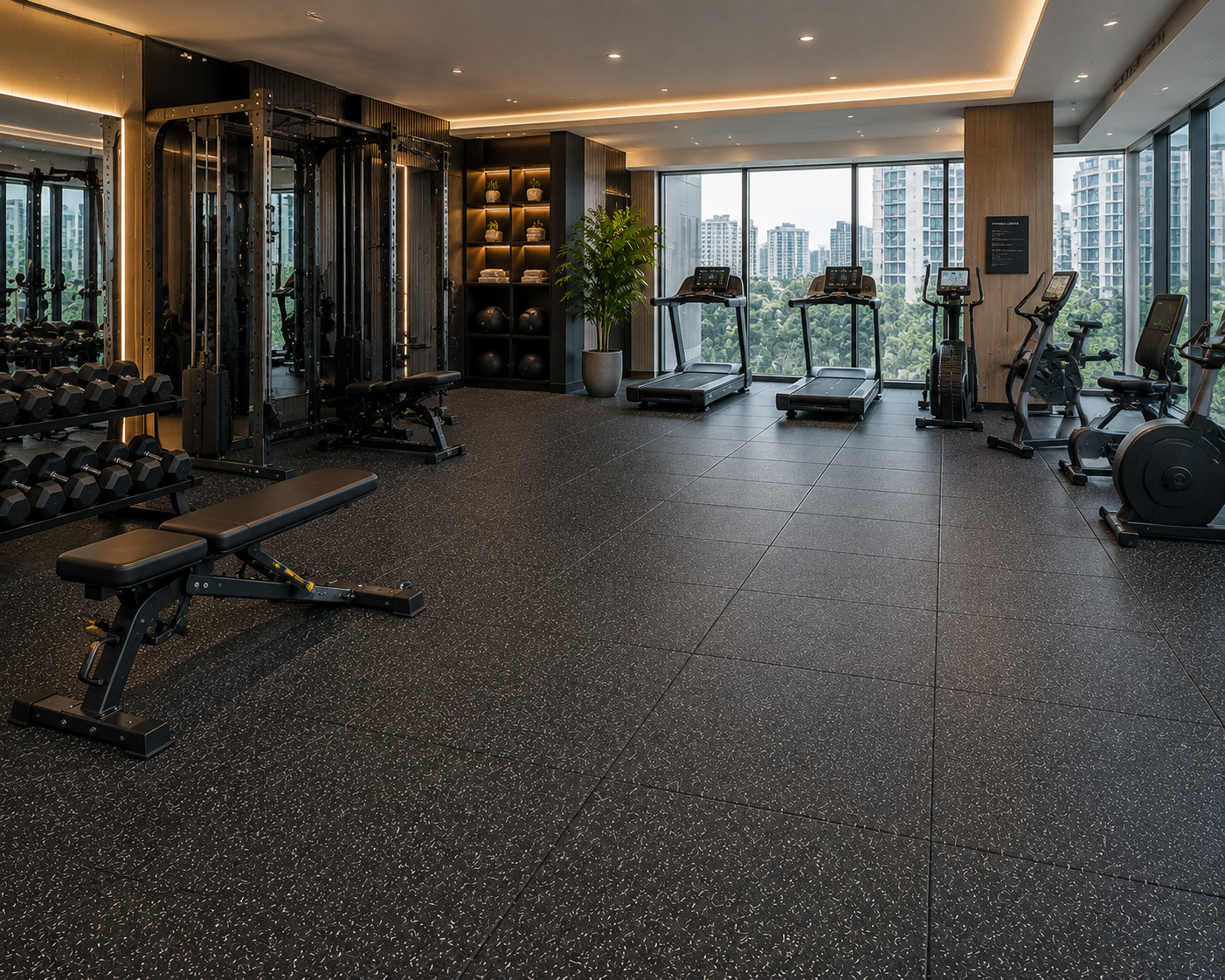
Flooring for Condominium Gyms: Regulations and Safety
The growing popularity of fitness areas within residential complexes represents an important added value for newly constructed condominiums and high-end properties. However, creating a condominium gym cannot be limited to choosing equipment or setting up the space. One of the most important elements concerns the gym flooring regulations, which involve aspects of safety, certifications, user protection, and the responsibilities of the condominium administrator.
Non-compliant flooring can, in fact, increase the risk of accidents, generate disputes among residents, and, in more serious cases, expose the condominium to civil or administrative liability. For this reason, it is essential to know the requirements set by current legislation and rely on specialized suppliers capable of offering certified solutions.
For condominium administrators, real estate companies, and residence managers, investing in certified technical flooring means protecting the real estate asset, ensuring greater safety for users, and reducing the risk of litigation in the long term.
- The regulatory framework
- User safety
- Essential certifications
- How to design a compliant gym
- How to choose the flooring
- Errors to avoid
- Maintenance and liability
- A safe investment for the condominium
The regulatory framework
Common fitness areas fall under shared spaces intended for use by residents. Although regulations may vary depending on the type of building and the facilities present, the design must always respect the general safety principles provided by Italian legislation.
The administrator has the task of verifying that the environments are built with suitable materials, installed correctly, and maintained in conditions that do not pose a danger to users.
The choice of flooring therefore plays a central role in preventing accidents and in the proper management of the fitness area.
The administrator's responsibilities
The condominium administrator must take all reasonably necessary measures to ensure safe environments, scheduling periodic checks and choosing materials that comply with applicable regulations.
Why know the regulations
Proper design allows for the avoidance of more expensive subsequent interventions and reduces the risk of disputes from residents or competent authorities.
User safety
Fitness areas are subject to continuous stress due to the movement of people and the use of equipment. The flooring must ensure stability, grip, and the ability to absorb part of the impact.
A technical surface reduces the risk of slipping, improves comfort during exercises, and protects the subfloor from concentrated loads produced by machinery.
The design must also consider proper acoustic insulation to limit the transmission of vibrations to adjacent apartments.
Impact protection
A certified anti-trauma floor helps reduce the consequences of any falls and is a particularly recommended solution in areas dedicated to bodyweight exercises.
Comfort and stability
Quality flooring improves the user experience by ensuring a stable footing during every phase of the workout.
Essential certifications
When choosing technical flooring, it is essential to verify the presence of certifications issued according to applicable European and national standards.
Certifications represent a guarantee of product quality and demonstrate that the material has undergone specific laboratory tests.
Requesting all technical documentation before purchase allows for a more informed and easily documentable choice.
Fire reaction
Rubber fire safety certification is one of the most important aspects when choosing flooring, especially in shared environments open to residents.
Technical data sheets and declarations
Every product should be accompanied by complete documentation regarding mechanical performance, certifications, and installation methods.
How to design a compliant gym
The design must start from an analysis of the available space and the planned activities. Zones dedicated to free weights, cardio areas, and multifunctional spaces may require different types of flooring.
A correct subdivision of the environments improves safety and facilitates routine maintenance.
It is also important to provide adequate access paths, lighting, and ventilation, integrating the flooring with the rest of the project.
Subfloor preparation
A perfectly leveled base ensures the durability of the entire installation and reduces the risk of deformation over time.
Professional installation
Installation performed by qualified personnel ensures the full functionality of the system and compliance with the manufacturer's specifications.
How to choose the flooring
The choice of material must be based not only on price but also on the intended use, expected intensity, and the duration of the investment.
High-density rubber flooring is one of the most popular solutions due to its resistance, ease of maintenance, and absorption capacity.
Relying on specialized manufacturers allows you to identify the most suitable solution for the needs of the individual residential complex.
Advantages of technical rubber
Professional surfaces offer high wear resistance, excellent acoustic performance, and long life even with daily use.
Relying on a qualified partner
Choosing a solution proposed by industry specialists such as gym flooring regulations allows you to obtain certified products and support in the design of the entire fitness area.
Errors to avoid
Among the most common errors is the use of domestic or industrial flooring not designed for fitness. These materials can deteriorate rapidly or fail to offer the characteristics required for sports use.
Neglecting certifications or purchasing products without adequate documentation also represents a significant risk.
Finally, underestimating the importance of professional installation can compromise the safety of the entire area.
Looking only at cost
A cheap but uncertified solution can lead to much higher costs in the medium term due to maintenance, replacements, or litigation.
Ignoring technical documentation
Requesting certifications and product data sheets is essential to demonstrate the compliance of the installed materials.
Maintenance and liability
A condominium gym requires a periodic maintenance program that includes visual checks, cleaning, and verification of the condition of the flooring.
Acting promptly in the presence of damage or wear helps maintain high safety standards and extends the useful life of the covering.
Documenting the interventions performed is also a good practice in managing condominium responsibilities.
Periodic checks
Scheduling regular inspections allows for the timely identification of any critical issues before they can turn into more serious problems.
Cleaning and preservation
Specific products and correct maintenance procedures allow for the preservation of the technical performance of the flooring over time.
A safe investment for the condominium
Creating a condominium gym that complies with regulations means increasing the value of the property and offering a service that is increasingly requested by buyers and residents.
Careful design, the use of common fitness area safety as a guiding criterion, and the choice of certified materials allow for the reduction of the risk of disputes and ensure a reliable environment in the long term.
For administrators, real estate companies, and property managers, investing in certified technical flooring represents a strategic decision that improves the building's value, protects users, and contributes to more efficient and safer management of common spaces.
Comments (0)