
Trolley
You have no items in your shopping cart

 Budgets
 Dumbers
 Discs
Discs
 Benches
 Racks and Rigs
 Weights Holders
 Isotonic machines
 Calisthenics
 Cardio
 Kettlebells
 Flooring
 Gym Set
 Accessories
 Combat
 ARTI MARZIALI
 CONTAINER GYM
 Tug-Of-War
 Used Gym Equipment
 PILATES MACCHINARI
 GINNASTICA ARTISTICA
 CAMPI DA PADEL
 Prodotti in Pronta Consegna
 Informazioni
 IRONMAN
 Gift Card
- Donatif
- General information
- 0 I like it
- 1904 Views
- 0 comments
- stress reduction, improved self-esteem, physical and mental well-being, gym training
READING TIME: 5 MINUTES ➤➤
Rehabilitation Stairs with Adjustable Handrail: Why Ergonomics Transforms Therapeutic Work
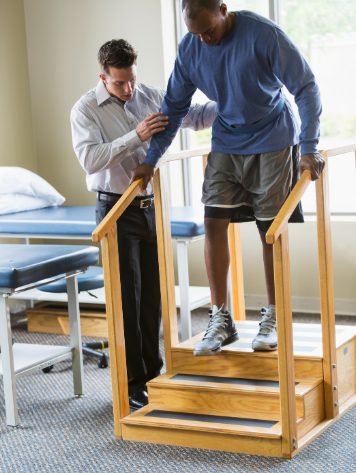
In the daily work of professionals involved in motor recovery, the quality of equipment has a direct impact on the effectiveness of the rehabilitation process. Stairs adjustable rehabilitation stairs are not just a technical support, but a tool that helps make treatment more precise, safer, and more aligned with the real needs of the individual. When patients perform exercises related to walking, coordination, and gait re-education, every construction detail becomes meaningful, especially when the goal is to work progressively without unnecessary strain.
In this context, the adjustable physiotherapy handrail represents one of the most important elements. The ability to quickly adjust height and structure allows professionals to create a dynamic therapeutic setting, adaptable to individuals with very different physical and clinical characteristics. This is where ergonomics stops being an abstract concept and becomes an operational factor: fewer compromises, greater personalization, and more efficient management of each session.
- Ergonomics and gait re-education
- Adjustable handrail: adapting the equipment to the patient
- Adjustment speed as a lever for efficiency
- A strategic choice for clinics and professionals
- How to evaluate a professional rehabilitation staircase
Ergonomics and gait re-education: the value of well-designed equipment
In functional recovery pathways, gait re-education requires tools that support movement without hindering it. An ergonomic structure allows patients to perform movements more naturally, reducing compensations, unnecessary tension, and inefficient postures. This aspect is particularly relevant when working with individuals with temporary or chronic limitations, as even small differences in hand positioning or support stability can significantly affect motor response quality.
Stairs for clinics designed with ergonomic attention help therapists deliver more gradual and controlled exercises. The goal is not simply to enable ascending or descending steps, but to guide patients through a recovery process where safety, movement perception, and confidence are closely connected. When equipment follows the body rather than forcing the body to adapt unnaturally, therapeutic work becomes more consistent and can be calibrated with greater precision.
Adjustable handrail: adapting the equipment to the patient, not the other way around
One of the main limitations of fixed structures is that they impose a standard setup on situations that are anything but standard. In rehabilitation, each patient differs in height, joint mobility, residual strength, level of independence, and type of condition. For this reason, the adjustable handrail in physiotherapy becomes a true personalization tool. Quickly modifying the height of the support allows therapists to respect individual biomechanics and design sessions that better align with clinical goals.
Adjustment improves not only comfort but also execution quality. Proper hand positioning helps patients distribute load more effectively, feel more stable, and focus on movement sequencing. This leads to greater effectiveness in exercises involving step climbing, descending, and weight transfer. In practice, personalizing gait re-education equipment creates more favorable conditions for motor learning and therapeutic progression.
Personalization based on height, mobility, and clinical condition
The ability to adapt the structure to very different individuals is one of the most evident advantages of adjustable rehabilitation stairs. An elderly patient with reduced balance, a post-operative subject, or someone undergoing neurological recovery cannot be placed in the same setting without adjustments. Regulating the handrail means creating an environment that reflects the patient’s real capabilities and the needs of the therapeutic protocol.
This adaptability is also clinically valuable, as it allows progress to be supported over time. In early stages, the support can be configured to provide greater protection and control, while in later stages it can be adjusted to encourage more autonomy and challenge. The structure does not remain static but evolves alongside the recovery process. This concept of full adaptability for every height and condition is what makes the equipment truly effective in professional settings.
Comfort, safety, and continuity of therapeutic movement
When patients feel safe, their movement changes. Fear of losing balance or lacking proper support often leads to stiffness, hesitation, and compensatory patterns that slow down rehabilitation. A properly adjusted handrail provides a stable and comfortable reference, improving the sense of control and helping patients perform movements more fluidly. This is essential in all gait recovery and step-training activities.
Safety is not only about risk prevention but also about the quality of the therapeutic experience. An ergonomic structure allows continuity of movement, avoiding interruptions caused by uncomfortable grip or unnatural posture. In professional settings, this translates into more consistent exercise execution, better patient cooperation, and more structured progression. Physiotherapy equipment that truly performs is capable of combining protection, comfort, and functionality.
Adjustment speed as a lever for therapist efficiency
In a therapist’s daily work, not only theoretical quality matters but also practical usability. Slow, complex, or unintuitive adjustments interrupt session flow and waste valuable clinical time. On the contrary, a system that allows quick modification of the handrail setup supports a smoother treatment process. Adjustment speed thus becomes a real efficiency factor, especially in environments where multiple patients are treated throughout the day.
This practicality directly impacts both internal organization and service perception. A setup that adapts in seconds allows professionals to focus more on observation, correction, and progression. In other words, less effort spent managing equipment means more attention dedicated to the patient. From a commercial and BOFU perspective, this is highly relevant: choosing physiotherapy stairs with quick-adjust handrails means investing in productivity, operational order, and treatment quality.
Fewer downtimes, smoother sessions
In a well-structured session, transitions between exercises should feel natural. When therapists can quickly adjust equipment, downtime is minimized and patients remain more engaged. This is particularly important in recovery pathways where focus, motivation, and continuity are essential. Every avoidable interruption represents a loss of rhythm that can negatively affect the overall experience.
For professionals managing multiple patients or working in efficiency-driven environments, practicality becomes a tangible advantage. Adjustable structures allow faster transitions between settings while maintaining high treatment quality without complicating workflow. Operational practicality is therefore not a secondary detail, but a concrete component of professional efficiency.
A dynamic setting for individualized and progressive treatments
Rehabilitation rarely follows a rigid, identical path for everyone. Each session may require small adjustments based on patient response, fatigue level, daily goals, or clinical evolution. Having access to rehabilitation stairs with adjustable handrails makes it possible to modify the setting accordingly, without turning each adjustment into a time-consuming task.
A dynamic therapeutic environment supports more accurate and personalized interventions. Therapists can adapt support based on progression, exercise type, or required assistance level. In this sense, equipment is not just present in the workspace but becomes an active part of the therapeutic strategy. This is where quick adjustment demonstrates its full operational value.
Why adjustable rehabilitation stairs are a strategic choice for clinics, physiotherapists, and micro gyms
Professional environments focused on motor recovery require tools that are versatile, reliable, and easy to integrate into daily workflows. Adjustable rehabilitation stairs meet this need because they can adapt to different targets, from physiotherapy centers to clinics and even personal trainers working on functional recovery in specialized spaces. Their strength lies not only in support but in improving the organizational quality of the therapeutic setting.
From a decision-making perspective, choosing equipment that combines personalization and practicality is highly valuable. A versatile structure allows professionals to serve different types of users, manage diverse protocols, and reduce the limitations of fixed solutions. For those in a BOFU phase, close to purchase, this is crucial: investing in adjustable systems means prioritizing intelligent use and long-term value.
Operational versatility across different professional contexts
Not all facilities operate with the same volumes, patients, or objectives, but they share a common need: reliable gait re-education equipment adaptable to different scenarios. In clinics, the priority may be managing complex and varied cases; in physiotherapy studios, optimizing space and speed; in micro gyms, flexibility in transitioning between clients.
This versatility makes these structures a cross-functional solution capable of supporting professional work without rigidity. It is especially valuable for delivering a service perceived as competent and reliable. The impression patients receive when entering a well-equipped, adaptable environment contributes significantly to the perceived quality of the facility.
Focus on Donatif stairs with quick-adjust handrails
When evaluating purchasing options, solutions that prioritize fast adaptability stand out. The focus on Donatif stairs with quick-adjust handrails fits perfectly into this logic: providing a concrete answer for those seeking ergonomics, adaptability, and practicality in a single tool. The ability to quickly adjust the handrail helps therapists maintain session flow and tailor treatment to each individual.
For professionals, this means relying on equipment designed not only for use but for integration into real therapeutic processes. The advantage lies not in a single feature, but in the combination of benefits: better patient adaptation, faster management, greater comfort, and a more professional service image. From a commercial standpoint, this is a strong positioning because it translates technical functionality into clear operational benefits.
How to evaluate a rehabilitation staircase for clinical and physiotherapy use
When analyzing a staircase for clinics or physiotherapy studios, the first criterion should not only be the presence of a handrail, but the quality of experience it enables. It is essential to assess how adjustable the equipment truly is, how fast the adjustment system works, and how well the overall structure supports ergonomic work. Effective equipment simplifies personalization and supports therapists in transitioning between patients without unnecessary complexity.
Alongside adjustability, alignment between intended use and professional context is key. Those working in gait re-education need tools that combine safety, comfort, adaptability, and efficiency simultaneously. This is why rehabilitation stairs with adjustable handrails are becoming increasingly relevant: they do not just solve a technical need but improve how treatment is designed, delivered, and perceived. This is where ergonomics reveals its true value, becoming a concrete advantage for both patient and professional.
Comments (0)