
Trolley
You have no items in your shopping cart

 Budgets
 Dumbers
 Discs
 Benches
 Racks and Rigs
 Weights Holders
 Isotonic machines
 Calisthenics
 Cardio
 Kettlebells
 Flooring
 Gym Set
 Accessories
 Combat
 ARTI MARZIALI
 CONTAINER GYM
 Tug-Of-War
 Used Gym Equipment
 PILATES MACCHINARI
 GINNASTICA ARTISTICA
 CAMPI DA PADEL
 Prodotti in Pronta Consegna
 Informazioni
 IRONMAN
 Gift Card
- Donatif
- General information
- 0 I like it
- 146 Views
- 0 comments
- gym flooring, safety flooring, gym safety, shock-absorbing materials
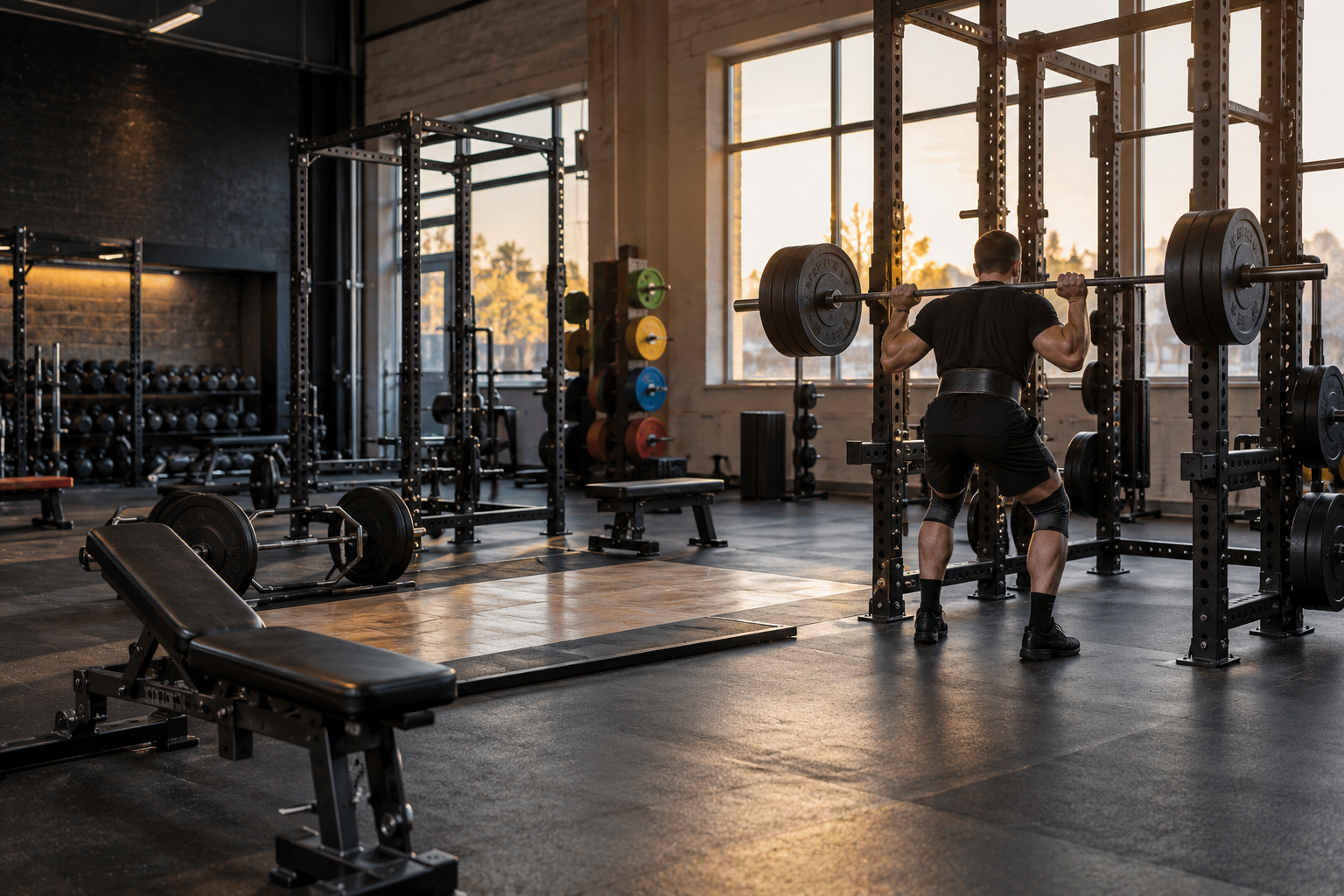
How to choose squat equipment for a powerlifting weight room
This guide approaches squat equipment with an operational focus, aimed at those who need to decide, set up, or manage a solution consistent with the available space.
For squats and powerlifting, it is useful to start from goals, users, and constraints, then verify performance, safety, assistance, and service continuity. An orderly comparison avoids omissions and makes the decision defensible.
In the text you will not find generic promises: you will find questions, checks, and criteria to be included in a technical sheet or site inspection. You can also explore powerlifting racks as an operational comparison point.
- Goal and context
- Technical requirements
- Space and flows
- Correct use
- Checks and maintenance
- Daily management
- Verification and improvement
Goal and context
The starting point is to describe the real need, users, frequency, and environment. A concrete requirement avoids choosing out of habit and allows comparing different solutions with the same logic. Measurements, adjustments, and access methods must be noted before ordering or setting up.
In the case of squats and powerlifting, the decision must also consider the specific constraints of the service. Robustness, comfort, noise, cleanliness, and ease of control influence each other. A feature that is useful on paper can become a limit if it is not compatible with the rhythm of the room or the capabilities of those managing it.
To make the choice verifiable, it is best to transform each preference into an observable question: how much space it occupies, what adjustments it offers, who can use it without assistance, and how to intervene in case of wear and tear. This grid reduces interpretations and makes the comparison between proposals clearer.
Question to clarify
The result is not a universal list, but a method applicable to one's own context. After installation, it is necessary to check that the instructions are understandable, that pathways remain clear, and that cleaning and maintenance activities have a person in charge. Quality is seen in the continuity of use, not just upon delivery.
Practical check
The starting point is to describe the real need, users, frequency, and environment. A concrete requirement avoids choosing out of habit and allows comparing different solutions with the same logic. Measurements, adjustments, and access methods must be noted before ordering or setting up.
Technical requirements
The starting point is to describe the real need, users, frequency, and environment. A concrete requirement avoids choosing out of habit and allows comparing different solutions with the same logic. Measurements, adjustments, and access methods must be noted before ordering or setting up.
In the case of squats and powerlifting, the decision must also consider the specific constraints of the service. Robustness, comfort, noise, cleanliness, and ease of control influence each other. A feature that is useful on paper can become a limit if it is not compatible with the rhythm of the room or the capabilities of those managing it.
To make the choice verifiable, it is best to transform each preference into an observable question: how much space it occupies, what adjustments it offers, who can use it without assistance, and how to intervene in case of wear and tear. This grid reduces interpretations and makes the comparison between proposals clearer.
Question to clarify
The result is not a universal list, but a method applicable to one's own context. After installation, it is necessary to check that the instructions are understandable, that pathways remain clear, and that cleaning and maintenance activities have a person in charge. Quality is seen in the continuity of use, not just upon delivery.
Practical check
The starting point is to describe the real need, users, frequency, and environment. A concrete requirement avoids choosing out of habit and allows comparing different solutions with the same logic. Measurements, adjustments, and access methods must be noted before ordering or setting up.
Space and flows
The starting point is to describe the real need, users, frequency, and environment. A concrete requirement avoids choosing out of habit and allows comparing different solutions with the same logic. Measurements, adjustments, and access methods must be noted before ordering or setting up.
In the case of squats and powerlifting, the decision must also consider the specific constraints of the service. Robustness, comfort, noise, cleanliness, and ease of control influence each other. A feature that is useful on paper can become a limit if it is not compatible with the rhythm of the room or the capabilities of those managing it.
To make the choice verifiable, it is best to transform each preference into an observable question: how much space it occupies, what adjustments it offers, who can use it without assistance, and how to intervene in case of wear and tear. This grid reduces interpretations and makes the comparison between proposals clearer.
Question to clarify
The result is not a universal list, but a method applicable to one's own context. After installation, it is necessary to check that the instructions are understandable, that pathways remain clear, and that cleaning and maintenance activities have a person in charge. Quality is seen in the continuity of use, not just upon delivery.
Practical check
The starting point is to describe the real need, users, frequency, and environment. A concrete requirement avoids choosing out of habit and allows comparing different solutions with the same logic. Measurements, adjustments, and access methods must be noted before ordering or setting up.
Correct use
The starting point is to describe the real need, users, frequency, and environment. A concrete requirement avoids choosing out of habit and allows comparing different solutions with the same logic. Measurements, adjustments, and access methods must be noted before ordering or setting up.
In the case of squats and powerlifting, the decision must also consider the specific constraints of the service. Robustness, comfort, noise, cleanliness, and ease of control influence each other. A feature that is useful on paper can become a limit if it is not compatible with the rhythm of the room or the capabilities of those managing it.
To make the choice verifiable, it is best to transform each preference into an observable question: how much space it occupies, what adjustments it offers, who can use it without assistance, and how to intervene in case of wear and tear. This grid reduces interpretations and makes the comparison between proposals clearer.
Question to clarify
The result is not a universal list, but a method applicable to one's own context. After installation, it is necessary to check that the instructions are understandable, that pathways remain clear, and that cleaning and maintenance activities have a person in charge. Quality is seen in the continuity of use, not just upon delivery.
Practical check
The starting point is to describe the real need, users, frequency, and environment. A concrete requirement avoids choosing out of habit and allows comparing different solutions with the same logic. Measurements, adjustments, and access methods must be noted before ordering or setting up.
Checks and maintenance
The starting point is to describe the real need, users, frequency, and environment. A concrete requirement avoids choosing out of habit and allows comparing different solutions with the same logic. Measurements, adjustments, and access methods must be noted before ordering or setting up.
In the case of squats and powerlifting, the decision must also consider the specific constraints of the service. Robustness, comfort, noise, cleanliness, and ease of control influence each other. A feature that is useful on paper can become a limit if it is not compatible with the rhythm of the room or the capabilities of those managing it.
To make the choice verifiable, it is best to transform each preference into an observable question: how much space it occupies, what adjustments it offers, who can use it without assistance, and how to intervene in case of wear and tear. This grid reduces interpretations and makes the comparison between proposals clearer.
Question to clarify
The result is not a universal list, but a method applicable to one's own context. After installation, it is necessary to check that the instructions are understandable, that pathways remain clear, and that cleaning and maintenance activities have a person in charge. Quality is seen in the continuity of use, not just upon delivery.
Practical check
The starting point is to describe the real need, users, frequency, and environment. A concrete requirement avoids choosing out of habit and allows comparing different solutions with the same logic. Measurements, adjustments, and access methods must be noted before ordering or setting up.
Daily management
The starting point is to describe the real need, users, frequency, and environment. A concrete requirement avoids choosing out of habit and allows comparing different solutions with the same logic. Measurements, adjustments, and access methods must be noted before ordering or setting up.
In the case of squats and powerlifting, the decision must also consider the specific constraints of the service. Robustness, comfort, noise, cleanliness, and ease of control influence each other. A feature that is useful on paper can become a limit if it is not compatible with the rhythm of the room or the capabilities of those managing it.
To make the choice verifiable, it is best to transform each preference into an observable question: how much space it occupies, what adjustments it offers, who can use it without assistance, and how to intervene in case of wear and tear. This grid reduces interpretations and makes the comparison between proposals clearer.
Question to clarify
The result is not a universal list, but a method applicable to one's own context. After installation, it is necessary to check that the instructions are understandable, that pathways remain clear, and that cleaning and maintenance activities have a person in charge. Quality is seen in the continuity of use, not just upon delivery.
Practical check
The starting point is to describe the real need, users, frequency, and environment. A concrete requirement avoids choosing out of habit and allows comparing different solutions with the same logic. Measurements, adjustments, and access methods must be noted before ordering or setting up.
Verification and improvement
The starting point is to describe the real need, users, frequency, and environment. A concrete requirement avoids choosing out of habit and allows comparing different solutions with the same logic. Measurements, adjustments, and access methods must be noted before ordering or setting up.
In the case of squats and powerlifting, the decision must also consider the specific constraints of the service. Robustness, comfort, noise, cleanliness, and ease of control influence each other. A feature that is useful on paper can become a limit if it is not compatible with the rhythm of the room or the capabilities of those managing it.
To make the choice verifiable, it is best to transform each preference into an observable question: how much space it occupies, what adjustments it offers, who can use it without assistance, and how to intervene in case of wear and tear. This grid reduces interpretations and makes the comparison between proposals clearer.
Question to clarify
The result is not a universal list, but a method applicable to one's own context. After installation, it is necessary to check that the instructions are understandable, that pathways remain clear, and that cleaning and maintenance activities have a person in charge. Quality is seen in the continuity of use, not just upon delivery.
Practical check
The starting point is to describe the real need, users, frequency, and environment. A concrete requirement avoids choosing out of habit and allows comparing different solutions with the same logic. Measurements, adjustments, and access methods must be noted before ordering or setting up.
Comments (0)