
Trolley
You have no items in your shopping cart

 Budgets
 Dumbers
 Discs
Discs
 Benches
 Racks and Rigs
 Weights Holders
 Isotonic machines
 Calisthenics
 Cardio
 Kettlebells
 Flooring
 Gym Set
 Accessories
 Combat
 ARTI MARZIALI
 CONTAINER GYM
 Tug-Of-War
 Used Gym Equipment
 PILATES MACCHINARI
 GINNASTICA ARTISTICA
 CAMPI DA PADEL
 Prodotti in Pronta Consegna
 Informazioni
 IRONMAN
 Gift Card
- Donatif
- General information
- 0 I like it
- 1 Views
- 0 comments
- gym flooring, safety flooring, gym safety, shock-absorbing materials
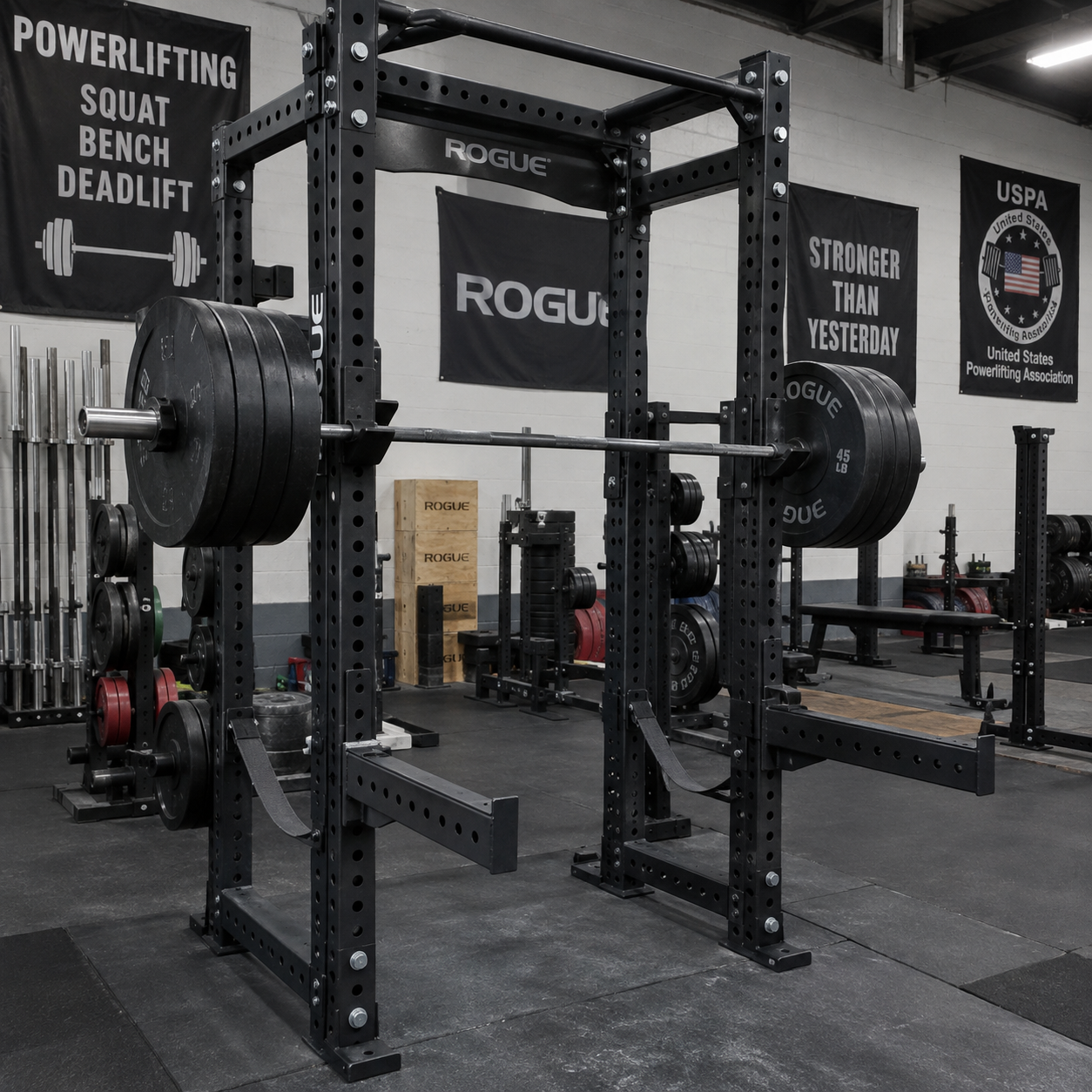
Powerlifting equipment safety: how to manage heavy loads and train without neglecting safety measures
Training with heavy loads requires careful evaluation of the equipment used and the procedures adopted before each session. In powerlifting, safety does not depend on a single component, but on the combination of racks, benches, barbells, weight plates, platforms, and protection devices correctly installed and used.
When working with squats, bench presses, and deadlifts, it is essential to choose equipment designed to support expected loads, verify the manufacturer's declared specifications, and periodically check the condition of the components. The presence of adjustable safety systems represents one of the most important elements for reducing risks during training.
Before purchasing a new setup, it is therefore advisable to evaluate weight capacity, stability, compatibility between various elements, and available operating space. Careful planning helps create a safer environment both in home gyms and professional facilities.
- What are the main risks in powerlifting?
- Which safety systems are essential?
- Checks to perform before training
- Safety checklist
- Why are space and flooring important?
- Errors that increase risk
- Safety in home gyms and gyms
- How to choose equipment in the long term
What are the main risks in powerlifting?
Most critical issues stem from using heavy loads combined with inadequate or improperly adjusted equipment. An unstable rack, supports positioned at the wrong height, or incompatible components can compromise the safety of the entire setup.
Failing to check the condition of the equipment can also increase risk. Loose hardware, worn adjustment systems, deformed supports, or damaged surfaces must be identified before use.
For this reason, every workout should begin with a brief visual inspection of the setup and a check of the adjustments required for the scheduled exercise.
What risks concern the squat?
In the squat, it is essential that safety systems are properly adjusted and that the barbell can be easily re-racked in the event of a missed lift.
What risks concern the bench press?
During the bench press, it is necessary to check the stability of the bench, the correct positioning of the supports, and the potential presence of safety devices compatible with the structure.
Which safety systems are essential?
A setup dedicated to powerlifting should include adjustable safety systems compatible with the rack used. These elements must be installed following the manufacturer's instructions and adjusted according to the exercise and the athlete.
The choice of structure should also prioritize products with complete technical documentation regarding load capacity, installation methods, and maintenance.
Adjustments must be simple to perform yet stable enough to prevent accidental movement during use.
Why are safety bars important?
They help limit the consequences of an uncompleted lift by keeping the barbell within a controlled zone when they are installed and adjusted correctly.
How much does rack stability matter?
A stable structure helps maintain consistent equipment behavior during use and reduces unwanted movement.
Which checks to perform before training?
Before starting, it is advisable to verify that all components are intact, correctly assembled, and adjusted for the intended exercise.
Checks should include barbell supports, safety systems, fasteners, bench stability, and flooring conditions in the work area.
When equipment is used by multiple people, it is also appropriate to check that the adjustments left by the previous user have been returned to the correct position.
Why perform a visual inspection?
A simple inspection often allows you to identify worn components, deformations, or loose elements before they can cause problems during training.
Why check compatibility?
Racks, benches, barbells, and accessories must be designed to work together without interference or operational limitations.
Pre-use safety checklist
The following table can be used as an operational reference.
| Check | What to verify |
|---|---|
| Rack | Stability, fasteners, and adjustments |
| Safeties | Height and correct insertion |
| Bench | Stability and positioning |
| Barbell | Integrity and compatibility |
| Plates | Correct locking |
| Platform | Stable and undamaged surface |
| Work area | Space free of obstacles |
These checks take only a few minutes but help identify any anomalies before the session begins.
For routine maintenance, it is advisable to follow the instructions provided by the equipment manufacturer.
How often should equipment be checked?
Frequency depends on intensity of use. Periodic checks should be scheduled according to the manufacturer's guidelines.
Why keep technical documentation?
Manuals and instructions allow you to quickly consult the assembly, adjustment, and maintenance procedures provided by the manufacturer.
Why are space and flooring important?
A well-designed setup must allow the athlete to move freely during all phases of the lift without interference from other equipment.
Technical flooring also contributes to the stability of the setup and protects the floor when using heavy loads.
The available space must also allow for the intervention of any spotters when required by the workout organization.
What role does the platform play?
The platform helps define the work area and offers a surface designed for barbell training.
Why plan the layout?
Correct arrangement of equipment improves operational safety and makes movement within the room easier.
Which errors increase risk?
One of the most frequent errors consists of using equipment without verifying compatibility among various components or without checking adjustments before training.
Another error involves the incorrect positioning of safety systems, which could render them ineffective during an uncompleted lift.
Finally, it is advisable to avoid neglecting periodic maintenance and the inspection of components subject to wear.
Is it correct to choose solely based on price?
No. Technical specifications, manufacturing quality, and the availability of documentation are equally important elements.
Is it advisable to modify the equipment?
Any modification should be carefully evaluated by referring to the manufacturer's instructions to avoid unintended configurations.
How does safety change between a home gym and a gym?
In a home gym, it is essential to optimize space while maintaining a complete and orderly setup. The presence of adjustable safety systems takes on particular importance when training individually.
In professional gyms, however, one must consider the number of users, the frequency of adjustments, and the need to schedule periodic checks on all equipment.
In both cases, a careful choice of powerlifting equipment represents the starting point for creating a more reliable training environment.
What priorities does a home gym have?
Versatility, correct installation, and constant monitoring of equipment condition are particularly relevant aspects.
What priorities does a gym have?
In addition to scheduled maintenance, it is important to ensure simple adjustments and components compatible with frequent use.
How to choose equipment thinking about long-term safety?
Evaluation should consider durability, availability of spare parts, ease of maintenance, and the possibility of expanding the setup while maintaining full compatibility between components.
Verifying declared weight capacities, compatibility between racks and benches, safety accessories, technical documentation, and manufacturing quality allows for a more informed choice.
To complete a setup dedicated to strength, it can be useful to evaluate a professional powerlifting rack compatible with the other elements of the system, planning periodic checks from the beginning and maintenance compliant with the manufacturer's instructions.
Comments (0)