
Trolley
You have no items in your shopping cart

 Budgets
 Dumbers
 Discs
Discs
 Benches
 Racks and Rigs
 Weights Holders
 Isotonic machines
 Calisthenics
 Cardio
 Kettlebells
 Flooring
 Gym Set
 Accessories
 Combat
 ARTI MARZIALI
 CONTAINER GYM
 Tug-Of-War
 Used Gym Equipment
 PILATES MACCHINARI
 GINNASTICA ARTISTICA
 CAMPI DA PADEL
 Prodotti in Pronta Consegna
 Informazioni
 IRONMAN
 Gift Card
- Donatif
- General information
- 0 I like it
- 19 Views
- 0 comments
- gym flooring, safety flooring, gym safety, shock-absorbing materials
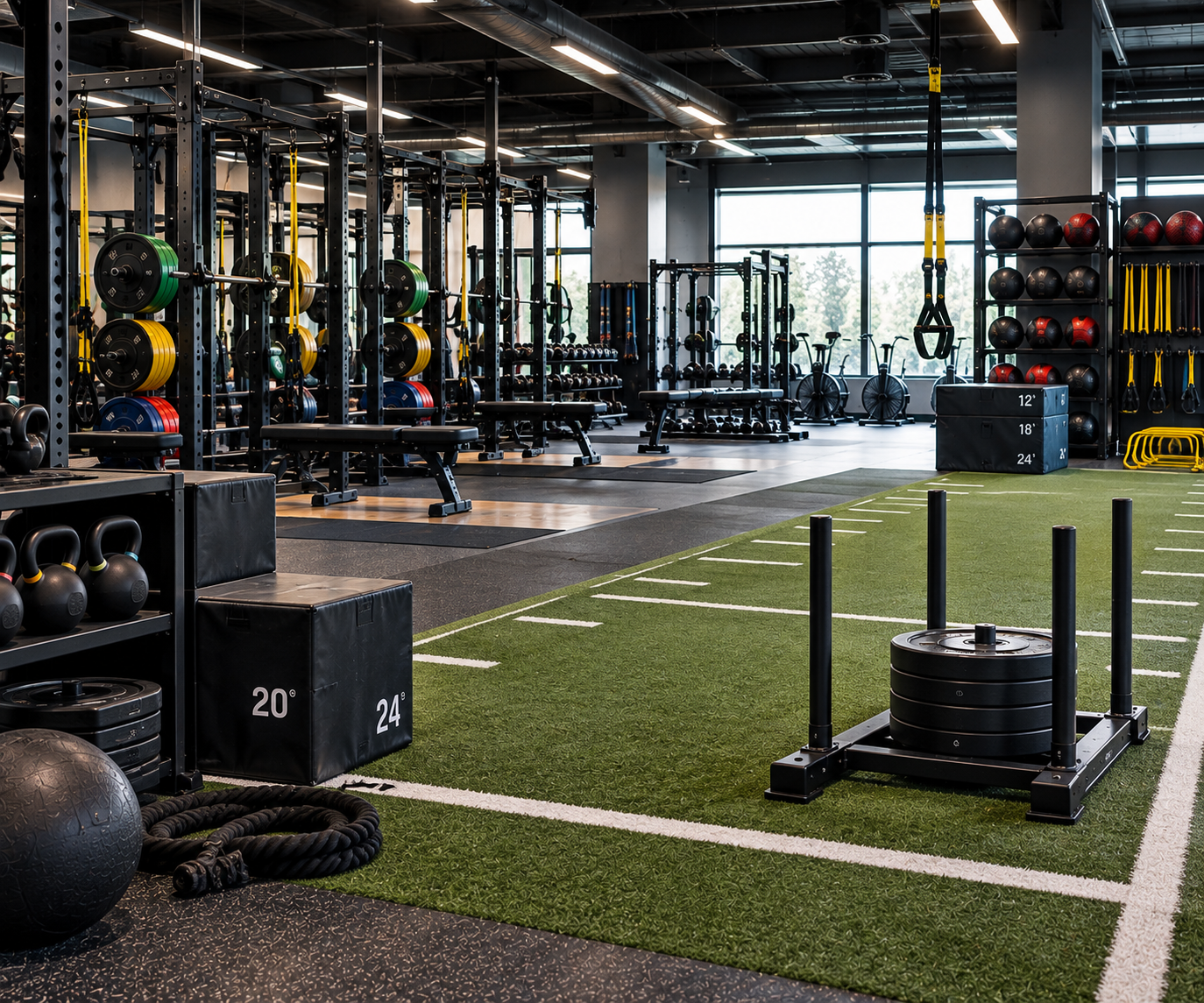
Safety in athletic preparation: avoiding generic programming and non-progressive load
Safety in athletic preparation does not depend exclusively on the quality of equipment or the training environment. A decisive role is played by program design, load progression, and the ability to adapt stimuli to the athlete's characteristics.
Too generic programming or a non-progressive load increase can reduce training effectiveness and increase the risk of organizational errors. For this reason, it is important to adopt verifiable criteria that allow work to be planned in a way consistent with the season's objectives.
This guide explores aspects related to the safety of athletic preparation, illustrating the main risks, checks to be carried out before training, and the most common design errors, with an operational approach intended for athletes, trainers, and sports facility managers.
- Quick answer
- What are the main risks?
- What safety requirements must a program have?
- Pre-training checks
- Errors to avoid
- Area and equipment management
- FAQ
- Organizing a safe work system
How to improve safety in athletic preparation?
Safety in athletic preparation is achieved through personalized programming, progressive load increases, periodic equipment checks, and proper space organization. Avoiding standardized programs and sudden increases in intensity allows work to be managed in a more controlled and coherent manner.
Every program should be adapted to the athlete's level, the discipline's objectives, and the period of the season, avoiding identical schemes for groups with different characteristics.
Documentation of activities carried out also facilitates monitoring progression and planning subsequent sessions.
Why avoid generic programming?
Programs built without considering age, experience, training level, and discipline requirements may prove ineffective and make load management difficult over time.
Why must the load be progressive?
An orderly progression allows work to be gradually adapted to the athlete's capabilities while avoiding sudden, unplanned variations.
What are the main risks?
The most frequent risks stem from incomplete planning rather than from the single exercise.
Among the most common critical issues are sudden increases in work volumes, exercises inconsistent with objectives, failure to alternate loads, and insufficient control of operating conditions.
Periodic verification of the entire program allows any imbalances in work distribution to be identified in a timely manner.
Management of strength
Strength development requires a progression compatible with the athlete's level and the overall program, avoiding unplanned increases.
Management of speed
High-intensity exercises require special attention in organizing recoveries, space availability, and the quality of technical execution.
What safety requirements must a program have?
A safe program is based on observable and easily verifiable criteria.
It is advisable to define measurable objectives, plan load progression, provide verification moments, and adapt work to the athlete's responses throughout the season.
The availability of suitable surfaces, efficient equipment, and shared procedures also contributes to the overall quality of the program.
Personalizing the work
Personalization concerns not only performance level but also training frequency, the competition calendar, and individual characteristics.
Monitoring evolution
Recording completed work allows program progression to be verified and any modifications to be planned based on observable data.
What checks to perform before training?
Before the session begins, it is useful to check the organization of the work area, equipment availability, and the presence of clear pathways.
Verifications also include checking the condition of surfaces, fastening systems, and general environmental order.
A simple and repeatable checklist helps standardize procedures and reduce operational oversights.
Checking the space
Work paths must be free of obstacles and organized so as to avoid interference between training groups.
Checking accessories
Cones, resistance bands, hurdles, and other tools must be intact, easily accessible, and stored correctly after use. To learn more about dedicated solutions, you can consult the gym accessories section.
How to manage equipment and flooring?
Proper organization of the training area contributes to session safety and the facility's operational continuity.
Equipment should be installed according to the manufacturer's instructions and subjected to documented periodic checks. The choice of flooring must also be consistent with the type of exercises planned and the level of facility usage.
Scheduling routine maintenance and recording performed interventions facilitates the management of the entire training space.
Scheduling inspections
Periodic checks allow wear, looseness, or anomalies to be identified before they can affect the regular conduct of activities.
Maintaining operational order
An organized environment makes trainers' work simpler and helps reduce interference during workouts.
What errors to avoid?
One of the most common errors is applying the same program to groups with different preparation levels without adequate adaptations.
It is also advisable to avoid sudden load increases, frequent unplanned modifications, and the absence of periodic checks on equipment status.
Unstructured planning makes it more difficult to evaluate results and correct critical issues during the season.
Avoiding standardized programs
Every program should be adapted to the objectives, practiced discipline, and characteristics of individual users.
Controlling load progression
Planning should provide a logical succession of stimuli with periodic checks on program progress.
FAQ on safety in athletic preparation
Does safety depend only on equipment?
No. Programming, space organization, load progression, and periodic checks also influence overall training quality.
Is it useful to use a checklist?
Yes. A control list helps systematically verify the environment, equipment, and session organization before activity begins.
What technical references to consult?
For safety management, it is appropriate to refer to equipment manufacturer manuals, technical documentation of sports surfaces, applicable standards for work environments, and guidelines from competent sports federations or organizations when relevant.
Is load progression the same for everyone?
No. It must be defined considering training level, discipline, sports calendar, and the athlete's individual characteristics.
Organizing a safe work system
Safety in athletic preparation stems from coherent planning, systematic checks, and organized management of spaces and equipment.
Scheduling work progressively, periodically checking operating conditions, and documenting interventions allows decisions to be made based on observable criteria rather than occasional evaluations.
A structured approach facilitates the technical staff's work, improves sports facility management, and helps create a training environment that is more orderly, efficient, and easily adaptable to the evolution of the competitive season.
Comments (0)