
Trolley
You have no items in your shopping cart

 Budgets
 Dumbers
 Discs
Discs
 Benches
 Racks and Rigs
 Weights Holders
 Isotonic machines
 Calisthenics
 Cardio
 Kettlebells
 Flooring
 Gym Set
 Accessories
 Combat
 ARTI MARZIALI
 CONTAINER GYM
 Tug-Of-War
 Used Gym Equipment
 PILATES MACCHINARI
 GINNASTICA ARTISTICA
 CAMPI DA PADEL
 Prodotti in Pronta Consegna
 Informazioni
 IRONMAN
 Gift Card
- Donatif
- General information
- 0 I like it
- 11 Views
- 0 comments
- gym flooring, safety flooring, gym safety, shock-absorbing materials
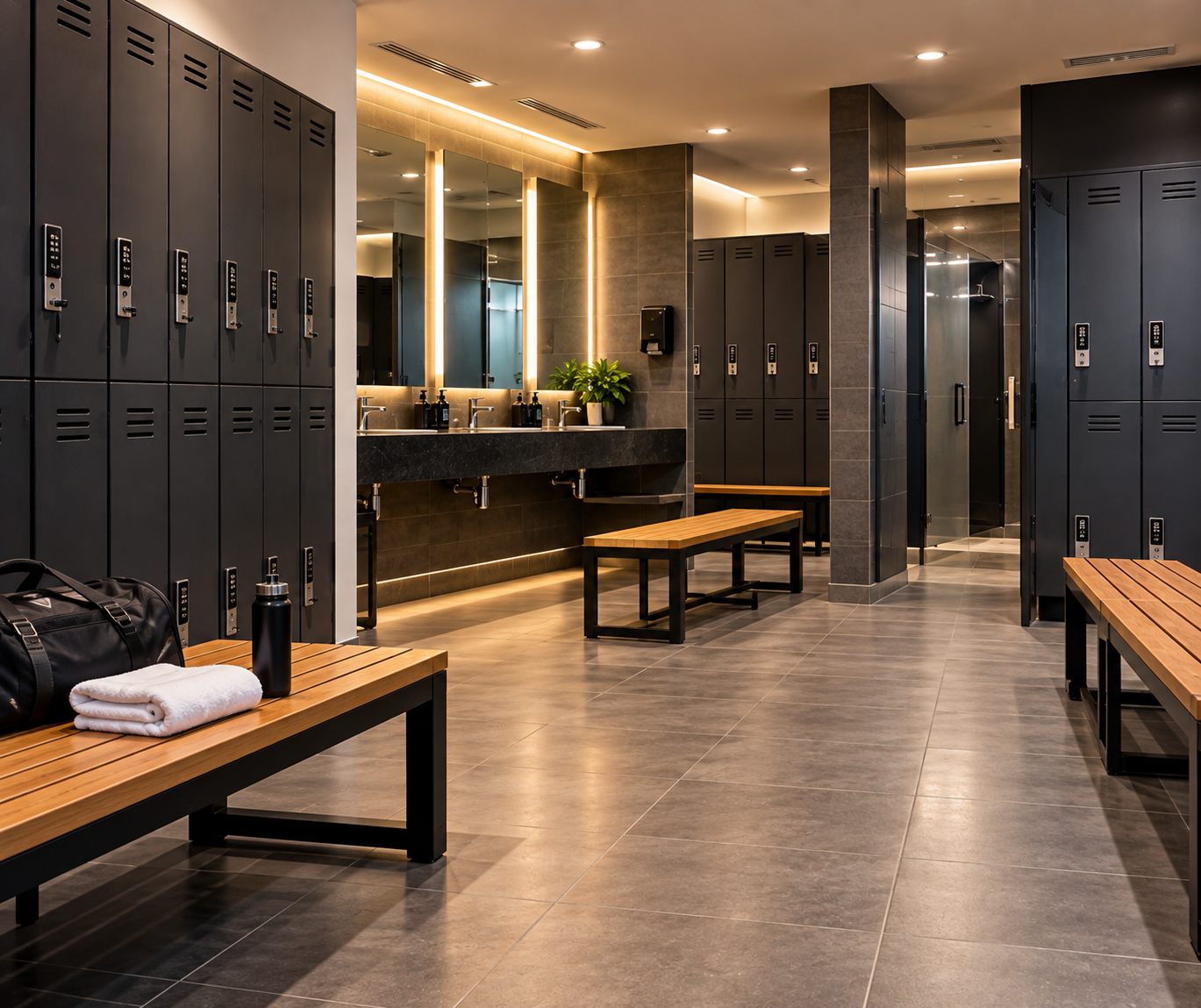
Gym locker room safety: preventing slips and hygiene issues
Safe gym locker rooms require a design that integrates suitable flooring, cleaning procedures, effective ventilation, orderly pathways, and scheduled maintenance. Reducing the risk of slipping and maintaining high hygiene standards means simultaneously intervening on materials, space organization, and periodic checks, following manufacturers' technical documentation and applicable regulations.
Locker rooms are among the most heavily used areas of a sports facility and are constantly exposed to moisture, water, detergents, and heavy foot traffic. Effective management does not rely on a single element but on a coordinated set of design, operational, and maintenance solutions.
For gym managers, fitness centers, and sports facilities, it is essential to establish procedures that ensure constant safety conditions throughout the day, even during peak hours.
- Quick answer
- What are the main risks
- Which requirements to check
- Checks before use
- Hygiene, ventilation, and maintenance
- Errors to avoid
- FAQ
- How to plan management
How to improve gym locker room safety?
Safety is achieved through a combination of anti-slip flooring, orderly pathways, adequate ventilation, scheduled cleaning, periodic checks, and maintenance of furniture and systems. Each intervention should be verified against the intended use of the facility and the manufacturers' technical instructions.
Planning should consider user flows, areas most prone to water accumulation, and the methods of use of the environments.
Preventive management helps reduce critical issues and facilitates the maintenance of operating conditions.
Objective
Ensure safe, hygienic, and easily manageable environments throughout opening hours.
Operational approach
Materials, systems, cleaning, and maintenance should be managed as an integrated system.
What are the main risks?
Wet surfaces represent one of the main causes of loss of traction. Overcrowding, moisture accumulation, poor aeration, and insufficient maintenance can also compromise the functionality and safety of the locker rooms.
Further critical issues can stem from damaged furniture, obstructed pathways, and improperly maintained drainage systems.
Periodic evaluation of environmental conditions allows for the timely identification of any anomalies.
Slipping
Areas most exposed to water require special attention during design and maintenance.
Hygiene
Air exchange, cleaning, and proper moisture management help maintain more comfortable environments.
Which safety requirements to check?
It is advisable to check the integrity of surfaces, the condition of furniture, ventilation functionality, pathway conditions, and the availability of necessary cleaning supplies.
Ventilation should be adequate for the intended use and contribute to moisture control.
When applicable, references include building regulations, hygienic-sanitary requirements, accessibility standards, and manufacturers' technical documentation.
Surfaces
Coverings should be kept intact and suitable for the environment.
Pathways
Connections between entrance, lockers, showers, and restrooms should always remain unobstructed.
Which checks to perform?
| Element | Check |
|---|---|
| Floors | Integrity and absence of standing water |
| Lockers | Functionality and stability |
| Ventilation | Proper operation |
| Pathways | Absence of obstacles |
| Cleaning | Execution according to schedule |
| Documentation | Updated maintenance log |
Checks should be scheduled based on the intensity of use and documented.
Daily checks
Quickly check floors, furniture, and general conditions before opening and during the day.
Scheduled checks
Periodic inspections allow wear and anomalies to be identified before they become critical.
How to manage hygiene, ventilation, and maintenance?
Cleaning procedures should be planned with a frequency appropriate to the number of users and integrated with checks on ventilation and surface conditions.
To explore dedicated solutions, you can consult gym flooring.
Manuals, maintenance logs, and operating procedures should be kept updated.
Cleaning
The regularity of interventions helps maintain constant hygienic conditions.
Maintenance
A preventive program facilitates the operational continuity of the facility.
Which errors to avoid?
Neglecting standing water, using unsuitable materials, reducing cleaning interventions, or failing to schedule maintenance are frequent errors. Overcrowding without flow organization can also compromise functionality and comfort.
Insufficient cleaning
Procedures should be adapted to the actual use of the environments.
Neglected maintenance
Documented checks help maintain consistent standards.
FAQ
What is the most important aspect to reduce the risk of slipping?
The combination of adequate flooring, regular cleaning, water management, and surface maintenance.
How much does ventilation matter?
It contributes to moisture control and user comfort along with correct management procedures.
Which documents to keep?
System manuals, maintenance programs, intervention logs, and technical documentation.
How to plan locker room management?
Planning should start with the analysis of flows, available surface area, and operational needs. Subsequently, it is possible to define materials, pathways, ventilation, cleaning schedule, and maintenance.
When applicable, the main references include current building regulations, hygienic-sanitary requirements, accessibility standards, and manufacturers' manuals regarding materials, systems, and furniture. Each configuration should be verified against the intended use of the facility.
A preventive approach makes it possible to maintain high standards of safety, hygiene, and operational continuity over time.
Comments (0)