
Trolley
You have no items in your shopping cart

 Budgets
 Dumbers
 Discs
Discs
 Benches
 Racks and Rigs
 Weights Holders
 Isotonic machines
 Calisthenics
 Cardio
 Kettlebells
 Flooring
 Gym Set
 Accessories
 Combat
 ARTI MARZIALI
 CONTAINER GYM
 Tug-Of-War
 Used Gym Equipment
 PILATES MACCHINARI
 GINNASTICA ARTISTICA
 CAMPI DA PADEL
 Prodotti in Pronta Consegna
 Informazioni
 IRONMAN
 Gift Card
- Donatif
- General information
- 0 I like it
- 1515 Views
- 0 comments
- gym flooring, safety flooring, gym safety, shock-absorbing materials
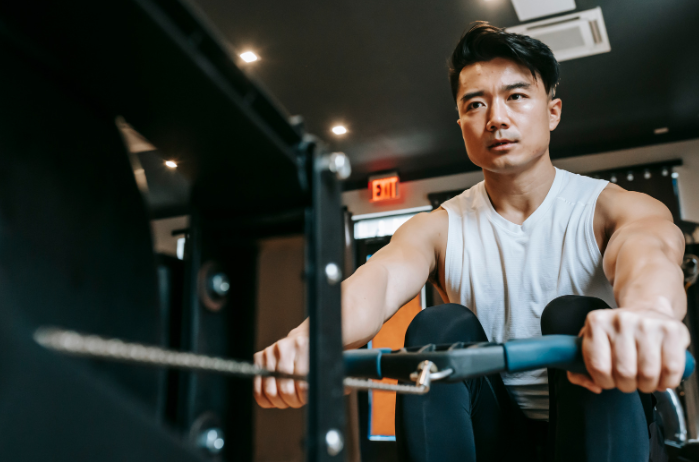
READING TIME: 5 MINUTES ➤➤
Rowing Machine Integration with Apps and Smartwatches
The evolution of home fitness has transformed the rowing machine into an increasingly connected and intelligent piece of equipment. Today, users no longer simply hop on the machine and train for a certain amount of time: they want to monitor every metric, synchronize data with their digital ecosystem, and gain a clear overview of their progress. The ability to integrate the rowing machine with fitness apps and smartwatches has therefore become an increasingly important feature for both home users and those seeking more precise performance tracking.
Many users, especially those with a data-driven approach to training, look for devices capable of communicating seamlessly with smartphones, wearables, and sports platforms. Motivation increases when users can visualize real improvements, compare different sessions, and receive instant feedback. For this reason, compatibility between rowing machines, apps, and smartwatches has become a key factor even during the purchasing process.
- Why connect your rowing machine to digital devices
- What data can be monitored during workouts
- How to connect the rowing machine to fitness apps
- Smartwatches compatible with rowing machines
- Common synchronization mistakes
- How to use data to improve training
- Choosing a rowing machine with advanced app compatibility
Why connect your rowing machine to digital devices
Integrating a rowing machine with technology allows users to turn a simple cardio workout into a far more measurable and complete experience. Through synchronization with apps and smartwatches, users can automatically track duration, distance, calories burned, and heart rate without relying on manual notes or separate tools. This approach makes monitoring more accurate and improves long-term workout consistency.
Another major advantage is motivation. When data is displayed clearly through graphs, statistics, and progressive goals, users are more likely to stay consistent. Modern digital platforms also offer rankings, challenges, and guided programs that help make indoor training less repetitive. For endurance athletes and cross-training enthusiasts, having every metric synchronized within a single ecosystem also saves considerable time.
What data can be monitored during workouts
Modern rowing machine app integration systems allow users to collect an increasingly large amount of performance data. Beyond traditional metrics such as time and calories, many apps can also record stroke rate, watt output, strokes per minute, and average workout intensity. These parameters make it possible to analyze workout quality more precisely and understand whether the training aligns with personal goals.
The ability to automatically archive workout sessions creates a historical database that can be consulted at any time. This is particularly useful for users who want to evaluate long-term progress or gradually adjust training loads. More advanced apps even provide automated suggestions based on previous performance, offering smarter workout management.
Useful metrics for improving performance
Among the most valuable metrics for structured rowing training are average pace, generated power, and the balance between effort and recovery. Monitoring these values helps users understand whether they are training efficiently or whether their technique requires adjustments. More experienced athletes often rely on this information to optimize cardiovascular endurance and anaerobic capacity.
Comparing different workout sessions also plays a fundamental role. Visualizing trends and improvements over time helps identify plateaus and modify training plans before motivation decreases. This data-oriented approach is one of the main reasons why more users are looking for advanced tracking systems.
The role of heart rate in indoor rowing
Heart rate is one of the most important metrics during rowing workouts. By connecting a smartwatch or heart rate monitor, users can verify whether they are training within the correct intensity zone, avoiding workouts that are either too light or excessively demanding. This control is particularly useful for people aiming to lose weight, improve endurance, or manage HIIT sessions.
Many modern smartwatches can also synchronize heart rate data directly with rowing-focused fitness apps. This centralizes all workout information into a single digital environment, making analysis and comparison much easier. Ease of use has become one of the most appreciated aspects among tech-savvy fitness users.
How to connect the rowing machine to fitness apps
Most modern rowing machines use Bluetooth or Wi-Fi connectivity to communicate with smartphones and smartwatches. The first step generally involves activating pairing mode directly from the rowing machine monitor. Users then need to open the compatible app on their smartphone and authorize the connection between devices.
The most popular applications offer automatic workout synchronization and often support third-party platforms such as Apple Health, Google Fit, Strava, or Garmin Connect. This makes it possible to integrate rowing sessions into a broader fitness routine without fragmenting data across multiple systems. While setup simplicity varies depending on the manufacturer, interfaces have become increasingly intuitive over recent years.
Bluetooth and Wi-Fi connection
Bluetooth is the most commonly used solution because it is fast and compatible with most mobile devices. Once the initial pairing has been completed, the connection usually becomes automatic during future sessions. Some premium models also support Wi-Fi for cloud synchronization and advanced software updates.
To avoid connection problems, it is important to verify app compatibility with the rowing machine model and ensure firmware is updated. Many issues are caused by outdated software versions or improperly configured Bluetooth settings.
Initial application setup
During the initial setup process, apps often require users to create a personal profile including age, weight, and training goals. This information is used to calculate calorie consumption and personalized statistics. Some platforms also allow users to configure guided programs, notifications, and weekly objectives.
Another important aspect concerns data privacy. More cautious users want to understand how workout information is managed and stored. For this reason, it is advisable to choose reliable applications and carefully review the permissions requested during installation.
Smartwatches compatible with rowing machines
Smartwatch compatibility is one of the most requested features among indoor training enthusiasts. Devices such as Apple Watch, Garmin, Fitbit, and Samsung Galaxy Watch increasingly support rowing workout tracking through dedicated apps or native integrations. This allows workouts to be automatically recorded without requiring additional tools.
A well-integrated smartwatch significantly improves the overall user experience because it allows essential metrics to be monitored directly from the wrist. During workouts, users can check heart rate, calories burned, and elapsed time without interrupting the session. For many people, this level of immediacy represents a strong motivational factor.
Apple Watch and fitness integration
The Apple ecosystem provides one of the smoothest integrations thanks to compatibility with Apple Health and Fitness. Many rowing apps automatically synchronize workout data, creating detailed reports that are easy to access and analyze. iPhone users often prefer this solution due to its stable performance and intuitive interface.
Notifications and daily activity goals also help maintain consistency and motivation. The experience becomes particularly effective for users already immersed in the Apple ecosystem who want a fully unified digital training environment.
Garmin, Fitbit, and other sports ecosystems
Garmin is highly appreciated among endurance athletes thanks to its advanced analytics and recovery tracking features. Fitbit, on the other hand, focuses more on simplicity and overall wellness monitoring. Both ecosystems can integrate with many Bluetooth-compatible rowing machines.
The ideal smartwatch ultimately depends on the level of detail required and the type of training performed. Performance-oriented users generally prefer platforms with advanced metrics, while those seeking simplicity often choose systems that are quick and easy to configure.
Common synchronization mistakes
One of the most common issues involves incompatibility between apps and rowing machines. Many users purchase devices without verifying which connection protocols are supported. This can create frustration and significantly reduce the overall experience.
Outdated firmware, missing permissions, or Bluetooth interference may also interrupt synchronization. To avoid these issues, it is recommended to follow official step-by-step guides and keep both the rowing machine monitor and connected applications updated.
How to use data to improve training
Collecting data is only valuable if it is interpreted correctly. Analyzing heart rate, pace, and session duration helps users understand whether their workouts are producing results aligned with their goals. More consistent athletes use these metrics to plan gradual progressions and avoid overtraining.
Modern applications provide intuitive dashboards that help users identify trends and improvements. This data-based approach increases the sense of control and strengthens long-term motivation. For many users, the true value of digital integration is not merely technological but linked to the possibility of training more consciously and effectively.
Choosing a rowing machine with advanced app compatibility
When evaluating the purchase of a new rowing machine, it is important to consider not only build quality and rowing smoothness but also the availability of smart features. A model with strong software compatibility offers greater long-term usability and better integration with evolving fitness platforms.
Checking for stable Bluetooth connectivity, support for major fitness apps, and compatibility with popular smartwatches helps avoid future limitations. For users focused on performance tracking and measurable progress, the digital component is no longer just an accessory but an essential part of the modern workout experience.
Comments (0)