Muay Thai equipment for beginners means getting the essential gear to train safely without purchasing accessories that are not yet necessary. Gloves, handwraps, mouthguards, and technical clothing represent the starting point, while the rest of the equipment can be gradually added based on training frequency and personal goals.
Those approaching Muay Thai for the first time often tend to underestimate the importance of choosing the right equipment or, conversely, to purchase numerous accessories that will rarely be used. A rational selection instead allows you to keep the initial budget down and focus on the elements that are truly indispensable during the first lessons.
Gyms also play an important role. A well-organized facility provides the shared equipment necessary for technical workouts, leaving practitioners responsible for using appropriate personal protection. Understanding this distinction helps to properly plan purchases right from the start.
What is the indispensable equipment to get started?
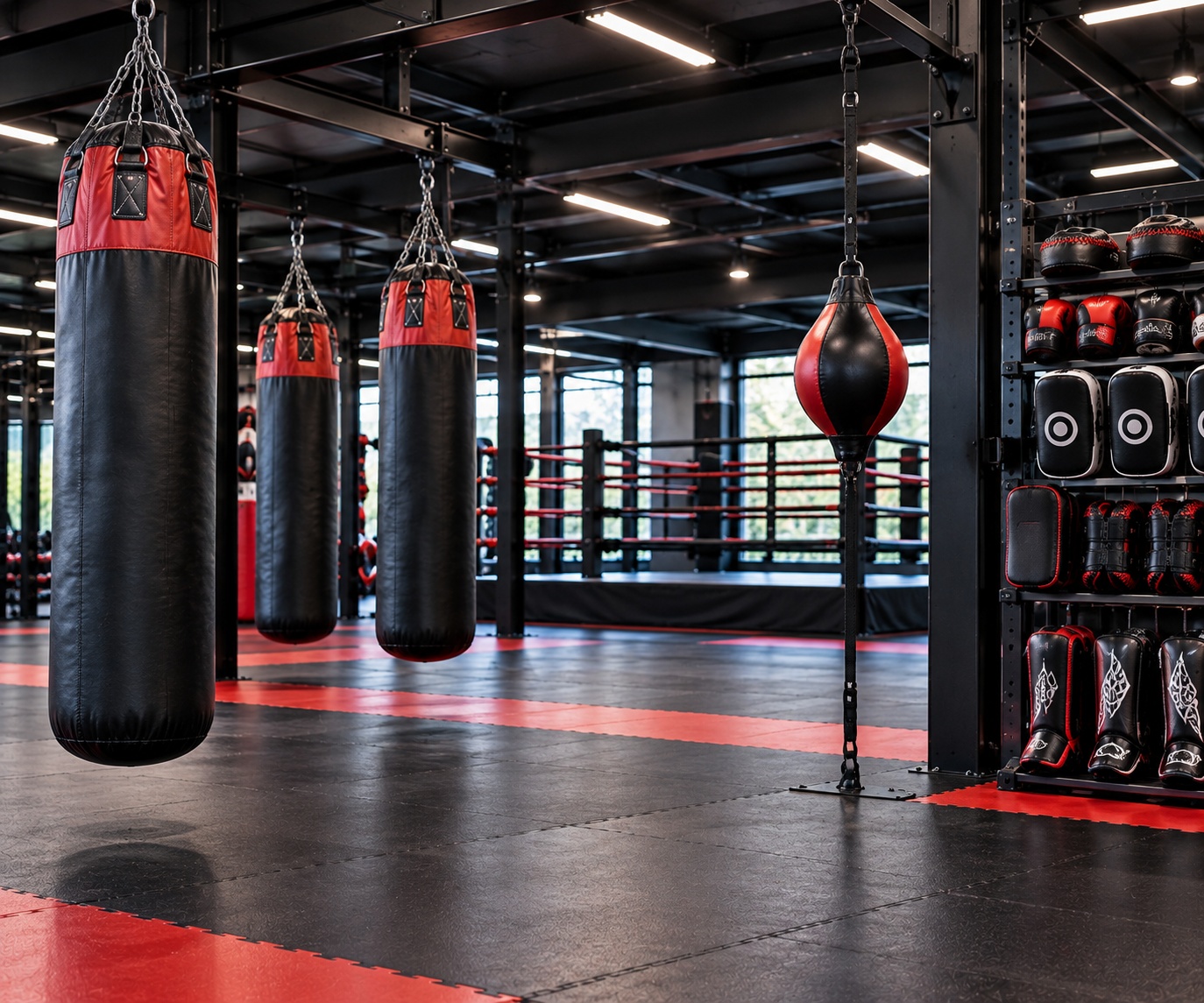
For the first lessons, gloves, handwraps, mouthguards, and comfortable technical clothing are generally sufficient. The gym should instead provide heavy bags, pao pads, punch mitts, and the space necessary for technical exercises.
This setup allows you to start training without high expenses and helps you understand which accessories will actually become useful over time.
Gradually purchasing equipment often represents the most practical solution both for those practicing at an amateur level and for those intending to continue with greater continuity.
Essential Gear
Personal items are those worn during every workout and that must properly fit the practitioner's characteristics.
Equipment Provided by the Gym
Sports facilities normally provide the shared equipment necessary for work on punch mitts, heavy bags, and paired technical exercises.
What equipment does a beginner really need?
The initial goal is not to buy all available material but to build balanced equipment that accompanies the first months of training.
Gloves represent the first purchase, followed by handwraps which help support the hand and wrist during exercises. The mouthguard completes the personal equipment when required by the activity performed.
Clothing should allow freedom of movement, promote breathability, and be suitable for high-intensity workouts.
How to Choose Gloves
It is advisable to evaluate the quality of the stitching, the distribution of the padding, the closure system, and the intended use, always following the manufacturer's instructions.
Personal Protections
Mouthguards and any other protections should be chosen according to the training program and the instructor's instructions.
How to correctly use the equipment?
Before each workout, it is advisable to quickly check the state of personal equipment by checking stitching, closures, and the general condition of the materials.
Handwraps must be applied correctly according to the instructions provided by the manufacturer or instructor, avoiding excessive tension or unstable fastenings.
After each session, it is advisable to let the equipment dry completely before putting it in the bag to limit deterioration.
Before Training
Preparing the equipment in advance allows you to verify that everything is available and in suitable condition for use.
After Training
Cleaning, drying, and proper storage help maintain the characteristics of the equipment for a longer time.
What practical criteria to use in selection?
The first criterion concerns training frequency. Those who train once or twice a week can start with an essential setup and expand it later.
The second criterion concerns construction quality. Resistant materials, careful stitching, and easily inspectable components facilitate maintenance over time.
The third criterion concerns compatibility with the gym program. Before purchasing specific accessories, it is useful to check which equipment is already available in the facility.
Managing the Initial Budget
Proceeding by priority allows you to invest first in the elements used during every workout, avoiding impulse purchases.
Equipment Compatibility
Personal equipment should be consistent with the planned training methods and the technical level achieved.
How to approach the first workouts?
The first lessons are generally dedicated to posture, basic movements, fundamental strikes, and physical conditioning. It is therefore not necessary to possess advanced equipment from the beginning.
Training bags, pao pads, and punch mitts are normally provided by the gym and allow you to progressively develop your technique under the supervision of the instructor.
To learn about the main categories dedicated to combat sports, you can consult combat equipment.
Learning Technique
The quality of execution is more important than the quantity of equipment owned during the initial phase of learning.
Purchase Progression
As experience increases, it will be possible to integrate additional accessories based on individual needs and the type of training performed.
What mistakes to avoid?
One of the most common mistakes is purchasing numerous accessories before regularly attending classes.
Another mistake concerns maintenance. Even equipment used by a beginner must be kept clean, dry, and periodically checked.
It is also advisable to avoid using visibly deteriorated materials or materials not suited for their intended purpose.
Buying Everything Immediately
A gradual growth of equipment allows for more conscious choices based on experience gained during workouts.
Neglecting Maintenance
Following the manufacturer's instructions regarding cleaning and storage helps maintain the equipment's efficiency for a longer time.
FAQ
Is it necessary to buy all the equipment before the first lesson?
No. In most cases, it is sufficient to start with essential personal equipment and integrate the rest progressively.
Must the gym provide gloves?
Some facilities provide gloves for initial trials, but the use of personal equipment is generally preferable for reasons of hygiene and comfort.
When is the time to buy other accessories?
When training frequency increases or the technical program requires specific equipment recommended by the instructor.
How to plan purchases over time?
For a beginner, the most effective strategy consists of distributing purchases over several phases. Initially, it is appropriate to invest in indispensable personal equipment, later evaluating any additions based on training continuity and sports goals.
Before purchasing new accessories, it is useful to check which tools are already available in the gym, avoiding unnecessary duplications. This approach makes it possible to use the budget more efficiently while maintaining truly functional equipment.
When applicable, the main reference sources remain the manufacturers' manuals regarding the use, maintenance, and storage of the equipment, in addition to the instructions provided by instructors and the general safety rules established for sports facilities. Basing your choices on verifiable criteria allows you to build a kit suitable for practicing Muay Thai without superfluous purchases.


 Budgets
 Dumbers
 Discs
 Benches
 Racks and Rigs
 Weights Holders
 Isotonic machines
 Calisthenics
 Cardio
 Kettlebells
 Flooring
 Gym Set
 Accessories
 Combat
 ARTI MARZIALI
 CONTAINER GYM
 Tug-Of-War
 Used Gym Equipment
 PILATES MACCHINARI
 GINNASTICA ARTISTICA
 CAMPI DA PADEL
 Prodotti in Pronta Consegna
 Informazioni
 IRONMAN
 Gift Card


Comments (0)