Choosing a curved treadmill requires an analysis that goes beyond price or aesthetic appearance. Construction quality, intended use, ease of maintenance and compatibility with the planned type of training are elements that directly affect the effectiveness of the investment and the durability of the equipment.
Curved treadmills are used in different contexts, from commercial gyms to CrossFit boxes to centers dedicated to athletic preparation. Each environment presents specific needs that should guide the choice of the most suitable model, avoiding comparisons based exclusively on commercial features.
This guide brings together verifiable technical criteria for choosing a curved treadmill, highlighting the most important specifications, aspects to compare between different models and the most frequent errors to avoid during evaluation.
How to choose a curved treadmill?
The choice should start from the intended use, the number of users and the type of training planned. Subsequently, it is advisable to compare construction quality, technical documentation, support, spare parts availability and the maintenance plan provided by the manufacturer.
A complete evaluation considers the total cost of ownership and not just the initial price, also analyzing operational continuity and ease of maintenance interventions.
Before purchasing, it is advisable to request technical datasheets, manuals, warranty conditions and indications regarding scheduled maintenance.
What is the first criterion to evaluate?
The intended use represents the starting point because it determines the characteristics required of the treadmill.
Why request technical documentation?
Manuals and technical datasheets allow you to compare different models using verifiable data and homogeneous criteria.
Which technical specifications really matter?
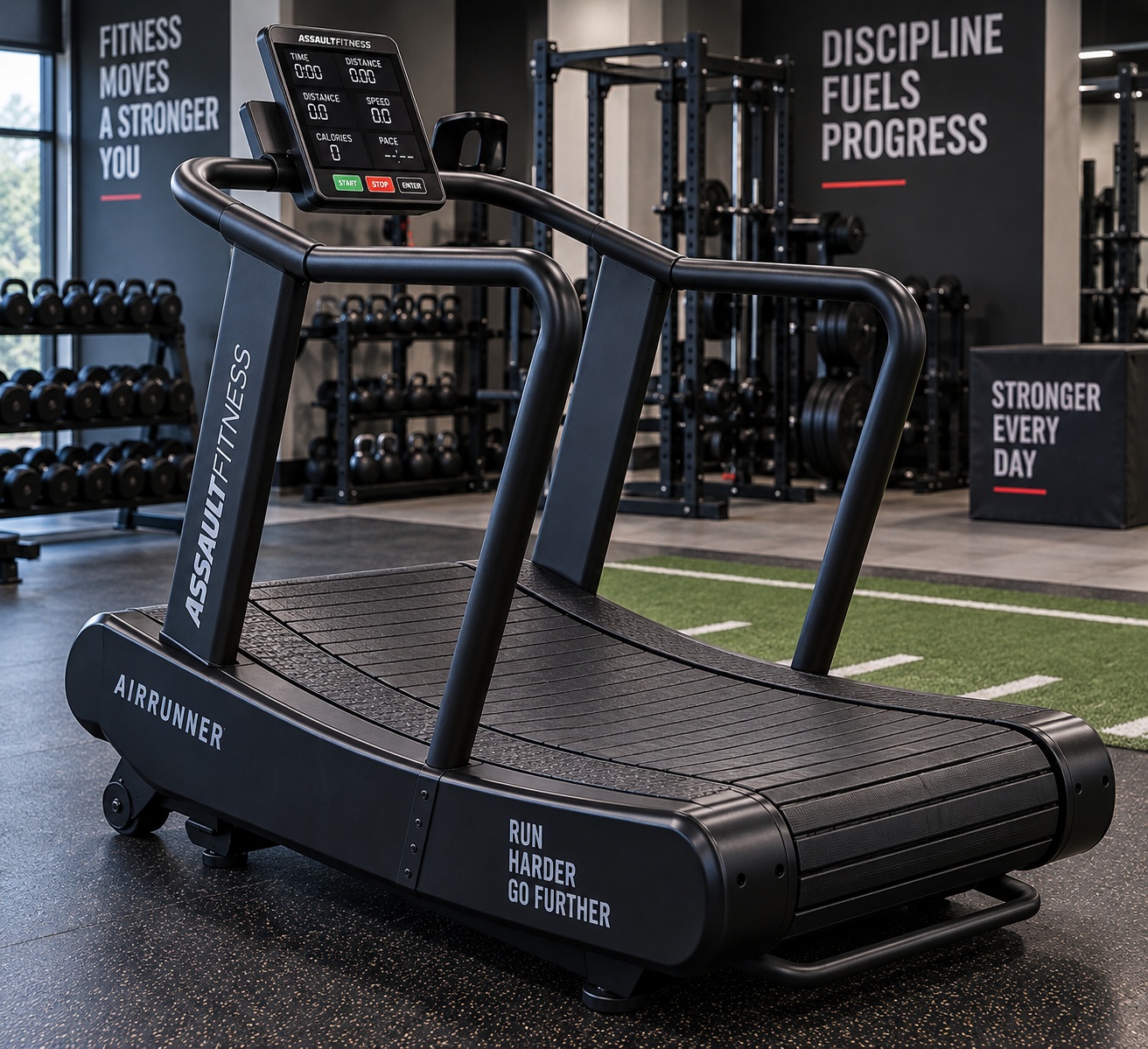
Among the main aspects are the curvature, the characteristics of the running surface, the resistance system, the robustness of the structure and the overall quality of the design.
It is important to verify that the model is designed for the expected level of use and that the technical documentation clearly reports the methods of use and maintenance.
The availability of spare parts and the simplicity of maintenance operations represent further elements to include in the evaluation.
Why is curvature important?
The geometry of the running surface contributes to the overall behavior of the treadmill and should be evaluated together with the other construction characteristics.
How much does structural quality matter?
Solid design favors reliability and operational continuity throughout the entire life cycle of the machine.
How to compare multiple models?
To make an objective comparison, it is useful to prepare a checklist based on identical criteria for each treadmill examined.
Among the aspects to compare are construction quality, running surface characteristics, technical support, maintenance, spare parts availability and documentation provided by the manufacturer.
A uniform evaluation facilitates comparison between different models, avoiding decisions based solely on marketing or price.
Why check spare parts availability?
The availability of components helps reduce machine downtime and facilitates equipment management.
How much does technical support matter?
An organized support service represents an important element in the management of a treadmill intended for continuous use.
How to verify compatibility with the operating environment?
A curved treadmill should be chosen considering the type of activity carried out in the facility, the number of users and the organization of the cardio area.
Workouts that include sprints or technical running require a careful evaluation of the characteristics declared by the manufacturer and the intended use.
To design an area dedicated to conditioning, it is possible to integrate the treadmill with other professional cardio machines selected according to the facility's goals.
Why evaluate the layout?
A well-designed arrangement improves accessibility, safety and flow management during workouts.
What role does flooring play?
A stable surface conforming to the manufacturer's instructions contributes to the correct positioning of the machine.
Why are maintenance and support crucial?
Scheduled maintenance helps keep the treadmill efficient and available over time, reducing the risk of unexpected interruptions.
Before purchasing, it is advisable to check the planned maintenance methods, the availability of spare parts and the level of technical support guaranteed.
Recording maintenance interventions also facilitates monitoring the state of the machine during its life cycle.
How to organize maintenance?
Following the plan indicated by the manufacturer and documenting each intervention represents an effective approach to equipment management.
When to check wear and tear components?
Checks should be carried out according to the maintenance schedule provided by the manufacturer.
What errors are best avoided?
One of the most frequent errors is choosing exclusively based on the initial price without evaluating maintenance, support and construction quality.
It is also advisable to avoid neglecting the intended use of the model or the technical documentation provided by the manufacturer.
Failing to analyze the available space can also make the integration of the machine into the training area more complex.
Why isn't price enough?
The total cost also includes maintenance, spare parts, support and operational continuity throughout the entire life cycle of the treadmill.
Why evaluate available space?
Preventive design facilitates installation and improves the overall organization of the cardio area.
What elements to compare between different models?
| Criterion |
Why it is important |
| Curvature |
Affects the behavior of the running surface |
| Running surface |
Determines comfort and usage methods |
| Resistance system |
Affects the characteristics of the workout |
| Construction quality |
Favors reliability and durability |
| Support |
Reduces machine downtime |
| Spare parts |
Facilitate maintenance over time |
| Layout compatibility |
Simplifies training area design |
Why use a checklist?
Comparing all models using the same criteria makes the evaluation more objective and easily verifiable.
What documents to request?
Datasheets, manuals, warranty conditions and maintenance information form the basis for a reliable comparison.
How to make a long-term oriented choice?
The choice of the curved treadmill should be based on the analysis of construction quality, technical documentation, support, maintenance and compatibility with the operating context in which it will be used.
Evaluating each model using verifiable technical criteria allows you to compare the different solutions with greater objectivity and to plan an investment consistent with the facility's goals.
Requesting complete information from the manufacturer and using a uniform checklist represents the most effective method to select a curved treadmill intended for professional or intensive use.
How to compare two very similar curved treadmills?
It is advisable to analyze construction quality, running surface, support, spare parts, maintenance and technical documentation provided by the manufacturer.
What is the most reliable method to choose?
Basing the decision on verifiable technical data, official manuals and measurable criteria represents the most effective approach to make an informed choice.


 Budgets
 Dumbers
 Discs
 Benches
 Racks and Rigs
 Weights Holders
 Isotonic machines
 Calisthenics
 Cardio
 Kettlebells
 Flooring
 Gym Set
 Accessories
 Combat
 ARTI MARZIALI
 CONTAINER GYM
 Tug-Of-War
 Used Gym Equipment
 PILATES MACCHINARI
 GINNASTICA ARTISTICA
 CAMPI DA PADEL
 Prodotti in Pronta Consegna
 Informazioni
 IRONMAN
 Gift Card


Comments (0)