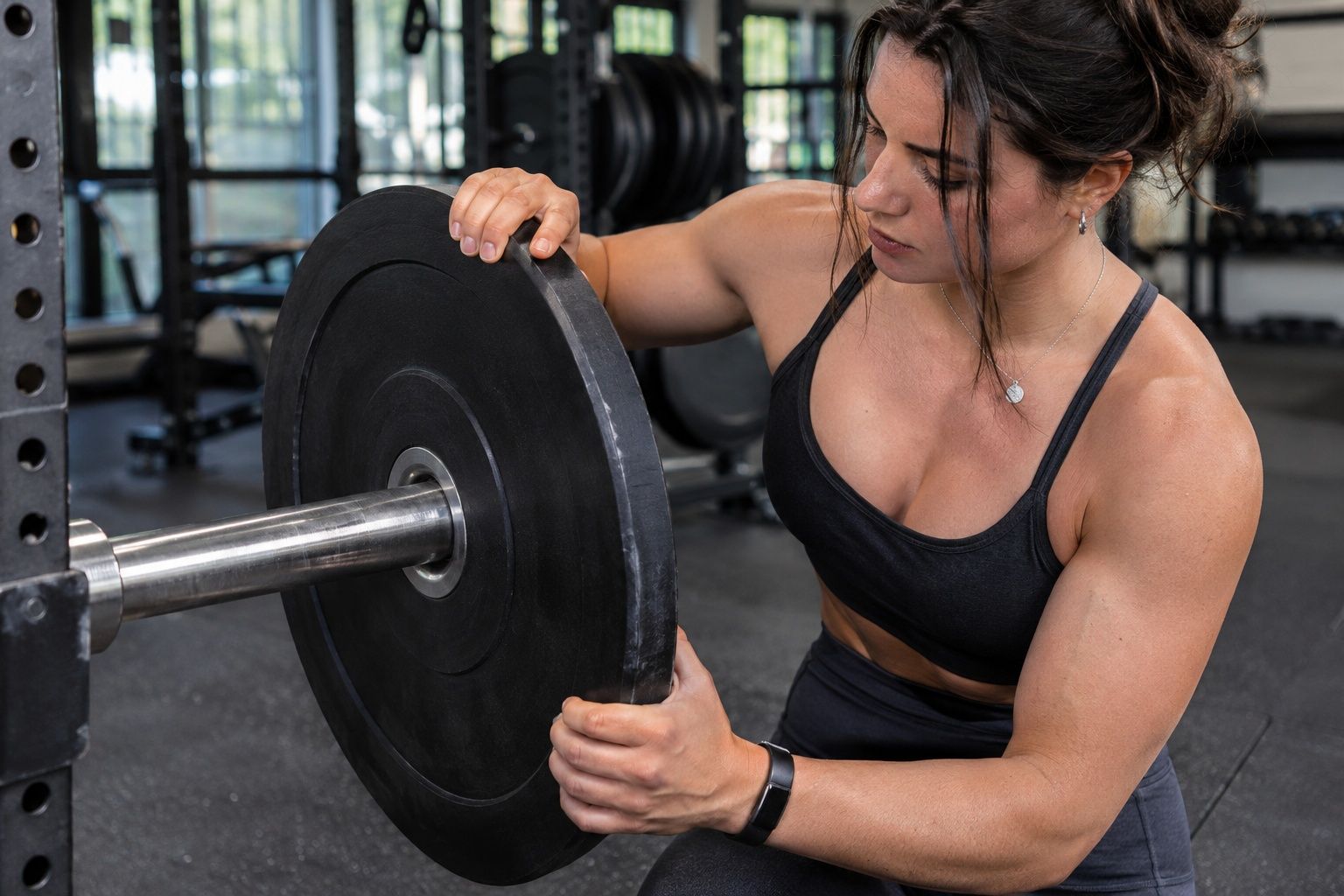
Black Friday represents an interesting opportunity to expand a home gym, replace worn components, or complete the equipment of a weight room. However, when purchasing barbells, weight plates, and collars separately, the promotional price is not the only element to consider. A convenient component can turn out to be unusable if its dimensions are not compatible with the equipment already available.
Anyone who already owns a barbell or a series of weight plates must face a precise check: the hole of the plates must be compatible with the weight plate sleeve, the collars must adapt to the locking system, and the expected load must respect the characteristics declared by the manufacturer. The distinction between grip diameter and sleeve diameter is particularly important, because these measurements describe different parts of the same tool.
This guide dedicated to black friday barbells and weight plates proposes an operational path to check compatibilities before completing the order. The objective is not to generically compare the available standards, but to identify the measurements to be taken, the data to look for in product data sheets, and situations in which it is advisable to ask for technical confirmation before purchasing.
The checklist is designed for athletes who use a home gym, personal trainers who manage shared equipment, and gym owners with components purchased at different times. The method remains valid even after the promotional period and allows you to evaluate each new purchase in relation to the system already installed.
Start from the equipment already available
The first activity does not consist in opening the promotion pages, but in reconstructing the configuration actually used. A barbell purchased several years before might have different characteristics compared to products currently available. Even apparently identical plates can present dimensional differences, especially when they come from different manufacturers or lines.
Preparing an inventory allows you to identify components that must continue to work together. For a home gym, a few data points may be sufficient: barbell model, outer diameter of sleeves, inner diameter of plates, type of collars, and amount of load used. In a professional gym, it is advisable to add the position of the equipment and any operational limitations of the individual stations.
When original documents are not available, measurements must be taken directly or requested from the manufacturer. It is important to distinguish a measured value from a simply assumed one. A commercial description such as a 28 mm barbell, without indicating the part concerned, does not by itself allow establishing which weight plates are compatible.
Identify the existing barbell
Note the brand, model, and product code when available. Measure the gripping area and the sleeve intended for the plates separately. Also check the loadable length of each sleeve, the type of ends, and the presence of any threading. If the barbell is used with racks or supports, also record the distance between the support areas and the overall length.
Catalog plates and accessories
For each family of plates, record the inner diameter of the hole, thickness, and nominal weight. Check if there are differences between cast iron, coated, and bumper plates. Collars must be cataloged separately, because a locking system suitable for one sleeve is not automatically compatible with all the others.
Checklist of measurements to verify
The compatibility of barbells and plates depends on the interaction between components, not on the presence of the same figure in two commercial descriptions. The main control concerns the coupling between the plate hole and the outer surface of the sleeve. Dimensional compatibility must be confirmed by considering the actual specifications, expected tolerances, and any fixing system.
A caliper allows for more precise measurements compared to a flexible tape measure, especially when it is necessary to distinguish nominally close dimensions. Before measuring, clean the surfaces and verify that there are no damaged coatings, deformations, or residues that could alter the reading. Repeat the check in multiple points if the component shows signs of wear.
The following table can be used as a reminder while browsing offers. The obtained measurements must be compared with those declared for the specific product code, without assuming that all items in the same category share identical dimensions.
| Element |
Dimension or data to verify |
Control method |
Related component |
| Plate |
Inner diameter of the hole |
Caliper and technical sheet |
Barbell sleeve |
| Barbell |
Outer diameter of the sleeve |
Caliper and model specifications |
Plate hole and collars |
| Barbell |
Grip diameter |
Caliper on the grip area |
Ergonomics and use |
| Sleeve |
Loadable length |
Measurement of usable surface |
Total thickness of plates |
| Collar |
Compatible diameter and clamping system |
Manufacturer's technical sheet |
Sleeve and locking system |
| Barbell |
Declared maximum load |
Technical documentation |
Plates and intended use |
| Rack |
Dimensions and distance of supports |
Measurement and specifications |
Length and geometry of the barbell |
Distinguish plate hole and sleeve
The plate hole and sleeve diameter represents the first dimensional check. The hole must allow the correct insertion of the plate onto the intended sleeve without requiring forcing. It is not enough to verify that the nominal value is similar: the compatibility indicated by the manufacturer and dimensional tolerances must be considered. A hole that is too small prevents mounting, while an excessively loose coupling can produce unwanted movement.
Check grip and loadable space
The grip diameter concerns the area grasped by the athlete and influences the feeling of the grip. It must not be confused with the diameter of the sleeves. The loadable length, instead, determines how many plates can be physically inserted before leaving the space necessary for the collar. A configuration may be compatible in diameters but not have enough space for the desired load.
Typical errors and incompatibilities to avoid
During a time-limited promotion, it is easy to focus on the discount percentage and overlook a technical feature. The most common error consists in considering products that report similar numbers as interchangeable. In reality, measurements can refer to different parts and must be interpreted in the context of the technical sheet.
Another error concerns purchasing plates without checking the already present barbell. The choice of a promotional set should start from the existing configuration, not solely from the convenience of the price per kilogram. Replacing the barbell also requires attention: a new model might not accept the available plates or might not adapt to the used station.
To avoid incorrect purchases, it is advisable to identify the possible point of incompatibility before comparing prices. If a fundamental piece of data is missing, the verification cannot be considered complete. In these cases, the correct solution consists in requesting additional information, rather than interpreting the absence of details as an implicit confirmation.
Confusing nominal measurements
The indications of 25, 28, and 50 mm can appear in descriptions of different equipment, but their meaning depends on the component and the product. It is not correct to assume that 28 mm always identifies the sleeve or that 50 mm describes the grip. Before purchase, it is necessary to identify exactly which surface is measured and which value is declared for the selected model.
Verify only two components out of three
A plate may be compatible with the sleeve but not leave enough space for the intended collar. Similarly, a collar apparently suited for the diameter may use a clamping system not indicated for that surface. Verification must include barbells, plates, and the locking system as a single functional set.
How to check product sheets during Black Friday
A complete product sheet should allow distinguishing the general characteristics of the category from the specific data of the item. During Black Friday, when comparing numerous offers, it is useful to record the SKU code of each component and verify that the consulted information refers exactly to the selected variant.
Different colors, lengths, versions, and configurations can belong to the same commercial family without sharing all specifications. Before adding an item to the cart, check that the indicated measurements correspond to the actually purchasable variant. When the description is incomplete, ask for written confirmation of the determining parameters.
To consult available alternatives, you can start from the Donatif category dedicated to gym barbells and apply the checklist to each model of interest. The presence of a product in the category does not constitute automatic confirmation of compatibility with plates already owned: the comparison must always be carried out on the specifications of the single configuration.
What information to request for an SKU
For a barbell, request at least sleeve diameter, grip diameter, total length, loadable length, declared maximum load, and characteristics of the plate-holder system. For plates, verify internal hole, thickness, weight, and intended use. For collars, compatible diameter, closing mechanism, and manufacturer's indications on supported surfaces are needed.
How to handle missing information
If the sheet only reports a generic indication, do not complete the check based on photographs. Images can help recognize the type of product, but they do not allow precise determination of dimensions and tolerances. Send the seller the model of the existing equipment, the measured dimensions, and the code of the desired item, asking for specific confirmation of the coupling.
Collars, locking systems, and safety
Collars are often considered secondary accessories, but they constitute an essential part of the loading system. Their task is to limit the movement of plates along the sleeves under expected conditions of use. The choice must therefore be made considering the diameter, geometry, and characteristics of the surface on which they are installed.
Compatible weight plate collars are not identified exclusively through a nominal measurement. Lever, screw, and spring systems exist, as well as solutions specific to certain configurations. Each mechanism presents its own requirements and must be used according to the manufacturer's instructions, without assuming that a seemingly stable closure guarantees adequate locking.
A practical check must be performed with stationary and unloaded equipment, verifying that the collar can be installed and removed correctly. Before training, it is also necessary to comply with the safety procedures provided for the exercise, the barbell, and the environment used. The collar does not replace correct technique nor any protective devices that may be necessary.
Compare closing systems
A lever collar uses a clamping mechanism that must be dimensioned for the intended sleeve. Spring models require a compatible geometry and adequate clamping force. Threaded systems may require specific barbell ends. The choice should not be based solely on aesthetic similarity between accessories.
Check locking before use
Verify that surfaces are clean and free from obvious damage, that the system closes according to instructions, and that enough space remains for correct positioning. If the collar does not reach the expected position or shows anomalous behavior, interrupt the check and consult the technical documentation. Do not use makeshift adjustments to compensate for an unverified dimensional incompatibility.
Allowed load and training configuration
Dimensional compatibility represents a necessary condition, but it does not exhaust the evaluation. The barbell must be suitable for the load and the type of exercise expected. Characteristics declared by the manufacturer may include load limits, intended use, and indications relating to permitted stresses. These data must be considered together with the dimensions.
A barbell used for controlled exercises can be subjected to different conditions compared to one used in dynamic movements. It is not prudent to deduce suitability for any training from the maximum indicated weight alone. It is necessary to check whether the manufacturer specifies operational limitations, conditions of use, or special requirements for load management.
The overall configuration must also include the other elements of the station. Racks, supports, hooks, and safety devices possess their own characteristics and limits. In a weight room with mixed equipment, verification should refer to the actual station, not just the barbell considered in isolation.
Calculate the load actually used
Sum the weight of the barbell and that of all installed plates, also considering any accessories that contribute to the overall load. Compare the result with the limits declared for the equipment. For example, four 20 kg plates and two 10 kg plates represent 100 kg of plates, to which the effective weight of the barbell must be added. This calculation does not replace verification of the dynamic conditions expected by the manufacturer.
### Space occupied by plates
The amount of loadable weight also depends on the thickness of the plates. Two configurations with the same total weight can occupy different lengths on the sleeves. Sum the thicknesses of the planned plates on each side and compare them with the declared useful length, leaving the space required by the locking system. A configuration that exceeds the loadable surface must not be used.
Pre-purchase verification tree
An orderly decision-making procedure helps reduce errors during limited-availability offers. The first step consists in defining which component you want to keep and which to replace. Subsequently, measured dimensions are compared with the specifications of the promotional item, verifying assembly and usage conditions.
The path must foresee three possible outcomes: documented compatibility, identified incompatibility, or insufficient information. This latter case does not equate to a positive response. If an indispensable parameter is missing, the purchase should be suspended until verifiable data is available.
To apply the method, imagine already owning a series of plates and wanting to buy a new barbell. The first question concerns the inner diameter of the plates. The second concerns the outer diameter of the sleeves of the new model. Only after confirming the coupling do you proceed with collars, loadable length, load limits, and compatibility with any supports.
Operational control sequence
Step 1: measure and identify existing components. Step 2: retrieve specifications of the desired SKU. Step 3: compare plate hole and sleeve. Step 4: verify collars and loadable length. Step 5: check maximum load, intended use, and compatibility with the station. Step 6: evaluate price, availability, and commercial conditions only after passing technical checks.
How to interpret the result
If all essential features turn out to be compatible and documented, the product can move to economic evaluation. If an incompatibility emerges, it is necessary to choose a different variant or consciously redesign the entire system. If a measurement is not available, request technical confirmation. Avoid purchasing additional accessories in the hope that they will automatically resolve an unverified dimensional difference.
How to compare offers without lingering compatibility
An interesting promotion does not necessarily coincide with the most convenient purchase for your configuration. The price must be evaluated considering the possibility of immediately using the product, the need for any additional accessories, and compatibility with equipment already available. A discounted item that requires replacing numerous components can lead to an overall expense higher than expectations.
Anyone wishing to buy an Olympic barbell during Black Friday should verify the actual characteristics of the chosen model and not rely exclusively on the commercial denomination. Compatibility with available plates, the type of sleeves, bar geometry, and suitability for the intended training must be confirmed before considering the offer advantageous.
For personal trainers and weight room managers, economic evaluation also includes equipment standardization. Using compatible components across multiple stations can simplify daily management, but this possibility must be verified through the specifications of actually installed products. Not all items belonging to the same commercial category are automatically interchangeable.
Calculate the overall cost of the configuration
Compare the promotional price with that of any collars, plates, supports, or other necessary components. Also consider delivery conditions and return policies applicable to the item. Real savings emerge only when the complete system meets technical requirements without requiring unexpected modifications.
### Manage time-limited offer pressure
The expiration of a promotion can favor decisions based on the discount percentage rather than data. Preparing the measurements of existing equipment in advance allows you to quickly compare offers without skipping checks. If documentation is not sufficient, foregoing a promotion may be preferable to purchasing a component that cannot be used safely.
Protecting the investment with a verified choice
Purchasing barbells and plates should be considered an investment in the continuity of your equipment. For a home gym, it means being able to progressively expand equipment without replacing components that are still functional. For a professional gym, it means reducing operational incompatibilities, duplicate purchases, and difficulties in station management.
The most useful criterion consists in separating technical verification from commercial evaluation. First, it is established whether the product can be used in the expected configuration, then price, construction characteristics, and sales conditions are compared. This sequence prevents a particularly evident discount from influencing the perception of compatibility.
Keeping a log of measured dimensions and verified product codes makes future purchases easier as well. Each new component can be compared against a pre-existing database, reducing the time needed to check subsequent offers. In the presence of multiple barbells or plates with different characteristics, a separate record for each family avoids confusion between configurations.
Before proceeding with payment, the checklist should therefore contain at least the inner diameter of the plates, the outer diameter of the sleeves, the grip measurement when relevant, the loadable length, the planned collar system, load limits, and the SKU code of the selected item. Every piece of data must be measured, documented, or confirmed by the manufacturer. If one of the essential checks remains unresolved, the purchase decision does not yet possess the necessary information.
Black Friday can become a concrete opportunity to improve your equipment when the promotion concerns truly usable components. A choice based on specific measurements, verified configurations, and declared usage conditions allows you to protect the budget and enhance what you already own, without entrusting compatibility to assumptions or simple commercial similarities.


 Budgets
 Dumbers
 Discs
 Benches
 Racks and Rigs
 Weights Holders
 Isotonic machines
 Calisthenics
 Cardio
 Kettlebells
 Flooring
 Gym Set
 Accessories
 Combat
 ARTI MARZIALI
 CONTAINER GYM
 Tug-Of-War
 Used Gym Equipment
 PILATES MACCHINARI
 GINNASTICA ARTISTICA
 CAMPI DA PADEL
 Prodotti in Pronta Consegna
 Informazioni
 IRONMAN
 Gift Card