When building a home gym over time, it is very common to accumulate equipment purchased at different moments. The first barbell might be an entry-level model with 28mm plates, while as experience grows, the desire arises to switch to a more professional system with the 50mm Olympic standard. The main problem arises when one wonders if it is truly necessary to replace everything or if it is possible to integrate the old weights into the new setup.
Compatibility between different standards is one of the most important aspects to evaluate before making an upgrade. Knowing the differences between the various diameters, understanding how plate holes work, and knowing what solutions exist allows you to avoid waste and make the most of the equipment already purchased.
Intelligent equipment management allows you to transform a simple collection of weights into an organized and progressive system. Through proper planning, it is possible to improve your home gym without necessarily having to start from scratch.
Differences between 28mm and 50mm standards
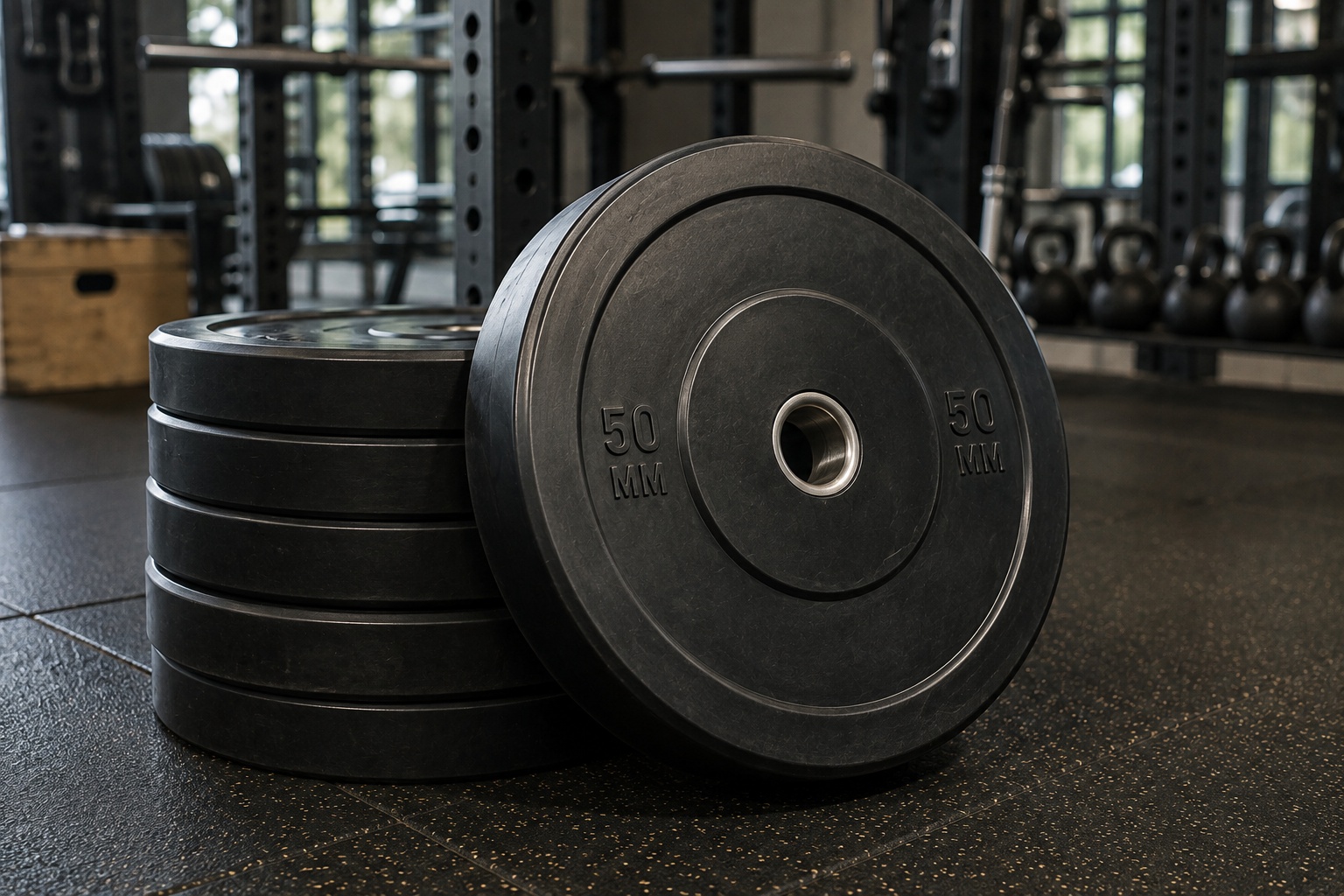
The first element to understand concerns the difference between the two main standards used in the weightlifting world. 28mm plates are designed for barbells with smaller sleeves, while 50mm plates belong to the Olympic standard used in most professional gyms.
The difference does not only concern the size of the center hole. 50mm systems are generally associated with more robust barbells, higher load capacity, and a wider availability of professional products.
However, this does not mean that old 28mm plates are unusable. Proper compatibility management allows you to continue utilizing part of the equipment you already have.
Characteristics of the 28mm standard
Plates with a 28mm hole are very common in entry-level home gyms and kits purchased by beginners. Their main advantage is represented by their affordable cost and ease of use.
For home workouts with moderate loads, they can offer an interesting price-to-quality ratio.
Characteristics of the Olympic standard
The 50mm system represents the professional benchmark. Olympic barbells are designed to support heavy loads and are used in disciplines such as powerlifting, weightlifting, and advanced strength training.
The greater availability of accessories makes this standard particularly attractive for those who want to build a complete gym over time.
How plate hole diameters work
The center hole of the plate determines the type of barbell it can be used with. A plate with a small hole cannot be placed directly on an Olympic barbell with a 50mm sleeve, just as an Olympic plate cannot be mounted on a smaller standard barbell.
This principle of compatibility is fundamental to avoid incorrect purchases. Before adding new components to your gym, it is always necessary to verify the actual measurements.
Correct identification of the standard allows you to create an orderly and easily expandable configuration.
How to correctly measure a plate
To identify a plate, it is necessary to check the inner diameter of the center hole, not just the weight indicated on the surface.
This verification is particularly important when purchasing used plates or products coming from different kits.
Why the hole is decisive
The hole diameter establishes the mechanical compatibility between the plate and the barbell. An incorrect measurement can make it impossible to use the equipment or create unsafe conditions.
Knowing this detail avoids problems during every phase of an upgrade.
Compatibility between plates and barbells
When talking about 28mm gym plates, one of the most important aspects concerns the possibility of integrating them with different systems. In general, every plate is created for a specific standard, but there are solutions that allow for greater flexibility in equipment management.
Compatibility must be evaluated by considering the hole diameter, the length of the barbell sleeve, and the total weight you wish to use.
Proper planning allows you to retain part of the initial investment even when switching to a more advanced system.
Recovering old plates
Many enthusiasts think that switching to a new standard automatically makes all previous weights unusable. In reality, with a correct technical evaluation, some components can continue to be utilized.
This allows you to spread the expense over time.
Creating a mixed configuration
A home gym can be developed gradually by integrating components purchased at different times.
The important thing is to always pay attention to the safety and compatibility of the individual parts.
When to use an adapter
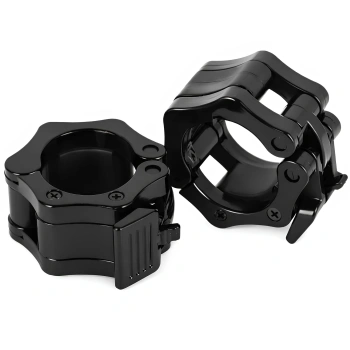
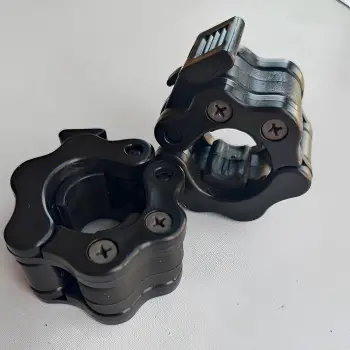
Adapters represent a useful solution when you want to temporarily or permanently connect components belonging to different standards. A 50mm barbell adapter can allow for certain configurations, but it must be chosen carefully based on the type of use.
Not all adapters are the same, and build quality is fundamental when working with heavy loads.
The best solution depends on the overall gym project and future goals.
Advantages of adapters
Adapters can extend the useful life of components already purchased and reduce the need for immediate replacements.
They are particularly useful during transition phases toward a new standard.
Limits to be aware of
Adapters should not be considered a universal replacement for native compatibility. It is important to always verify the load capacity, stability, and intended use.
An informed choice avoids problems during more intense workouts.
How to perform an intelligent upgrade
An effective upgrade does not necessarily consist of replacing all equipment at once. The best strategy is often to identify the elements that most influence the quality and safety of the workout.
Gradually switching to more professional components allows you to distribute the budget and keep the gym operational during the change.
Accurate planning reduces waste and makes every purchase more useful.
Which elements to upgrade first
In many cases, the barbell is the first element to improve because it determines compatibility with future purchases.
Subsequently, it is possible to expand the set of plates while maintaining a coherent logic.
Thinking about future growth
A home gym should be designed considering how it might evolve over the coming years.
Choosing common and easily expandable standards allows for greater freedom in future purchases.
Common mistakes in managing weight plates
One of the most frequent mistakes consists of purchasing new plates without verifying the hole diameter. This can lead to having incompatible components and unnecessarily increasing expenses.
Another mistake is thinking that the initial price is the only important factor when choosing equipment.
A broader vision allows you to build a more efficient and long-lasting gym.
Ignoring the standard
Not knowing the difference between 28mm and 50mm can create confusion, especially during online purchases.
Always checking technical specifications is a simple habit that avoids many problems.
Not planning for evolution
Purchasing products without considering future updates can limit the growth possibilities of the gym.
A coherent project makes every investment more effective.
The modular solution for the home gym
One of the main needs of those updating their home gym is to avoid losing the value of the equipment already purchased. The possibility of integrating old components with new systems represents an important advantage for those who want to progressively improve their setup.
Compatibility and modularity allow you to build a more flexible configuration, adapting it to needs that change over time. To learn more about solutions dedicated to the growth of your gym, you can consult the range of gym weight compatibility by Donatif.
An intelligent approach to upgrading allows you to invest better, reduce waste, and create a home gym capable of accompanying every phase of your training journey.


 Budgets
 Dumbers
 Discs
 Benches
 Racks and Rigs
 Weights Holders
 Isotonic machines
 Calisthenics
 Cardio
 Kettlebells
 Flooring
 Gym Set
 Accessories
 Combat
 ARTI MARZIALI
 CONTAINER GYM
 Tug-Of-War
 Used Gym Equipment
 PILATES MACCHINARI
 GINNASTICA ARTISTICA
 CAMPI DA PADEL
 Prodotti in Pronta Consegna
 Informazioni
 IRONMAN
 Gift Card