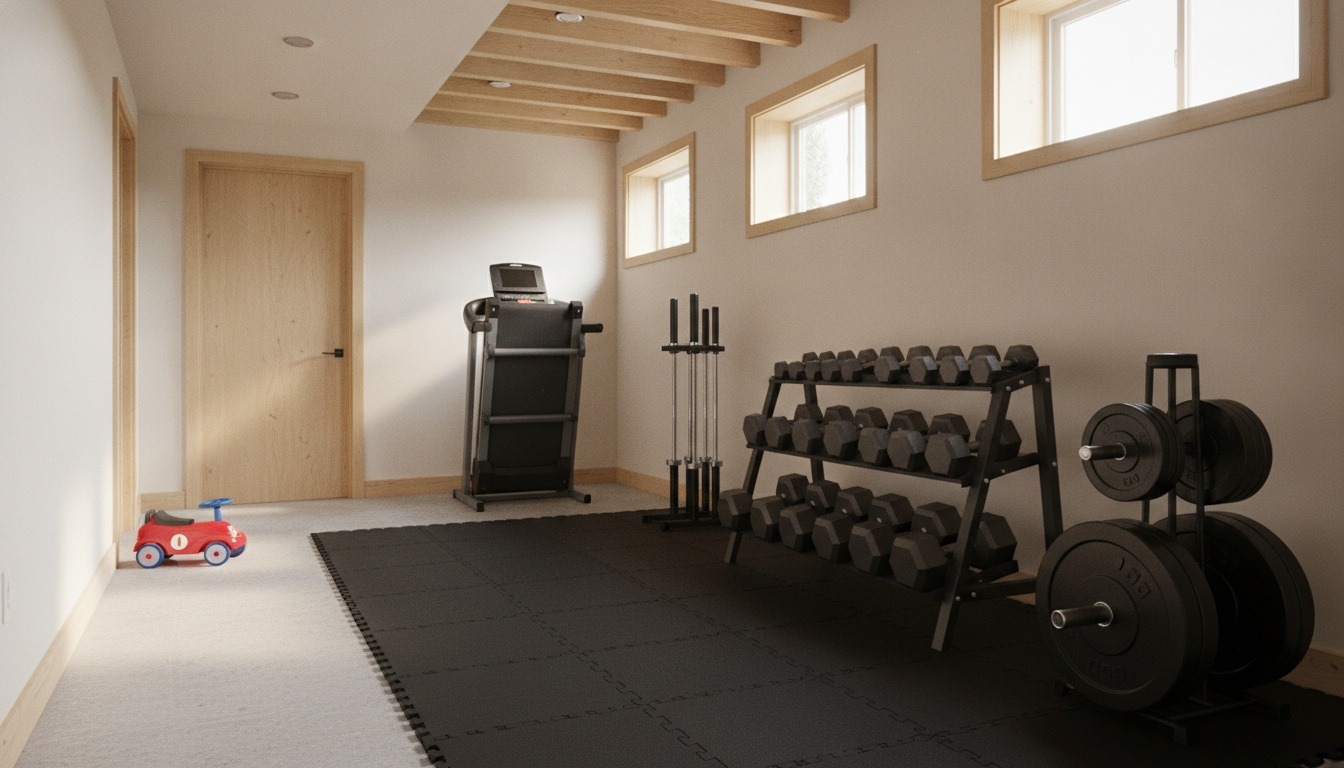
With kids in the house, home gym child safety depends less on the equipment itself and more on how you leave the room after training: weights off the floor, treadmill unplugged, racks anchored and moving parts at rest. A closed door helps, but it isn't enough on its own. That's the foundation of a safe home gym, whether you have young children or nieces and nephews visiting for the holidays.
You don't have to give up training at home. You just need to know which equipment needs the most attention and turn a few simple habits into a routine you repeat after every session.
In this guide you'll find the risk points for each type of equipment and how to store dumbbells, weight plates and barbells. You'll also see how to handle treadmills, machines with moving parts and racks, plus a lockdown checklist to hang in your gym. For children's health, your pediatrician is always the reference. For each piece of equipment, follow the manufacturer's instructions.
In this article
Which equipment is riskiest with kids in the house?
A child doesn't use your gym the way you do: they explore it. They touch, push, climb, stick their fingers into every opening and try to lift whatever they find on the floor. That's why the riskiest equipment isn't necessarily the heaviest. It's whatever can be moved, tipped over or switched on, or has pinch points within a child's reach.
The table below summarizes the main points of attention. Use it as a starting point: for each model, the owner's manual remains the reference.
| Equipment | Risk point | What to do |
|---|
| Motorized treadmill | Accidental start-up, accessible belt and rear roller, folding deck | Remove the safety key, unplug the machine, check the deck lock |
| Spin bike, rowing machine, elliptical | Flywheel, chain or belt, pedals and seat that keep moving after use | Keep children out of the area during use, wait for a full stop |
| Weight stack machines | Plates that lift and drop, pulleys, attached handles | Detach accessories, check the guards provided by the manufacturer |
| Dumbbells, weight plates, kettlebells | Weights that roll, tip over or fall on feet | Use racks and weight storage, never lean plates against the wall |
| Power racks, rigs, pull-up bars | Instability if not anchored, barbell left on the hooks, climbing | Anchor per the manufacturer, unload and store the barbell |
| Adjustable and folding benches | Backrests and adjustment mechanisms that can close on fingers | Lock the adjustments, store benches folded and stable |
| Small accessories | Collars, micro plates, resistance bands, ropes, chalk | Closed container on a high shelf |
Is a closed door enough? Start with a map of the room
A closed door is a good first layer of protection, but it doesn't work on its own. It stays open while you grab your water bottle. A guest who doesn't know the house opens it. Sooner or later a child learns to press the handle, and at that point what matters is what they find inside.
That's why you need two layers. The first limits access: a door, and possibly a lock or latch out of children's reach. The second makes the room as "neutral" as possible when you're not training, and to get there you need a map.
How to map your home gym in 5 steps
- Look at the room from a child's height. Get down low and you'll see handles, cables, sharp corners and plates you don't notice while standing.
- Mark everything on the floor. Dumbbells, plates, kettlebells, medicine balls, barbells left leaning: every weight on the floor needs a fixed storage spot.
- Identify anything that switches on or moves. Outlets, power strips, power cables, treadmills, machines with flywheels, chains or cables.
- Check what could tip over. Racks, storage stands, leaning mirrors, folding equipment stored upright: check stability and anchoring as indicated by the manufacturer.
- Define a training zone. A clear perimeter, for example marked out by your gym flooring, helps you stay organized and helps kids understand where not to go.
This is where habit works against you: the equipment you use every day seems harmless precisely because you know it so well. The map is a way to look at it with fresh eyes once and decide where everything goes.
Weights on the floor: where to store dumbbells, plates and barbells?
Weights left on the floor are the easiest problem to fix and the one that changes the room the most. A round dumbbell can roll. A plate leaning against the wall can fall. A barbell left in a corner can slide if someone grabs it. There's only one rule: after training, every weight has a fixed place, and that place is not the floor.
Dumbbells and kettlebells
A dedicated rack keeps dumbbells in place and sorted by weight. Among dumbbell racks, choose a stable model suited to the weights you own. Put the heaviest ones on the lower shelves: if a child pulls one out, at least it won't fall from above. Hex dumbbells tend to roll less than round ones, but they still need to be stored properly. If space is tight, you'll find ways to use walls and corners in our guide on how to organize dumbbells in a small home gym.
Weight plates
Plates stacked on the floor or leaning against the wall are among the most unstable setups in a home gym. A weight plate tree keeps them on the pegs, separated by weight and evenly distributed. Load the heaviest plates onto the lower pegs first. Also check that the structure stays stable under full load, following the manufacturer's guidelines.
Barbells
A barbell leaning diagonally in a corner is a long, heavy lever that can slide. A dedicated holder is better. A vertical barbell holder takes up little floor space and keeps bars secure in their slots. Position it following the instructions, and never leave plates loaded on the bar at the end of a session.
Small accessories
Collars, micro plates, resistance bands, jump ropes and chalk are small, often colorful and very appealing to a child. Collect them in a closed container on a high shelf. Don't leave bands and ropes hanging from handles or knobs, where they could become a strangulation hazard.
Flooring
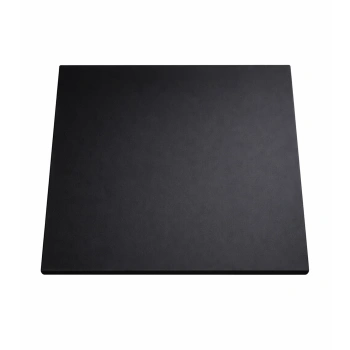
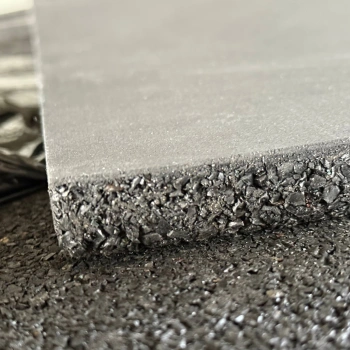
Rubber gym flooring won't make a room safe on its own, but it helps in two ways. It visually marks out the equipment area and provides a uniform, stable base for racks and structures. If you choose tiles, like the 50x50x2 cm gym flooring, make sure they're laid flush with no raised edges, which would become a trip hazard.
Treadmills and cardio: how to manage moving parts?
Treadmills: safety key and plug
The motorized treadmill is the piece of equipment that needs the most attention, because it can be switched on. Many models have a safety key or clip that, when removed, stops the belt or prevents it from starting: check your manual to see how it works on yours. After every session, remove the key and store it away from the machine, not on the console.
Add a second step: unplug the machine, or switch off the main power switch if your model has one. Pay attention to the rear area too, where the belt and roller sit close to the floor: while someone is running, it's where a child's fingers can get trapped. During use, children must stay out of the area around the machine. To size the space properly, read our guide on treadmill access and clearance area.
If your treadmill folds, make sure the deck is latched upright with the intended lock and cannot drop back down. A deck left half-folded or unlocked is one of the easiest risks to underestimate. The manufacturer's instructions explain how to fold and unfold it safely.
Spin bikes, rowing machines and ellipticals
They don't have a motor, but they have parts that keep moving after you stop: flywheels, pedals, chains, belts, seats on rails. The most delicate moment is during and right after use, when a child comes closer out of curiosity. Set a simple rule: nobody enters the area while the machine is moving. At the end of the session, wait until the flywheel has stopped completely.
If your model has locking or braking systems, use them as described in the manual. Whenever possible, place this equipment away from walkways, respecting the wall clearances required by the manufacturer.
Weight stacks, racks and benches: what to check?
Weight stack machines and cables
On weight stack machines there are three critical points: the plates, which lift when you pull the cable and then drop back down, the pulleys, and any attached handles. A child pulling a handle can lift part of the stack and let go with their hands near the plates.
After training, unclip handles, ropes and ankle straps from the carabiners and put them away: a cable with no handle is far less tempting to play with. Check that the weight stack guards are in place, if your model has them. Check the manual for any specific instructions on the selector pin and locking devices.
Power racks, rigs and pull-up bars
To a child, a rack is a climbing frame, so stability matters even when you're not training. Anchor it to the floor or wall as the manufacturer indicates, using anchors suited to your surface. Before drilling, review the criteria in our guide on how to anchor a power rack. The same goes for wall-mounted bars, covered in our article on the risks of mounting a pull-up bar on the wall.
At the end of a session, unload the barbell and return it to its holder instead of leaving it on the hooks: a bar at shoulder height invites a child to hang from it. If you have a folding wall-mounted rack, fold it and lock the arms as instructed.
Adjustable and folding benches
Adjustable backrests, incline seats and folding mechanisms often have points where fingers can get pinched. Leave the bench in the flat position, with adjustment pins and levers firmly engaged. If it folds, store it closed and lying flat or on a stable support, not upright against the wall.
The lockdown routine after every workout
Safety is won in the last few minutes of the session. If locking down becomes a habit, you don't have to remember what to check each time: you just do it. Print this checklist and hang it near the door.
- Weights put away: dumbbells and kettlebells on the rack, plates on the plate tree, nothing on the floor.
- Barbell unloaded: plates removed, bar in the barbell holder, collars in the container.
- Treadmill off: safety key removed and stored out of reach, plug pulled, deck locked if foldable.
- Cardio at rest: flywheels and pedals still, locks engaged if provided.
- Cables clear: handles and accessories unclipped from the pulleys.
- Benches locked: stable position, adjustments engaged.
- Accessories collected: bands, ropes, micro plates and chalk in the closed container.
- Electrics in order: power strips off and cables away from walkways.
- Door closed: with a lock or latch, if you have one.
When guests arrive with children
During the holidays the house runs at a different pace: more people, open doors, children who don't know the spaces. Run through the checklist before guests arrive and let the other adults know that room is not a play area. If your gym is in the garage or basement, check secondary access points too.
With older children, it helps to calmly explain that equipment is only used together with an adult: a rule with a reason is clearer than a simple ban. Checking the room is still the adults' job.
FAQ
Can I keep my kids in the room while I work out?
It depends on their age, the space and the equipment you use. With motorized machines, flywheels or free weights in motion, the safest choice is to keep them out of the training area. If you have to supervise them, set up a separate zone and choose exercises you can stop immediately.
Is unplugging the treadmill enough?
It's a good habit, but it's best combined with removing the safety key or clip and storing it away from the machine. With two independent barriers, a single action isn't enough to start it. The safety features of your model are described in the manual.
Are hex dumbbells safer than round ones?
On the floor they tend to roll less, but the difference only matters if you leave them there. With a rack and a lockdown routine, the problem is solved whatever the shape.
Do I really have to anchor my rack?
Follow the manufacturer's guidance: some models require anchoring, while others are designed to stay stable thanks to their base. With children who can climb, check the stability of the structure with extra care.
I'm planning a home gym and expecting a baby: what should I plan for now?
A room with a door, a dedicated storage solution for each type of weight, outlets and cables away from walkways, and racks anchored from the day of installation. Building these choices into the plan is easier than retrofitting a gym that's already full.
Where to start
You don't need to dismantle your home gym or live in worry. All you need is a map of the risk points, a fixed place for every weight and a lockdown routine repeated after every session. That way the room stays yours and under control, even with kids in the house.
If your first step is getting weights off the floor, start with weight storage suited to your equipment. If you're planning or reorganizing your space and want advice on storage, flooring and equipment layout, you can ask Donatif for a consultation.


 Budgets
 Dumbers
 Discs
 Benches
 Racks and Rigs
 Weights Holders
 Isotonic machines
 Calisthenics
 Cardio
 Kettlebells
 Flooring
 Gym Set
 Accessories
 Combat
 ARTI MARZIALI
 CONTAINER GYM
 Tug-Of-War
 Used Gym Equipment
 PILATES MACCHINARI
 GINNASTICA ARTISTICA
 CAMPI DA PADEL
 Prodotti in Pronta Consegna
 Informazioni
 IRONMAN
 Gift Card