To choose the right dumbbell handles, you need at least four measurements: the grip diameter, the usable grip length, the section where the plates are mounted (sleeve) and the overall footprint. Weight alone or a declared "compatibility" is not enough, because each figure answers a different problem.
If you run a gym or a personal training studio, you often need to justify your choices to clients and staff. If you are setting up a home gym, you want to avoid buying supports or plates that won't fit together. In this guide you'll see which data to read on the technical sheet, which to measure yourself and how to compare them, without universal rules that don't hold in your case.
We won't cover the general comparison of diameters or how to choose a model here: you'll find other in-depth articles for that, which we reference in the useful points. The goal here is just one: to correctly read the grip dimensions.
In this article
Which measurements really matter?
It depends on what you need to combine. If you buy complete dumbbells, grip and footprint matter most. If you buy adjustable dumbbells or separate plates, the part where the plates slide on also matters. If you need to store the dumbbells on a rack, total length and projection matter.
Before looking at any product, write these items on a sheet of paper:
- grip diameter (the part you hold);
- grip length between the two blocks or the two plates;
- sleeve diameter and length, if the plates are separate;
- hole diameter of the plates you already own;
- total length of the loaded dumbbell;
- space available on a rack or stand.
This gives you a repeatable method and, if someone asks why you chose a model, you have the numbers to back it up.
How do you read the grip diameter?
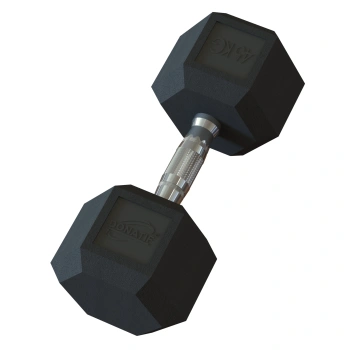
The grip diameter is the thickness of the part you squeeze with your hand. It is not automatically the same as the sleeve diameter or the plate hole diameter, even though spec sheets often use the word "diameter" for all three.
Grip, sleeve and hole: three measurements not to confuse
On adjustable dumbbells, the listing may show a diameter that refers to the hole of the compatible plates. On our adjustable dumbbells, for example, the product name indicates 28 mm or 50 mm: in that case the value refers to the plate standard to use, not the grip thickness. To know how thick the grip is, look for the specific entry in the sheet or measure it yourself.
If you want to understand how the two standards differ in general, read the dimensional comparison between diameters, which we won't repeat here.
Why grip thickness changes your choice
A thicker or thinner grip changes how the hand closes around the tool and how well it fits different hands. There is no single right size for everyone: it depends on who uses the tool, the exercises and personal preference. For a facility with different users, it may be worth asking trainers for input or trying the dumbbell before ordering a full set.
Length, sleeves, footprint: the other measurements
After the diameter, these are the measurements that most often cause problems.
Usable grip length
This is the free space for the hand between the two elements that bound it. If it's too short, the hand has no room or rests against the plates. If it's very long, the overall footprint increases. Check that the sheet lists this value and not just the overall length.
Sleeve and plate fixing
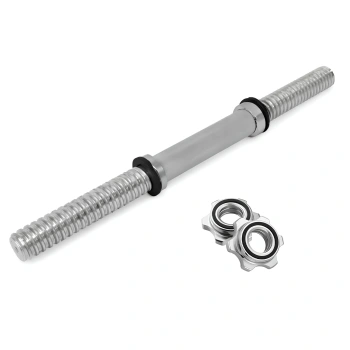
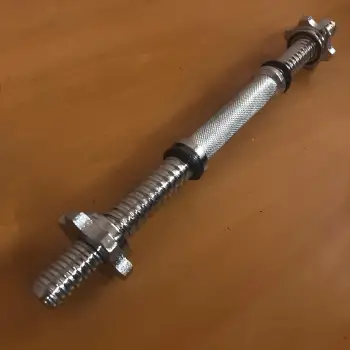
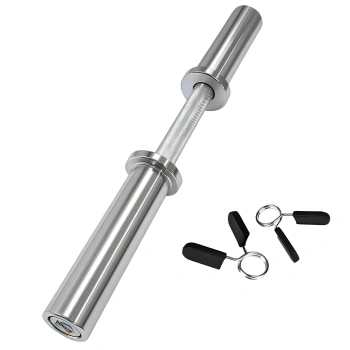
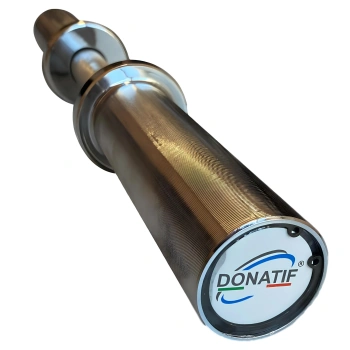
On adjustable dumbbells, the sleeve is the part the plates slide onto. The free length matters because it determines how many plates you can mount. The locking system also matters: for example, our catalogue includes a model with a screw collar and another with spring clips. Different locks require different clearances and different handling.
If you already have plates and want to know whether you can reuse them, see adjustable dumbbells and multi-diameter compatibility.
Total footprint and storage space
A loaded dumbbell takes up length and width that add to those of the plates. If you store them on stands or racks, check that the footprint is compatible: for this aspect, see how to size a rack for a dumbbell set.
How to measure in person, step by step
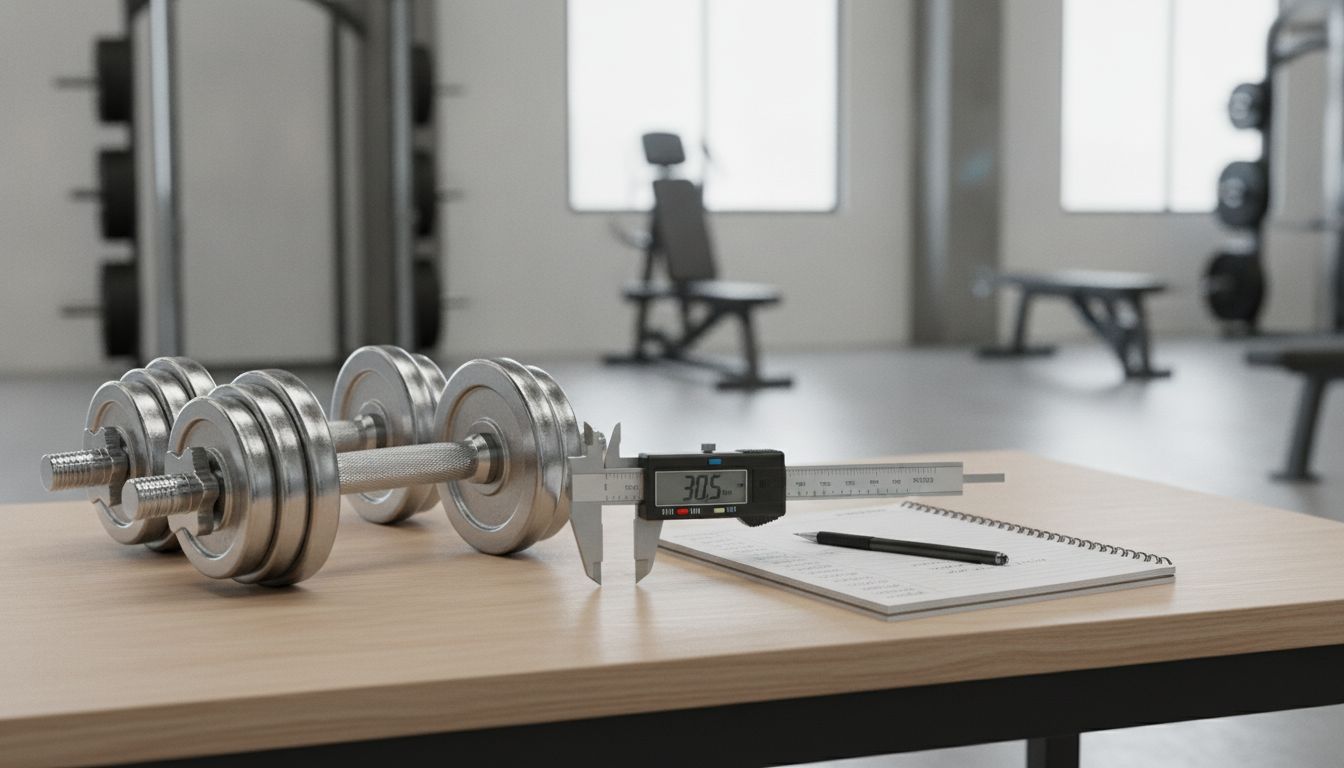
If you already have dumbbells or handles and want to replace or add to them, measure them directly. You'll need a caliper or, failing that, a rigid ruler and a bit of care.
- Grip: measure the diameter at the central point, where you squeeze, and repeat at two different points to check it's uniform (on knurled surfaces, measure on the raised part and note it).
- Grip length: measure the free space between the two blocks, excluding any parts the hand cannot occupy.
- Sleeve: measure the diameter and free length, if you have separate plates.
- Plate hole: measure the inner diameter of at least one plate per type.
- Total length: measure the complete dumbbell with the plates mounted.
- Photos and notes: photograph each measured point with the ruler in view and save the values in a table.
This list is also useful for documenting your choice for owners, staff or clients, and for retrieving the data if you need to reorder in the future.
What to ask for on the technical sheet
A good spec sheet should let you fill in the table below. If an item is missing, ask for it before buying instead of guessing.
| Data | Why it matters | If missing |
|---|
| Grip diameter | Fit for users' hands | Ask for the measurement or try it in person |
| Usable grip length | Room for the hand between the blocks | Ask for the specific measurement |
| Compatible plate hole diameter | Compatibility with the plates you have or will buy | Don't order plates until it's clear |
| Sleeve length | Maximum number of plates that can be mounted | Check with the manufacturer or with Donatif |
| Locking system | Handling and footprint | Check photos and description |
| Total footprint | Storage and working space | Measure the product or ask for dimensions |
Keep the data written by the manufacturer separate from the data you measured yourself: if they differ, flag it before buying. For handles sold as a separate accessory, you'll find a selection in the handles category; the same reading rules apply there too.
Practical example: existing plates and new dumbbells
Imagine a personal training studio that already has plates with a 50 mm hole and wants to add adjustable dumbbells. The first check is the hole: the dumbbell must be designed for that standard. Among the products in our catalogue is the 50 mm olympic adjustable dumbbell, while for 28 mm plates there is the 28 mm adjustable dumbbell. These are different standards and are not interchangeable without adaptations declared in the sheet.
The second check is the grip: the studio tries the dumbbell with a few clients, notes the diameter and length, and decides whether it suits everyone or only part of its users. The third is space: measure the length of the loaded dumbbell and check that it fits the planned storage space.
Only at this point does it make sense to compare the variants, looking at the adjustable dumbbells category and, more broadly, the dumbbells category. If something doesn't add up, ask for a check before ordering. For a broader comparison of grip measurements and basic checks, you can also read our dedicated article on dumbbell handles.
Frequently asked questions
Is the diameter in the product name the grip diameter?
Not necessarily. It often indicates the standard of the compatible plates. For the grip thickness, check the dedicated entry in the sheet or ask.
Can I use plates of a different diameter with adapters?
Only if the product sheet explicitly allows it. Otherwise don't assume it: check with the manufacturer or with Donatif before buying.
Should I try the dumbbell before ordering many?
For a large order it's advisable, because grip feel is subjective. If you can't test it, request the measurements and compare them with equipment you already use.
Are the measurements on the website enough?
They're a good starting point, but for important orders check the specific product sheet and compare it with your own measurements.
Conclusion
Before buying handles or dumbbells, always read and measure the grip diameter, usable grip length, sleeve, plate hole and footprint. Keep them in a table and compare them with the spec sheet: if a value is missing, ask for it. This way your choice is documented and doesn't rely on general rules.
If you want advice on your specific case, for example existing plates or unusual space constraints, you can contact Donatif for a consultation. Otherwise, start from the dumbbells category with your measurement table in hand.


 Budgets
 Dumbers
 Discs
 Benches
 Racks and Rigs
 Weights Holders
 Isotonic machines
 Calisthenics
 Cardio
 Kettlebells
 Flooring
 Gym Set
 Accessories
 Combat
 ARTI MARZIALI
 CONTAINER GYM
 Tug-Of-War
 Used Gym Equipment
 PILATES MACCHINARI
 GINNASTICA ARTISTICA
 CAMPI DA PADEL
 Prodotti in Pronta Consegna
 Informazioni
 IRONMAN
 Gift Card