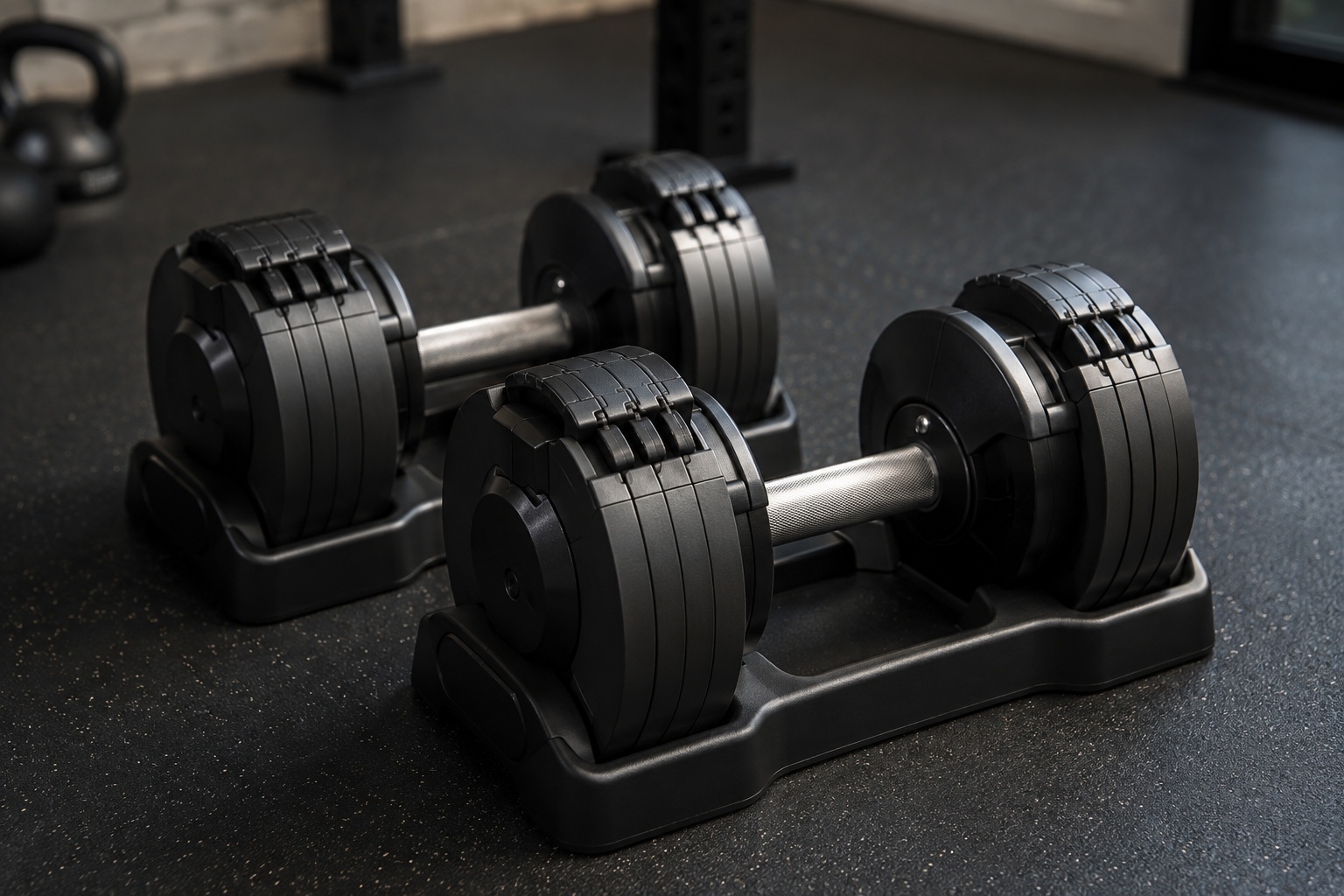
In the world of weight training, the difference between budget equipment and a professional solution is not always obvious from the outside. Two dumbbells may look similar, have the same operating principle, and allow for load adjustment, but what determines real quality is often found in the internal materials, the precision of the components, and the ability to maintain consistent performance over time.
For a demanding athlete or a fitness professional, choosing between professional adjustable dumbbells and budget variable load models means evaluating much more than just the purchase price. Safety, reliability of the selection system, build quality, and durability are fundamental elements when equipment is used frequently and subjected to heavy loads.
The adjustment mechanism is the true heart of this product category. A precise selector allows for quick weight changes while maintaining stability during movement, whereas less advanced systems may exhibit mechanical play, premature wear, or a lower sense of solidity. Analyzing these differences allows one to understand which investment is truly cost-effective in the long run.
Construction differences between professional and budget models
The first difference between a professional product and a budget model concerns the overall design. An adjustable dumbbell intended for intensive use must be designed to withstand thousands of adjustments, repeated movements, and frequent load variations without losing precision.
Entry-level models often focus primarily on the ability to offer many weights in a single tool, prioritizing the ratio between the amount of available load and the initial price. This approach may be sufficient for occasional use, but it can become limiting when the equipment is used every day.
A professional system, on the other hand, considers every component as part of an integrated whole: handle, plates, selector, and locking system must work in a coordinated manner to ensure a stable and safe experience.
The design of internal components
In higher-end products, internal components are designed with more precise tolerances. This means reducing unwanted movement between parts and ensuring a more uniform feel during use.
Mechanical precision becomes particularly important when the athlete performs exercises with controlled movements, where even small differences in stability can influence the perception of the load.
Quality controls and production process
The final quality also depends on the checks performed during production. Professional equipment requires more rigorous verification of materials, fastening systems, and the correct functioning of the adjustment mechanism.
These checks contribute to creating a more reliable and consistent product from one use to the next.
The role of the click mechanism in adjustable dumbbells
The selector represents one of the most important elements in an adjustable dumbbell. It is the component that allows for weight modification and must ensure a secure connection between the handle and the discs during every exercise.
Many users evaluate the product only by looking at the number of available adjustments, but the real difference emerges in the quality of the selector's movement, the precision of the lock, and the ability to keep the system stable over time.
A well-designed dumbbell click mechanism must offer a quick load change without compromising training safety.
Why selector precision is fundamental
During intense training, the athlete must be able to count on predictable equipment. A precise selector allows for quick weight changes while maintaining a sense of solidity similar to that of a traditional dumbbell.
Conversely, a less precise system can generate vibrations, noise, or a perception of instability that reduces the quality of the exercise.
Wear and frequency of use
Every adjustment subjects the mechanical system to a work cycle. In an environment where the dumbbell is modified many times a day, resistance to wear becomes a determining factor.
Components designed for frequent use maintain their initial precision longer and reduce the need for replacements.
Materials and durability of the equipment
The materials used directly influence the durability and perceived quality of the product. Steel, protective coatings, and assembly systems determine the dumbbell's ability to withstand impacts, repeated use, and different environmental conditions over time.
The difference between a budget product and a professional one often emerges after months or years of use, when components are subjected to continuous stress.
Strength of the main structure
A robust structure ensures greater reliability during exercises with heavy loads. The handle must maintain ergonomics and stability, while connection systems must prevent unwanted movement.
Protection of components over time
Quality coatings and finishes help preserve the equipment from aesthetic and functional wear. A product intended to last must maintain constant performance even after numerous sessions.
Safety during training with variable loads
Safety is one of the aspects that most distinguishes professional equipment from a budget solution. When the load is modified through an adjustable system, the correct locking of the parts becomes essential.
An athlete must focus on the movement without worrying about the stability of the tool. The quality of the fastening system directly influences confidence during complex exercises.
Load stability during movement
A good adjustable dumbbell must keep the weight firmly connected to the handle even during dynamic movements. This feature improves control and safety.
Reducing risks in daily use
Investing in reliable components allows for the reduction of problems related to wear, malfunctions, or frequent replacements.
Performance and feel for the advanced athlete
For those who train consistently, the quality of the equipment also influences the perception of the workout. A stable and precise dumbbell allows for greater concentration on technical execution.
The advanced athlete seeks tools capable of accompanying load progression without introducing elements of distraction or limitations.
Experience similar to traditional dumbbells
The best adjustable systems seek to offer a feel close to professional fixed-weight dumbbells, combining practicality and performance.
Supporting athlete growth
The ability to progressively modify the load makes these tools suitable for evolutionary training programs.
Evaluating the long-term investment
The initial price is not the only parameter for evaluating the cost-effectiveness of an adjustable dumbbell. A cheaper product may require premature replacements or limit the user experience.
A professional investment must be analyzed by considering durability, reliability, and the ability to maintain high performance over time.
The real cost of the equipment
When evaluating a purchase, it is important to consider the cost distributed over the years of use. A durable product may prove more cost-effective than multiple replacements of budget models.
Value for professionals and athletes
For those who use the equipment frequently, quality becomes an integral part of the result obtained from the investment.
How to choose the best adjustable dumbbells
The choice of the best adjustable dumbbells 2024 must start from the user's real needs. Training frequency, technical level, available space, and personal goals are fundamental elements in the evaluation.
A professional system offers advantages especially when it is used as the primary training tool and must guarantee constant reliability.
Elements to compare
Materials, selector precision, lock safety, and build quality are the main factors to analyze before purchasing.
A decision based on quality
Choosing an adjustable dumbbell means investing in a tool intended to accompany your training journey. Carefully evaluating the internal construction allows you to distinguish truly professional products from alternatives that focus only on price.


 Budgets
 Dumbers
 Discs
 Benches
 Racks and Rigs
 Weights Holders
 Isotonic machines
 Calisthenics
 Cardio
 Kettlebells
 Flooring
 Gym Set
 Accessories
 Combat
 ARTI MARZIALI
 CONTAINER GYM
 Tug-Of-War
 Used Gym Equipment
 PILATES MACCHINARI
 GINNASTICA ARTISTICA
 CAMPI DA PADEL
 Prodotti in Pronta Consegna
 Informazioni
 IRONMAN
 Gift Card