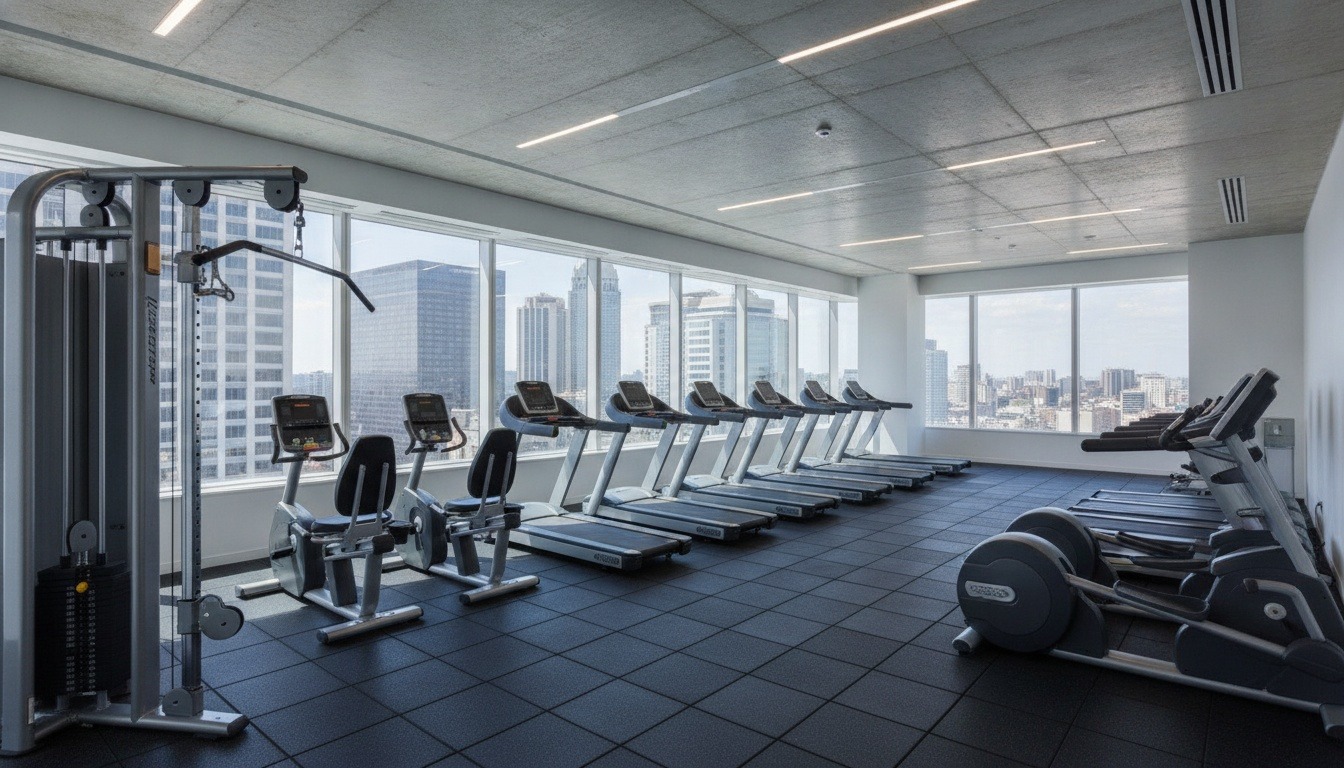
A corporate gym should be designed starting from its users and their peak hours, not from the equipment catalog: this determines floor area, equipment and management model. As a practical rule, the number of people using the gym at the same time matters far more than the total number of employees.
The idea of "buying a few machines and putting them in an empty room" is the shortcut that most often leads to underused or hard-to-manage spaces. In a company there is no instructor, usage is concentrated (lunch break, end of shift) and users have very different levels of experience.
In this guide you will find a five-step method, a usage profile → equipment matrix and a brief to share with the supplier. For tax, insurance and occupational safety matters, involve your consultants and the RSPP (health and safety officer): here you will only find the technical and design approach.
In this article
Where the project starts: users and usage times
The first step is a short, anonymous internal survey to understand who would really use the gym. A project built on the tastes of the decision-makers risks not reflecting those of their colleagues.
The useful questions are few:
- At what times would you use the gym (before work, lunch break, end of shift)?
- How much time would you have available per session?
- Do you already have training experience, or do you prefer guided equipment?
- Which activities interest you (cardio, basic strength, mobility)?
- Which sites or shifts need to be served?
From the results you get two numbers: the potential users and the peak of simultaneous presences. They are the basis for everything else.
How much space do you need?
There is no single valid floor area for everyone: it depends on the peak number of users and on the areas you include. Think in zones rather than total square meters, and always add the access and safety clearances around each piece of equipment specified by the manufacturer.
The typical zones of a corporate gym are:
- Cardio: the most requested and the easiest to use independently.
- Guided strength: machines with a fixed movement path or multi-station units.
- Free area: mats, light dumbbells, mobility and stretching.
- Support services: changing rooms and showers, if not already available in the building, and a space for sanitizing equipment.
For sizing, you can explore the general principles in how to design a fitness center and in the guide to the areas to include in a fitness center. For cardio, the most common case, the guide on the space in front of a treadmill is useful.
Technical checks on the room
Before choosing equipment, check usable ceiling height, floor load capacity, entrances and passageways for moving equipment, ventilation and electrical outlets for cardio machines. These constraints are easier to assess with a site visit from the supplier; for regulations on premises and systems, consult your technical reference professional.
Which equipment should you include in a corporate gym?
Choose based on how independent your users are: without an instructor, intuitive equipment with guided movement and simple adjustments works best. More equipment does not mean more value: it means more maintenance and more space to supervise.
Usage profile → equipment matrix
| Usage profile | Need | Recommended equipment |
|---|
| Beginner, short lunch break | Independence, zero setup | Simple cardio and guided machines |
| Regular user, 30-45 minutes | Complete circuit | Weight-stack machines, multi-station, cardio |
| Experienced user | Variable loads | Dumbbells and bench, in a dedicated and limited area |
| Mobility and recovery | Open space | Mat area, light accessories |
For cardio, treadmills and exercise bikes cover most requests and are immediately usable. For strength, weight-stack machines and multi-station machines offer a guided path and the load is adjusted with a pin, which is useful when nobody is supervising. For a comparison of cardio criteria, see cardio equipment for a fitness room.
If space is limited, a station such as the MR150 multi-station machine allows several exercises in a single footprint; check dimensions and space requirements on the product page. If you want a ready-made solution, also consider gym kits and sets.
With dumbbells, keep the offer limited: a few weights and an orderly rack prevent clutter and risks. Rubber hex dumbbells are a typical choice for mixed areas.
Flooring, cleaning and maintenance
Flooring is a technical choice, not a detail: it protects the subfloor, reduces noise and simplifies cleaning. In companies, where the room is often a former office or storage space, it is one of the first things to define.
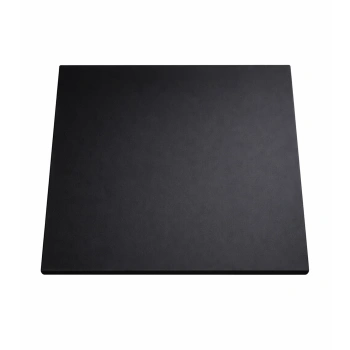
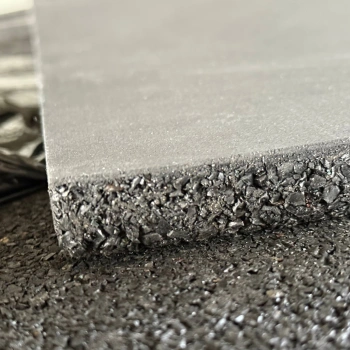
For smaller rooms, rubber tiles are modular and allow individual pieces to be replaced. Choose the thickness based on loads and use; the product page lists the specifications. An example is the professional 50x50 cm tile.
For maintenance, set these from the start:
- Daily cleaning handled by the company's existing cleaning service, using products compatible with the surfaces and coverings.
- Sanitizing wipes or sprays available to users, with usage instructions posted.
- Periodic checks on cables, adjustments and bolts, following the manufacturer's manuals.
- Scheduled maintenance, with a designated person in charge and a maintenance log.
Who manages the gym?
You need a clearly identified internal contact, usually in HR or facility management, who receives reports and coordinates cleaning and maintenance. Without a responsible person, faults remain unresolved and the space loses credibility.
Define in writing a usage policy: access, hours, clothing, use of equipment, reporting of faults. Do not improvise on liability, insurance coverage or users' fitness to train: involve consultants, your insurer, the RSPP and, for training guidance, a qualified instructor. An introductory sheet or an initial session with a professional can help users operate the machines correctly.
For a comparison with other contexts without an instructor, read the guide to the residential building gym, which shares many access and usage rules with the workplace.
The brief to give the supplier
With the information collected, you can write a complete brief. The more precise it is, the more comparable the quotes will be.
- Number of potential users and peak of simultaneous presences.
- Time slots and opening days.
- Floor plan or room dimensions, usable height, access points and constraints.
- Desired areas: cardio, guided strength, free area.
- Expected level of user independence.
- Planned flooring and existing services.
- Management model: contact person, cleaning, maintenance.
- Indicative budget and project timeline.
Frequently asked questions
Do you need an instructor in a corporate gym?
It is not mandatory by definition, but it depends on the chosen model and the guidance of your consultants. Without an instructor, it is better to focus on guided equipment and clear usage rules.
Is it better to buy new or used equipment?
It depends on budget and timing. The catalog also includes used gym equipment: always check condition and availability on the product page.
How much equipment is needed for a company with many employees?
It depends on the peak number of users, not on the total headcount. Start from the survey and the time slots, then size the stations accordingly.
Who is responsible in case of injury?
This is a legal and insurance matter: address it with your consultants, your insurer and the RSPP before opening.
Conclusion
A corporate gym that works comes from a method: users, usage times, space, management and only then equipment. With a clear brief, the discussion with the supplier becomes concrete and the risk of an unused space is reduced.
If you would like advice on your project, contact Donatif for a consultation or a quote; in the meantime you can explore weight-stack machines and professional cardio.


 Budgets
 Dumbers
 Discs
 Benches
 Racks and Rigs
 Weights Holders
 Isotonic machines
 Calisthenics
 Cardio
 Kettlebells
 Flooring
 Gym Set
 Accessories
 Combat
 ARTI MARZIALI
 CONTAINER GYM
 Tug-Of-War
 Used Gym Equipment
 PILATES MACCHINARI
 GINNASTICA ARTISTICA
 CAMPI DA PADEL
 Prodotti in Pronta Consegna
 Informazioni
 IRONMAN
 Gift Card