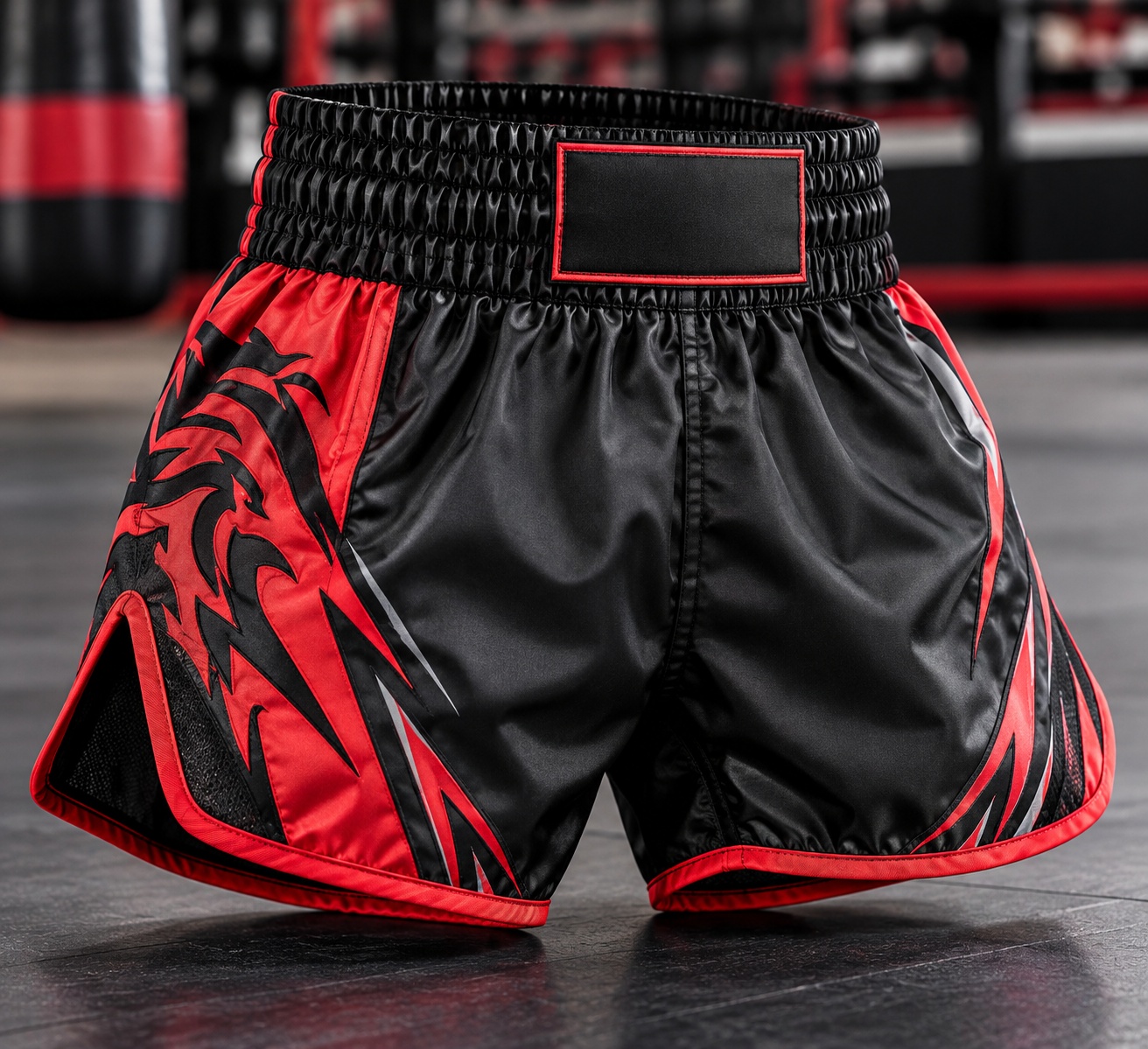
The shorts used in Muay Thai and those used in kickboxing share similar features, but are designed to meet different technical requirements. Choosing the correct model affects freedom of movement, comfort during training, and compatibility with the practiced fighting style.
Understanding the differences between Muay Thai and kickboxing shorts allows you to select a garment suitable for your needs without relying solely on aesthetics. Elements such as cut, length, leg width, and fit actually impact the mobility required during techniques.
This guide compares the two models, highlighting practical differences, decision-making criteria, usage scenarios, and mistakes to avoid when choosing Muay Thai apparel.
What is the difference between Muay Thai and kickboxing shorts?
Muay Thai shorts are generally shorter, with pronounced side slits and a fit that favors the range of motion for kicks and knee techniques. Kickboxing shorts tend instead to have a longer and more fitted line, prioritizing greater coverage without sacrificing mobility.
The choice depends mainly on the type of discipline practiced, personal preferences, and the guidelines of the gym or reference federation.
Both models must allow fluid movements without limiting the execution of techniques.
What is the main criterion?
Freedom of movement represents the most important element when choosing shorts, regardless of the aesthetic style.
How much does the fit matter?
A correct fit allows you to train without restrictions while maintaining stability during direction changes, kicks, and movements.
What are the main differences?
The differences mainly concern the cut of the garment, leg length, side slits, and overall construction.
Muay Thai shorts are designed to favor wide movements of the hips and legs, while kickboxing shorts often feature a slightly longer and more linear structure.
Both solutions normally use lightweight and breathable materials suitable for high-intensity training.
Differences in cut
The short cut with side slits typical of Muay Thai facilitates techniques that require high mobility of the lower limbs.
Differences in length
Kickboxing shorts can offer slightly superior coverage while maintaining good freedom of movement.
How to choose between the two models?
The choice should be based on practical criteria rather than exclusively aesthetic preferences.
It is useful to consider the discipline practiced, training frequency, personal comfort, any applicable regulations, and the manufacturing quality of the garment.
Trying them out for movement is also an important step before purchasing.
Check mobility
During the try-on, it is advisable to simulate some techniques to verify that the fabric does not restrict joint range of motion.
Evaluate materials
Lightweight fabrics, careful stitching, and good drying capacity facilitate use during frequent training sessions.
When to choose Muay Thai or kickboxing shorts?
The choice depends mainly on the context of use and the characteristics of the discipline practiced.
Those who practice Muay Thai predominantly may prefer a model designed to favor the typical techniques of this sport, while those who mainly dedicate themselves to kickboxing can lean towards garments with characteristics closer to the needs of their own discipline.
Many practitioners use different models based on the type of training performed during the week.
Daily training
Comfort, freedom of movement, and quick drying represent particularly useful elements during frequent sessions.
Competitions and regulations
Before competitions or events, it is advisable to check any requirements set by the organization or competent federation regarding clothing.
What mistakes should be avoided?
One of the most common mistakes is choosing shorts exclusively for their design while neglecting fit and functionality.
It is also advisable to avoid models that are too tight, excessively loose, or made with materials poorly suited for intense use.
Buying the wrong size can also limit the quality of your training.
Check the space for movement
Shorts should allow complete movements without creating tension during kicks, movements, or dynamic exercises.
Match the accessories
Shin guards, boxing gloves, and other equipment elements should be compatible with the type of training planned. To learn more about combat sports equipment, you can consult the combat equipment section.
How to maintain your shorts over time?
Proper maintenance helps preserve the fabric and characteristics of the garment.
It is advisable to always follow the instructions on the label, avoiding unforeseen washing temperatures or products that could alter the material.
Allowing the shorts to dry completely before storing them helps keep the garment in good condition between workouts.
Proper washing
Following the manufacturer's instructions represents the most reliable solution to maintain the performance and durability of the fabric.
Storage
Storing the clothing completely dry helps preserve its characteristics over time.
FAQ on Muay Thai and kickboxing shorts
Can I use kickboxing shorts for Muay Thai?
In many recreational training sessions it may be possible, but you should verify that the model guarantees the required freedom of movement and complies with any gym rules.
Which materials are most recommended?
Lightweight, durable, and quick-drying fabrics are generally preferred, always following the specifications stated by the manufacturer.
Are there technical standards?
Clothing requirements can vary depending on the sports federation, competition organization, and adopted regulations. It is advisable to consult the rules applicable to your context before official events.
Is it better to choose a larger size?
Not necessarily. The size should guarantee comfort and full freedom of movement without being excessively loose or unstable during training.
Choosing the most suitable garment
The choice between Muay Thai and kickboxing shorts should be guided by the discipline practiced, the quality of the fit, and the freedom of movement required during training.
Evaluating the cut, materials, comfort, and compatibility with your training program allows you to purchase a truly functional garment instead of relying solely on aesthetic appearance.
An approach based on verifiable criteria facilitates a more conscious choice and helps improve the training experience while maintaining comfort and practicality over time.


 Budgets
 Dumbers
 Discs
 Benches
 Racks and Rigs
 Weights Holders
 Isotonic machines
 Calisthenics
 Cardio
 Kettlebells
 Flooring
 Gym Set
 Accessories
 Combat
 ARTI MARZIALI
 CONTAINER GYM
 Tug-Of-War
 Used Gym Equipment
 PILATES MACCHINARI
 GINNASTICA ARTISTICA
 CAMPI DA PADEL
 Prodotti in Pronta Consegna
 Informazioni
 IRONMAN
 Gift Card