
Trolley
You have no items in your shopping cart

 Budgets
 Dumbers
 Discs
Discs
 Benches
 Racks and Rigs
 Weights Holders
 Isotonic machines
 Calisthenics
 Cardio
 Kettlebells
 Flooring
 Gym Set
 Accessories
 Combat
 ARTI MARZIALI
 CONTAINER GYM
 Tug-Of-War
 Used Gym Equipment
 PILATES MACCHINARI
 GINNASTICA ARTISTICA
 CAMPI DA PADEL
 Prodotti in Pronta Consegna
 Informazioni
 IRONMAN
 Gift Card
- Donatif
- Sports products
- 0 I like it
- 1870 Views
- 0 comments
- stress reduction, improved self-esteem, physical and mental well-being, gym training
READING TIME: 5 MINUTES ➤➤
Boot Camp and Home Gym: Essential Equipment and Recommended Flooring
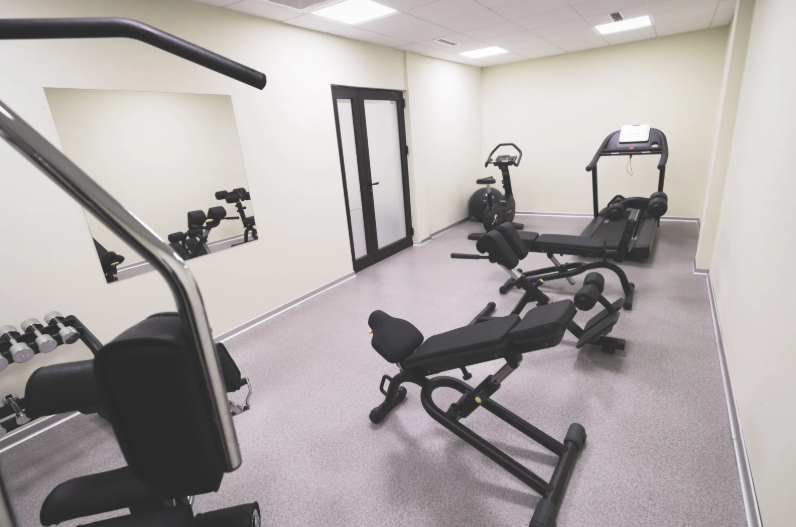
Boot Camp home gym refers to a home-based area designed for high-intensity functional training. It is a structured space equipped with essential equipment and technical flooring, capable of supporting dynamic exercises, free weights, and combined circuits. The goal is to create a complete training zone that integrates seamlessly into residential environments.
Building a dedicated home fitness area for Boot Camp means combining versatile equipment, protective surfaces, and modular solutions. Choosing the right materials directly affects stability, acoustic comfort, and long-term durability. A well-planned setup allows you to train independently, without external logistical constraints.
- What Is a Home Boot Camp Area and How Much Space Does It Require
- Boot Camp Equipment: Essential Tools
- Boot Camp Flooring: Protection, Stability, and Comfort
- How to Design a Modular Home Fitness Area
What Is a Home Boot Camp Area and How Much Space Does It Require
The term home Boot Camp refers to an area organized for functional circuits that combine strength, endurance, and coordination. It does not require large square footage, but rather efficient space management. Even a 10–12 square meter room can be suitable if the equipment is selected in a coherent and modular way.
The layout must ensure freedom of movement for multi-joint exercises, controlled jumps, and free weight training. It is important to consider ceiling height, distance from walls, and the presence of delicate surfaces. In apartment buildings, acoustic comfort becomes a decisive factor when selecting materials.
Boot Camp Equipment: Essential Tools
Boot Camp equipment includes versatile tools suitable for bodyweight and loaded exercises. Kettlebells, adjustable dumbbells, barbells compatible with different plate diameters, and multifunctional stations form the operational foundation. Modularity allows you to adjust intensity without replacing the entire setup.
In a home gym context, resistance bands, medicine balls, and compact pull-up structures are also highly relevant. The objective is to maintain continuity between dynamic movements and strength phases. A coherent selection reduces clutter and supports gradual progression, avoiding redundant or incompatible purchases.
Boot Camp Flooring: Protection, Stability, and Comfort
Boot Camp flooring plays a central technical role. High-density rubber surfaces absorb impact, reduce vibrations, and protect both the subfloor and the equipment. When using barbells or kettlebells, shock absorption becomes essential to preserve structural integrity.
Solutions such as high-resistance tatami mats or rubber tiles allow for simple and scalable installation. Beyond mechanical protection, they enhance joint comfort during plyometric exercises. In shared environments, noise reduction is a tangible advantage, particularly in micro-gyms or apartment settings.
How to Design a Modular Home Fitness Area
Creating a Boot Camp at home requires a comprehensive vision that integrates equipment and flooring coherently. A modular approach allows you to start with an essential setup and expand it over time. This strategy avoids full replacements and ensures compatibility between components.
A well-structured home fitness area addresses product quality, comfort, and long-term durability. Choosing equipment aligned with professional standards ensures continuity even when upgrading. Rational space organization supports safe, intensive workouts, transforming a domestic environment into a fully operational training space.
Comments (0)