Building an advanced home gym today no longer means choosing a single price range for all equipment. The real difference between an effective setup and an inefficient one lies in the ability to create an intelligent hybrid configuration, where entry-level and premium elements coexist in a coherent and functional way. This approach allows you to optimize your budget without compromising the training experience.
Many users, especially advanced athletes and personal trainers, are held back by one doubt: will mixing different price ranges lead to an inconsistent result? In reality, the opposite is true. A home gym designed based on priorities, usage, and progression is far more effective than one built on uniform but unstrategic choices.
Why a Hybrid Configuration Is More Effective Than a Uniform One
Relying on a uniform approach—choosing either all entry-level or all premium equipment—is often a mental shortcut that simplifies decisions but does not optimize results. In a fully entry-level setup, limitations quickly emerge in terms of durability, stability, and precision, especially for heavily used components.
At the same time, going all-in on premium equipment can lead to a disproportionate investment, where cost does not always translate into a real improvement in experience. A hybrid configuration allows you to focus your budget where the quality leap is truly محسوس, maintaining a balance between performance and financial sustainability.
The Limit of the “All Entry-Level” Approach
A fully basic setup may work in the early stages, but it quickly reveals weaknesses as training intensity increases. Components like racks or entry-level barbells can compromise both safety and progression.
This approach often leads to premature replacements, increasing the total cost over time and creating a sense of instability within the setup.
The Myth of Full Premium Consistency
The idea that everything must be premium to be consistent is linked to a perfectionism bias. In reality, many categories do not significantly benefit from a higher price tier.
Investing in premium equipment where it’s not needed means taking resources away from more critical components, reducing the overall effectiveness of your home gym.
How to Define the Real Priorities of Your Setup
The key to an effective configuration is shifting the focus from price range to function. Each piece of equipment should be evaluated based on its role within the training system and how frequently it is used.
A rational approach considers not only current usage but also future progression. This helps avoid setups that quickly become obsolete or limiting.
Usage Frequency and Impact on Training
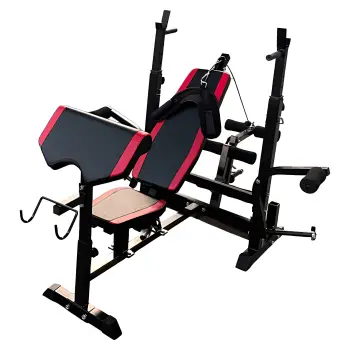
Equipment used in every session has a direct impact on the overall experience. Racks, barbells, and benches fall into this category and deserve greater attention.
On the other hand, accessories used occasionally can be chosen in a lower price range without affecting overall performance.
Progression and Load Over Time
An advanced athlete must consider increasing loads and intensity. Structural elements need to ensure long-term reliability.
Investing in these components means protecting the entire setup and reducing the need for future upgrades.
Where It Makes Sense to Invest in Premium Equipment
The categories where upgrading to premium truly matters are those that affect safety, stability, and precision. In these cases, the difference is not only qualitative but also functional.
A targeted choice allows you to maximize return on investment without wasting resources.
Load-Bearing Structures and Safety
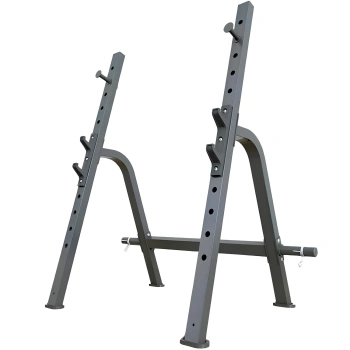
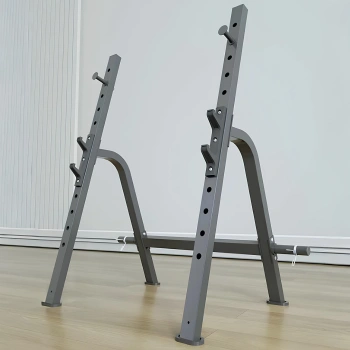
The rack is the core of any home gym. A premium structure ensures stability, tighter tolerances, and greater safety under heavy loads.
This type of investment directly impacts training quality and operational confidence.
High-Interaction Components
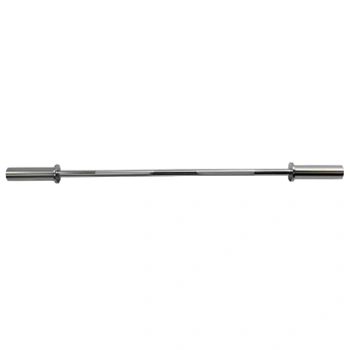
The barbell is one of the most used and most noticeable pieces of equipment. Material quality and finishing affect grip, rotation, and comfort.
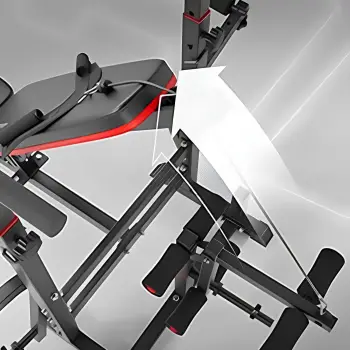
High-end benches also provide greater stability and more precise adjustments, improving the overall training experience.
Where Entry-Level Is More Than Enough
Not all categories require a high investment. Some elements have a minimal impact on the overall experience and can be managed more economically.
This approach frees up budget for more critical components while maintaining a functional setup.
Accessories and Secondary Components
Dumbbells, resistance bands, and small accessories do not necessarily need premium standards to be effective.
In many cases, the difference between price ranges is minimal in real-world use.
Low-Impact Perceptual Elements
Weight plates and flooring can be chosen in a mid-range or entry-level category unless there are specific needs.
The key is ensuring compatibility and minimum durability without overspending.
Decision Framework for Building a Hybrid Home Gym
An effective configuration comes from a clear framework that links each category to its role and the most appropriate price range. This reduces uncertainty and simplifies decisions.
The focus shifts from “how much to spend” to where to spend for maximum impact.
Category and Role in the Setup
Each piece of equipment should be classified based on its primary function: structure, load, support, or accessory.
This distinction helps clarify the real importance of each component within the system.
Recommended Tier Based on Usage
Core categories require higher investment, while secondary ones can remain more accessible.
This model creates a balanced setup that remains coherent even when mixing different price ranges.
Common Mistakes in Hybrid Configurations
Despite its advantages, a hybrid setup can lead to mistakes if not managed properly. The main risk is creating an unbalanced system where some components limit the entire setup.
Another common mistake is being guided by perception rather than actual data, leading to inefficient investments.
Unbalanced Setup
Overinvesting in one category while neglecting others compromises overall balance.
Consistency does not come from price range, but from intelligent resource distribution.
Spending Not Proportional to Benefit
Buying premium where it’s not needed is one of the most costly mistakes. Not every upgrade leads to a noticeable improvement.
A conscious approach helps maintain control, order, and long-term investment protection.


 Budgets
 Dumbers
 Discs
 Benches
 Racks and Rigs
 Weights Holders
 Isotonic machines
 Calisthenics
 Cardio
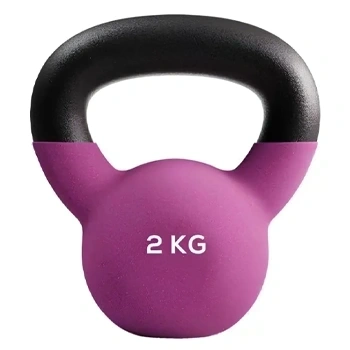 Kettlebells
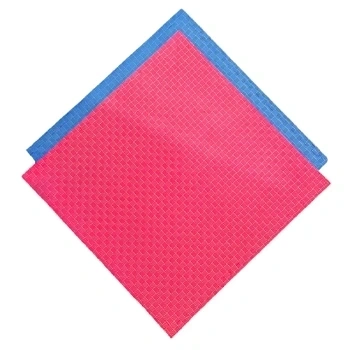 Flooring
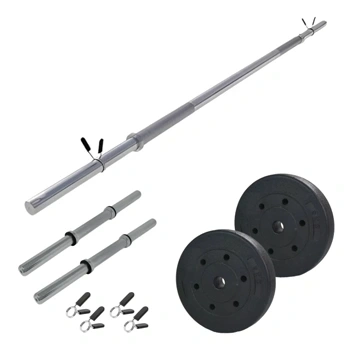 Gym Set
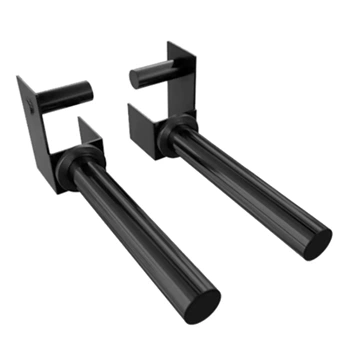 Accessories
 Combat
 ARTI MARZIALI
 CONTAINER GYM
 Tug-Of-War
 Used Gym Equipment
 PILATES MACCHINARI
 GINNASTICA ARTISTICA
 CAMPI DA PADEL
 Prodotti in Pronta Consegna
 Informazioni
 IRONMAN
 Gift Card