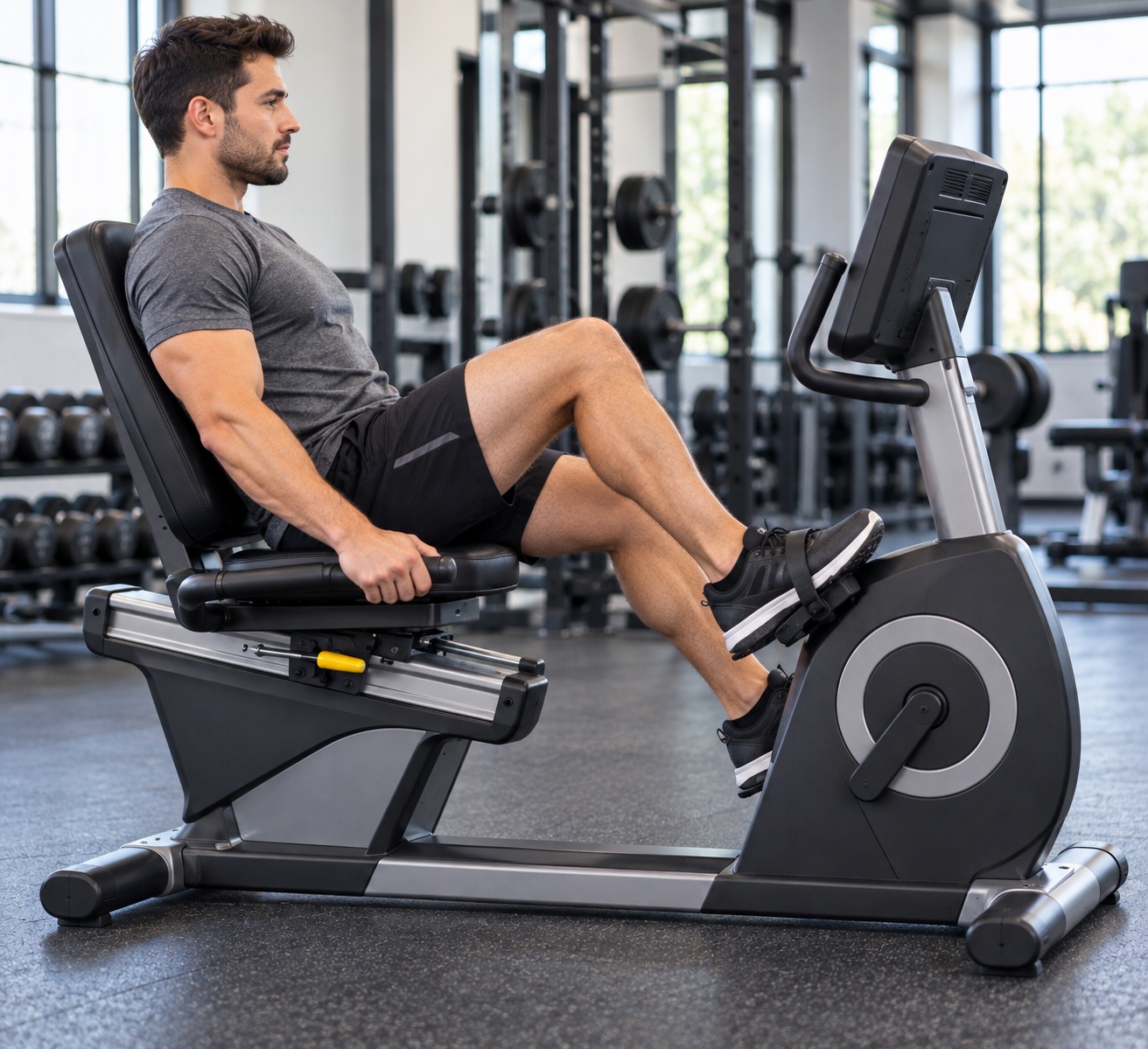
The recumbent bike, or recumbent exercise bike, is a cardio machine equipped with a seat with a backrest that allows you to pedal in a reclined position, distributing body weight differently compared to an upright exercise bike. To choose the most suitable model, it is necessary to evaluate comfort, adjustments, build quality, available space, and intended use, avoiding basing the decision exclusively on price or the number of available programs.
The correct choice actually depends on the end user, the frequency of use, and the context in which the machine will be installed. A setup intended for a professional gym presents different requirements compared to a corporate gym, a physiotherapy center, or intensive home use.
This guide compiles verifiable criteria for selecting a recumbent exercise bike, comparing the main technical characteristics, the aspects that truly matter in the choice, and the most frequent purchasing errors. When applicable, it is always appropriate to refer to the manufacturer's manuals, technical datasheets, and installation instructions, which constitute the primary sources for dimensions, adjustments, maintenance, and usage limits.
What is a recumbent exercise bike and who is it suitable for?
The recumbent bike is a cardio machine characterized by a wide seat with a backrest and pedaling with legs extended forward. This configuration modifies posture during training and generally makes access easier compared to a traditional exercise bike.
It is used both in home settings and in professional gyms, fitness centers, facilities dedicated to senior fitness, and motor activity pathways where the responsible professional deems its use appropriate.
The supported seated position favors cardiovascular training oriented toward low-impact cardio, while maintaining the ability to modulate the intensity and duration of the exercise.
How it works
The machine uses an adjustable resistance system that allows you to adapt the level of effort to the user's characteristics. The adjustment methods depend on the model and must be used according to the manufacturer's instructions.
Who can benefit from it
It may be suitable for users seeking a stable seat, greater lumbar support, or facilitated access, always in compliance with the professional's indications when specific requirements are present.
What technical features really matter?
When choosing, it is best to focus on the elements that actually affect daily use rather than the number of accessory functions.
The main criteria include structural quality, machine stability, ease of adjustment, seat ergonomics, simplicity of access, and availability of technical assistance.
Before purchasing, it is useful to compare the specifications reported in official technical datasheets instead of relying exclusively on promotional material.
Seat quality
A wide seat with a well-designed backrest improves comfort during prolonged sessions. It is important to verify that the adjustments are simple and easily accessible.
Available adjustments
The ability to quickly adapt the user's position represents an advantage both in the home environment and in shared facilities.
How to choose a recumbent exercise bike?
The choice should start from the intended use and not from the price. A machine intended for professional use requires different characteristics compared to a model used occasionally.
It is advisable to check the robustness of the frame, the quality of the materials, the simplicity of maintenance, and the availability of spare parts.
A systematic comparison allows you to identify the model truly consistent with operational requirements.
Criteria comparison table
1. Intended use: domestic or professional.
2. Expected frequency of use.
3. Ease of access to the seat.
4. Available ergonomic adjustments.
5. Overall footprint and operating space.
6. Ease of maintenance.
7. Availability of assistance and spare parts.
What priorities to establish
For an informed purchase, it is useful to define in advance the profile of the users, the average number of daily sessions, and the space actually available.
Better a recumbent bike or an upright exercise bike?
The choice depends on the goals and characteristics of the user. Neither type is universally better.
The upright exercise bike requires a different posture and a different access method compared to the reclined version.
The recumbent bike prioritizes seat comfort and torso support, while the upright exercise bike generally occupies less surface area and reproduces a position more similar to traditional pedaling.
When to prefer the recumbent bike
It can be an appropriate choice when comfort, seat stability, and accessibility represent priority criteria.
When to consider the upright exercise bike
It may be preferable when spaces are limited or a different configuration of cardiovascular training is sought.
How to check compatibility with available space?
The necessary space includes not only the footprint of the machine but also the area required for access, adjustments, and maintenance.
Dimensions must always be verified in the manufacturer's technical documentation, as they can change significantly between different models.
The quality of the flooring also influences the stability of the equipment and must be evaluated during the design of the fitness area.
How much space does a recumbent bike occupy?
There is no standard measurement valid for all products. It is necessary to check the footprint, operating space, and safety distances reported in the technical documentation.
Machine positioning
The station should allow easy access and permit any assistance or maintenance operations without obstructing passage.
Which purchasing errors to avoid?
A frequent error consists of evaluating exclusively the number of electronic programs while neglecting ergonomics, adjustments, and build quality.
Another critical issue concerns the purchase of a machine incompatible with the available space or the user profile.
It is also advisable to avoid products lacking complete technical documentation or with limited assistance.
Underestimating space
Considering only the dimensions of the frame without anticipating the operating space can make daily use difficult.
Ignoring the intended use
A machine designed for occasional use might not be adequate for contexts with intensive use.
What safety and maintenance aspects to consider?
Regular maintenance helps maintain the efficiency, stability, and durability of the machine over time.
It is advisable to respect the maintenance schedule provided by the manufacturer, periodically checking fastenings, adjustment systems, electronic components, and parts subject to wear.
Cleaning of contact surfaces must be carried out using products compatible with the materials indicated in the technical documentation.
Periodic checks
Preventive checks allow anomalies to be identified promptly, reducing the risk of operational interruptions.
Why consult the manuals
The manufacturer's manuals represent the primary source for correct adjustments, maintenance, installation, and safe use of the equipment.
How to evaluate the investment in a recumbent exercise bike?
The choice should consider build quality, availability of spare parts, simplicity of adjustments, seat ergonomics, after-sales assistance, and compatibility with the installation environment. A comparison based on verifiable criteria allows you to evaluate the overall value of the machine instead of focusing exclusively on the initial cost.
To explore the various solutions dedicated to cardiovascular training, you can consult the cardio machines category, useful for comparing different types of equipment based on the goals of the facility or the user.
Before purchasing, it is advisable to analyze technical datasheets, assembly instructions, user manuals, and manufacturer documentation, which constitute the primary sources for dimensions, adjustments, power supply, maintenance, and installation requirements. An informed choice based on verifiable data allows you to identify the most suitable recumbent exercise bike while avoiding decisions based exclusively on commercial features or accessory functionalities.
FAQ: is a recumbent exercise bike suitable for home use?
Yes, provided that the available space, frequency of use, and technical characteristics of the machine are consistent with the user's needs.
FAQ: which documents to check before purchasing?
It is advisable to consult manuals, technical datasheets, installation instructions, and official manufacturer documentation to verify specifications, adjustments, and usage requirements.


 Budgets
 Dumbers
 Discs
 Benches
 Racks and Rigs
 Weights Holders
 Isotonic machines
 Calisthenics
 Cardio
 Kettlebells
 Flooring
 Gym Set
 Accessories
 Combat
 ARTI MARZIALI
 CONTAINER GYM
 Tug-Of-War
 Used Gym Equipment
 PILATES MACCHINARI
 GINNASTICA ARTISTICA
 CAMPI DA PADEL
 Prodotti in Pronta Consegna
 Informazioni
 IRONMAN
 Gift Card